


 SHARE:
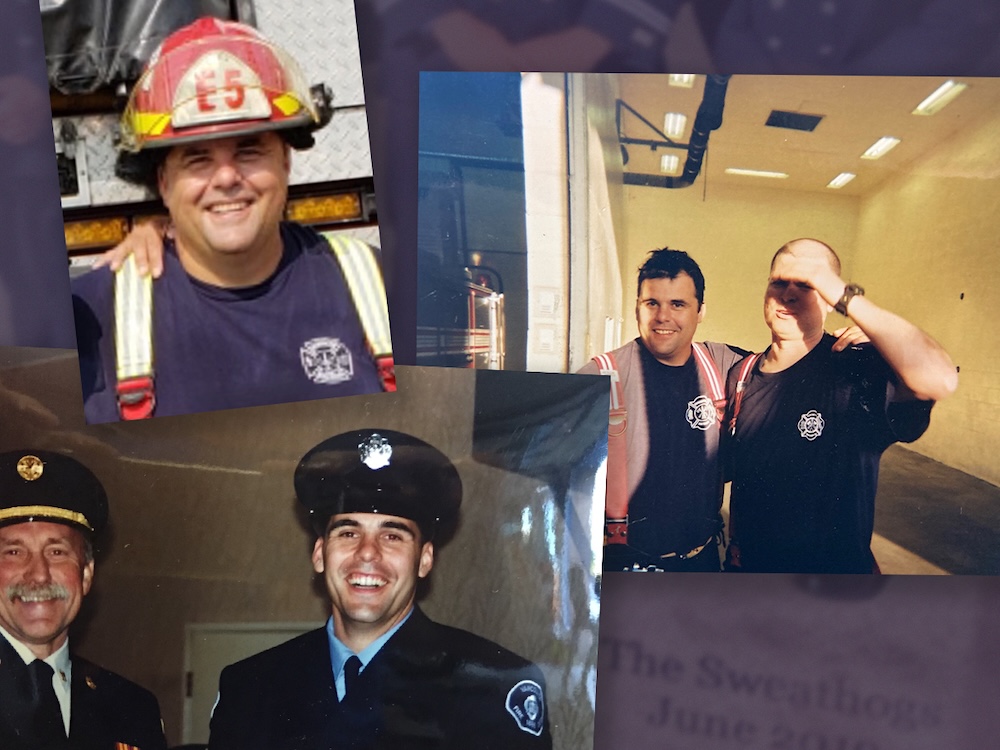
After more than 26 years as a Vancouver firefighter, Rod Salas was deeply frustrated that when he needed mental health care he had to fight for it.
“I wanted to go to a certain type of wellness and I was denied that opportunity,” Salas told The Tyee. “It took me three years of moral injury... and getting a lawyer for me to be able to receive the proper care that I deserved, and the right type of care too.”
Both the Workers’ Compensation Board or WCB, which operates as WorkSafeBC, and Labour Minister Jennifer Whiteside say people like Salas who are injured on the job can have their opinions on treatment, along with those of their health-care providers, taken into consideration.
In a four-page letter sent to the ministry last year, Salas outlined his experience, beginning with some of what he’d seen on the job.
He described being called to a motorcycle crash and “lifting of the helmet that revealed two eyes staring at me, and the obituary some days later that told me of his wife and kids.”
There was an older woman who was dragged under a bus, a young woman who had jumped from a building, a father about to be told his newborn baby was dead and a young man found in an apartment dead of an overdose.
Over time, he wrote, as he witnessed more tragedy he became the “grumpy old captain” giving a tough-guy appearance. “Privately, I was overeating, over-worrying, overreacting, my anxiety overwhelming and nightmares so frequent that my wife slept in a separate room.”
But when he realized he needed help and asked for it, he wrote, things got worse.
Program for first responders disallowed
Salas was diagnosed in 2019 with post-traumatic stress disorder, major depressive disorder and anxiety disorder. He stopped working and began what he describes as a “years-long battle for proper treatment.”
Advised by the fire department’s captain of health and wellness, Salas asked to attend a trauma program with Boreal Wellness that was designed specifically for first responders.
Salas said the WCB case manager said he would choose the program and there would be no discussion about it. The case manager chose a program based on exposure therapy and set a goal for Salas to return to work in three months.
Exposure therapy is based on working with people to confront reminders of their traumatic memories in a safe and controlled environment. It works for many people, Salas told The Tyee, but may be inappropriate for a first responder who works in a particular culture and who will have had a large number of traumatic experiences.
“There’s a place for exposure therapy, but dealing with our culture and our stigma within the first responders, when you’re dealing with thousands and thousands and thousands of triggers throughout your career, exposure therapy isn’t just sitting outside a Starbucks and watching the apparatus going back and forth,” he said, using the term for a firefighting vehicle. “There are a thousand triggers that trigger you for certain types of incidents.”
Salas participated in the program — starting by sitting outside the firehall and watching the trucks come and go — but found his symptoms worsened. Being at his workplace as an observer, not as captain with the respect the position brings, made him feel weak and ashamed.
After four weeks of the therapy he felt he had rapidly deteriorated and, having lost friends and colleagues to suicide, feared he was on a path that could be fatal.
“I struggled with the exposure therapy,” he said. “It got to a point where my safety was in danger and my family’s safety was in danger and I had to withdraw from the program.”
Quitting the program meant WCB stopped paying for his lost wages.
Early retirement
At age 55, Salas decided to retire from the fire department and give up on becoming a battalion chief. He and his wife moved to Kelowna, but he still struggled. “I thought it would go away, but it didn’t go away.”
In 2022 he reconnected with WCB and his case manager and got a second psychological assessment. Since the injury was from his time working, he remained eligible for treatment.
The Boreal program was no longer offered, but the counsellor recommended the Diversified Rehabilitation Group, an 11-week residential program in Kelowna that specializes in treating first responders and military veterans.
Salas said he was hopeful it could help, but WCB denied the request, saying the program had not been vetted. Instead it offered treatment at a facility for people with addictions, even though he had no addiction and never had.
“Absurd as this may sound... my case is not exceptional,” he wrote in his letter to the government. “I know of several others who were sent down this same, nonsensical, invalidating path.”
Salas appealed the WCB decision, and after the second psychological assessment found he would have benefited from the type of treatment Diversified offered, in the summer of 2023 WCB finally accepted the program and agreed to pay for it.
While he’s still recovering, he said, the program helped and he’s much better than he was. Through the program he learned how to feel his triggers coming on and how to ground himself. He better understands what his brain is doing and why.
“I work on it every day,” he said.
Workplace culture and stigma
Many fire departments are more attentive now to mental health than they were in the past, Salas said, but they’ve long had a culture of encouraging toughness that exacerbates mental health issues for workers.
“At the beginning of their career we create this stigma, this stigma that you have a shield and with that shield you create a stigma of ‘You’re tough enough to deal with this’ and just suck it up buttercup and everything’s going to be OK,” he said.
“What happens is you don’t have the people around you that you should,” he said. “Everybody has this, so you’re dealing with 12 guys that are at the firehall that are all struggling with the same thing, but they are not aware of it. They’re not educated on it.”
Over time you become someone you don’t want to be, but it’s too uncomfortable to seek help, Salas added. “What happens is you start to form a shield and with that shield comes anger, comes avoidance, comes isolation, comes bullying.”
Through treatment and the support of his family and counsellors he has come to recognize how the job shaped him and has been able to get on a better course.
“It’s changed my life,” he said. “I like who I look at now. I like to get up in the morning. I like who I see in the morning.”
In his letter to the government Salas expressed how difficult it was to step forward, that he worries about privacy for himself and his family and acknowledges that the stigma that prevented him from seeking help for so long still weighs on him.
“I now call on decision-makers at every level to remove the barriers to treatment that, in the peak of our pain, feel impossibly high,” he wrote. “Not only for those serving members, but for the retired members also.” Retired firefighters have access to $500 a year for counselling, he said, which is too little.
A disappointing government response
In early February Salas received a response from the Labour Ministry. In 160 words it thanked him for his letter and letting the government know about the challenges he’d faced during his career and after retirement.
“We recognize the mental and emotional impacts that can arise from the work undertaken by firefighters, as well as other first responders,” it said. The letter added that the mental disorder presumption under the Workers Compensation Act is intended to improve access to benefits for workers dealing with mental illness as a result of trauma they experience on the job.
Under the presumption, mental illness is automatically considered work-related for people in 19 eligible occupations who experience at least one traumatic event in their work. Along with firefighters, it applies to police officers, correctional officers, sheriffs, nurses, social workers and others.
“The time you have taken to share your concerns about your personal experiences navigating the workers’ compensation system and seeking the supports you deserve is very much appreciated,” it said. “Your concerns have been shared with WorkSafeBC and will be taken into consideration during future discussions on these matters.”
Salas was disappointed with what he considered the shallowness of the government’s letter.
“I wish I could have got a better response,” he said, adding it didn’t strike him as a sincere consideration of what he had said. “I don’t think they really understood the depth people are putting themselves out to to try and change it.”
Speaking in early March, Whiteside said she was unfamiliar with Salas’s case.
“I know that particularly in cases where there are psychological injury arising from traumatic events, that WorkSafe has a trauma-informed approach,” she said.
“When it comes to the kind of programs that may be appropriate, I think absolutely the worker’s own care provider is going to be making recommendations about the appropriate course of action and we expect them to be working with the WorkSafe staff to find that appropriate path,” she said.
The government is responsive when people raise issues about their experiences with WorkSafeBC, said Whiteside. “For sure we are always happy to hear from workers or from their representatives or from MLAs on all sides of the house who refer cases to us so we can help advocate and potentially unstick situations that might be causing difficulty.”
Workers’ choices are considered, says WCB
Nobody from WCB was made available for an interview, but a spokesperson provided a statement saying the agency supports workers with work-related psychological injuries “by providing access to assessment, treatment, and evidence-based recovery services through a province-wide network of qualified mental health professionals.”
There are psychologists and clinical counsellors available who provide trauma-focused treatment, they said, as well as other supports including a “Trauma Recovery Service designed to normalize reactions to trauma and strengthen resiliency” and “PTSD programs offering comprehensive, interdisciplinary treatment.”
Services are delivered through a network of care providers under contract with WCB, they said.
“Most mental health service contracts are long-term and are open for competitive bidding every few years to all qualified professionals.”
Workers’ preferences are considered, the spokesperson said.
“When there are reasonable treatment options, reasonable differences of medical opinion, or decisions that depend on personal preference, worker input is an important consideration.”
At the same time, they said, “Treatment decisions must also support timely recovery and be clinically appropriate, effective, and safe.”
A “worker-centred approach” guides WorkSafeBC, and “workers are encouraged to discuss their treatment needs and concerns with their case manager,” they said.
WCB’s approach has been a long-standing issue
In lawyer Janet Patterson’s landmark 2019 report on making WCB more worker-centred, New Directions: Report of the WCB Review 2019, she observed that the board’s approach to medical decisions can, and does, interfere with a worker’s recovery.
“Many medical and treatment decisions are taken out of the hands of the worker’s health professionals and put in the hands of either a [board medical adviser], who does not see the worker, or a case manager, who has no medical training,” she wrote.
“The approach often forces workers to choose whether to attend treatment programs or [return to work] against the advice of their doctor or to lose the Board’s financial support while healing and/or appealing,” she said.
“Neither path is conducive to maximum recovery. It is, and has been, very damaging to a worker’s trust and confidence in the compensation process. It is also inconsistent with their right to choose their own health-care provider.”
Many workers end up in an appeal process that delays getting the help they need, she said. “It is the experience of most people involved in appeals that the delay in treatment and/or benefits during the appeal period alone impedes recovery.”
To make the system more worker-centric, WCB should minimally supervise health care and refrain from interfering with choices made by the worker and their caregivers unless the direction of care is likely to delay or impede the worker’s recovery, she recommended.
She also said WCB is often “over aggressive” in referring workers to providers it has under contract, even “when this referral is not in agreement with the treatment preferences of the worker and/or the recommendations of treating physicians.”
In the cases of several workers who spoke as part of her review, she said, it resulted in harm or injury.
Labour Minister Whiteside said she’s grateful for the work Patterson did on making supports more worker-centred and the government continues to work with WorkSafeBC to make sure it is responsive to the conditions injured workers are experiencing.
“I’m particularly concerned about the rise in psychological injury and ensuring we have the appropriate framework and supports in place to support workers who are experiencing psychological injury,” she said.
Now 60 and still living in Kelowna, Salas is a director of the Retired Firefighters Wellness Network, a group advocating for improved treatment and to change the culture among firefighters.
“What we’re trying to do here is also break the barriers in both active and retired firefighters as far as when it comes to actually having to say ‘Yeah, you take a knee and actually yeah, I do have a mental health illness here and it’s a brain trauma and this is why,’” said Salas.
He knows from experience how difficult it can be to ask for help, especially in a workplace culture that values toughness.
“It took 26 1/2 years and my wife almost leaving me and my family being affected to say ‘Hey, something’s wrong here,’” he said.
When someone like him does seek help, the support needs to be made available promptly and provided without the worker having to fight for what they need, he said.
He explained his goal in his letter to the government.
“I share my story not to place blame, but to call for change that will finally get this right, that will remove barriers to care that are simply too high for too many and that I fear may be costing lives.” ![[Tyee]](/design-article.thetyee.ca/ui/img/yellowblob.png)
Read more: Health, Rights + Justice, Labour + Industry








Tyee Commenting Guidelines
Please note that email notifications for replies are not currently working due to a software issue which may be resolved in a future update.
Comments that violate guidelines risk being deleted, and violations may result in a temporary or permanent user ban. Maintain the spirit of good conversation to stay in the discussion and be patient with moderators. Comments are reviewed regularly but not in real time.
Do:
Do not: