


 SHARE:
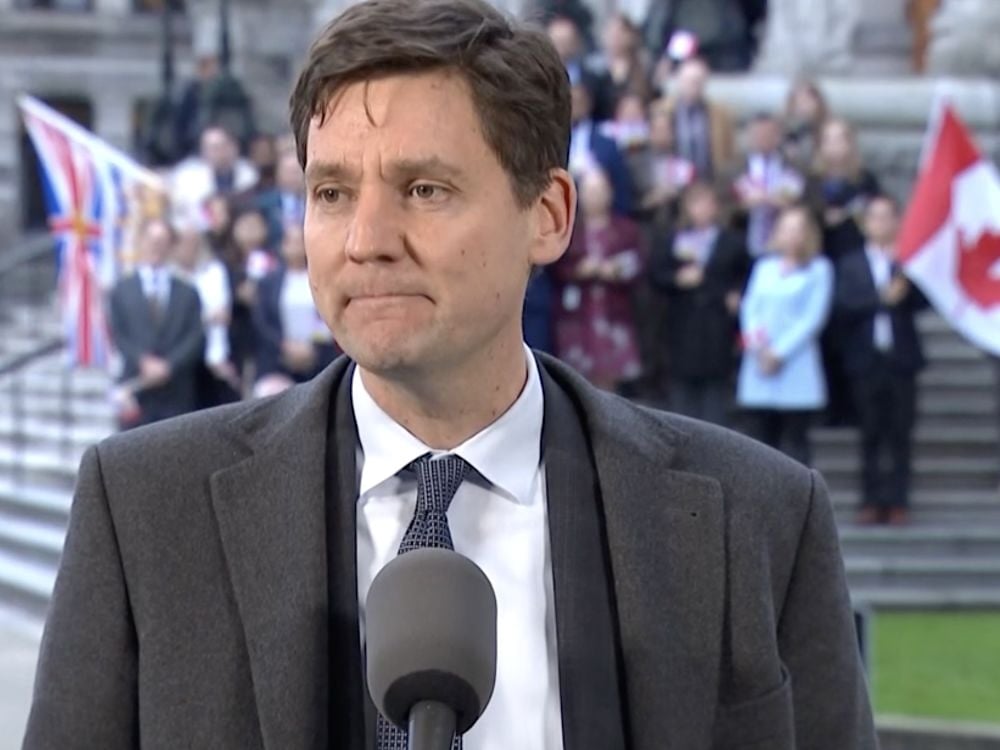
B.C. Premier David Eby defended his right to criticize court decisions despite organizations that represent lawyers calling his recent comments unfair and irresponsible.
“The idea that the premier should not comment, should not indicate any position on the court decisions, is patently absurd,” Eby said in an interview in his office. “I will continue to point out that I think the decisions are unhelpful.”
Earlier this month the B.C. Court of Appeal overturned a B.C. Supreme Court decision. The Appeal Court ruled that the province had incorporated the United Nations Declaration on the Rights of Indigenous Peoples, or UNDRIP, into its laws through the Declaration on the Rights of Indigenous Peoples Act and that the province’s mineral tenure system, which allows claims to be staked online, was inconsistent with UNDRIP.
The lower court had already found that the system breached the Crown’s duty to consult under the Canadian Constitution and needed to be modernized to allow for consultation with Indigenous nations.
The decision followed an August ruling in the B.C. Supreme Court that found the descendants of the Cowichan Nation have Aboriginal title to part of Tl’uqtinus, their summer fishing village on the south arm of the Fraser River, and have an Aboriginal right to fish for food in the area.
The judge in that case found that the Crown had unjustifiably infringed on the Cowichan Nation’s Aboriginal title to about 780 acres and declared the federal government and the City of Richmond’s titles to some of the lands defective and invalid.
The ruling left other private property intact but said, “B.C. has a duty to negotiate with the Cowichan to reconcile their Aboriginal title with the private fee simple interests in a manner that accords with the honour of the Crown.”
In a speech to the BC Chamber of Commerce last week, Eby panned both decisions.
In the current economic climate where work is being done with First Nations to move various projects forward, “such dramatic overreaching and unhelpful court decisions as we have seen over the last couple months is deeply troubling.”
Those comments drew statements criticizing Eby, a lawyer and former attorney general, from several groups that either represent lawyers or advocate on legal issues.
The Trial Lawyers Association of British Columbia said Eby was “undermining public confidence in the justice system” and his comments “reflect a troubling national trend in which politicians use the courts as punching bags to score political points.”
It quoted association president Rebecca McConchie reminding politicians that the courts are part of a system of checks and balances. “The job of the court is not to be helpful to the government. It is to interpret and apply the law without fear or favour.”
The Court of Appeal decision just says the government has to comply with legislation that Eby’s government chose to enact in 2019, the statement said.
“While the Premier is entitled to disagree with a court ruling — and to appeal it — he is not entitled to use his platform to attack judges who cannot respond publicly.”
By denigrating judges the premier “is eroding public trust in the administration of justice,” it added. “He is actively undermining the rule of law that we all depend on to protect our fundamental freedoms, solve disputes, and hold government to account.”
The president of the Canadian Bar Association’s B.C. branch, Patricia Blair, wrote Eby a letter calling the comments inappropriate and expressing serious concern.
“Public criticism of court decisions by elected officials undermines the rule of law and threatens the independence of the judiciary,” she wrote. “As you know, courts make independent and impartial decisions based solely on the law and the evidence presented to them, not the interests of any particular government, business, community or individual.”
Any party that thinks a court has made an error in law or fact, or both, may appeal, she reminded him. “It’s hard to overstate the damage that can be done by exerting political pressure on judges to align their rulings with the government of the day. We strongly object to comments that compromise the separation of powers between the judiciary and the executive and erode public confidence in the justice system.”
Blair urged Eby to be more “responsible” in his public comments. “Judicial independence is crucial to safeguard legal rights, making sure that individuals and communities without political influence are treated fairly and are protected from government overreach or the sway of popular opinion.”
The national Canadian Bar Association put out a statement from president Bianca Kratt saying it’s important for politicians to respect the line between legitimate criticism of a particular court decision and making unfounded attacks on the courts themselves.
“Every government, federal and provincial, regardless of political affiliation, eventually faces a court ruling it dislikes,” she said. “That's because, under our Constitution, courts and elected lawmakers have distinct and complementary roles. When they occasionally come into tension, each has a responsibility to avoid statements or actions that damage the other's legitimacy.”
It’s the court’s role to make sure constitutional rights are upheld and the laws are followed, including by the government, she added. “In a free society, it is emphatically not the courts' role to simply get out of the government's way.”
And the BC Civil Liberties Association, an organization Eby was executive director of before entering politics, accused him of backtracking on the Declaration on the Rights of Indigenous Peoples Act, or DRIPA, legislation his government had said would provide a framework for reconciliation.
“As a former civil liberties and human rights lawyer, the premier should know better than to unfairly criticize the courts for simply applying the legislation his party designed,” it quoted staff counsel Veronica Martisius saying. Along with the First Nations Leadership Council, the BC Civil Liberties Association intervened in the mineral claim staking case.
Eby said it’s unreasonable to expect premiers to refrain from commenting on court decisions and that he rejects the argument that he has undermined the courts or public respect for them.
“The irony is that I feel that critique itself undermines the courts,” he said, “because it suggests that the courts are so weak and so easily influenced that me saying I don't like a particular decision, or I would have preferred that the court decided in a different direction, would cause judges, who are famously strong-willed in British Columbia, to change their interpretation of the law. I think that idea itself is also silly.”
Judges are strong and will make their decisions according to the law, Eby added, and as premier he has a role communicating to British Columbians the government’s position on decisions the courts make. “That's the way the system needs to work, and I don't think they should be attempting to silence politicians on the decisions of the court.”
Trevor Halford, the interim leader of the Conservative Party of BC, said Eby is right that the court decisions are a problem, but he has only himself to blame.
“I think ‘unhelpful’ is the understatement of the world,” said Halford. “This is a premier that stood in this house in 2019 as the attorney general and told British Columbians that the legislation in terms of DRIPA would not result in some of the issues that we're seeing today. That hasn't played out that way.”
To fix the mess the government made, Eby needs to recall the legislature and repeal DRIPA, Halford said. “He's refused to do that. His answer is that he's going to go away and find some amendments that may or may not work.”
The world is watching to see what B.C. will do, he continued. “I think it's been a complete abdication of leadership by Premier Eby [not] to rise to the moment and actually say, ‘We got this wrong.’ It is never the wrong time to do the right thing, but he continues to hide on this issue.” ![[Tyee]](/design-article.thetyee.ca/ui/img/yellowblob.png)
Read more: Indigenous, Rights + Justice, BC Politics









Notice about commenting changes
The Tyee’s commenting system will be moving to a new platform on Nov. 12. If you’re already a Tyee commenter you must register with the new system on or after Nov. 12 with your preferred username.More information can be found here.