


 SHARE:
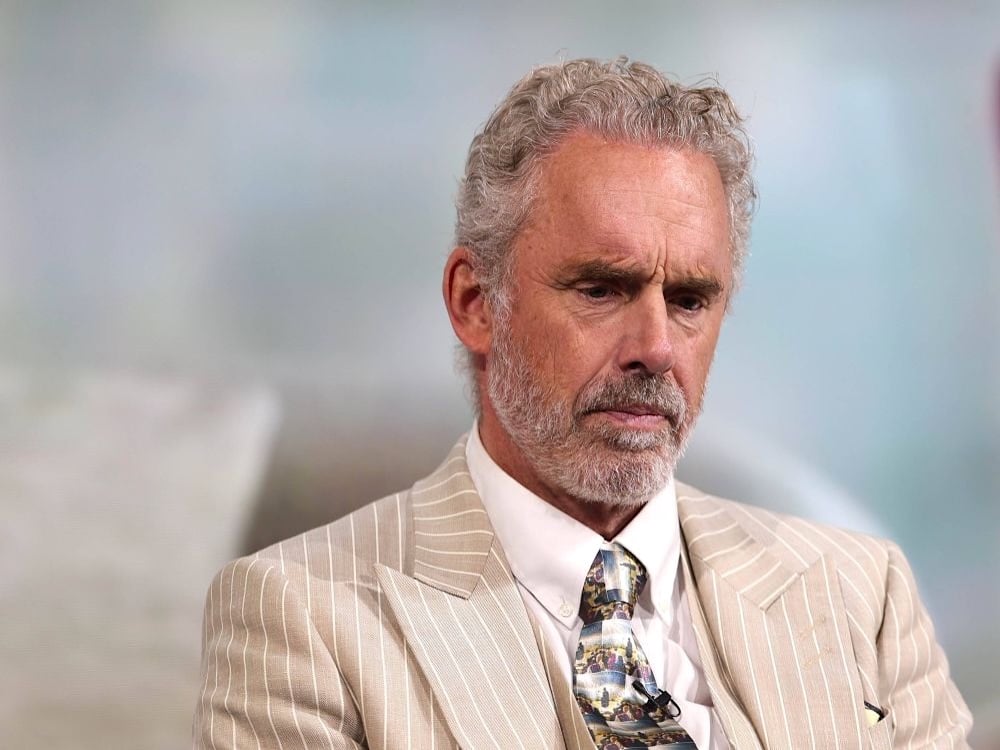
Jordan Peterson, the popular and polarizing psychologist, is held in high esteem by Alberta Premier Danielle Smith, who has twice appeared on Peterson’s podcast, which draws millions of listeners worldwide.
A Tyee investigation has found that Smith’s admiration for Peterson went well beyond her affinity for him as a fellow conservative culture warrior.
Documents obtained through freedom of information request show that Smith, and her chief of staff, Rob Anderson, directly intervened with Alberta’s Advanced Education Ministry in an attempt to help Peterson’s higher-education business venture.
On Aug. 1, 2024, Smith met with Peterson “to discuss how his organization can work with the province to have their online training platform accredited.”
Those discussions by Anderson and ministry officials continued into the summer of 2025 and would eventually include changing the law, if necessary, to allow the accreditation.
The “organization” is the Peterson Academy, an online school officially launched, the documents state, on Aug. 21, 2024, three weeks after Peterson’s meeting with Smith.
Peterson markets his academy as being free of “idiot ideological nonsense,” a counter to the “woke” ideology that he claims has polluted mainstream universities.
Its initial launch offered 18 on-demand video courses. It now features more than 72 eight-hour courses with four new courses added each month.
Peterson has said he wants to make quality higher education accessible to everyone at a reasonable cost. According to the academy’s website, nearly 64,000 students are enrolled, paying an annual fee of US$399, or about C$560.
If every student had registered in the same month, that would generate about C$35.8 million in yearly revenue.
“These lectures are so good that it physically, psychologically and spiritually hurts to press pause,” student Ryan Limond said in a review published on the academy’s website.
The courses — everything from “How to Plan Your Life” to Nietzschean philosophy to “Brain Metabolism and Mental Health” — are taught by Peterson himself and a range of academics, including many from prestigious universities whose lectures hew to mainstream pedagogy.
Of the 39 instructors listed on the academy’s website, only two are women.
Some of the courses challenge the widely accepted science of climate change and vaccines.
Others are critical of progressive narratives, especially in relation to postmodernism and gender.
“Many of these instructors seem to have a very particular alt view that supports a Peterson perspective,” said University of Alberta health and law professor Tim Caulfield, an expert on misinformation.
“I would call it problematic but Smith would likely say it is a counter to the current bias in academia, which is clearly a false spin.”
Caulfield notes that some of the instructors are more akin to influencers, promoting keto diets and skepticism of vaccinations and insulin.
One chairs the Ayn Rand Institute. Rand is an icon of the right, lionized for her promotion of rugged individualism and anti-collectivism, major themes in Peterson’s own public credo and teachings.
“I find this kind of movement scary,” Caulfield said. “It is a way to further erode and bias our knowledge base.
“It is ironic that those on the right complain — without good evidence — about bias in media and academia, and then push something like this that is clearly a ‘This is my perspective’ approach.”
Although heavily redacted, the documents reveal that after Peterson’s initial Aug. 1, 2024, meeting with Smith, her government expedited work on determining whether there was a path to accreditation for his academy.
What flowed from Peterson’s visit with minister
On Sept. 3, 2024, Peterson, accompanied by his daughter and son-in-law, had an online meeting with then-advanced education minister Rajan Sawhney.
“(Advanced Education) met with Peterson Academy representatives to outline pathways by which the academy could offer post-secondary programming in Alberta, and the estimated timeline associated with each,” a briefing note said.
“Also discussed was the academy’s projected timeline for developing course content.”
By Oct. 8, 2024, ministry staff had already generated an evaluation of how it could accredit the Peterson Academy.
A senior ministry official in charge of program innovation and digital transformation produced a slide show entitled “Pathways to Offering Post-Secondary Programming in Alberta.”
Smith’s chief of staff, Rob Anderson, a lawyer, also was scheduled to meet with Sawhney’s chief of staff about the accreditation, and later with Myles McDougall, who succeeded Sawhney as advanced education minister.
The documents reveal the ministry even considered changing the law to allow the accreditation.

Peterson left Canada for the United States in December 2024, citing professional and personal reasons. According to news reports, he now lives in Arizona near his daughter Mikhaila Peterson Fuller, who is the CEO of the Peterson Academy. His son-in-law Jordan Fuller is chief operating officer.
The ministry officials noted that the Peterson Academy “has no physical presence in Alberta” and that “degree programs that are offered fully online and do not have an on-the-ground component (e.g. in-person recruiters, supervised practicum) in Alberta do not require approval.”
Another memo noted that “under the Post Secondary Learning Act (PSLA) there is currently no authority for ministerial approval of fully online programs offered by non-resident institutions.”
A presentation slide generically dated January 2025 is entitled “Proposed Legislative Changes to Recognize Peterson Academy.” All eight pages of the proposed changes were redacted.
As recently as March 4 the ministry was still considering the “Peterson Academy Proposed Degree Program.”
And a briefing note shows McDougall and Anderson were to meet on June 26 to discuss “accrediting online programs for transferability in Alberta.”
Smith, Anderson, Sawhney, McDougall and Peterson did not respond to interview requests from The Tyee. The documents show no future action on the Peterson Academy accreditation proposal after June.
After publication of this story, Advanced Education Minister Myles McDougall’s press secretary provided a statement that said the ministry has not received a formal proposal for accreditation from the Peterson Academy.
The statement did not rule out the possibility that the academy could receive accreditation.
“As more Alberta students choose to learn online, we have a responsibility to ensure high-quality programs are recognized and that we continue adapting to the modern learning environment.”
An academy with no actual presence in Alberta
Paul Gooch wonders how the ministry could accredit the Peterson Academy, which apparently has no infrastructure in Alberta and no formalized governance policies.
Gooch, a philosophy professor, is former president of Victoria University, a federated university of the University of Toronto, and former chair of the Ontario Universities Council on Quality Assurance, an independent body that oversees academic quality for Ontario's public universities.
He also served for 10 years on the Campus Alberta Quality Council, which among many roles also oversees academic quality for the province’s public universities.
Under Alberta’s Post-Secondary Learning Act, it is Campus Alberta — not politicians or ministry officials — that must approve all programs that are to be offered in the province.
Campus Alberta doesn’t provide the formal accreditation but rather provides the approval for accreditation after it sends in a team of external experts to review whether an institution has appropriate academic standards and governance policies, such as academic freedom and protection of students.
“The organization has to meet these standards in order to be recognized,” Gooch said.
At The Tyee’s request, Gooch reviewed the Peterson Academy website. He noted that many of the academics are from prestigious universities.
“So that is not the issue. It is whether they can assemble courses into a degree program, and for that you need an institution that has passed a certain level of maturity and tests, and they have policies for good governance.
“It is not about whether they are right-leaning or left-leaning. It is all about academic and institutional integrity, and the [Peterson] academy isn't a recognized institution, with policies about how students are treated or how many courses you need to get. It doesn’t have degrees.”
It is not known if Peterson approached Smith about accreditation or if Smith offered to help Peterson. But the public record shows the two share the same view that there is leftist bias in education at all levels, which may explain her attempt to help Peterson’s academy to gain accreditation.
Smith’s turn on Peterson’s podcast
Danielle Smith was sworn in as premier on Oct. 11, 2022, after winning the United Conservative Party leadership election. On Nov. 8, 2022, she won a byelection to gain a seat in the legislature.
Shortly after her election, she gave her first major interview as premier to Peterson.
In the Nov. 17, 2022, podcast, which has garnered more than 1.6 million YouTube views, Smith complained that “the conservative movement has pretty well ceded the ground on so many of the culture-shaping institutions” from kindergarten to Grade 12, and in universities.
There weren’t enough “conservative, libertarian-minded teachers” and it seemed only one type of research gets funded at universities, Smith told Peterson.
“So our universities I don't think are giving us the support that we need in the conservative and libertarian movement.”
If the UCP government changes the law specifically to allow the accreditation of the Peterson Academy, “it would not look good in the rest of the country,” Gooch said.
Why rigorous accreditation matters
The Council of Ministers of Education across the country long ago agreed on uniform degree level standards that every degree program in the country would meet, Gooch said.
“So that you could take a degree from Alberta, for example, and go to New Brunswick and do a graduate degree there based on your Alberta degree. But in every province, they go through a system of appraisal by academic experts.
“The government doesn't decide whether these degrees are worth it. They have councils with academic experts who render that judgment.
“So any government that would bypass that would find that the students from those programs wouldn't be accepted at other institutions,” Gooch said.
The Tyee asked University of Alberta political scientist Feodor Snagovsky how appropriate it was for the premier and her chief of staff to intervene with a ministry on behalf of an individual and his business.
“There is nothing illegal about it, as far as I know, but I would think it would be quite unusual on individual matters like this, for a premier to lobby on behalf of a specific person,” Snagovsky said, quickly adding that “lobbying is probably not the right term here.”
Lobbying normally refers to registered lobbyists acting for clients in an attempt to influence the government.
“In the common vernacular, it could be lobbying, but it is not legally considered lobbying.”
Such interventions by politicians and their staff are not good policy, he said, but “for as long as politics have gone on in democracies and non-democracies, people with more money, more connections to government, have had more influence.
“And that is discouraging for political scientists — that someone who has an in with the premier has more influence.”
If you have any information for this story, or information for another story, please contact Charles Rusnell in confidence via email. ![[Tyee]](/design-article.thetyee.ca/ui/img/yellowblob.png)








Notice about commenting changes
The Tyee’s commenting system will be moving to a new platform on Nov. 12. If you’re already a Tyee commenter you must register with the new system on or after Nov. 12 with your preferred username.More information can be found here.