


 SHARE:
Things are getting messy in the current round of contract negotiations for about 452,000 workers in B.C.’s public sector.
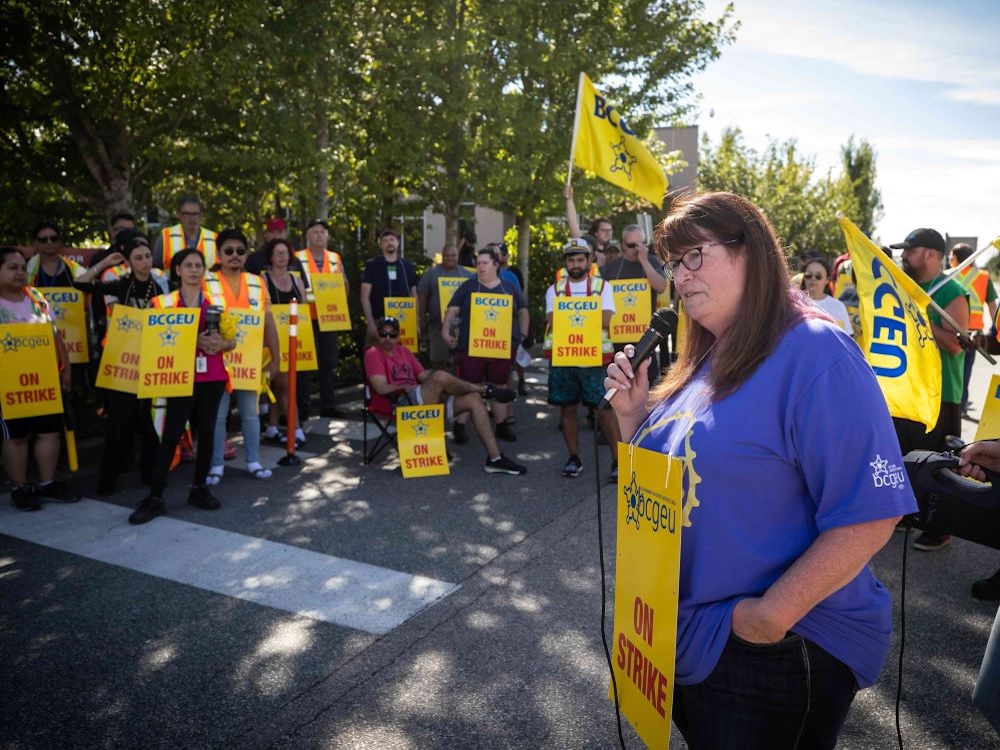
The BC General Employees’ Union, representing about 34,000 direct government employees, launched an offensive against the government Friday. Not only did the union announce that 93 per cent of members had voted yes to a strike, but it issued 72-hour strike notice. Meaning job action could start as early as today.
But the BCGEU’s threat was muted by the Hospital Employees’ Union, which on Thursday announced it had reached an agreement with the government on the key elements of a deal. The HEU, with twice as many members, appears to have accepted the basic contract framework the BCGEU is fighting.
Don’t expect a rousing round of “Solidarity Forever” to break out any time soon.
The HEU pact, which included agreements on pay increases, would be the basis for settling the rest of the outstanding contracts, the government said. Not just with the BCGEU, but with unions representing teachers, nurses and the rest.
Since at least 2010, governments have set out bargaining mandates to apply to all unions. The new framework announced Thursday is called the Balanced Measures Mandate.
Based on bargaining to date, the mandate will provide a 3.5 per cent increase over two years, plus measures to give an extra boost to lower-paid workers.
But the BCGEU is seeking more than double that — four per cent in the first year of a new contract and 4.2 per cent in the second — and is now locked into strike mode.
The BCGEU hoped to drive the push for a favourable mandate, as it did in 2022. The Shared Recovery Mandate included cost-of-living clauses and delivered 14 per cent increases over three years.
BCGEU president Paul Finch was irked with the HEU: “The agreement is below inflation and undermines the very fight that public service workers across B.C. are taking on together for fair wages and respect at the bargaining table.”
He’s right that the deal could provide increases below the inflation rate, which is running at 2.7 per cent so far this year. But the year-over-year rate for July was 1.7 per cent, suggesting consumer price index increases are slowing and making the framework more palatable.
The mandate also reflects the government’s tough financial situation. It’s forecasting a record $10.9-billion deficit this year and facing a tough job in reducing that in next year’s budget.
A one per cent increase in public sector wages costs about $530 million, according to the government, so the BCGEU’s proposal would add more than $2 billion to spending next year.
Collective bargaining is usually messy, and much more so when it involves multiple unions, public services and a government facing big deficits.
Things should get much messier now.
The other unions, like the BC Teachers’ Federation, have to decide if they’ll back the BCGEU’s push for wage increases above the inflation rate or accept the framework reached with the HEU.
And the BCGEU, having threatened strike action as early as today, has to decide if that’s still an effective strategy and assess members’ willingness to walk off the job. The union acknowledged the stress in a members’ bulletin. “We know this moment may feel scary and uncomfortable,” it said. “It may also feel exciting and overdue.”
And while the turnout and support for a strike mandate were strong, that doesn’t mean members are actually keen on walking off the job and losing pay. In its pre-vote materials the union said that “a strong ‘YES’ mandate is the best way to avoid a strike. It puts pressure on the employer to return to the table with a real offer.”
“This isn't a vote to walk out tomorrow,” the BCGEU told members as the vote began. “It's a vote to show we're serious.”
But now the members are facing the prospect of an immediate walkout and living on strike pay of $650 a week.
At least some of them. Workers doing jobs “necessary or essential to prevent immediate and serious danger to the health, safety or welfare of the residents of British Columbia” can’t strike.
In 2022, the BCGEU launched job action with a strike at four BC Liquor Distribution Branch wholesale and distribution centres. About 950 workers walked off the job, and the strike put pressure on government without hurting most members. Other options like overtime bans and rotating strikes are also available.
But the BCGEU likely expected to emerge from the strike vote leading the public sector bargaining effort. The hope was dashed by the HEU framework agreement, and job action is much riskier.
Expect a chaotic next few weeks in the push for new contracts. ![[Tyee]](/design-article.thetyee.ca/ui/img/yellowblob.png)
Read more: Labour + Industry







Tyee Commenting Guidelines
Comments that violate guidelines risk being deleted, and violations may result in a temporary or permanent user ban. Maintain the spirit of good conversation to stay in the discussion and be patient with moderators. Comments are reviewed regularly but not in real time.
Do:
Do not: