


 SHARE:
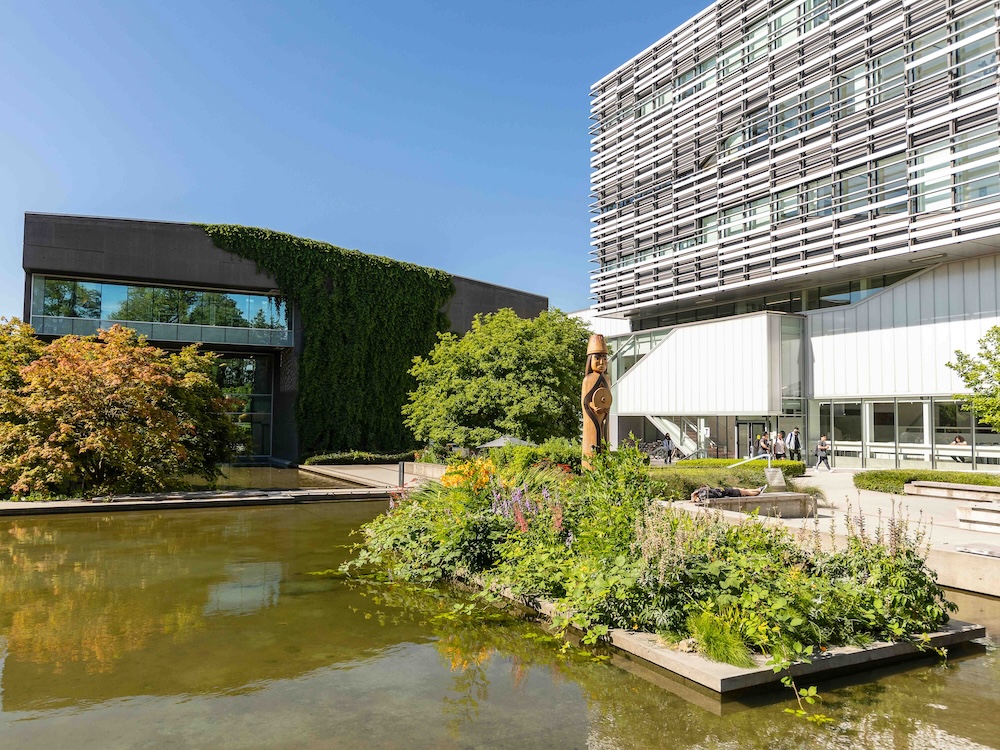
Despite multiple pledges and commitments to reduce greenhouse gas emissions, both Canada and British Columbia are set to blow through their 2030 emission reduction targets.
Perhaps they should be looking at what Langara College is doing, as the public college says it is on track to reach net-zero greenhouse gas emissions by 2030.
As detailed in its recently released “2024 Climate Change Accountability Report,” almost 97 per cent of Langara’s energy emissions are from campus buildings.
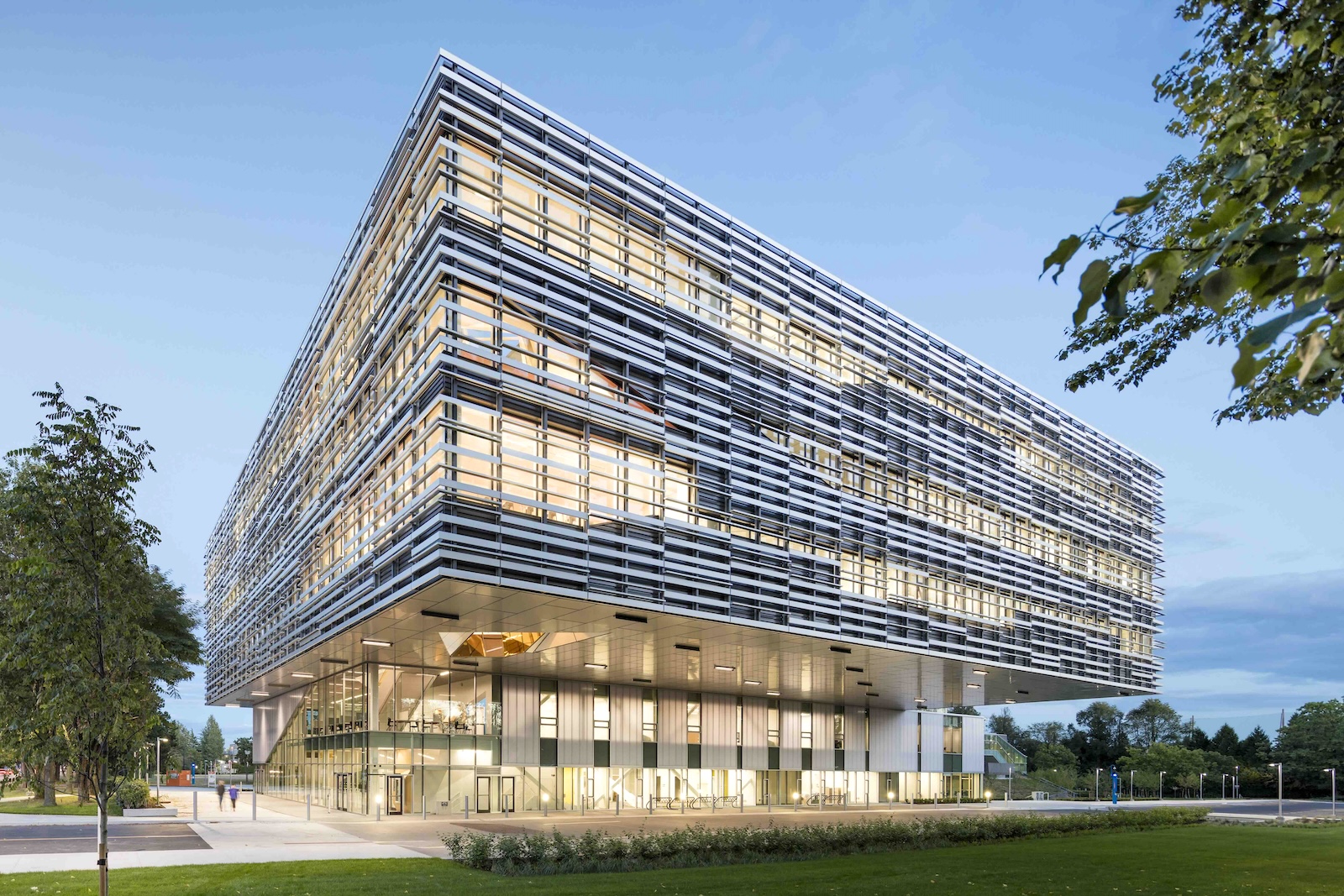
But thanks to more sustainable construction — four out of seven Langara buildings meet LEED Gold efficiency standards — and energy-saving retrofits to older buildings like rooftop solar panels, Langara reduced its building emissions by 60 per cent and its overall emissions by 41 per cent in 2024 compared with 2007 levels.
While Langara is required by the province to report its annual emissions and purchase carbon offsets from the province for energy used, the college’s overall sustainability focus comes down to dedicated leadership and staff, as well as government support from CleanBC, said Dwayne Doornbosch, Langara’s director of facilities.
It’s also connected to Langara’s relationship with the xʷməθkʷəy̓əm (Musqueam) First Nation, whose territory the campus sits on and who gifted the public college with the name snəw̓eyəɬ leləm̓, which means “house of teachings,” he added.
“The baseline of that is thinking about how we interact with our environment and how we are trying to be stewards of our land and the space that we’re living and working on,” said Doornbosch. He added that this thinking extends to considering the well-being of the students and staff who work on campus.
But while Langara is reaching new heights with its climate initiatives, it is not all good news at the college in Vancouver.
Layoffs, lost work
Last fall the Langara Faculty Association sounded the alarm on layoffs and lost work hours, particularly for temporary faculty members, due to the federal government-imposed cap on international students.
Recent further restrictions on what education programs make international students eligible for post-work permits have also contributed to the decline in international student enrolment.
Last fall the faculty association estimated 27 temporary faculty members had lost work in the fall semester but was still waiting for official numbers from the college.
Another 31 administrator positions were reportedly eliminated earlier this spring, although nine of those positions were vacant at the time.
As well, a proposed new strategic plan for Langara was making the rounds, reorganizing the college’s 40 academic departments into six new academic centres, leading to concerns that more faculty cuts were coming.
Since then the association reported up to 200 faculty will have lost work hours by the summer semester, while 21 permanent faculty members were laid off.
Since September 2023, there has been a reduction of 180 dues-paying faculty association members, from 841 to 683 members as of this past May.
When asked by The Tyee, a Langara spokesperson neither confirmed nor denied these numbers.
“We continue to work closely with our deans to assess impacts and with the Langara Faculty Association to keep them informed,” a college spokesperson told The Tyee via email.
“Any loss of work is felt deeply within our community, and we are navigating these challenges with care.”
Langara reported a $4-million budget deficit in the 2024-25 year, which administrators attributed largely to a reduction in international student tuition revenue due to the federal restrictions. They are anticipating another $13-million budget deficit next year because of the loss of international student revenue.
“Sustainability isn’t just about the environment and climate; it’s also about people and it’s also about labour,” said Pauline Greaves Aylward, Langara Faculty Association president, in a recent interview with The Tyee.
“And if we don’t have those things, then it doesn’t matter whether we have an energy-efficient building if you don’t have anybody in them.”

Getting out of hot(ter) water
Langara isn’t just tooting its own horn in the realm of sustainability. In 2022, the public college was rated 10th in the world in building sustainability out of more than 800 competing post-secondary institutions under the Association for the Advancement of Sustainability in Higher Education’s Sustainable Campus Index.
“Up until recently, we’ve never had any dedicated sustainability staff on our team,” Doornbosch said. He noted that prior to hiring a director of energy and sustainability last December, many Langara staffers had been running environmental sustainability projects off the sides of their desks.
“We’ve had a lot of people that were really passionate about doing better and trying to push the boundaries and see what we could do to create a good environment and be very sustainable for our campus.”
While sustainability was a focus of many staff for years, it took the 2022 Sustainable Campus Index rankings for Langara to formally recognize what work was happening across the institution, Doornbosch said, “out of pure passion.”
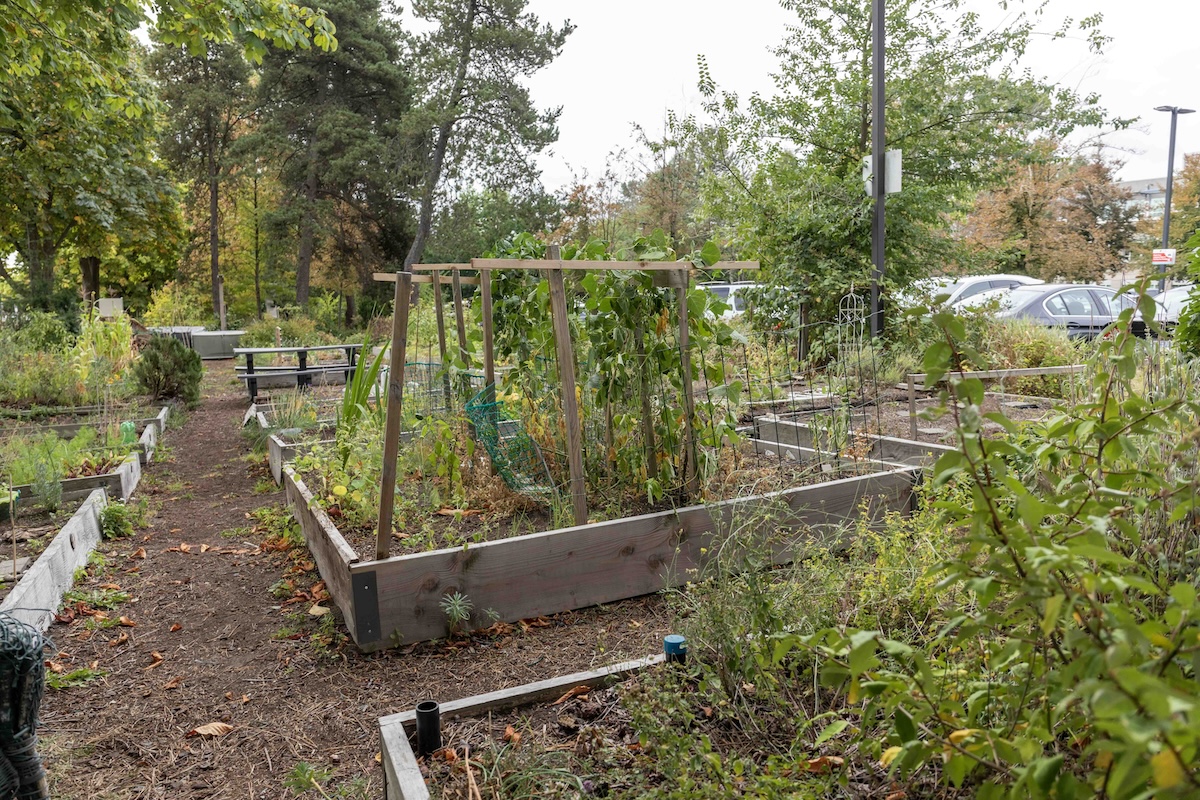
This includes guerrilla-gardening biology instructor Mario Moniz de Sa, who was cultivating campus gardens without any institutional support.
“I found out he was doing this great work and started interacting with him and my grounds team to see how we could build a partnership,” Doornbosch said.
“Over the years we’ve fixed up an old, dilapidated greenhouse on the roof of one of our buildings that was no longer being used. We turned it over to him and some of the other biologists to start growing plants.”
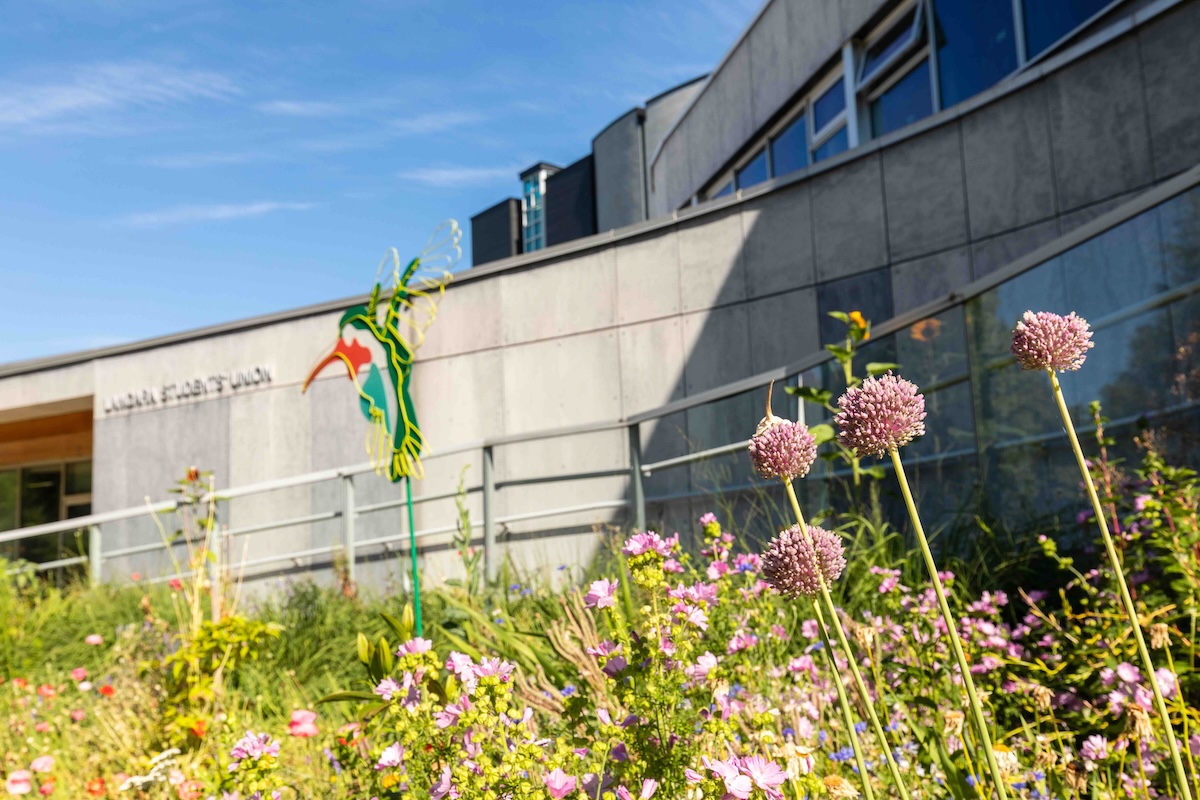
Along with another Langara biology instructor, botanist Ji Yong Yang, Moniz de Sa and students began planting and researching pollinator gardens on campus.
It’s all part of Langara’s “living lab,” or “using your built environment to help interact with our student body and educate them based on real-world problems,” Doornbosch said, adding the living lab concept is common in post-secondary institutions today.
“Recently there was a project that was student-led energy forecasting using AI,” Doornbosch said. There was also data from the campus’s mechanical systems’ building management system, including carbon dioxide and lighting sensors, and energy-use monitoring.
“Working with our students in our data analytics program, we were able to take some of the big data and use AI in looking at energy and forecasting, and diving into ‘How can we possibly make better decisions based on past trends of our mechanical systems?’”
Other sustainability changes on campus include switching to reusable, returnable plastic food containers in food services, and procuring 31 per cent of food sold from local producers.
The campus’s new central heating plant, providing the heating and cooling for all seven campus buildings, finished in 2023. Twenty per cent of the heating and cooling load is provided by 160 geothermal wells on campus, while the rest is from gas-fed boilers.
The college plans to do the expensive transition to electric boilers after further energy-use reductions are achieved, Doornbosch said. One of those reduction methods is simply reducing the temperature of the campus’s hot water.
“By reducing that overall temperature load, you can really reduce a certain amount of energy,” Doornbosch said.
The campus is sustainable. What about the work of its staff?
Some of Langara’s initiatives involve not just saving energy, but saving money.
The COVID-19 pandemic meant a reduction in printing costs as the time people spent away from campus resulted in sharing information electronically instead of on paper, a habit that people have kept up.
Since then, implementation of a real-time paper-use tracker showing where printing is happening on campus, and changing the default setting for all campus printers and photocopiers for double-sided printing in black and white, also resulted in an overall paper consumption reduction of 78 per cent since 2016.
Langara’s campus now boasts 46 electric vehicle charging stations, which Doornbosch estimates will provide the college up to $100,000 in carbon credits annually. The revenue will go towards further building infrastructure costs.
The college’s sustainability achievements and greenhouse gas emission reductions should be celebrated, said the Langara Faculty Association’s Greaves Aylward.
“The piece that’s missing, and always seems to be missing, is when we talk about the human factor, that fact of people and faculty,” she said.
“How best can we deal with the community, with our students and the college community generally, by supporting and sustaining our members? Especially those that come in with expertise and have contributed to the development of the college for years and years.”
The average annual full-time international student tuition at Langara for first- and second-year students is $19,910.70, compared with $3,359.10 for domestic students.
And with enrolment for the spring 2025 term showing almost 1,300 fewer international students compared with spring 2024, the cuts continue. Those are playing out in the form of faculty, staff and administration layoffs.
There is also a proposed total reorganization of the college’s 150-plus academic departments and program offerings into six centres of learning, according to a three-year plan, “Future Focused: Strategic Framework 2025-2028.”
Greaves is still waiting for official numbers from the college on how many people have lost work, but she said an unknown number of layoff notices for the spring 2026 semester have already been issued.
“We’ve been told that they were told to cut, I believe, five per cent across the board, and that some individuals were laid off,” she said.
“The only ones that we’re aware of are the CUPE members have lost jobs, and faculty.”
The Tyee reached out to Canadian Union of Public Employees Local 15 representing Langara staff to ask how many of their members have received layoff notices, but did not receive a response.
In an emailed statement to The Tyee, a Langara spokesperson did not comment on Greaves’ statement about a five per cent cut.
But they did confirm the college’s board of governors voted to adopt their new strategic framework late last month.
“The framework does include strategic repositioning of Langara’s academic programs, with the intent to strengthen Langara’s ability to meet the needs of students and communities in a rapidly changing environment,” the emailed statement reads.
“Implementation will proceed thoughtfully, with consultation across our faculty, staff, and community.”
As facilities director, Doornbosch isn’t in a position to speak to faculty layoffs or the new strategic plan at Langara.
But he did say a reduction in student enrolment, faculty or staff numbers isn’t having a big impact on their sustainability goals.
“We will still be operating the buildings in the same way,” he said.
“Although class sizes might be smaller or things of that nature, we will still have the same required use of the buildings themselves.” ![[Tyee]](/design-article.thetyee.ca/ui/img/yellowblob.png)
Read more: Education, Labour + Industry, Environment






Tyee Commenting Guidelines
Please note that email notifications for replies are not currently working due to a software issue which may be resolved in a future update.
Comments that violate guidelines risk being deleted, and violations may result in a temporary or permanent user ban. Maintain the spirit of good conversation to stay in the discussion and be patient with moderators. Comments are reviewed regularly but not in real time.
Do:
Do not: