


 SHARE:
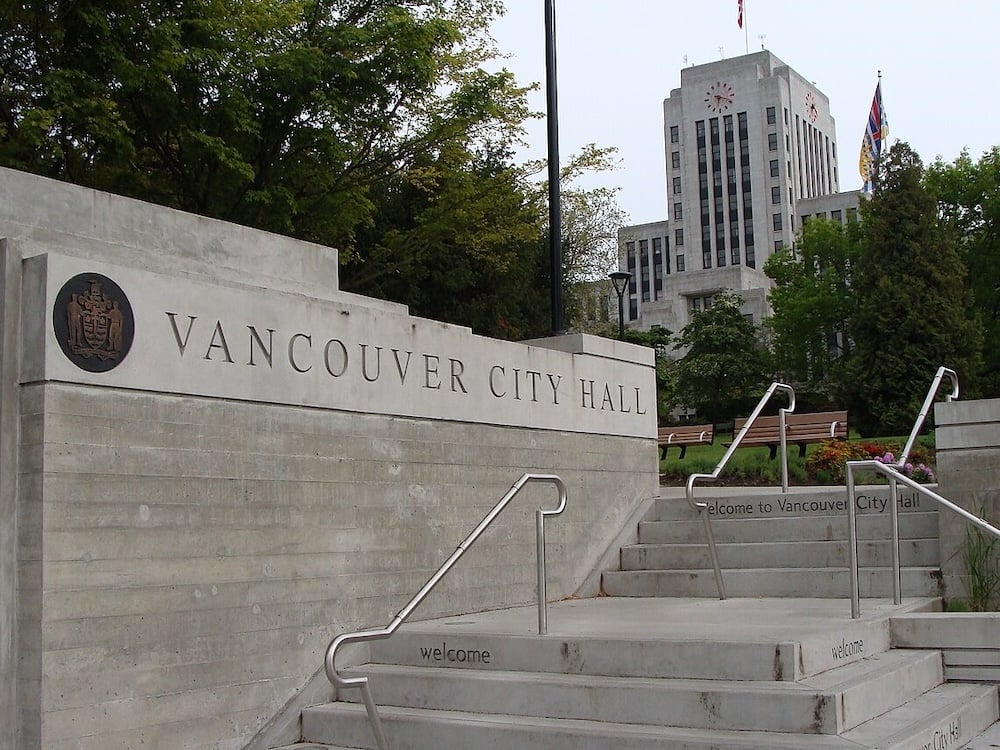
For a decade, Vancouver city managers knew an employee in the building inspection department was part owner of a private company that did work frequently checked by city inspectors.
That employee and the city staff he managed often inspected the company’s work, and a conflict-of-interest investigation found the employee, “in their capacity as a city inspector, personally made decisions about the private sector business they owned in four instances.” None of those decisions were “unfavourable” to the business, the report said.
The employee also said he’d been offered, but refused, a bribe from another contractor. An analysis by the city’s Office of the Auditor General, or OAG, found the contractor had appeared to receive preferential treatment from the employee.
The auditor general also discovered broader issues.
“We found that employees say bribes and hospitality are routinely offered to inspectors,” audit principal Hamish Flanagan told Vancouver city councillors during a presentation Thursday.
The investigation was sparked by a whistleblower on city staff, and the allegations were substantiated by the auditor general investigation. The independent office was created by Vancouver city council after a motion introduced by then-councillor Colleen Hardwick in 2020.
The OAG has referred further investigation of bribery allegations to the Vancouver Police Department.
Auditor general Mike Macdonell has previously released reports advising how the park board can improve its revenue management and identifying gaps in the VPD’s “enterprise risk management.”
But Macdonell said this investigation stands out, warranting an interim report to council along with recommendations on tightening up rules and processes at the development, buildings and licensing department.
Prior to the creation of the OAG, Macdonell said, the city’s human resources department would have handled the city’s existing whistleblower policy and this particular complaint. According to city communications staff, the employee no longer works at the city.
On July 3, city councillors who sit on the auditor general committee unanimously approved the OAG’s recommendations, including creating better documentation to ensure the same standards are being followed, tighter rules around when in-person inspections are required, regular audits of building inspections, and requiring regular conflict-of-interest declarations from staff.
This isn’t the first time in recent B.C. history that a conflict of interest has gone unchecked for many years: in 2022, The Tyee reported that the former CEO of BC Housing had directed government funds to his wife’s company for over a decade, in violation of rules set up to manage that conflict of interest. In that situation, some employees who spoke up about the rule breaking said they had been pushed out of the agency, a dynamic that created a culture of silence.
Let’s take a closer look at what happened inside the city department that ensures buildings are safe, and what we can learn from this case and how other cities have dealt with conflict of interest and bribery allegations.
Why did this conflict-of-interest problem continue for so many years?
Concerns about the employee were first raised in 2015 and 2016 but “not formally documented,” according to a statement from the City of Vancouver.
“In one case, the nature of the work was assessed by the individual’s manager as not presenting a significant risk, and in the other, additional review measures were implemented to maintain integrity in the process,” city communications staff wrote.
The city also says its current code-of-conduct policy requires that potential conflicts with outside employment must be identified in writing and approved, a rule that wasn’t in place in 2015 and 2016 when the concerns were first brought forward.
According to the OAG report, “even when City management were made aware of instances where the employee was found to have personally made favourable decisions about the [company he part owned] and had knowledge that some degree of conflict did exist, steps were not taken at the time or subsequently to document that conflict or mitigate it to prevent a reoccurrence.
“This contributed to the conflict continuing for many years.”
According to the city and Macdonell, the allegations dealt with in the OAG report were reported to city leadership in January 2024 and were then sent to the OAG for investigation.
What are the allegations?
The OAG investigated five allegations, but not all of the allegations were substantiated.
The auditors investigated allegations that the employee had a conflict of interest when conducting inspections for the city; had given certain contractors preferential treatment; had taken bribes in return for favourable inspections; had worn city-branded clothing while working in a private capacity; and had been made aware of other employees giving preferential treatment to some contractors but did nothing.
OAG staff confirmed that the employee had a conflict of interest that was both “undocumented and unmitigated”: the employee had “retained a significant ownership interest” in a private business that does work that is inspected by city building inspectors. Investigators found that the employee had been involved in renewing the company’s business licence with the city and had made decisions about the company in their role as a city building inspector on at least four occasions.
While the city updated its conflict-of-interest policy in 2018, the OAG found the employee did not comply with that new policy.
The OAG says it was able to partially substantiate the allegations that some private sector contractors were given preferential treatment by the employee. The employee had the second-highest number of inspections for one particular contractor but never made an unfavourable decision. Meanwhile, “other inspectors had made unfavourable decisions regularly.”
While the employee explained he’d made an extra effort to support that particular contractor, the OAG says its data analysis, research and the complaint “all infer serious concerns that preferential treatment occurred.”
The OAG wasn’t able to substantiate the allegation that the employee had taken a bribe from the same contractor that the whistleblower alleged had been given preferential treatment. The employee said he’d been offered a bribe from that contractor but hadn’t accepted it and had used it as a chance to train his staff on improper offers of bribes or hospitality.
The OAG says it wasn’t able to find any evidence that a bribe was accepted but has referred the information to the Vancouver Police Department.
The OAG wasn’t able to substantiate the allegation that the employee had worn city-branded clothing while working for a private company. Instead, the OAG says, the employee had been wearing his city uniform at a meeting with the same private contractor he’s been accused of giving preferential treatment to. At that meeting, the contractor said the employee worked for them rather than the city. According to the OAG’s report, the employee then asserted he was at the meeting in his role as a city employee.
Finally, the OAG says it was not able to substantiate the allegation that another city employee had also given preferential treatment to a private contractor.
Why does this matter?
The work that building inspectors do is vital to make sure buildings are safe, but it’s a job that’s vulnerable to corruption.
In 2024, two New York City Fire Department chiefs were charged with bribery after they allegedly started a fire safety company that took fees from businesses in return for speeding up inspections. In 2015, over a dozen New York city employees were charged in a widespread bribery prosecution that alleged building inspectors took bribes from landlords and property managers to cover up unsafe building conditions.
Macdonell said his team didn’t find any evidence that safety has been compromised, but he’s still concerned by what he heard from city management.
“We were told by management that when the conflict was declared or discovered that re-inspections were done, but we couldn't find any evidence of that,” he said, clarifying that city staff had apparently not documented or kept the documentation that re-inspections had been completed.
“And I really took notice of that. That's a concern, that there's no record.”
Macdonell explained that dynamic further to city councillors during the July 3 committee meeting.
“There were specifically four inspections that were conducted by the individual in question that presented a conflict, insofar as the individual had a business interest and were essentially inspecting their own work,” he said.
Macdonell said that not only is there no record of the city’s re-inspections, but “the individual in question was still the inspector of record, and then it reoccurred three years subsequent to those events, suggesting whatever precautions may have been agreed to weren't actually working.”
Even if safety hasn’t been compromised, Macdonell said the public’s trust in the city’s ability to regulate building construction will be shaken if conflict-of-interest problems are not addressed.
Because of privacy laws, Macdonell’s office cannot reveal the name of the city employee, the private company he part owns, the contractor he’s alleged to have given preferential treatment to, or any of the buildings the city claims were re-inspected after the concerns came to light.
That means city residents and commercial tenants will continue to be in the dark when it comes to knowing whether they may have been affected. ![[Tyee]](/design-article.thetyee.ca/ui/img/yellowblob.png)
Read more: Municipal Politics











Tyee Commenting Guidelines
Please note that email notifications for replies are not currently working due to a software issue which may be resolved in a future update.
Comments that violate guidelines risk being deleted, and violations may result in a temporary or permanent user ban. Maintain the spirit of good conversation to stay in the discussion and be patient with moderators. Comments are reviewed regularly but not in real time.
Do:
Do not: