

 SHARE:
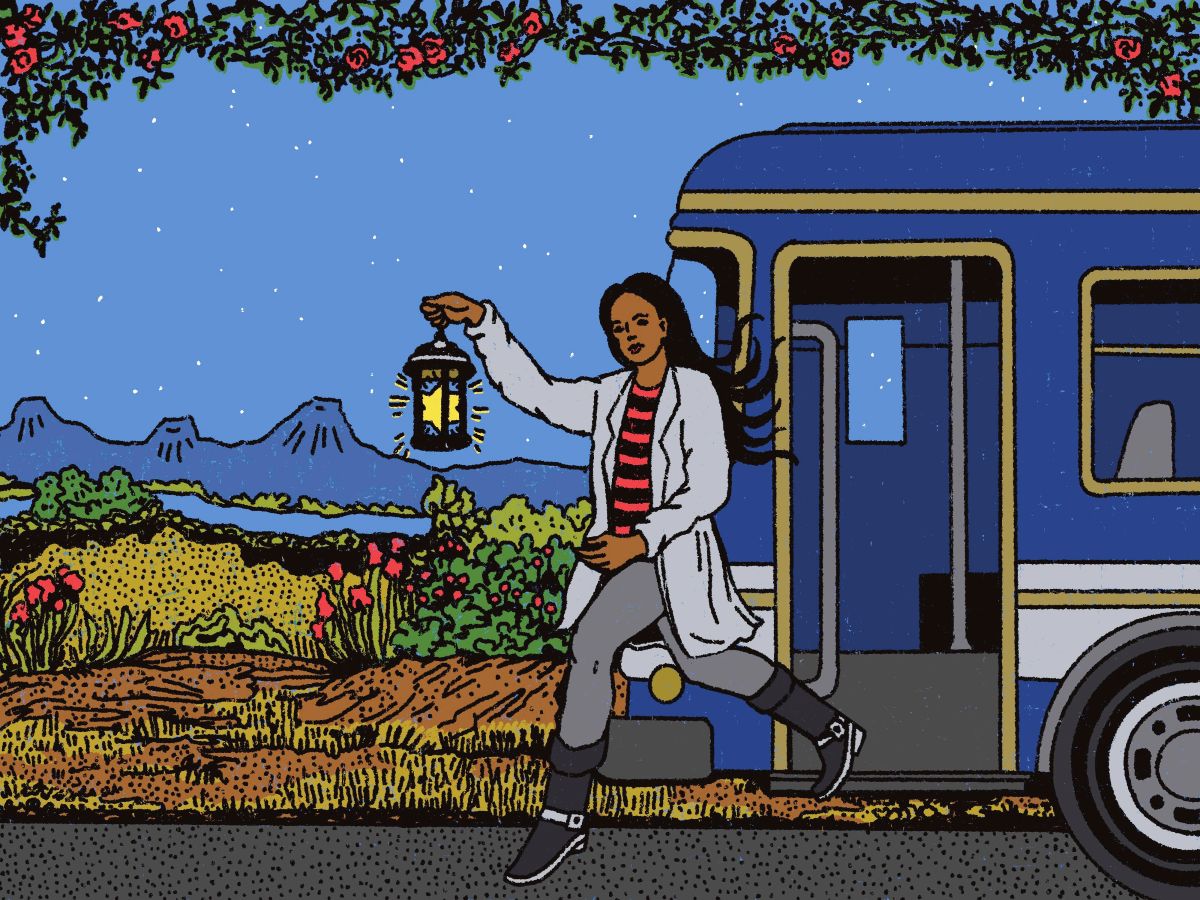
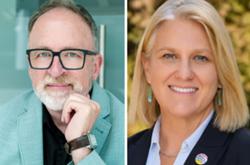
Like many stories of those who feel called by a higher power, Bruce Grierson’s begins with a voice from above.
It was a Sunday in 2010, and, as usual, Grierson and his wife had been dropping off their children for the youth program at the North Shore Unitarian Church in West Vancouver. This time, though, they followed a voice upstairs to the main hall and found themselves, as Grierson would later say, “beguiled” by the minister’s service. “We decided to stay.”
Grierson is a journalist and writer. Three years earlier, he had published U-Turn, a book about lives redirected by a single moment. It opens with the story of his grandfather, then an atheist university student in Halifax, who attended a student missionary movement event on campus as a cynic. But when the speaker asked for volunteers to work overseas, he felt compelled to go to the stage. He became a pioneering medical missionary for the Presbyterian Church — his life altered in an instant.
Grierson’s own decision to stay that Sunday seemed to be answering the same call. He was initially hooked by the intellectual, rather than pious, approach of the Unitarians’ psychiatrist turned minister. As he and his wife came to know other members of the flock, they invested emotionally. Founded in the 1960s, the church maintains the spirit of its beginnings. Many early members were hippies, Grierson says. “All the peace, love and understanding stuff — that’s the bones of it.”
The minister who brought them into the fold retired, however, and his replacement didn’t mesh with the congregation. In 2020, when the church found itself without a parson, Grierson and several others stepped in to lead services. True to its unconventional roots, the congregation ultimately chose not one leader, but five. Today, Grierson takes the pulpit about every third sermon, making him something of a church leader — a U-turn, or perhaps a homecoming. He’s known for smart Sunday sermons that are more like cultural essays than traditional preaching.
When I found out about the unusual congregation on the North Shore, I needed to see it for myself. I am, after all, another non-religious person in search of a spiritual home.
A spiritual free trial
More and more Canadians have strained relationships with religious institutions, whether through general distrust or bad personal experiences. According to the most recent data from Statistics Canada, collected in 2021, 35 per cent of Canadians have no religion, an increase of six per cent from a decade earlier. The drift away from temples of worship has been significant enough that, beginning in 2026, the national census will track religious affiliation every five years instead of once a decade.
Though the number reporting their religion as “none” is rising, an Angus Reid survey in March 2025 found that people 18 to 34 years old are attending religious services more frequently than other age groups. Perhaps correspondingly, Statistics Canada found that people 15 to 35 are the loneliest age cohorts in the country.
Growing up, I would stand with my eyes closed in front of my mom’s puja as she prayed in Hindi, which I don’t speak, to Hindu gods I can’t name. A puja, a Hindu altar, is traditionally a room, but in my family home it’s a kitchen cupboard with a brown door, above the one where we keep potato chips and beside the shelf that holds mugs and a kettle. As I stood there, I would imagine who might be listening to my mom’s prayers. I couldn’t picture the Hindu gods — colourful deities with several heads and arms — or the white-bearded Christian God from my school church services in Scotland. I ended up adopting my father’s atheism and, now in my 20s, still don’t believe in any God or gods. But having grown up as a witness to my mother’s faith, I can’t shake the sense that I might believe in something.
Recently, I’ve begun what feels like a spiritual free trial — testing various belief systems to see what, if anything, resonates. I attended my first church service as an adult, an Anglican one, to see if I’d feel closer to God (I didn’t). I tried manifesting my desires into reality through the law of attraction (I couldn’t). Now, here I am, outside the Unitarian Universalist church on the North Shore.
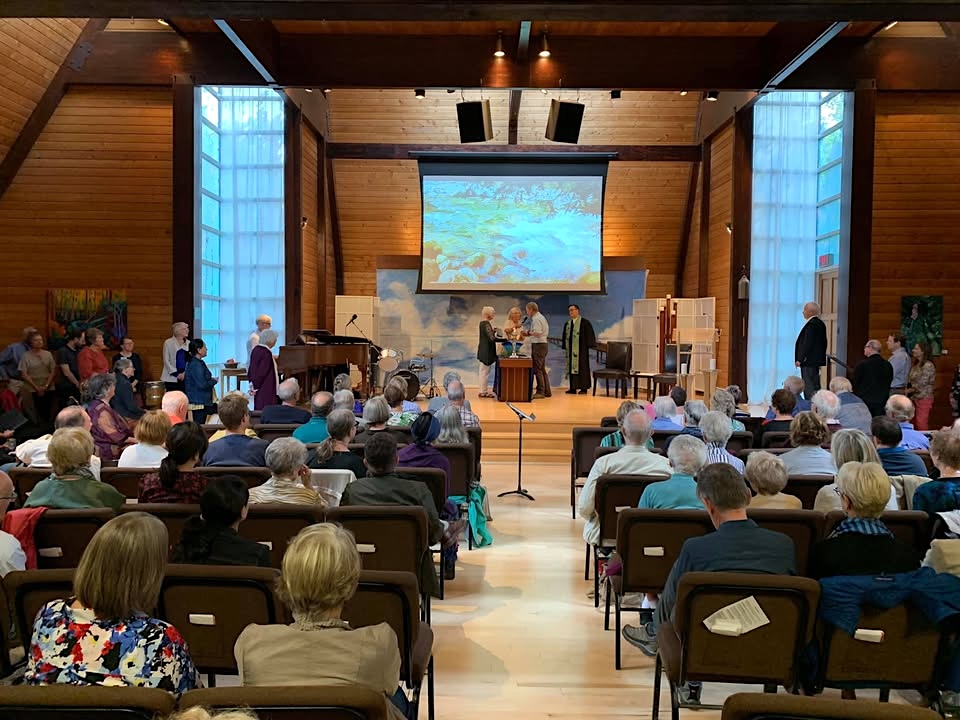
A Unitarian Universalist church is something of an oxymoron. One of the sect’s foundations is that there are no fixed beliefs among its members. Instead, it emphasizes a non-credal, non-dogmatic faith, in which members do not follow a single scripture or doctrine. Ideas are entwined from religion, philosophy, science and personal experience — all within one church. Or hall. Whatever you prefer to call it.
The building that houses the North Shore Unitarians is tucked down a short street, the sleepy suburban kind, where children shoot basketballs into a hoop in the middle of the road. Inside, however, it is bustling.
I’m greeted by a man at the door, whose name tag reads “Greeter.” I think back to the Anglican church service I attended, where I slipped into a pew, avoiding eye contact with anyone. At the Unitarian church, a woman leads me inside and tells me to take a seat wherever I like. Another woman chats with me about the milk options at the coffee and tea station. When I sit, people immediately sit on either side of me. The service begins with lighting a flame in a chalice, followed by a song about coming together, “whoever you are.”
Though the North Shore Unitarian Church opened toward the end of the 1960s, Unitarian Universalism itself sprang from two movements that emerged in Europe in the late 1500s: Unitarianism and Universalism. Unitarians rejected the doctrine of the Trinity — the idea of God as Father, Son and Holy Spirit — while Universalists centred their faith on universal salvation, the belief that all people are equally worthy of love and none are eternally damned.
In the 18th and 19th centuries, both movements found a home in North America, where they came to be known for progressive social values, such as support for women’s rights, abolition of slavery and access to education. The two movements joined forces in 1961.
Instead of stained-glass images, the windows of the North Shore hall are clear, allowing sunlight to stream in. The walls display not religious frescoes, but paintings by artists in the community. Grierson steps onto the stage at the front of the hall and greets the audience with an “Ahoy, everyone!” With that, he launches into a sermon on ageism.
“What’s a subject like ageism doing anchoring a church service?” he begins. “Well, this is Unitarian Universalism, and we do things a bit differently here.”
So it seems. Grierson goes on to cite University of British Columbia professor Julia Henderson, who has described ageism as “the last acceptable prejudice.” (I stand out as one of the youngest people in the room; nearly everyone around me is over 60. As if on cue, Grierson points out that ageism goes both ways.) He tells the story of Harry Bernstein, a writer who published a memoir at the age of 96 and told the New York Times that it took him until his 90s to realize he could write a book. “God knows what potentials lurk in other people,” Bernstein told the reporter, “if we could just keep them alive till well into their 90s.”
Grierson leads the room through more anecdotes and studies. “Here’s the churchy part,” he says toward the end. “Nobody else can tell you how well you’re aging, or what you should be because of your age.” The service feels more philosophical than spiritual — grounded in real-world problems rather than our immortal souls or higher powers.
Since 2023, alongside Grierson, the church has been led by Rebecca Lindley, Sue Forbes, Alison Nixon and Leslie Whyte. Grierson’s daughter compares it to “a School of Athens,” where classical Greek philosophers, scientists and mathematicians met to share ideas. Next week’s service, led by Forbes, looks at artificial intelligence. Lindley’s, the week after, is titled “The Power of Community.”
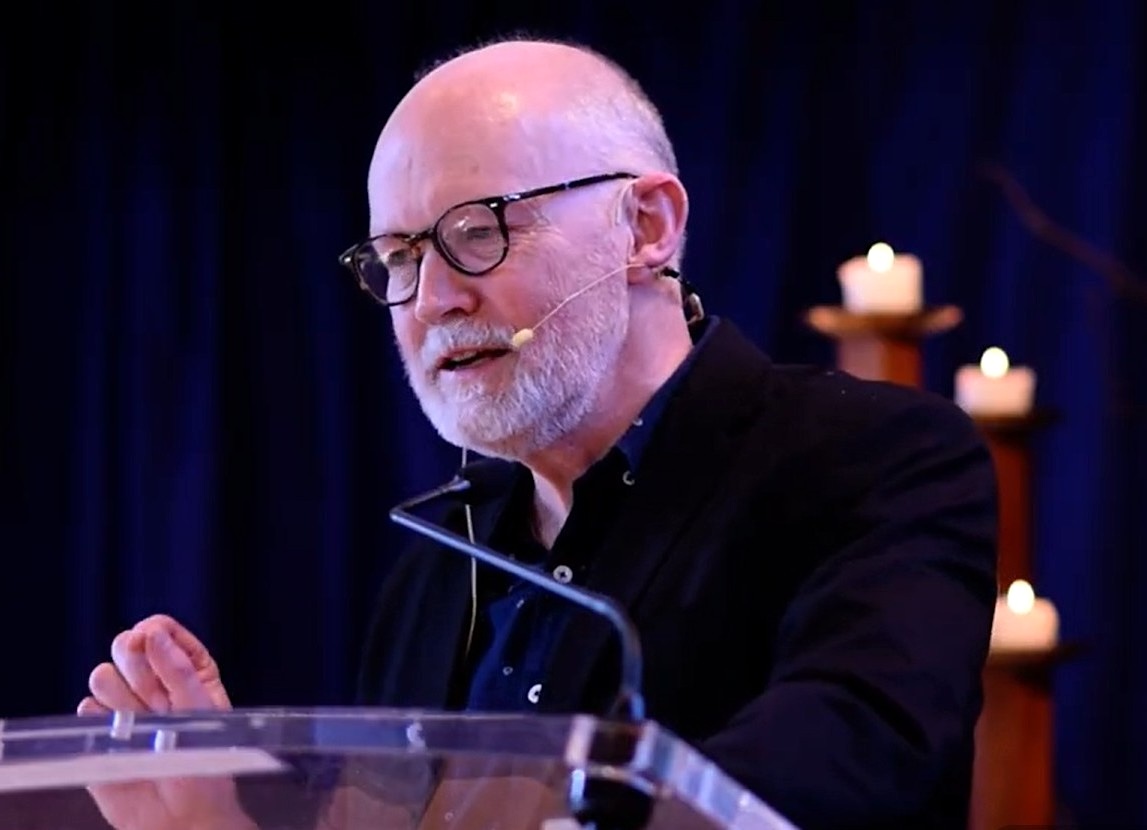
Grierson closes with a final thought:
“If humans are going to get out of this mess we made for ourselves, we need multiple perspectives at the table. Not just to cover off one another’s blind spots, but to become kind of” — he draws out a pause — “moral counterbalances for each other.” Or, as he then puts more simply: “Pretty clearly, older people and younger people need to hang out a lot more.” He never once mentions God or quotes scripture.
In my personal search for a life of the spirit, I had been searching for something above me, something listening. But as the choir sings “Rise Again,” an ode to resilience with roots in Cape Breton, Nova Scotia, and people laugh and talk about the topic raised that week, I begin to wonder if I have been looking in the wrong direction.
Loving in the same direction
As Canadians distance themselves from religion, the idea of anything that resembles a “church” becomes easier to dismiss. If it’s understood as doctrine or dogma, then that disappearance might seem like progress. What may vanish more quietly, though, is community.
“I think at some point we swap out worldly pleasures — sex, drugs and rock ’n’ roll — for a sense of growth, both emotional and spiritual,” Grierson says. “That can happen alone. But it happens faster, deeper, better in a community.”
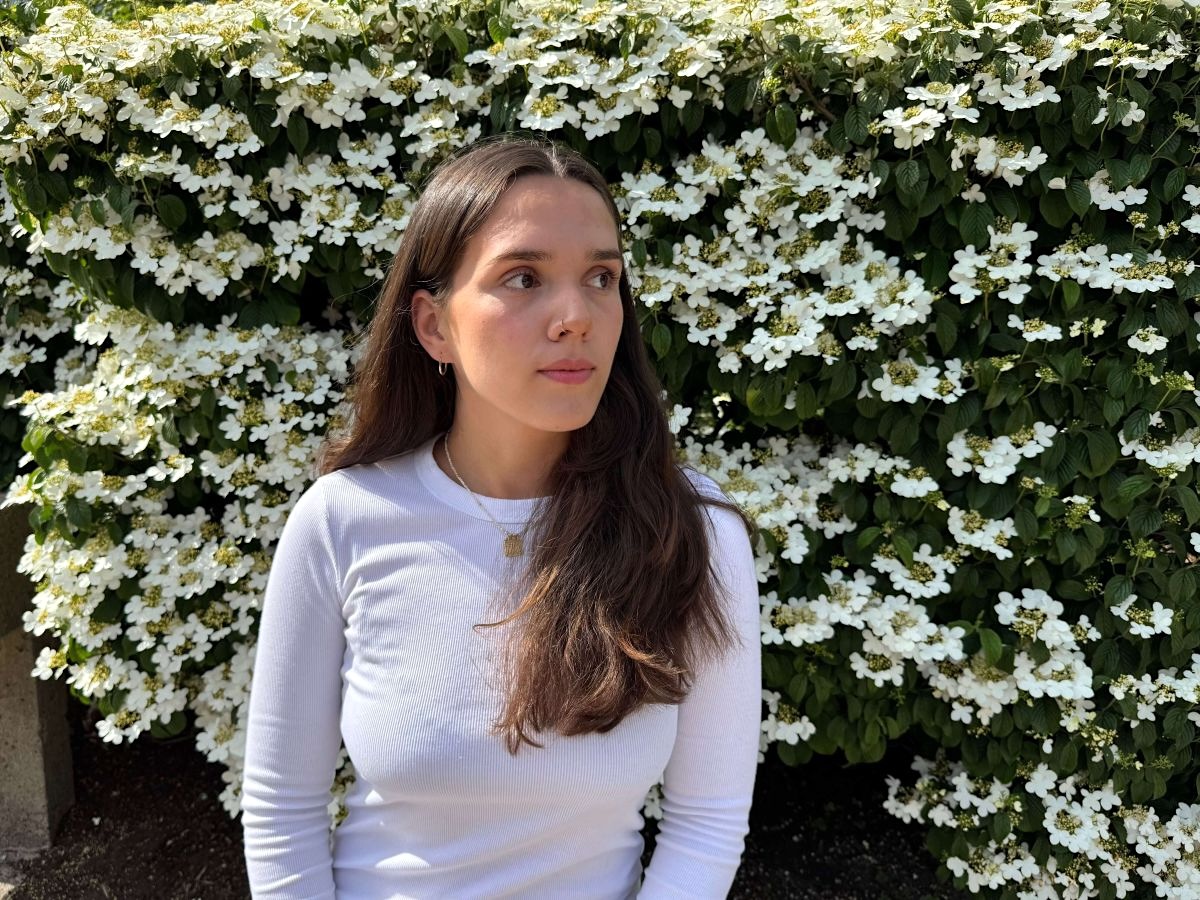
Meghan Mitchell first came to North Shore Unitarian Church as a child through the youth program. As she grew up, and school and sports took over, she eventually stopped attending. But a year and a half ago, after she lost her stepmother to cancer, Mitchell decided to return. “I had this real calling to go back to somewhere where I felt like I was really warmly welcomed,” she says.
Despite the peace that comes from her visits most Sundays, Mitchell says she is often embarrassed to tell people that she attends church. “There’s this preconceived notion of what that word means,” Mitchell says. “People make a lot of assumptions.”
Unitarians are at times grouped in with Quakers, another non-traditional, community-oriented group. Quakers practise a worship where members (known as “friends”) sit together for an hour in silence. If a person is compelled to speak, they stand and share their thoughts. I decided to attend a Quaker meeting in Marpole, in south Vancouver.
The group was younger there than on the North Shore, the majority appearing to be in their late 20s to 30s. The service was held in a small room with a double circle of mismatched chairs. I sat silently in the ring of strangers, feeling as though we were stuck on a broken-down bus together, waiting for the driver to make an announcement. I thought about myself, about lunch. About what the others were thinking about.
“I am sure we are all thinking about this,” a person finally stood to say, and I wondered if everyone, like me, had been thinking about their plans for the afternoon. “About what is happening in Minneapolis,” they continued. It was the day after the activist Alex Pretti had been shot in that city by federal immigration agents. The person talked about finding a community in pain and anger, and how we “cannot do any of this alone.” Two seats down the circle, a woman began to weep in silence, and no one spoke again for the rest of the hour.
Shared pain is powerful, but so is shared joy. In an interview with the Athletic in February, Vancouver-born actor and soccer club owner Ryan Reynolds compared the stadium of his team Wrexham AFC to a church. “They perform the same function, inasmuch as they bring people together,” Reynolds said. “People who have completely disparate ideologies walk through those gates, and they are together, wearing the same colour shirt and singing the same, filthy chants.”
When I share this anecdote with Grierson over the phone, he tells me that the author John Green once wrote about growing up as a Liverpool soccer fan and his deep affinity for the club’s anthem, “You’ll Never Walk Alone.” Green described the experience of hearing and singing it as “magical,” not because of the lyrics, but rather from the feeling of singing in community. In that moment, he said, the fans are simply “people whose love is oriented in the same direction.”
Sometimes, that shared orientation is a desire for change. In New York in the late 1990s, a man known as Reverend Billy Talen created the Church of Stop Shopping, an anti-consumerism protest, performance and church service in one. “There's no contradiction between protest and religion,” Talen tells me. “They go together.” Talen’s church treats religion not just as belief, but as a collective practice. “A healthy neighbourhood, a healthy political community, that is a radical thing,” he says. “You have to accomplish things together, teach each other, love each other, support each other, help each other raise their families.”
For Grierson and the North Shore Unitarians, their faith comes from many directions. For some, it does come from above and in the shared ritual of returning each Sunday. For others, it’s in the act of singing together, of meeting the eyes of the person beside you. Beyond the walls of the church, it can appear in other ways: a cinema full of strangers laughing at the same movie, classmates in silence reading the same book.
Years before, Grierson followed a voice into a hall. I began my own search looking upward, too, for something divine and certain. Instead, we found something more ordinary and, perhaps, more enduring: the steady, imperfect practice of finding faith in the person beside you. ![[Tyee]](/design-article.thetyee.ca/ui/img/yellowblob.png)






Tyee Commenting Guidelines
Please note that email notifications for replies are not currently working due to a software issue which may be resolved in a future update.
Comments that violate guidelines risk being deleted, and violations may result in a temporary or permanent user ban. Maintain the spirit of good conversation to stay in the discussion and be patient with moderators. Comments are reviewed regularly but not in real time.
Do:
Do not: