

 SHARE:
[Editor’s note: Louise K. Blight is an author and conservation scientist who teaches at the University of Victoria’s School of Environmental Studies. Her new book, ‘Where the Earth Meets the Sky: A Story of Penguins, People and Place in Antarctica’ reaches bookstores on April 21 through Bond Street Books, a division of Penguin Random House Canada Limited.
Blending memoir with travelogue and science writing, Blight’s beautiful prose takes readers to Antarctica, the most isolated place on the planet that is also one of the most affected by climate change. This excerpt from ‘Where the Earth Meets the Sky’ follows Blight as she arrives at her base camp for the first time. It is republished with permission from the publisher.]
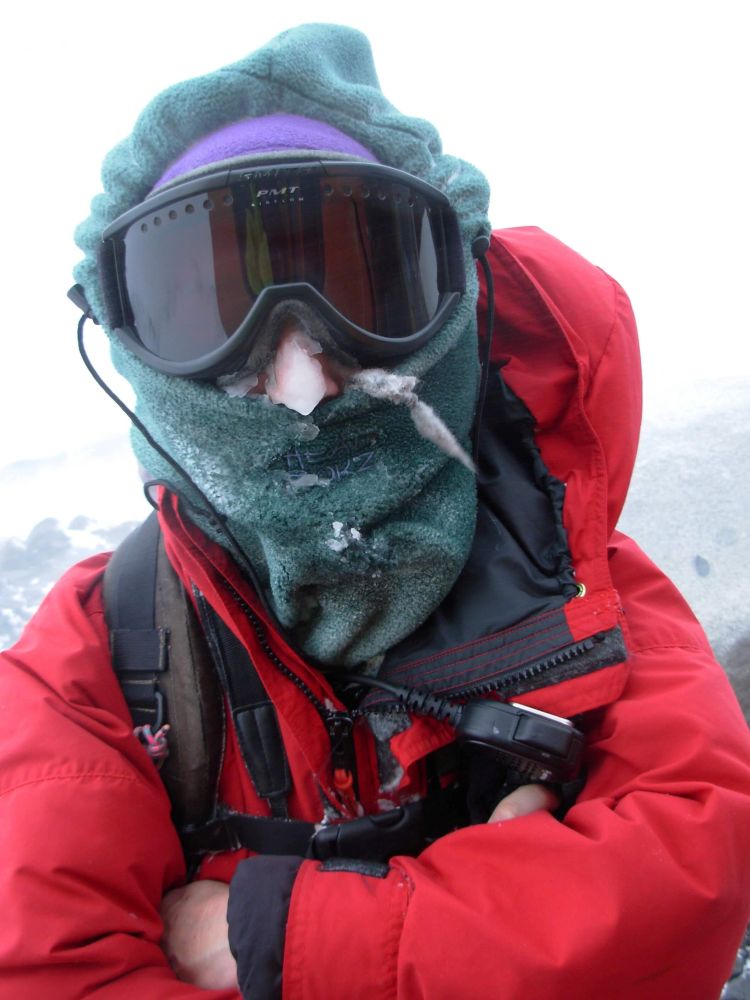
At the military airbase in Christchurch, we had all been made to change into our regulation Extreme Cold Weather gear, or ECW: big blue puffy polar boots that lace up to the knees, with soles 10 centimetres thick; insulated windproof coveralls; oversized red parkas with a faux-fur fringe around the face and a white name tag with black lettering Velcroed onto our chests.
Back in New Zealand someone had said the name tags were all the better to identify each other under our glacier glasses and all that ECW, but I suspect that really we have to wear them so they can identify our bodies if anyone steps outside into a whiteout, or gets unlucky with a crevasse before we get to our field safety training.
On the flight, parkas doubled as pillows and necks of undershirts gaped open. Now, as we press together on the plane’s gangway, our excessive clothing is welcome, even necessary.
We disembark down the ramp onto the sea ice, frozen McMurdo Sound beneath our feet. Once off the plane we mill about like a flock of young penguins, disoriented by the newness.
My first impression was right. Everything is brilliantly white. To be sure, there are McMurdo Station personnel in matching red parkas; a few people from New Zealand’s Scott Base in earthier tones, there to pick up the handful of Kiwis on board; and a collection of bizarre orange vehicles with big wheels or massive tracks, clearly ready for whatever weather extremes the continent can throw at us.
A colourfully flagged route leads from the sea ice runway toward McMurdo, with its utilitarian collection of drab buildings crouched just a few hundred metres up the slope, and black electrical cables snake back down toward us to feed the aircraft operations.
But apart from these insignificant objects we are in a vast monochromatic frozen world.
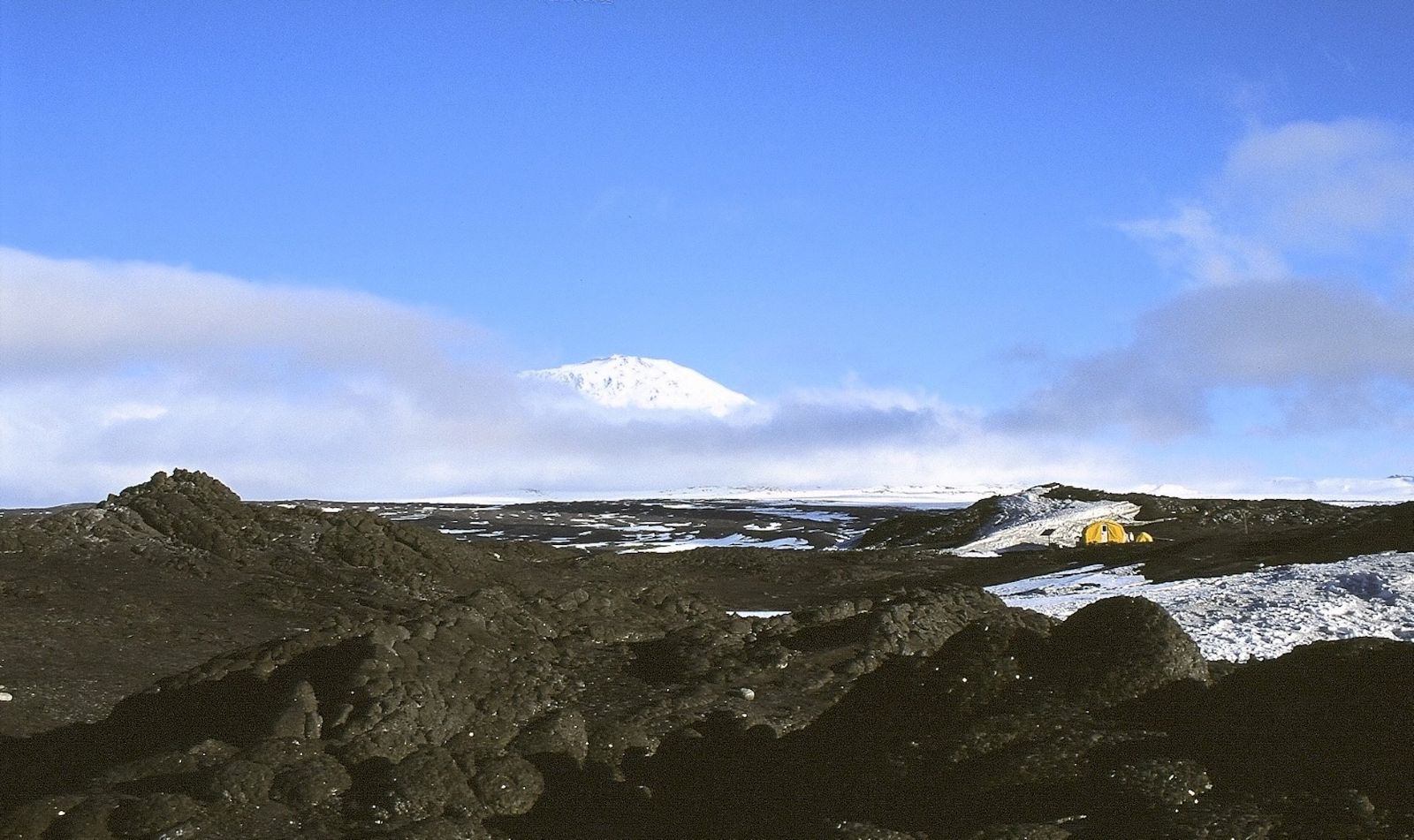
Smooth sea ice underfoot, the surface of a frozen ocean. Hummocky fast ice, lumpy against the nearby shore. A thin layer of snow dusting the ground around the buildings of McMurdo. A luminous sky of high cloud hiding the 24-hour-a-day sun.
And surrounding us, glaciated mountains and the continental ice sheet stretch to the horizon. For a moment I feel we’ve been transported via a time warp to the ice caps of Mars, trapped on the surface of an inhospitable planet.
We are herded toward a massive six-wheeled people-mover that is waiting nearby, with “Ivan the Terra Bus” lettered on its sides. Most of us bumble along, unaccustomed to feeling the icy surface beneath our feet, encased in their unfamiliar field-issue boots with the double-thick soles.
Everyone’s parka hood is pulled tight against a bitter wind from the south, blinkering our vision and causing us to bump into each other as we slowly turn our heads to see this new world through a narrow red field of view. The shapeless red girl in line in front of me is distinctive because she’s carrying a plastic lunchbox in the shape of a sandwich in her gloved hand. Perhaps sensing me checking out the lunchbox, she turns around.
“Hi, my name’s Sandwich,” she says, introducing herself from within her hood.
“Hi,” I say. “I recognized your lunchbox. I saw you in the departure lounge in L.A. What are you going to be doing here?”
“Working in the galley,” she replies. “You?”
“Working on the penguin project at Cape Royds,” I say.
“Oh great!” she says. “I know Grant and Viola. Not my first year here.”
I’m reminded of the saying in Antarctica: The first time you go for the adventure, the second time you go for the money, and the third time you go because you no longer fit in with the rest of the world.
In search of the Adélie, ‘a smart and fussy little man in evening clothes’
From the superheated interior of the Terra Bus there is nothing to see through the windows, encrusted as they are with sheets of frozen condensation, and some of us get off again to linger outside, gawking, until we are yelled at to get back on board for the short trip to the station.
I breathe a hole in the window ice to look at the scenery and futilely scan the frozen ocean for signs of penguins or seals. At this time of year, however, the edge of the sea ice is at least 30 kilometres to the north and the nearest penguins are likely no closer than Cape Royds, so a sighting is unlikely until we move out to the field. Here at Antarctica’s largest logistics hub we are mostly too far south even for these birds.
Though everybody in the world who hasn’t been here equates Antarctica with penguins, for most of the people stationed at McMurdo these are creatures that are rumoured to exist out where they don’t get to go, except very rarely, on a so-called boondoggle.
In fact, it begins to dawn on me that even here in Antarctica our group is considered to be supremely lucky to be going into the field to study these birds. I find out later that the occasional appearance of a lost Adélie out on the sea ice runway will prompt a massive downing of tools at McMurdo and a rush to the site for photo-documentation of this element of the “real” Antarctica.
Of course such penguin envy excludes the deep nerds of the more obscure branches of polar science, those here to study nematodes or glaciers or phytoplankton or muons. None of these scientists are much impressed by the banal higher life forms represented by marine birds.
One of my companions on the Terra Bus is a biomedical researcher who is here to study the effects of extreme cold and lack of daylight on human physiology. She barely seems to know that penguins are in the animal kingdom.
To be fair, she’s not alone in her confusion about their taxonomy, for with their flightless behaviour and phenomenal swimming and diving ability it is natural to wonder if penguins are more fish than fowl. In the year 1620, the French commodore Augustin de Beaulieu said of the African penguin that “they have nothing of the taste of flesh, and I take them to be feathered fish.”
But with their combination of feathers, beaks, warm-bloodedness and egg-laying, penguins are decidedly in the same taxonomic class as ostriches and hummingbirds, and like other families of birds, they come in a variety of colours and sizes.
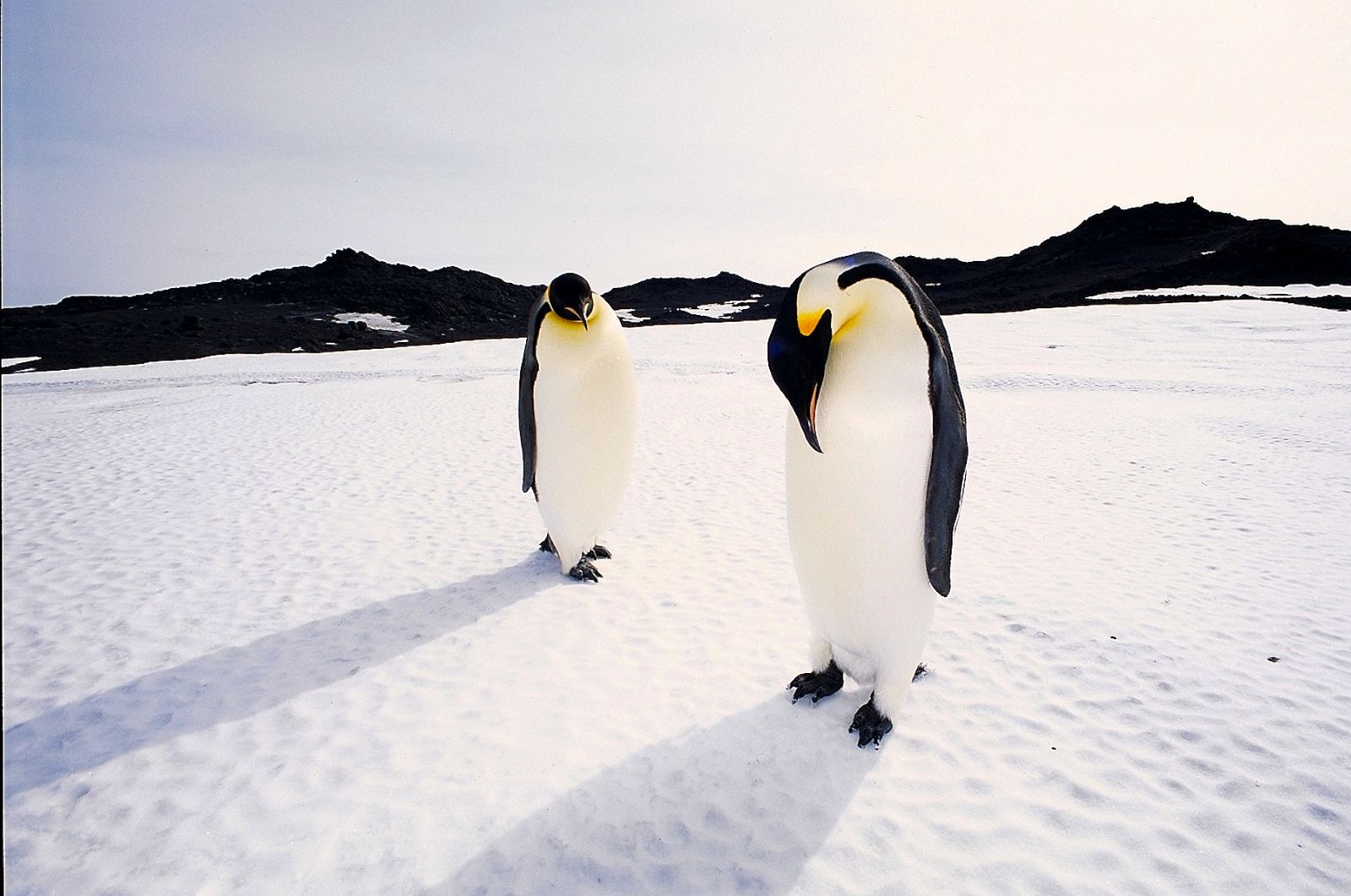
The emperor and king penguins — both by far the largest of the penguin species — have a pinkish lower bill, and an attractive flush of yellow and orange on their head and neck feathers.
Crested penguins, such as the macaroni, royal and rockhopper, have fat, bright orange beaks and foppish yellow plumes atop their heads.
The smallest species of penguin, which is variously known as little, blue or fairy, is as diminutive as its names suggest, and with dorsal plumage that’s an attractive blue-grey in colour.
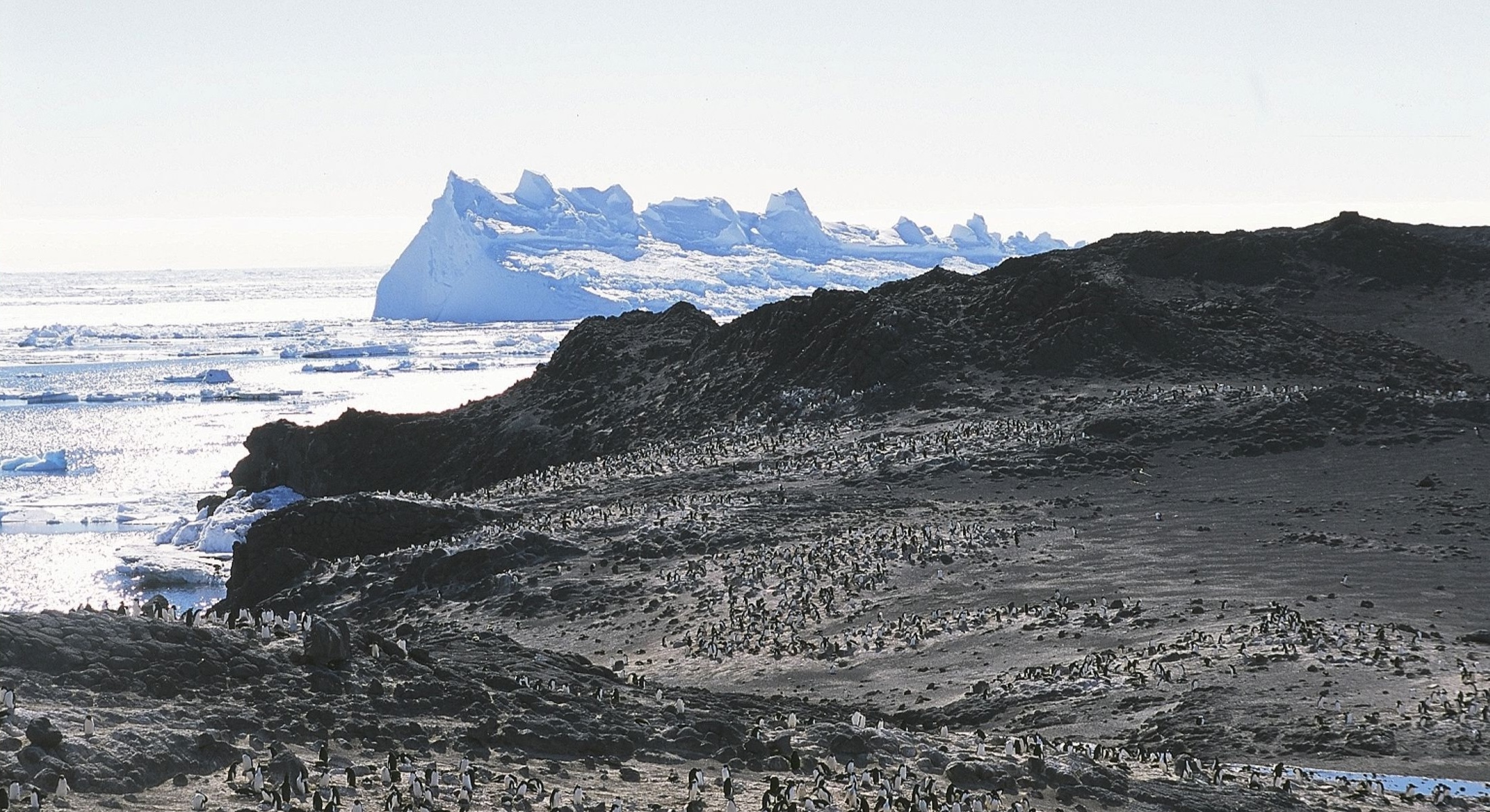
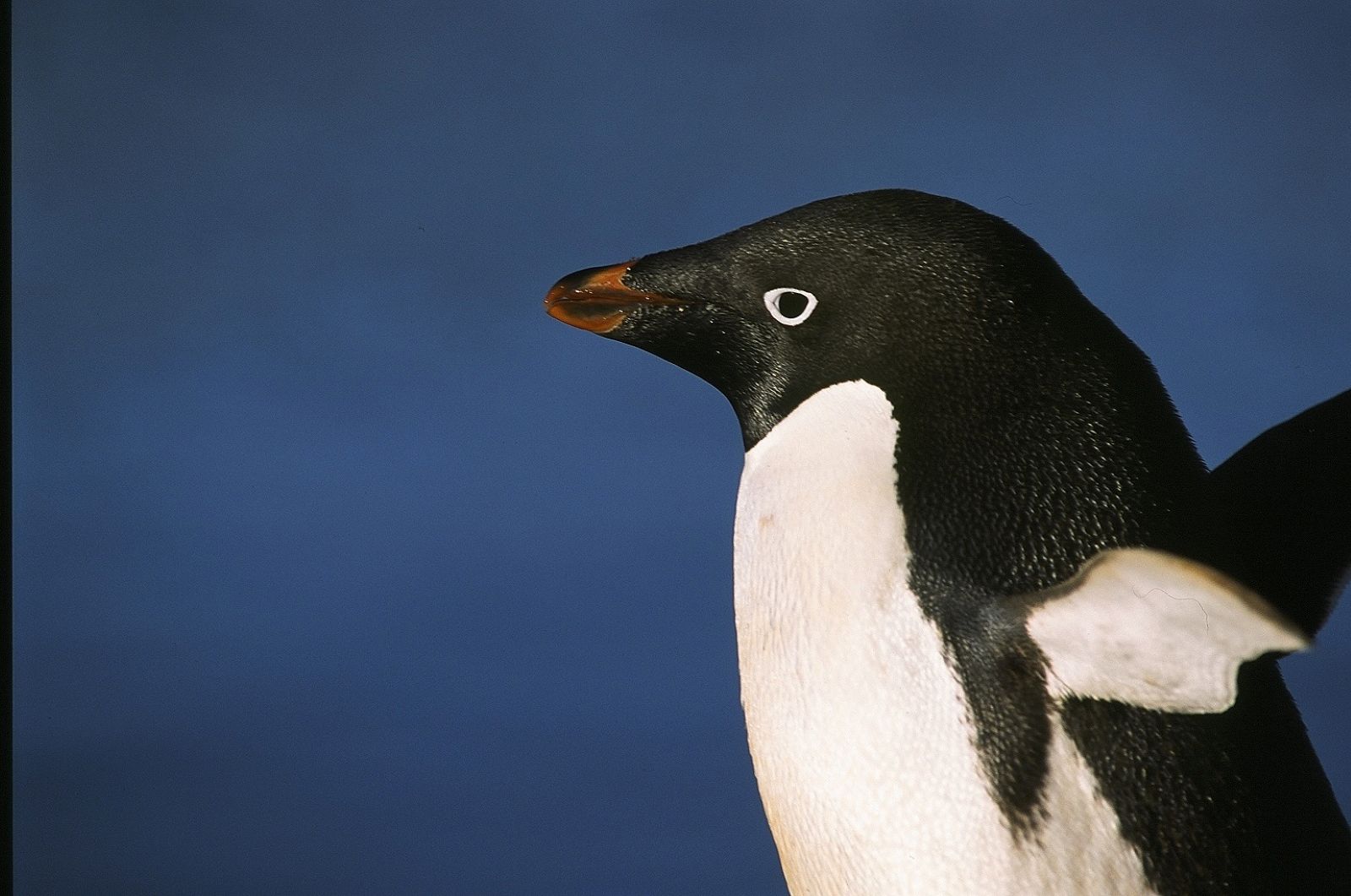
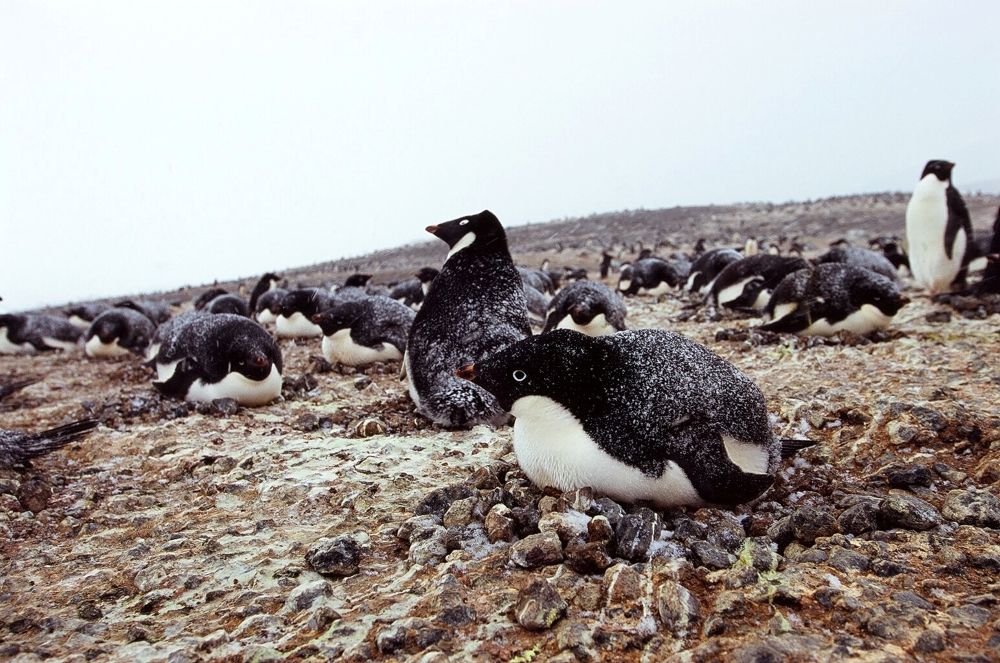
On Ross Island, the focal penguin for our research will be the Adélie, a basic knee-high, black- and-white variation on the penguin theme.
Adélie penguins were named in the 1800s after the wife of French explorer Jules Sébastien César Dumont d’Urville, Adèle, and were the first member of the penguin family to receive widespread public attention. The ubiquity of this species in the Ross Sea meant that the expeditions of Scott, Shackleton and other Antarctic heroes of the early 20th century exposed Adélies to positive press early on.
In 1936, in his classic book The Oceanic Birds of South America, the great seabird biologist Robert Cushman Murphy wrote that “with singular unanimity, explorers have likened the Adélie penguin to a smart and fussy little man in evening clothes.”
My new home base
Adélie penguin breeding distribution follows the coastline of the Antarctic continent, with our study site at Cape Royds described in the literature as the species’ most southerly nesting location in the world — although in recent years a few breeding pairs have sometimes taken up residence at neighbouring Cape Barne, a few kilometres farther south still. Cape Royds has been occupied by Adélies for about one thousand years, from the time that this tiny point of land became free of the West Antarctic Ice Sheet.
Ross Island, in its entirety a mere 2,500 square kilometres, is home to about eight per cent of the world’s Adélie penguins — with the vast majority breeding on its eastern shore at the giant Cape Crozier colony, which is home to literally hundreds of thousands of Adélies at the height of the breeding season.
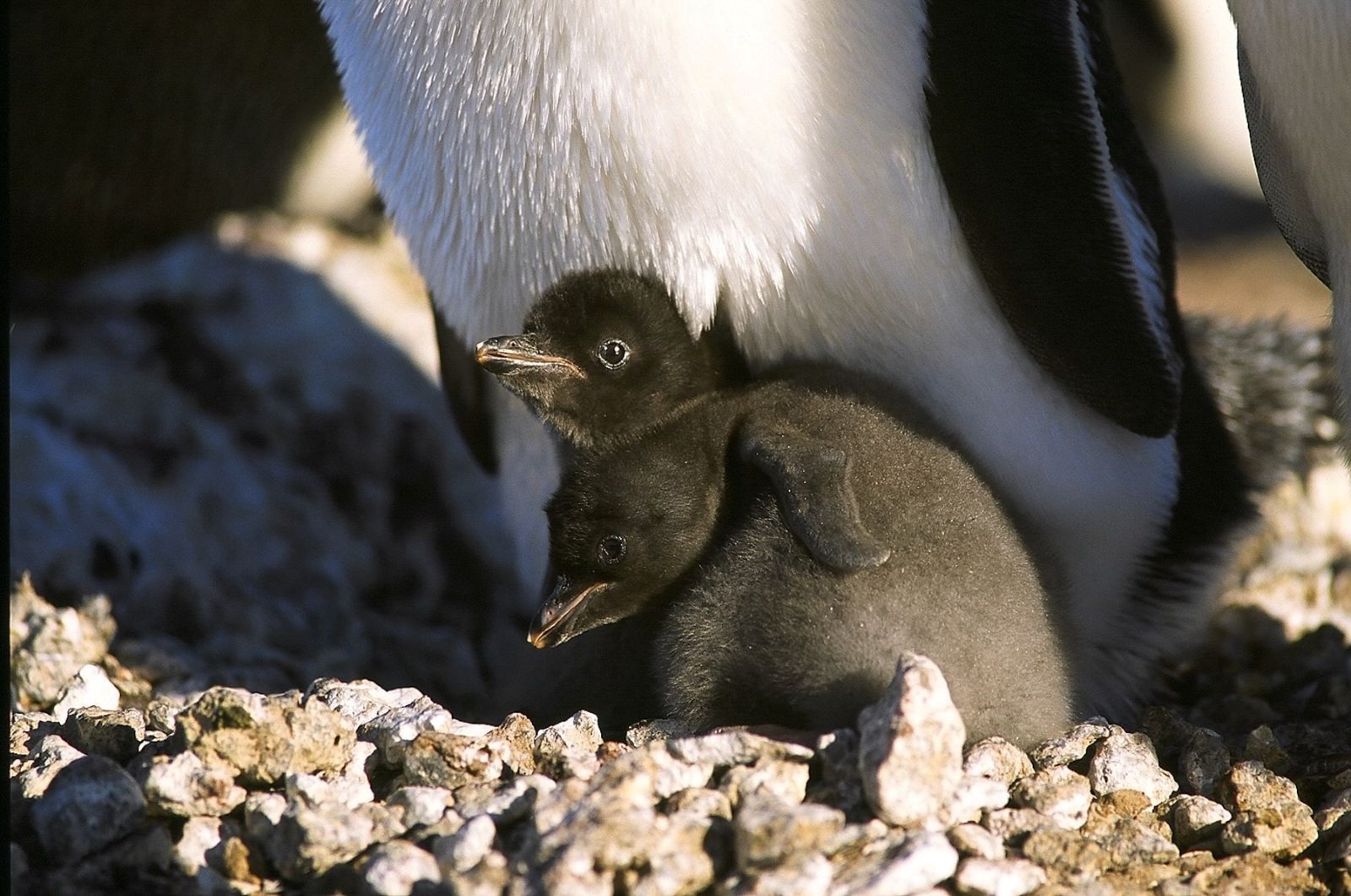
Anticipation at being in their midst is building in me; I would much rather be in the field in their penguin city than here at McMurdo, an isolated but very human village.
The bus pulls up the slope leading off the sea ice toward a collection of utilitarian prefabricated huts and barracks-like dormitories, hunched together against a backdrop of volcanic grit. The scene is reminiscent of a remote and dirty Arctic mining camp, or a High Arctic village circa 1980. “Ugly” is the first word that comes to mind to describe it, an assault on the continent’s purity.
Our vehicle stops at the entrance to the main building, 155, where the driver tells us we’ll be assigned a room before receiving an orientation session.
As I step off the bus a cheerful woman bundled in thermal National Science Foundation garb passes me a printed handout that reads “Welcome to McMurdo,” as if I’m entering some bizarre polar holiday camp. Everything here seems slightly off-kilter or larger than life, a bit like something out of Alice’s Wonderland — from landing in a military plane on the frozen ocean to the fact that I’ve already glimpsed one of the locals wearing a coloured party wig.
Even the infrastructure is arcane. Where at home one might find a garbage can and a blue box for recycling, for example, here each building holds entire waste stations composed of a bewildering array of containers.
One of the first things I learn at the orientation is that McMurdo’s waste management system requires separation into more than 20 streams of trash for shipping back off-continent, where about three-quarters of the items are reportedly recycled.
I soon find it’s the norm to see a puzzled resident standing in front of one of these stations reading the many waste stream descriptions while some article of garbage hangs forgotten from their fingers. Avoiding this sort of behaviour is one of the many things that distinguishes an old hand from a fingee — an FNG or fucking new guy, army slang dating back to Vietnam.
McMurdo (Mactown to the locals, or just “town” to the field crews) is rife with such anachronistic jargon from the days when the station was run by the U.S. Navy: The cafeteria is the galley, the station’s shop is also known as the ship’s store and if we work late we can go for midrats, the term for the midnight rations cooked for the night shift crews.
We’re toured around Building 155 and I’m drawn to the hustle and bustle of the station store, the notices for yoga sessions and cross-country ski lessons posted on sundry bulletin boards and the photographic studies of workers from previous seasons, courtesy of a participant in the National Science Foundation’s Antarctic Artists and Writers Program.
McMurdo’s recreation department dispenses everything from cross-country skis and board games to high heels, feather boas and penguin costumes — these are important party ingredients in a place where people have to make their own entertainment. There are two bank machines (somehow run from afar by Wells Fargo) and a bowling alley, and over at Scott Base there’s a well-used rugby pitch on the adjacent ice shelf (the Kiwis always win).
Next door to Building 155 is the coffee shop and wine bar, in a cozy, wood-panelled Quonset hut that’s the oldest building in town, originally erected in 1959. Apart from espresso and liquor, the coffee house has herb tea, board games and mellow music. Also around the station are two more bars, a computer lab, science labs, a bouldering gym and a library.
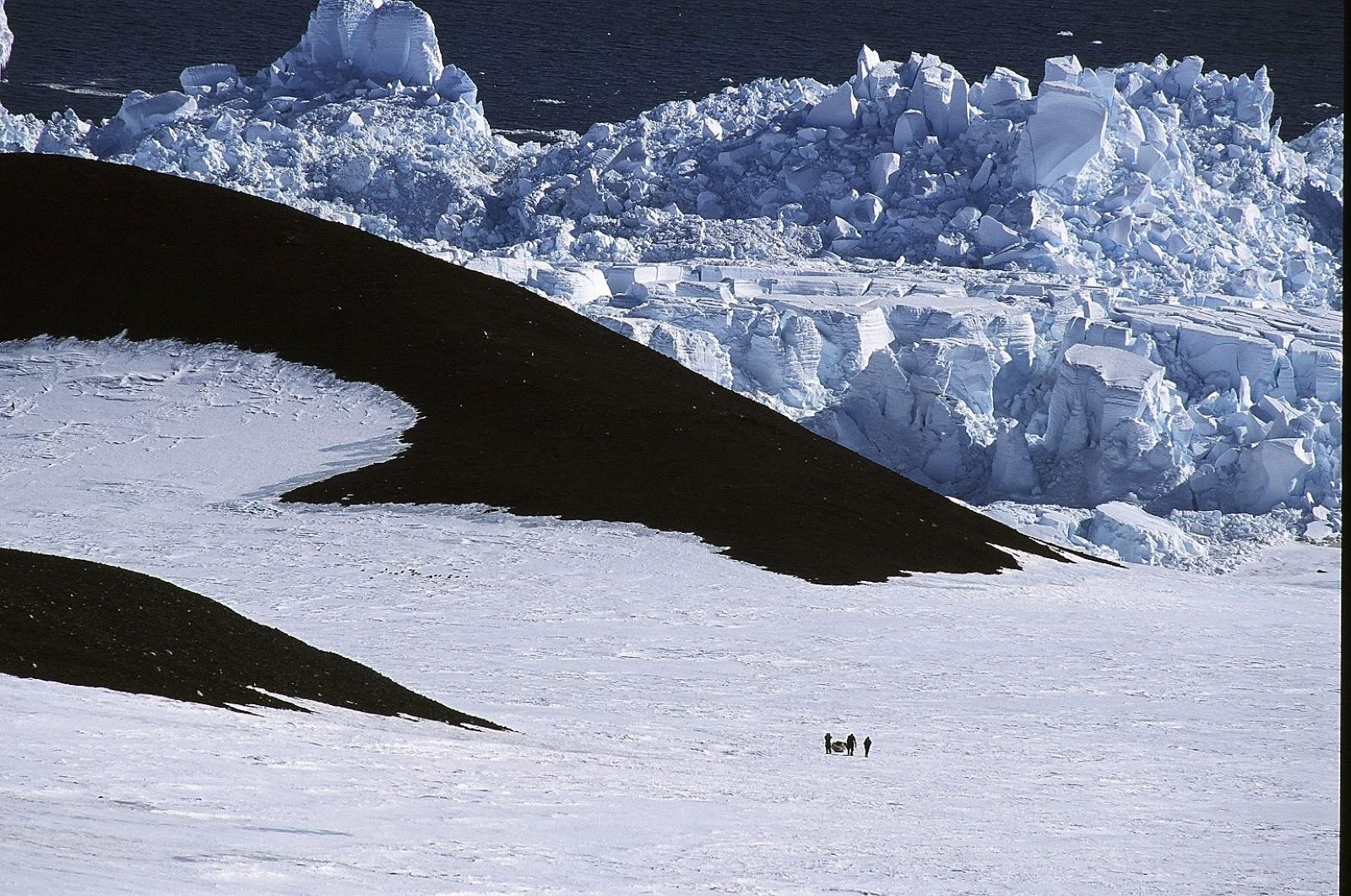
McMurdo feels consummately self-contained in its extreme isolation, like a ship stuck just above the fast ice of the frozen sea. This is the place that will be our base until we head into the field, and our point of contact with the rest of the world for the two and a half months after that.
Old meets new
At the end of our station tour I’m led to my room — an impersonal cave-like dorm — to unpack. I sit on my bed, contemplating the blackout curtains drawn back to let in the sun, and realize I already feel at home.
Although I am keen to get out into the field to see the local penguins in situ, we won’t be able to go until we’ve spent a week or so at McMurdo, doing mandatory field safety training and readying gear.
One of my pre-deployment responsibilities is to develop a basic meal plan for the season and then choose and pack our supplies from among the frozen, canned and dehydrated foods stocked here in another of the many buildings.
And while we’ll no doubt be craving fresh fruits and vegetables by the end of our field season, we will be well enough fed that we won’t need to eat our study animals, unlike Bill Sladen and some of the earlier human residents of McMurdo Sound and other parts of Antarctica.
In the first part of the 20th century, penguins were seen as a ready source of food for many a stranded field party. The early explorers favoured penguin colonies for their camps as these headlands and islands were ice-free, and the birds could be killed and their eggs collected by marooned expeditioners in preparation for overwintering — although the edibility and flavour of these provisions were often disputed.
American polar explorer Lincoln Ellsworth wrote, “Penguin eggs are delicious when made into omelettes, but ye gods, when they are boiled! Then they are like rubber balls, and fishy besides. My first experience with these eggs was when they were boiled [and] I have never since been able to eat them in any form.”
But during their winter stranded in an ice cave at Inexpressible Island in 1912, the members of Scott’s Northern Party mixed Adélie meat into breakfast stews to the hearty enjoyment of the starving men. Even a dried-out old penguin flipper — a forgotten pot scraper — eventually made it into a meal.
Before that, on board the icebound Belgica in 1898 and ’99, first mate Roald Amundsen escaped scurvy by mixing raw penguin with his tinned fruit.
But by mid-century field parties were better provisioned and less hungry. In Hoosh: Roast Penguin, Scurvy Day, and Other Stories of Antarctic Cuisine, author Jason Anthony recounts the advice of the cook from the Falkland Islands Dependencies Survey (as the British Antarctic agency that employed Bill Sladen was once called): “If, after cutting out the breast meat and washing it, hanging it outside for a few days, washing it again, blanching it, and washing it one final time, it still reeks of penguin… sling it out through the nearest window.”
For many of the early explorers, hunger was the spice that rendered a penguin edible.
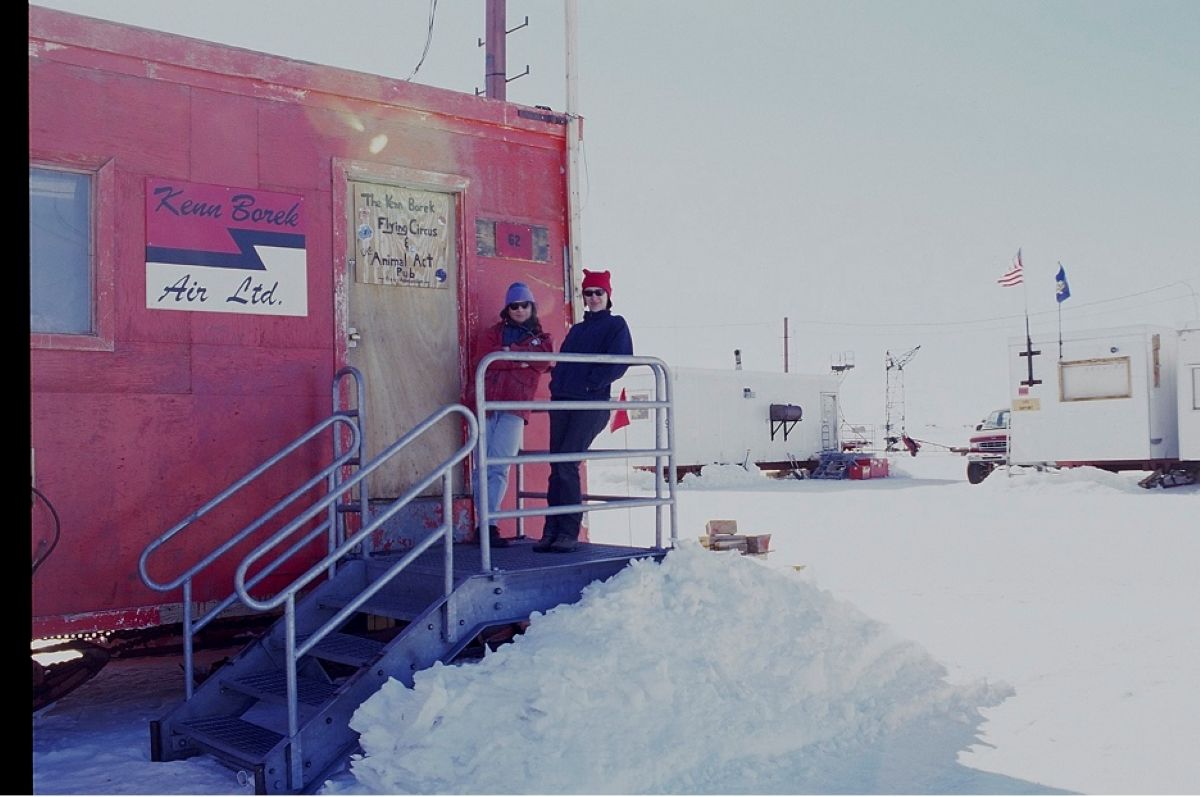
One relatively fine day (cold, high overcast clouds, little wind) during our first week, I take a break from field prep and walk with Rachael out to Hut Point to look at Scott’s Discovery Hut after signing out the key from the Chalet, as the steep-roofed wooden building that acts as the McMurdo headquarters for the National Science Foundation is known.
Rachael is a recent graduate of Cornell University, which as a prestigious Ivy League institution has a reputation for being one of the top spots for bird research worldwide. She is quiet and cheerful, and has long, dark blonde hair that’s always escaping from under whatever hat she’s wearing at the time. She also has a big smile, and a slow and thoughtful way of commenting on a situation or a research question. It turns out we are both avid readers and on our walk we discuss the books we’ve brought with us for the season, a mix of Antarctica-focused non-fiction, literary fiction and trashy novels.
An outpost at the end of the world
The Discovery Hut was built as the storage facility and base ashore for Scott’s 1901-04 Discovery Expedition, but for those working at McMurdo Station it’s a de facto museum from a time when life in Antarctica was for just a few people, all of them men.
Yes, it was the hut of that Scott, Captain Robert Falcon Scott, Scott of the Antarctic, the British explorer Scott who died on the Polar Plateau in 1912 after being beaten to the South Pole by the Norwegian Roald Amundsen (who had gained extensive Antarctic experience through his enforced overwinter on the Belgica).
Before handing over the sacred key its guardian tells us twice about the rules to follow while it’s in our possession, and we are warned that anthrax spores have been found (who looked?!) in Scott’s other hut at Cape Evans a few kilometres to the north, so we might not want to go to this first hut of Scott’s here on the outskirts of McMurdo. The logic of this litigiously minded statement escapes us so we take the key and tell Key Lady we won’t sniff the hut’s floor.
On its outside the Discovery Hut is a weathered brownish-grey under a peaked roof; the wood is worn but solid, belying the fact that this place has stood here for a hundred years.
The first thing that hits me as we open the door is the smell. The odour that escapes is warm and sweet, like a barn occupied by horses. Directly ahead through the doorway lies a pile of decaying straw bales. Perhaps the smell emanates from these, or perhaps somewhere there is still a store of sennegrass — the dried Arctic sedge that was traditionally used by the Sámi people as an insulating and moisture-absorbing boot liner, and was adopted by the early Antarctic explorers.
Just inside the main room on the right, a greasy pile of hundred-year-old seal carcasses is slowly disintegrating, and around the corner to the left of the straw is a small storage room with — incredibly — the mummified carcasses of a couple of sheep hanging on the walls. It’s a small shock to round the corner and see them there, like the artfully placed display of a talented museum curator, but these sides of mutton are the real thing, left a century ago to feed members of some future expedition. Happily, we aren’t that hungry, given the mountains of imported foods that await us back at the galley.
Apart from the desiccated sheep the hut holds wooden crates with black stencilled lettering proclaiming their British contents as dog biscuits, Fry’s cocoa and Bovril, and on the walls, shelves hold decaying tins of baking soda and processed meat among those of less identifiable foodstuffs, their labels peeling away.
This was the hut referred to by Shackleton in his memoir South as “a most useful pied-à-terre for the start of any southern journey.” Later, in 1968, it was the hut from which Australian author Thomas Keneally filched a hardtack biscuit. Of that voyage, he wrote: “I was able to experience Antarctica in so profound a way that it recurred in my dreams for decades to come. In particular, the huge Transantarctic Mountains… returned to me in sleep.”
The call of those vistas and the crisis of conscience initiated by his theft meant that more than 30 years later he made another trip and returned the biscuit to its box, writing of both journeys in the literary magazine Granta (in an issue called, appropriately enough, “This Overheating World”).
As we leave the hut, I think of another story about it, immortalized in the book Big Dead Place, in which author Nicholas Johnson reports receiving a memorable blow job there. No doubt not the first or last tryst over the years; perhaps that is one reason they so carefully guard the key.
Suddenly I’m swamped with loneliness, jealous of the idea of his casual intimacy. In the numb aftermath of my sister’s death, I had settled for too many things: a mediocre job as a biologist in government, from which I’m currently on leave; a master’s degree in Canada rather than a PhD program in Australia, where I’d been headed to do doctoral research on Antarctic marine birds until my sister was diagnosed with cancer; and a relationship with a man with anger management problems.
I’ve left this future ex-husband behind at home, and I realize that I don’t miss him at all. I have taken a tentative step back to my original path by pursuing a prestigious PhD fellowship in Canada, and by returning to Antarctica.
But there are few things lonelier than being at the end of the world and awakening to the fact that you are truly alone, with not even a longing for home to sustain you.
Excerpted from ‘Where the Earth Meets the Sky: A Story of Penguins, People, and Place in Antarctica’ by Louise K. Blight. Copyright © 2026 Louise K. Blight. Published by Bond Street Books, a division of Penguin Random House Canada Limited. Reproduced by arrangement with the Publisher. All rights reserved. ![[Tyee]](/design-article.thetyee.ca/ui/img/yellowblob.png)
Read more: Books, Environment






Tyee Commenting Guidelines
Please note that email notifications for replies are not currently working due to a software issue which may be resolved in a future update.
Comments that violate guidelines risk being deleted, and violations may result in a temporary or permanent user ban. Maintain the spirit of good conversation to stay in the discussion and be patient with moderators. Comments are reviewed regularly but not in real time.
Do:
Do not: