


 SHARE:
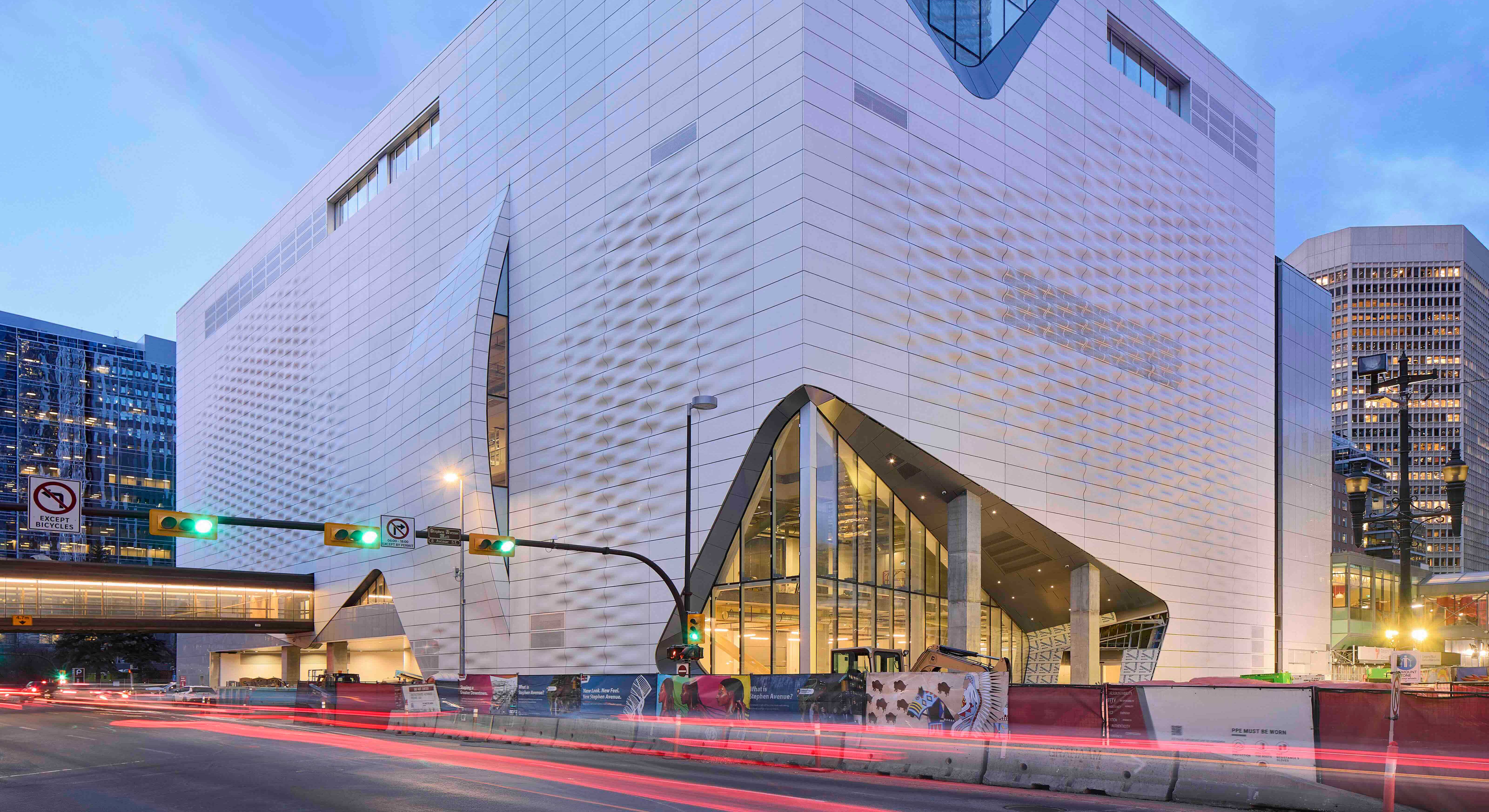
Staff at Calgary’s Glenbow Museum are gearing up to install its vast collection in its renovated home, called the JR Shaw Centre for Arts & Culture, which opens next year. Amidst hammers and drills echoing in the background — as well as the “oohs” and “ahhs” let out by the odd visitor touring the 312,000-square-foot building — archivists and curators are diligently preparing 36 exhibitions for the museum’s 2027 reopening.
Albertans have much to look forward to. The brutalist building’s transformation extends to changes that go well beyond Glenbow’s physical space, which has operated in its current location in downtown Calgary since 1976 after its founding in 1955.
“We worked alongside Dialog, the architects, right from the very beginning to determine the things we needed to change to be more relevant to the community over the long term,” Melanie Kjorlien, Glenbow’s chief operating officer and vice-president of engagement, told The Tyee on a recent call.
The renovation extends beyond physical improvements to the museum’s quarters, she explained, noting that the JR Shaw Centre for Arts & Culture presents an opportunity to rethink the role Glenbow plays in southern Alberta by inviting residents to participate in the organization’s direction. “This renovation has allowed us to implement fundamental changes that are going to be important for the museum for a long time into the future, and make it more responsive to the needs of the community,” she said.

The new Glenbow is clad in sleek concrete panels whose curved surfaces evoke the ripples formed by freshly fallen snow on the Rocky Mountain foothills. The stern brutalist facade that enclosed the museum for nearly five decades is now out of sight from the exterior; today, it is inside the building that the brutalist staples of bare concrete and exposed ductwork rise to prominence.
With the museum’s old carpeted floors, drop ceilings and drywall partitions gone, the concrete structure serves as a grounding backdrop to the artifacts and artworks to come, and it also tells a story of its own.
Drill holes are visible where bolts once attached studs and drywall boards to the building’s sturdy columns. Although the concrete floors have been impeccably polished, the traces left by the museum’s past are evident to those who remember it.
“Instead of covering up the memories of the building, we highlighted the memories of the building,” said Robert Claiborne, the project’s conceptual architect and a partner at Dialog.
Revealing the unseen was a core principle of the facility’s refresh.
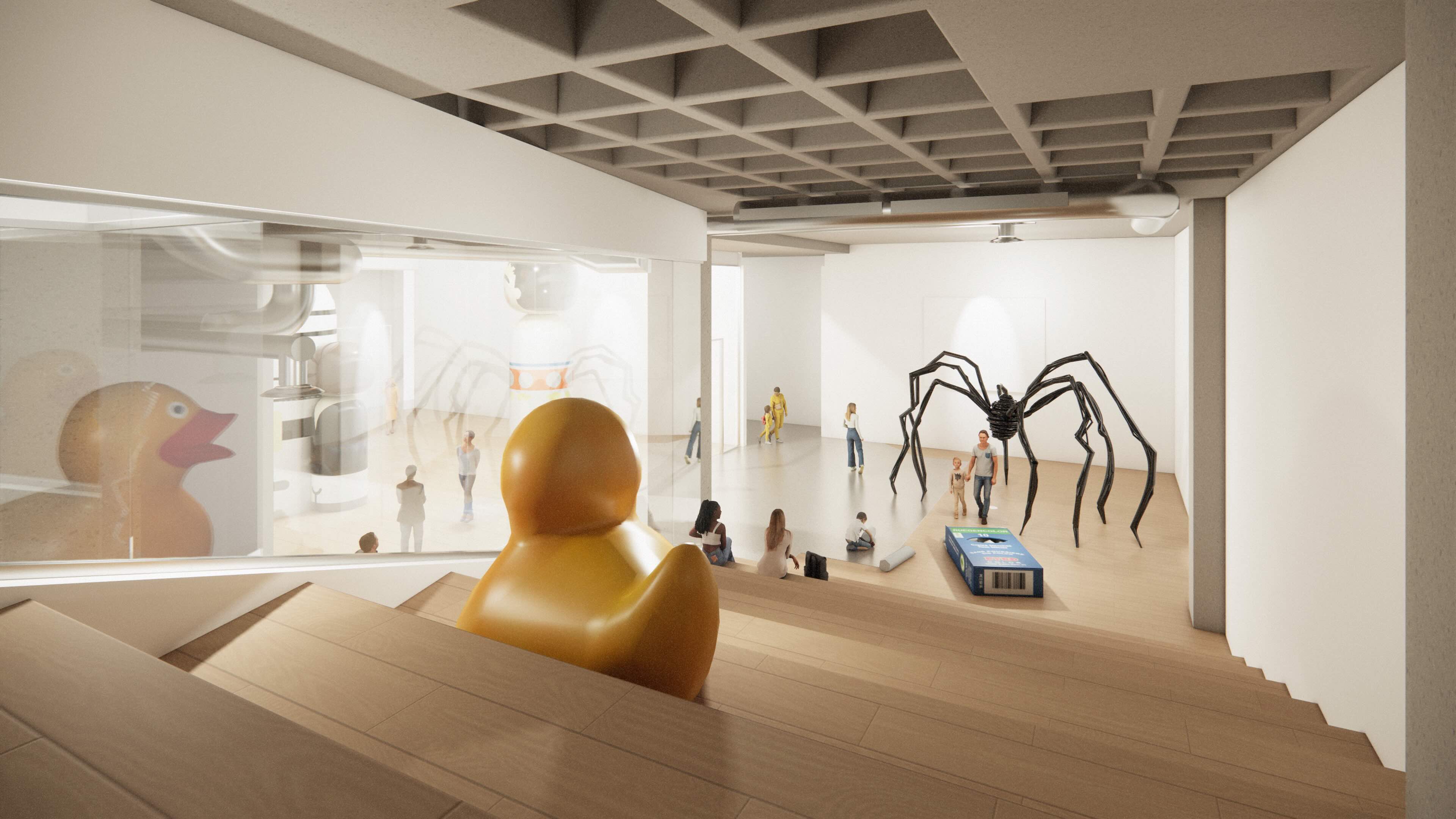
Subtle details in white oak point to a feature gained — or lost — to the museum’s renovation, while strategically located windows frame the ever-changing skyline of downtown Calgary, situating museum goers in time and space. Unrestricted sightlines into the facility’s storage and conservation areas remind visitors that there’s more to this place than meets the eye.
“Museums have traditionally had a presentation side and a back-of-house side,” Claiborne told The Tyee. “I wanted to completely invert all of that and make everything visible.”
The building’s honesty also exposes a difficult truth, albeit indirectly.
As a colonial institution, museums have historically operated from a position of power, limiting the stories their exhibitions convey to those determined by settlers. The imposing architecture of museums around the globe was part and parcel of the institution’s oppressive ethos.
But this is changing.
Who are museums for?
Over the last century, museums have shifted their approach from being an institution about someone to being for someone, an evolution described by the late museum theorist Stephen Weil in his 2002 book Making Museums Matter.
Linda Norris, an independent museum professional based in the United States, takes Weil’s explanation one step further.
She believes that, as museums become a community service, their being with somebody is paramount for the institution’s efforts to meaningfully address and respond to its colonial history. To exist with the community, museums must create opportunities for different groups of people to share their stories with one another, and facilitate the finding of common ground among communities across multiple geographies, identities and affinities.
The events and programs put forward by a museum should thus spark meaningful community collaboration. But this requires staff to surrender their sense that they know best, Norris said.
“Boards of directors, curators, everybody has to be committed to the idea that community work is the work of every single person in the organization.”
By embracing what museum professionals call “dialogic interpretation,” a facilitation practice based in dialogue and mutual understanding, museums can become more than a space people visit to receive an education. They can become dynamic spaces of civic engagement, where many ways of knowing converge through collaboration, where a community’s collective narratives, histories and identities also shape the museum.
“Dialogic interpretation starts with the idea that all of us have knowledge,” Norris told the Tyee.
“And the starting place to connect with whatever you’re seeing is your own lived experience.”
An interactive space
Imbued with a renovated purpose, museum architecture is also evolving to better serve the community.
The highly structured museum environments of yore, where spaces conceived for a fixed purpose told a single story, often detached from the lived experience of visitors, are being replaced by fluid gallery, exhibition and community spaces that adapt to the evolving needs of the groups museums serve.
Such flexibility can transform the institution from an intimidating venue, where knowledge is imposed on community members from the top, to one that incorporates a myriad of stories and ways of knowing.
It is in this spirit that the Glenbow’s redesign aims to show visitors that the museum is a place where everyone belongs, regardless of their background.
Before the renovations began in 2021, space in the museum wasn’t efficiently allocated, making it difficult for curators to refresh existing exhibitions, install new ones and adopt more inclusive curatorial practices. Similarly, programming opportunities were limited to the activities enabled by spaces that architects had designed to showcase artifacts, rather than collaborate with the public.
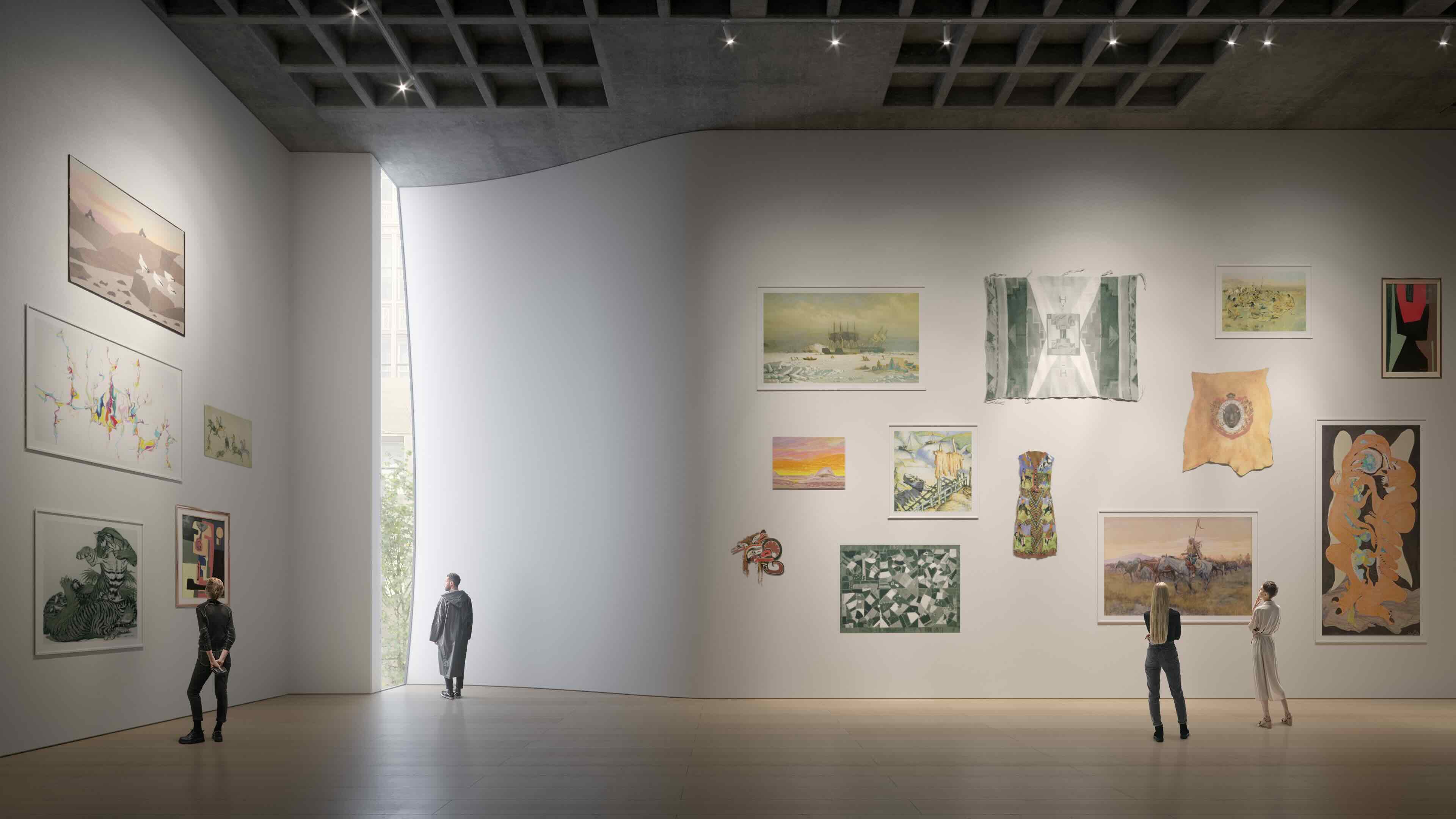
“We’ve really rethought how we’re utilizing the space that we have dedicated for exhibitions,” Kjorlien said. “The space is much more adaptive and flexible to accommodate new curatorial models and new ways of working.”
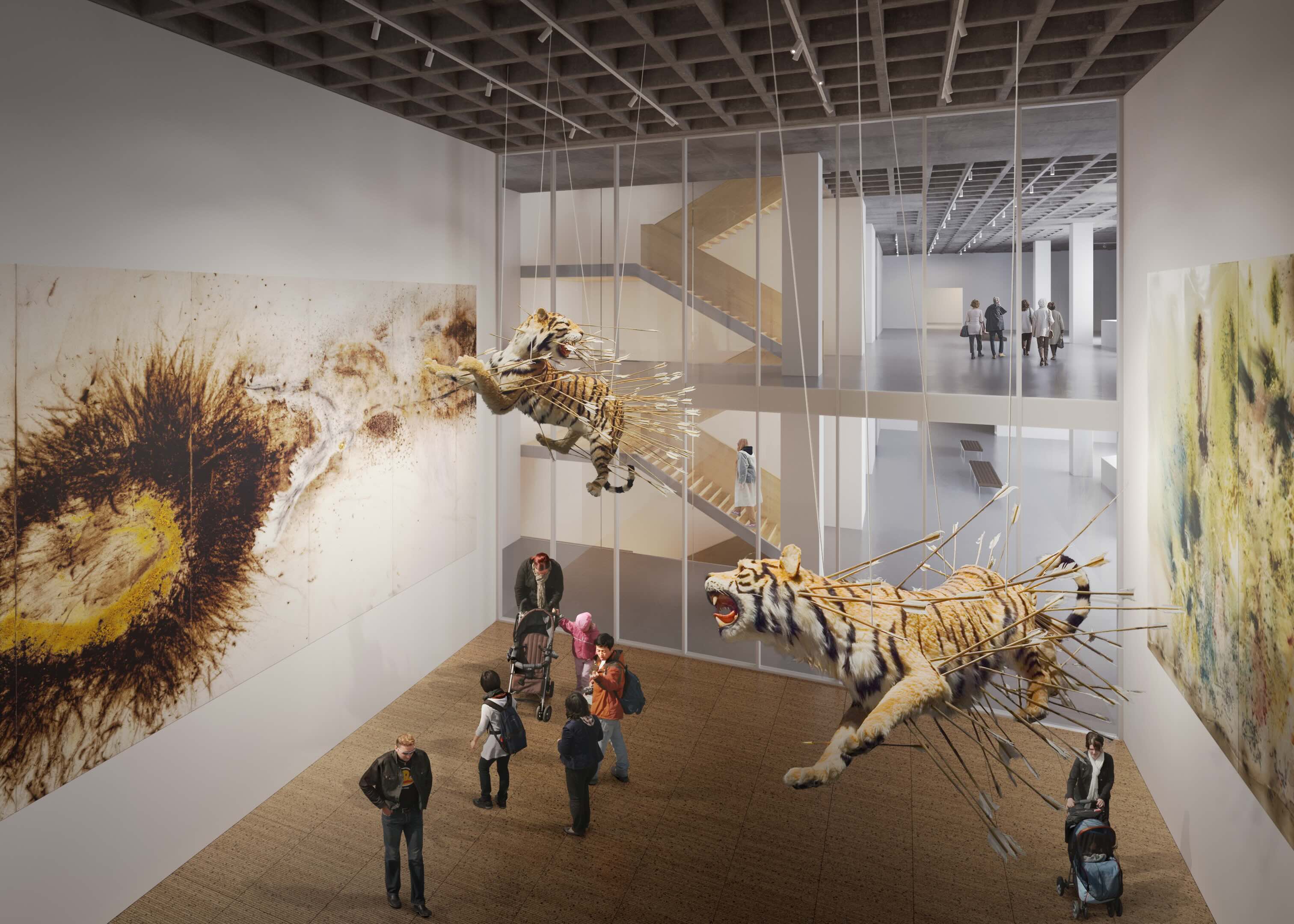
When the museum reopens next year, visitors can expect an experience where exhibition spaces of varying sizes and ambiences — including a vertical gallery spanning four of the building’s eight stories, two double-height galleries and an outdoor garden — are complemented by accessible community areas where visitors can attend a cultural ceremony, take an art class, sit in on a lecture or grab a bite at the museum’s café.
Because the curatorial team is attuned to the colonial legacy of museums, Glenbow plans to introduce opportunities for community members to co-curate exhibitions and tell their own stories using the artifacts in the museum’s collection, Kjorlien said. “It’s very important for us to have community co-curation and collaboration to speak about different subjects.”
A more welcoming, accessible space
Besides the collaborative opportunities supported by the building’s retrofit, two key changes should allow the JR Shaw Centre for Arts & Culture to become the welcoming space it aspires to be.
One is the installation of the building’s main entrance on Stephen Avenue, downtown Calgary’s pedestrian mall, whose glass doors face east towards the morning sun and City Hall. (Previously, the museum’s main entrance was located inside the adjacent convention centre, making it difficult to find.)
The second change is that access to the Glenbow will be free of charge in perpetuity, owing to a $25-million endowment established by the Shaw Family Foundation, a charity founded in 1970 by Francis E. Shaw, father of Canadian media mogul JR Shaw.
Ultimately, the success of the Glenbow’s transformation will be determined by its impact on the community, well beyond its fresh new facade.
To become truly welcoming to the communities Glenbow serves, the stories on display should foster empathy and understanding among the various ethnocultural, geographical, identity and affinity groups coexisting in southern Alberta.
“I’m hopeful that there will be opportunities for the community to bring ideas to what the Glenbow should be collecting to represent their family, or their community, into the future,” Kjorlien said.
“Having a really diverse exhibition program that shows a lot of the collection, and our commitment to rotating it more frequently, is going to allow us to bring more of those stories out.” ![[Tyee]](/design-article.thetyee.ca/ui/img/yellowblob.png)
Read more: Alberta, Urban Planning











Tyee Commenting Guidelines
Please note that email notifications for replies are not currently working due to a software issue which may be resolved in a future update.
Comments that violate guidelines risk being deleted, and violations may result in a temporary or permanent user ban. Maintain the spirit of good conversation to stay in the discussion and be patient with moderators. Comments are reviewed regularly but not in real time.
Do:
Do not: