


 SHARE:
There was a 17-year stretch when my life circumstances meant that I moved apartments at least annually, or every few years at best. Space was tight, so I became skilled at scaling back my belongings as I approached yet another pile of moving boxes. On several occasions, I would KonMari too close to the sun — pressed for time and resources, I gave away many items I later wish I’d kept.
One beat-up shoebox survived each move. It contained the CDs I couldn’t give up, no matter what. They now line the top of a bookshelf in an apartment we luckily have no plans of leaving soon.
The CDs include embarrassing teen fixations that I keep around to remind me of my formative years (my high school rock god was Tri-Cities celebrity Matthew Good). There are studio albums, box sets and record store clearance items.
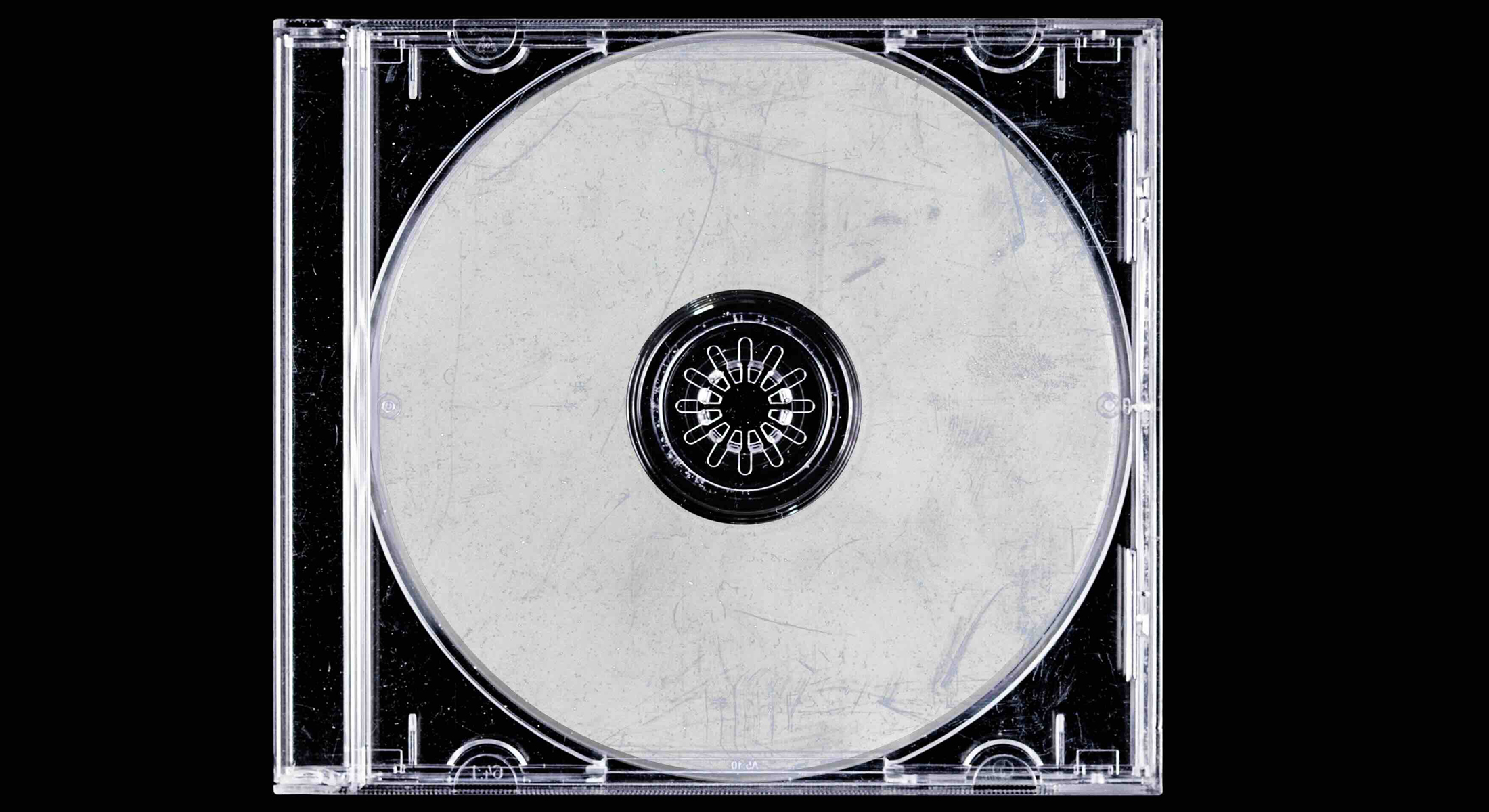
There are also slim volumes in clear plastic cases. They’re easy to miss, but they hold the most value to me. They are burned CDs.
Most are labelled in Sharpie marker in the handwriting of people I knew when I was young. They were all made during the height of the ripped CD, a fleeting stretch of time in the early-to-mid-2000s enabled by the technological leaps in peer-to-peer file sharing that shaped internet culture. Crucially, this occurred in the bubble before the compulsory performativity and surveillance of the social web took young internet users by storm.
It was the era of Napster, LimeWire, Kazaa and BitTorrent. When Windows Media Player 8 launched in October 2001, users of these services could rip MP3s to CD for the first time.
Music nerds like me spent hours downloading songs and albums from a range of peer-to-peer services, then burning our favourites onto CDs.
As a token of friendship, a romantic gesture or a mark of affection, we curated album-length collections of such songs and burned them onto what was then known as a mix CD, the millennial successor to the mixtape.
To me, they were the perfect gift, and I made and received dozens of burned CDs between 2001 and 2006.
The contents of the burned CDs on my shelf vary widely. Some of the friends who made them for me added track listings, while others didn’t. No one wrote their names on the discs, because it simply wasn’t done, and besides, I knew who they were anyway. Looking back now, I see the freedom in this, a time before everything digital was tagged with your full name and connected to your contact information and geographic location.
Some CDs feature hand-drawn illustrations or zine-style album art collages with a short message that indicates the occasion for which it was made. My birthday (Buck 65; early 2000s hip-hop). Romantic doom (Neutral Milk Hotel; Cat Power covering Pavement). A cheeky vote of confidence in a challenging time (Handsome Boy Modeling School).
People burned me CDs of full albums. I have a copy of Ratatat’s self-titled debut. Boards of Canada’s The Campfire Headphase and Manitoba’s Start Breaking My Heart are labelled with an old boyfriend’s familiar scrawl. Others fall somewhere between album and mix, such as the burned copy of Wolf Parade’s Apologies to the Queen Mary in my own handwriting. There was extra space on the disc following the 12 tracks on that album, so I tossed in some additional songs.
My child is now weirdly familiar with a five-minute 2005 time capsule in the form of the club mix of Bloc Party’s “Tulips,” because the only CD player in our possession is the one in the old car I drive.
‘Music is now indistinguishable from tap water’
There was an art to the burned CD. It required an investment of time, research and intention that feels miles away from the algorithmic mediocrity we now contend with.
On Spotify, I have access to millions of songs. As a habit-bound, comfort-seeking creature in an overwhelming ocean of choice, however, I’m more likely to search for and listen to what I already know than to trawl the expanse for new material.
If I leave Spotify to its own devices without directing it, the music streamer will serve me other songs and artists similar to the ones I already know. My listening habits have trained its algorithms to play predictable, samey content in a loop of my own making. When the algorithm does suggest an unfamiliar song, I often skip it.
Unlike a burned CD from a friend, there’s no social contract that compels me to sit with something new, and take the time to better understand it. There’s very little on Spotify that will compel me to dive into the catalogue of a new-to-me artist, then seek them out when they go on tour.
“Music is now indistinguishable from tap water or electricity,” wrote Toronto artist manager and music brand supervisor Joel Gouveia in a recent Substack post responding to music business leader Jimmy Iovine’s remarks on the imminent death of music streaming platforms in a June 2025 interview with David Senra on his Founders podcast.
“When music is treated like a utility,” Gouveia wrote, “It’s unconsciously devalued by the consumer. It’s background noise.”
Music streamers are akin to ATMs, Iovine noted in the podcast. “You put your money in, you get your music,” he said.
“They don’t do anything for the artist.”
The logic is clear: “Spotify does not want you to have a relationship with your fans. Spotify wants you to have a relationship with Spotify,” Gouveia wrote.
The artists who will survive the next five years, he said, will be those who shift their focus away from streaming services and onto cultivating direct relationships with their audience.
“The music industry has spent a decade obsessing over how to get a million people to listen to a song once,” Gouveia wrote. “The next decade will be defined by artists figuring out how to get 1,000 people to care forever.”
Getting 1,000 people to care about one musician’s work forever will require an interesting process of undoing. It will require, at scale, a return to deep listening, focused research and the inconvenient yet pleasurable friction derived from trying at something, however imperfectly. It takes work — repetition, supplemental reading, sustained engagement — to bridge the gap from enjoying something casually to approaching it with more depth. Some even say that a bit of snobbery offers a kind of productive pushback to the slop surrounding us.
The burned CDs in my collection, in anyone’s collection, are not masterworks of the audio arts, and that is not the point. They are candid displays of creative self-expression rendered in years when those receiving them were not reflexively documenting the exchanges in front of thousands of followers. Burned CDs are records of genuine effort and attempts at connection. That, to me, is worth holding onto.
We’re at a cultural moment when anyone creating content for consumption at any scale is in a word-for-word fight for their audience’s attention.
Making and receiving burned CDs at the turn of the millennium offered a glimpse of a different possibility: that a person could experiment creatively, put a piece of their heart on their sleeve and rest in the hope that their intended recipients would stop, listen and take them seriously.
What a gift. ![[Tyee]](/design-article.thetyee.ca/ui/img/yellowblob.png)
Read more: Music, Science + Tech











Tyee Commenting Guidelines
Please note that email notifications for replies are not currently working due to a software issue which may be resolved in a future update.
Comments that violate guidelines risk being deleted, and violations may result in a temporary or permanent user ban. Maintain the spirit of good conversation to stay in the discussion and be patient with moderators. Comments are reviewed regularly but not in real time.
Do:
Do not: