 SHARE:
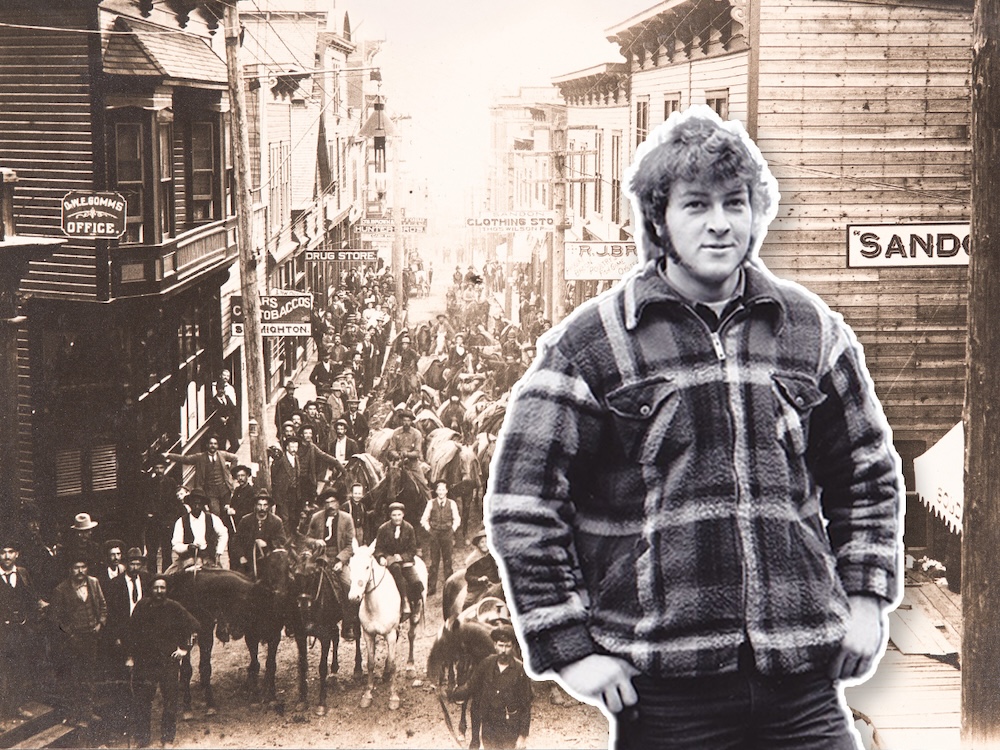
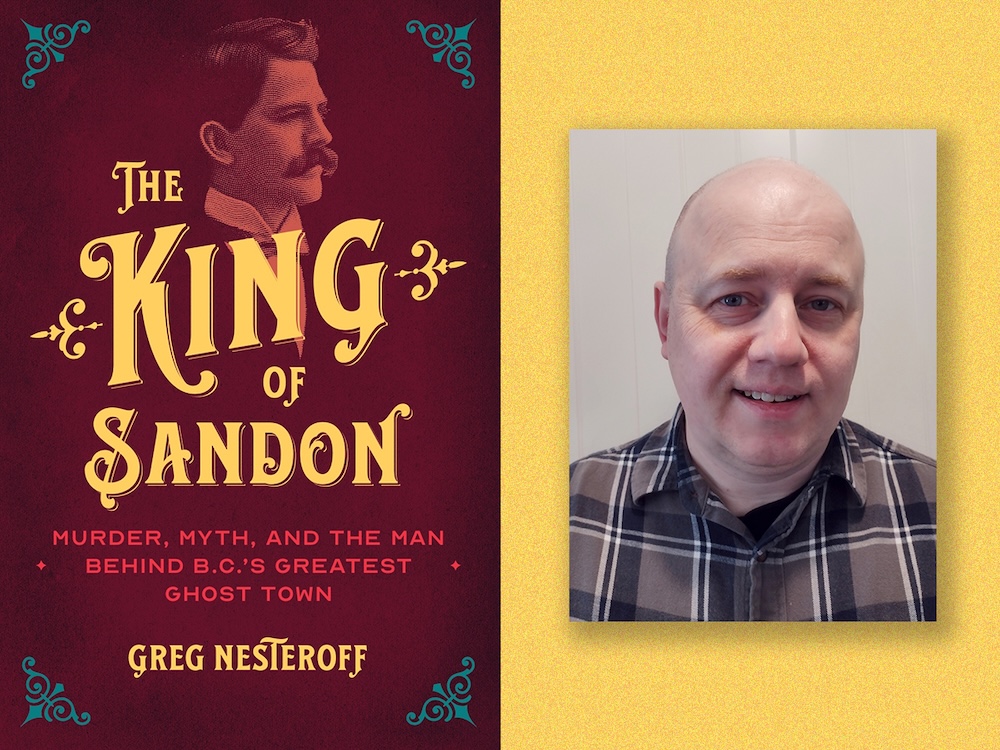
[Editor’s note: In ‘The King of Sandon: Murder, Myth, and the Man Behind B.C.’s Greatest Ghost Town,’ longtime Kootenay journalist and historian Greg Nesteroff profiles John Morgan Harris, a pivotal figure in one of the province’s most colourful ghost towns. In this excerpt, which has been adapted for The Tyee, Nesteroff writes about how Sandon was preserved, and the pivotal role played by a pair of teenagers still in high school. ‘The King of Sandon’ is available online.]
You’d be hard pressed to find a worse place for a town than where Sandon was born.
The one-time capital of the Silvery Slocan was hemmed in by a narrow valley where little daylight penetrated the high mountains, earning Sandon the nickname the Sunless City. Flat land was at such a premium that the main street was built overtop Carpenter Creek.
Yet here John Morgan Harris established a community as a monument to himself. That Sandon survived long after neighbouring boom towns reverted to wilderness was a testament to Harris’ entrepreneurialism, stubbornness, and vanity. He owned the townsite, waterworks, power plant, hotels, office buildings, and more — all paid for with proceeds from his silver mine. He was dubbed the King of Sandon, though his subjects didn’t always see his rule as benevolent. The zeal with which he enforced his property and mineral rights earned him no shortage of enemies.
Harris had arrived in the Slocan from Virginia by way of Idaho in 1892, at the forefront of a mining rush that saw hundreds of prospectors invade Sinixt territory in search of fortune. He was luckier than most, buying a promising claim called the Reco, which became one of the region’s steadiest producers.
For a few years, Johnny Harris was Sandon’s feudal lord and benefactor, and he watched with pride as the mining camp grew into a bona fide city, one replete with saloons, gambling halls, and brothels.
The bubble burst fast. The miners’ union went on strike, the Klondike rush drew attention away from the area, and a fire destroyed much of the town. Sandon was soon a shadow of its former self.
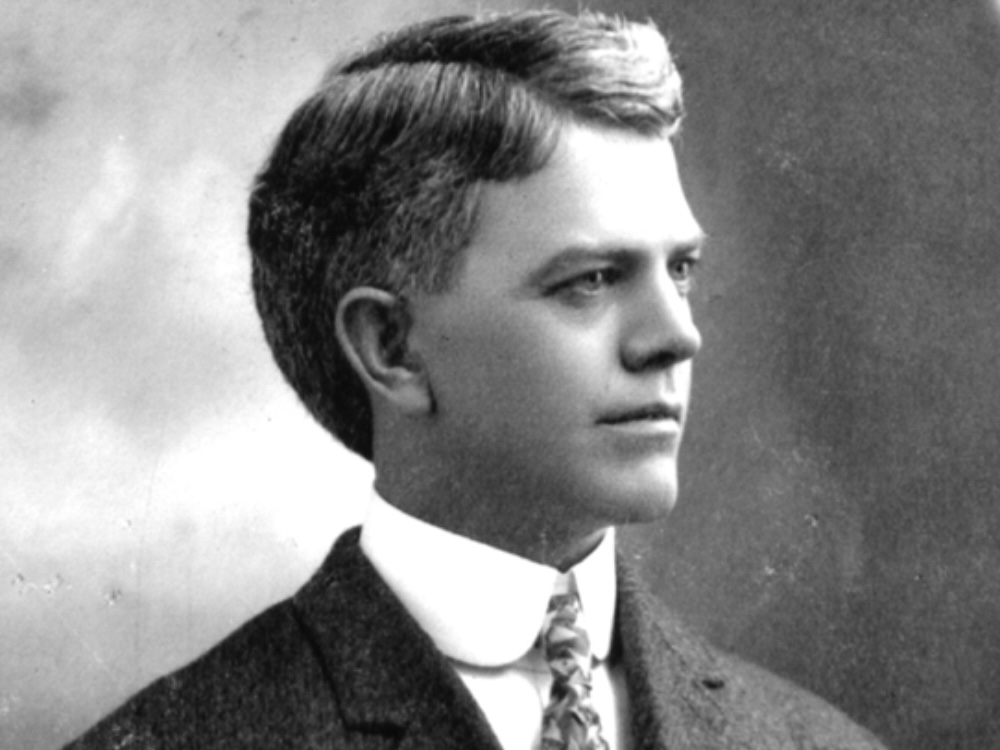
But Harris refused to go. Even as others sensibly left for greener pastures, he kept up Sandon’s infrastructure, betting that the mines would roar back to life and he would be well positioned as chief landlord when they did.
It didn’t work out that way. The town continued a long decline, punctuated only by a bitter interlude during the Second World War, when the B.C. Security Commission sought places in the B.C. Interior to intern Japanese Canadians. Sandon’s surviving buildings and isolation made it ideal in the eyes of officialdom.
Johnny Harris died in 1953, age 89, having spent most of his life in Sandon. Two years after he was laid to rest, a washout of Carpenter Creek undermined many of the remaining buildings. By all rights, the town Harris founded should have died with him.
Sandon still wasn’t finished.
A ghost town gains notoriety
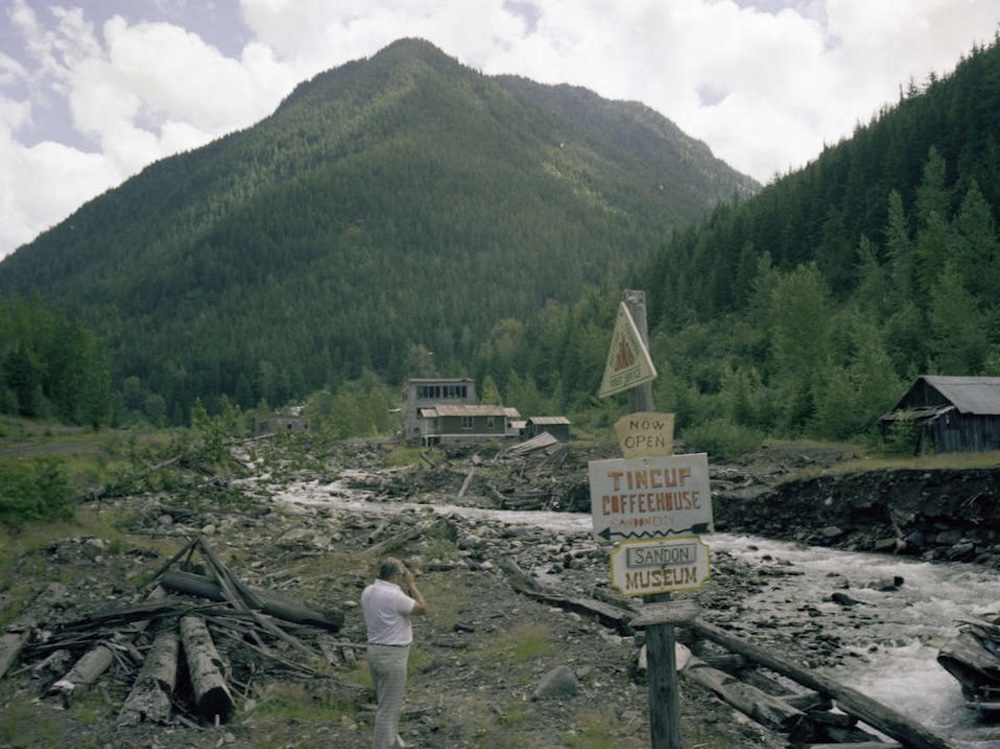
Even before Harris’ death, his town was regular grist for magazine writers who chronicled its colourful past. It was well on its way to becoming the most famous ghost town in the West Kootenay, and possibly all of B.C. By the 1960s, hundreds of tourists were following a dirt road each summer to see what remained and souvenir hunters had started picking the town apart.
Several history buffs who fell under Sandon’s spell could see its potential as a heritage site, including two teenagers from Salt Spring Island, Hal Wright and Steve Anderson. In the summer of 1972, after completing Grade 9, the pair established a modest museum in Sandon.
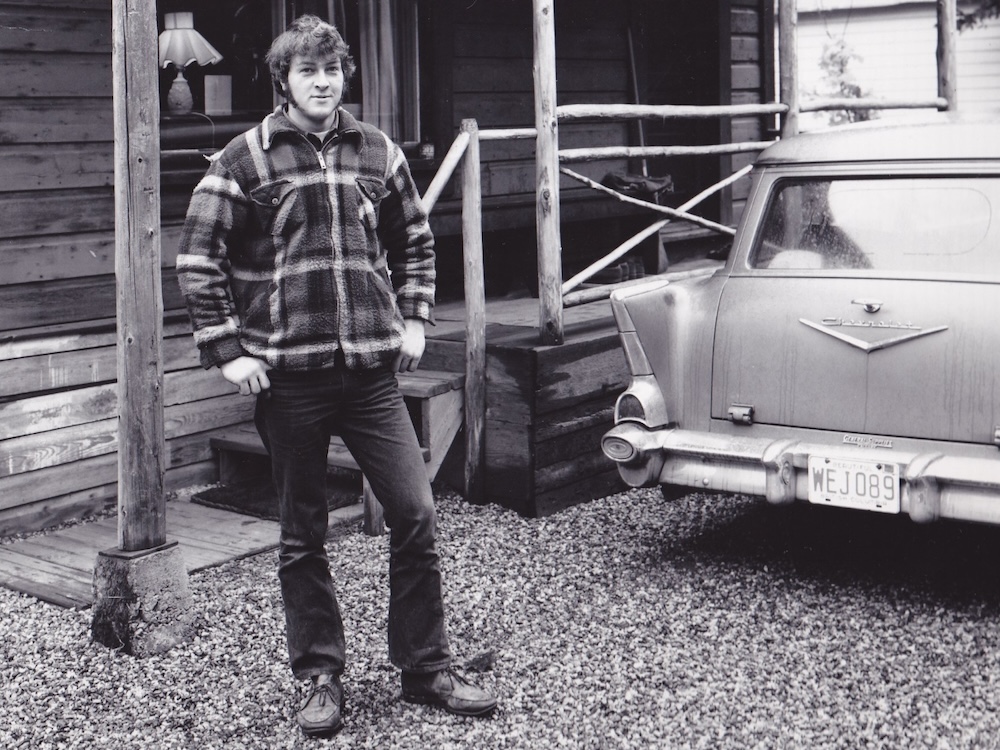
Wright’s interest in history had been whetted through a friend of his parents, who introduced him to longtime provincial archivist Willard Ireland.
“We’d go to Victoria and spend an entire day in the archives,” Wright recalled. “Mr. Ireland was wonderful to me. The fact that I was young didn’t put him off at all. Everything was hands-on. He’d give me white gloves and tell me how to handle things.”
Local farmers would post job opportunities at Hal’s school and he’d eagerly respond. A few hours of picking gooseberries or building fences would mean cash to buy prints of archival photos, especially of Sandon.
Wright’s maternal grandmother, a French professor in Nelson, first took him to Sandon in the 1960s when he was 10. Wright was entranced.
“It was an amazing, enormous ruin,” he said. “Debris from all the buildings that had been torn down covered the downtown floor. The ruins must have been there a long time, and yet the evidence was fresh.”
It was a kid’s paradise, with scores of wide-open buildings inviting exploration, although you could barely go anywhere without stepping on a nail. When Wright first visited, Johnny Harris’ Virginia Block was boarded up, but the building was still intact. The miners’ union hospital and many homes still stood on a hillside. The hospital, in particular, still had its staircases and wainscoting, though the plaster was crumbling. A big wooden bathtub remained in the basement, left over from the internment years.
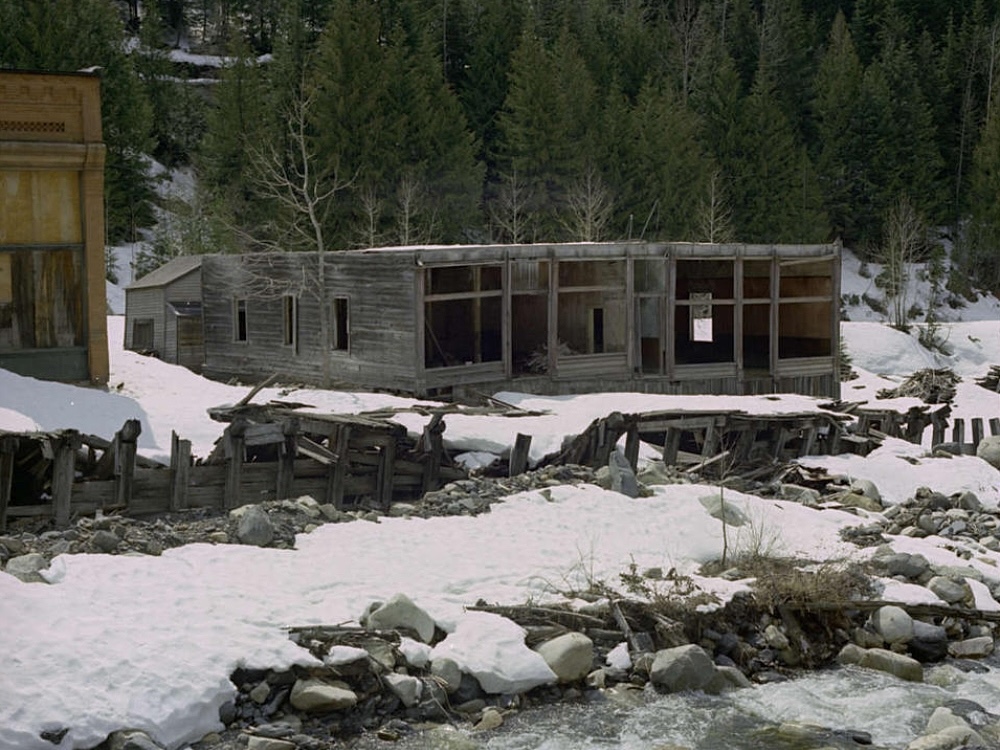
The city hall was also still standing. After Sandon disincorporated, the building had been used as a school from 1925 to 1954, and then sold to Gene Petersen, Sandon’s last remaining full-time resident. But it was becoming increasingly derelict as Petersen dismantled it for its lumber.
Sandon had become a lumber scrapyard, in fact, with fancy woodwork strewn throughout the wreckage of its demolished buildings. Victorian decorative features were long out of vogue, so no one bothered to cart them away.
A handful of buildings were occupied and signs of the now-abandoned railway were everywhere: the old grades, a few surviving trestles, collapsing sheds. Utility poles stood with scattered lines hanging off of them. There was little greenery to hide the damage of the 1955 washout, but trees were starting to take Sandon over at its fringes. On hot days, downtown seemed blisteringly dry. It reminded Wright of a gravel pit.
After that initial visit, Wright took every opportunity to come to the Kootenays and stay with his grandmother. He would head out to Sandon with a brown bag lunch in tow and spend the day exploring ruins and peppering Petersen with questions before finding his way home and ruminating over how he could help preserve the place and its history — at least what was left of it.
In the few years since he’d first visited, he had already witnessed nature and people claw away at the remaining buildings. And unless someone did something soon, Sandon’s soul would be lost.
When Wright returned home to Salt Spring in the fall of 1971, he was determined to be that someone. He spent the following Easter holiday in Sandon, fixing up an old cabin Petersen had given him. Later that spring, Wright applied for federal funding to put new roofs on some buildings and start a small museum, through the recently announced Opportunities for Youth program. His grant was approved for nine weeks.
The day after school ended in June 1972, Wright and his friend Steve Anderson — who was the same age, and whose ear Wright had talked off about Sandon — lugged a steamer trunk stuffed with photo albums aboard a Greyhound bus and made their way to the Slocan for the summer.
“We were on our way,” Wright recalled. “We were so excited.”
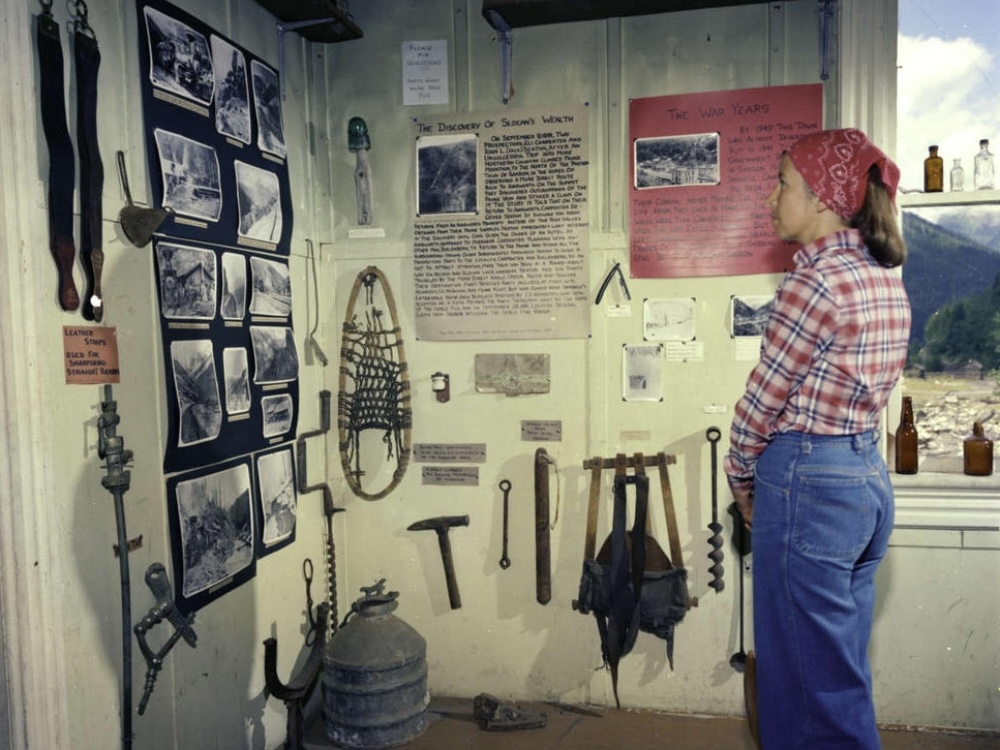
Petersen thought the old railway station might make a good spot for the proposed museum. Wright and Anderson began setting up photographs they’d hauled along and populated exhibits with newspaper clippings and other old documents, plus artifacts that Petersen donated or that the boys unearthed, including mining equipment, ore samples, and poker chips. The museum was an immediate hit. Some astonishing number of tourists — 8,000? 10,000? 20,000? — visited that summer.
A steady stream of people had already been coming to gawk at Sandon’s ruins — or to dispose of garbage, as the town was an unofficial dump. But now they could see what the city had looked like at its peak, learn a little bit of mining and railway history, or take a guided tour from two eager kids. The guestbook filled up with names from around B.C. and the U.S.
In their off hours, the boys tackled reconstruction and repair projects. They shored up and re-roofed buildings, and they put in new foundations under Petersen’s watchful, somewhat wary eye. Petersen had a soft spot for the boys, admiring their enthusiasm and offering encouragement, but he was ambivalent about tourists. On one hand, they were crowding his space and cramping his style. On the other, they burnished his self-image as Sandon’s unofficial mayor.
At summer’s end, Steve Anderson went back to school on Salt Spring. But Hal Wright could see his future lay in Sandon. With his parents’ blessing, he continued high school by correspondence and stayed in the area to look for work with the local mines.
Despite early success, detractors emerge
Wright and Anderson’s museum received enthusiastic coverage in local and provincial newspapers.
The attention lured new visitors and helped reframe public perception of Sandon. No longer was it a ghost town inexorably sliding toward oblivion or just a good place to score a free door or window. Now it was a viable candidate for heritage status, a place not only with an interesting past but a promising future.
Still, in the early going there was no shortage of detractors. Plenty of people couldn’t see any point in preserving Sandon — they laughed and told Wright he was wasting his time. He was undeterred.
In the summer of 1974, Wright made a deal to move the museum into the former police station. Built in 1925 as the residence of Sandon’s police officer, it was still a modest space, but large enough that Wright was able to live there as well.
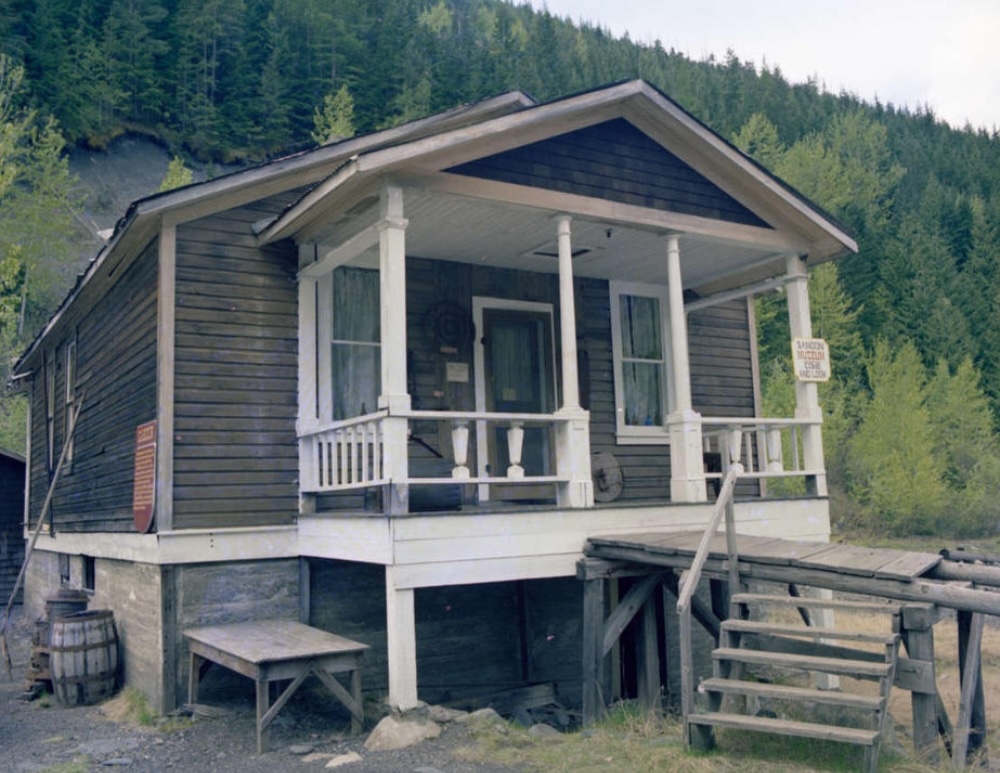
Wright’s younger brother Alexander came to help. They approached Petersen about buying the old city hall, but he was adamant it was coming down, much to the boys’ chagrin. While Petersen was interested in Sandon’s history, he was no preservationist. He would use any available wood to heat his home, even if it came from an old building.
Petersen expected Sandon to die a natural death once he finally moved on, and in the meantime he wanted lumber from city hall to build a home in Kaslo or New Denver. The Wright brothers offered to buy him an equivalent amount of wood for the project, but he demurred.
Still determined to change his mind — and full of energy — Hal and Alexander volunteered to dig out the bottom of the building, buried in rubble and sediment. Hal helped Petersen shovel the roof that winter, waiting for Petersen’s change of heart.
Hal hadn’t given up on government support to conserve Sandon as a heritage site either. In writing, Hal and Petersen both expressed the belief that government intervention was necessary if there was any hope of saving what was left.
“The destruction of the old historic structures continues at an accelerated pace,” Petersen wrote to B.C.’s minister of recreation and conservation. “Soon there will not be enough left to bother with — the old ghost town atmosphere will be gone — and our last chance to have a major tourist attraction lost forever.”
The minister’s reply was less than encouraging. It noted the cost of preserving Sandon would be significant, and that in the previous 15 years, the government had already turned the historic mining towns of Barkerville and Fort Steele into heritage attractions. For both reasons, the province wasn’t eager to get involved.
Even so, parks officer Phil Whitfield was dispatched to see what could be done. After Petersen and Hal Wright toured him around, Whitfield concluded Sandon was “not particularly unique in the annals of British Columbia mining towns. At the same time, it is representative of the many industrial towns in this resource-based province which fade away following the exhaustion of the resource.”
Whitfield acknowledged the threats of heavy snow and increasing visitors, who brought destruction through salvage, souvenir hunting, and vandalism. He thought the government could use its legislative tools to more “rigorously” deter looters.
Fellow BC Parks employees Patrick Fey and Joy Smith also visited Sandon, coming away less conflicted than Whitfield. Fey was convinced the city hall could be turned into an interpretive centre and the still-operating Silversmith power plant could become a working museum.
Smith prepared a proposal for B.C.’s recently formed historic sites advisory board, the body that would recommend whether the government should act. Her report said Sandon was “generally acknowledged as the most interesting of the British Columbia ghost towns,” and although most lots there had already reverted to the Crown, she proposed spending thousands to acquire buildings and artifacts.
Smith’s proposal went before the advisory board in September 1974. However, it was met with silence. In mid-December, the deputy minister wrote the board urging a decision. There is no record of a reply. In fact, the board took no action at all.
Over the winter, the hospital and a house collapsed. A Department of Highways road crew reportedly destroyed other structures, including two shacks on private property. They also burned a building close to the road, and the fire spread to another building nearby. A grader operator accidentally pushed a structure that Hal Wright owned off its new foundation.
‘I don’t think Sandon is dead’
Local citizens tried to fill the gaps when government was unwilling to step in — or even to fix damage its workers caused. The tide was finally turning, as artifacts that had long ago left Sandon started to return home and find a place in the museum. They included plates and china from the miners’ union hospital, flat irons and a dentist’s chair, a cash register from a saloon, a wind-up Victrola phonograph, and Johnny Harris’ typewriter.
In the spring of 1976, when Wright was 19, he married Irene Palmer of New Denver. After Hal and Irene returned to Sandon from their honeymoon, he kept the museum going for another summer by himself, but work and family began to consume his time and resources.
While the museum remained his passion, he became less hands-on. But friends were willing to volunteer, and some grants were available.
In an effort to further spread the work around, the Sandon Historical Society was founded in 1978, with a reluctant Gene Petersen as president. “We had to work on him to sit as a board member,” Wright said. “We saw it as imperative that he was there. We wanted him to be the figurehead.”
The society would assume responsibility for the existing museum, but eyed the old city hall as a possible new location.
In 1980, Bob Broadland, who headed B.C.’s heritage administration and had advocated for government involvement in Sandon, asked a colleague: “Is Sandon dead, or does it just appear so? Can it be revived?” A project officer replied: “I don’t think Sandon is dead, not yet just anyway.” That was the last word in the government’s file.
A new era comes to Sandon
Gene Petersen died in 1988 at the age of 72, following a battle with prostate cancer. His 66 years in Sandon had topped Johnny Harris’s 61.
Almost to the end, Petersen had remained determined to build a new house with lumber salvaged from Sandon’s city hall. The beautiful wood was lying ready, stacked inside the stripped building. But his plan was thwarted after he sold the windows — still in place at the time — to someone who wanted to build a greenhouse. Rain blew in and spoiled the lumber.
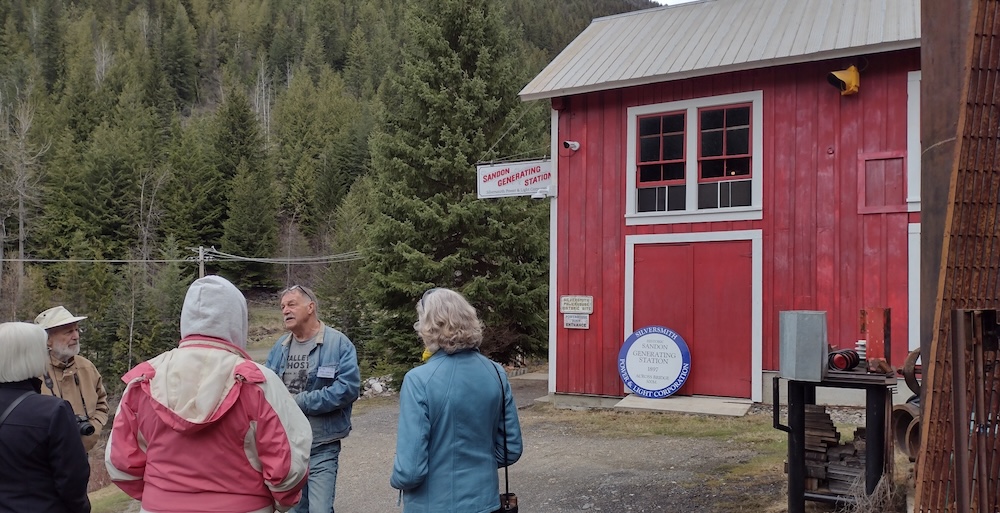
As Petersen was dying, Hal Wright was finally able to buy the building. Hal, Irene, and their kids had moved back to Salt Spring Island in 1981 for work, but Petersen asked if he’d return to Sandon to look after the Silversmith powerhouse, which had once powered a major mining operation and now served Sandon’s few residents. Wright was the only person Petersen trusted with the antique hydroelectric equipment, since they’d worked on it together.
Wright agreed, but he asked Petersen again about the city hall.
“I said if we’re going to come here and look after the power plant, this is going to be a big change to my career path.”
Wright offered to have the building re-roofed, and Petersen finally agreed to sell it. It would give Wright’s family something to work with as they tried to make a living in Sandon.
So began a belated restoration program. Wright lifted, turned, and straightened the building before it could collapse. A gift shop opened on the ground floor in 1990.
But maintaining the power plant and catering to tourists in the summer wouldn’t sustain Wright and his family year-round. He would work various jobs as a heavy equipment operator and truck driver. When one position dried up, he found another.
“I’ll manage one way or the other,” he said. “You have to be a jack of all trades and can’t be too fussy about the type of work you do to stay employed in a place like this.”
A life’s work continues
Sandon today is more ghost than town, but it’s still a fascinating place and a popular tourist draw. However, politics and infighting has conspired to keep Sandon from reaching its full potential as a heritage site or tourist attraction.
In the 1990s, the provincial government lent support to a program to replicate some of Sandon’s historic buildings. Things stalled when tourism minister and longtime Sandon booster Bill Barlee lost his seat in the legislature.
The museum, meanwhile, moved to a much larger space in a former general store. Part of the brick building had been on the verge of collapse, but Wright worked aggressively to save it. The restored building was declared a provincial heritage site.
What should have been an auspicious sign of Sandon’s future was soon tempered by internal disputes: two former historical society directors sued the society for defamation. A subsequent conflict resulted in Wright’s expulsion from the same society, which he had helped found. The parties never reconciled. Today, Wright and his family own most of the private land in Sandon and continue to operate the gift shop in the former city hall as well as the Silversmith powerhouse. The historical society runs the museum. They maintain an uneasy coexistence, with sometimes competing visions.
In the early 2000s, Wright bought a fleet of old transit buses and brought them to Sandon, intending to restore them and sell them to transportation museums. Transit buffs are agog when they discover them, but others are aghast, feeling they are out of place, lacking connection to Sandon’s past.
Only a handful of people live in Sandon year-round, including Wright, but in the summer, the town comes alive. Many hikers also pass through en route to a former forestry lookout atop Idaho Peak – or at least they did until the road became impassable a few years ago.
The replica buildings that were started more than 30 years ago have finally been completed and their windows now bear a display on Sandon’s internment era.
Sandon has become Hal Wright’s life’s work: more than 50 years of shoveling snow off of old buildings, caring for the venerable power plant, and convincing others of the town’s historic value, all while hustling to make a living.
What would Johnny Harris have made of the time and energy Wright and others have invested in preserving the remains of his beloved town? He might have been puzzled that they didn’t share the more mercenary side of his personality. But he would have been impressed with their dedication and considered them worthy heirs to his throne.
Harris always said his town would come back one day. It never realized his ambitions, but its evocative atmosphere endured, charming newcomers who ensured Sandon -- and its stories -- would live on.
Excerpted from ‘The King of Sandon: Murder, Myth, and the Man Behind B.C.’s Greatest Ghost Town’ by Greg Nesteroff. Copyright © 2025 Greg Nesteroff. Reproduced by arrangement with the writer. All rights reserved.
Happy holidays, readers. Our comment threads will be closed until Jan. 5 to give our moderators a much-deserved break. See you in 2026! ![[Tyee]](/design-article.thetyee.ca/ui/img/yellowblob.png)
Read more: Books