


 SHARE:
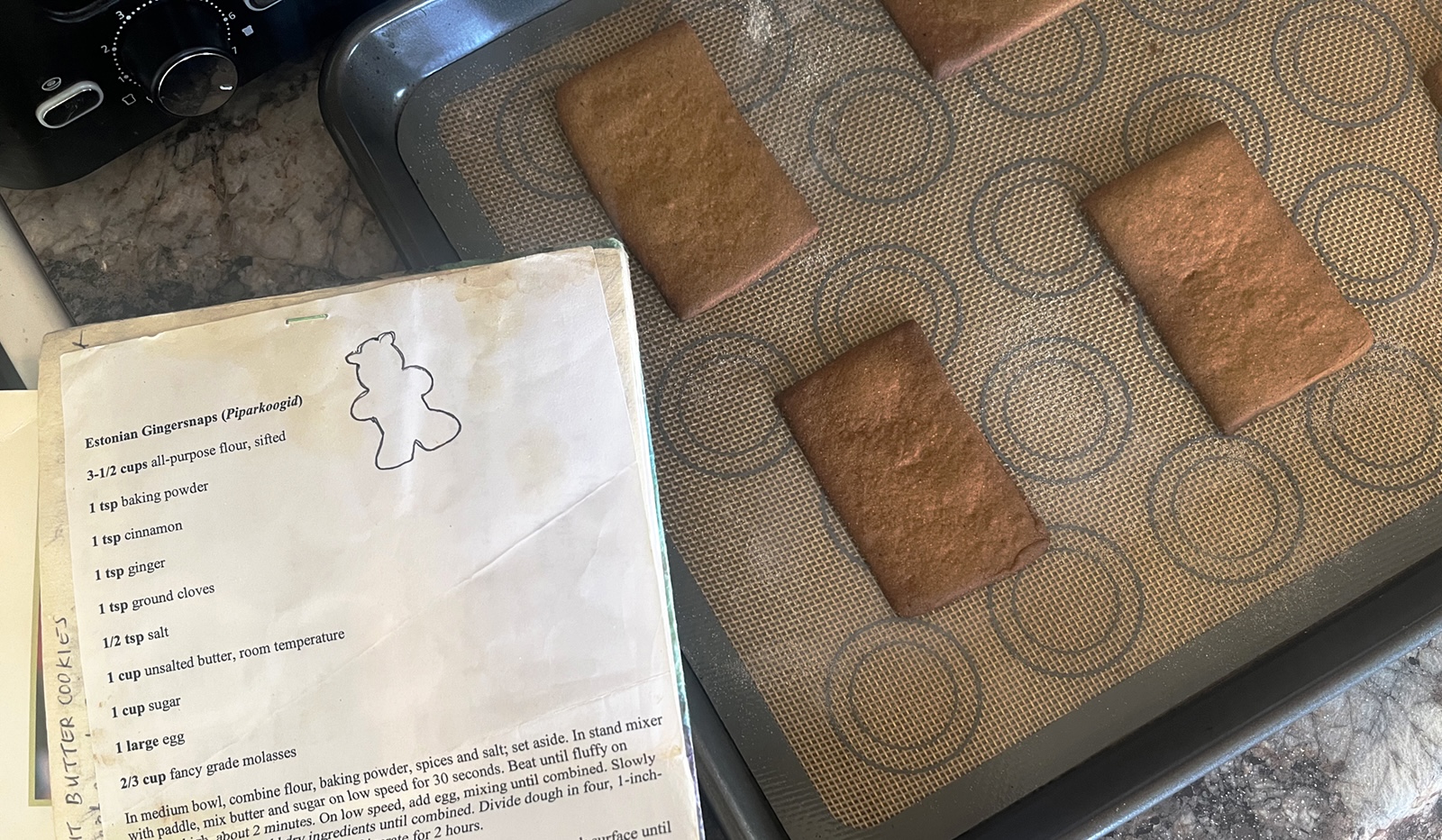
It’s already dark out when my partner Will joins me in the kitchen. The overhead lights are on, and I’ve just whipped up a batch of royal icing. Two days ago I made gingerbread dough; yesterday, I baked it. We’re ready.
Are we ready? Five minutes in, I have thrown a cookie across the kitchen in frustration.
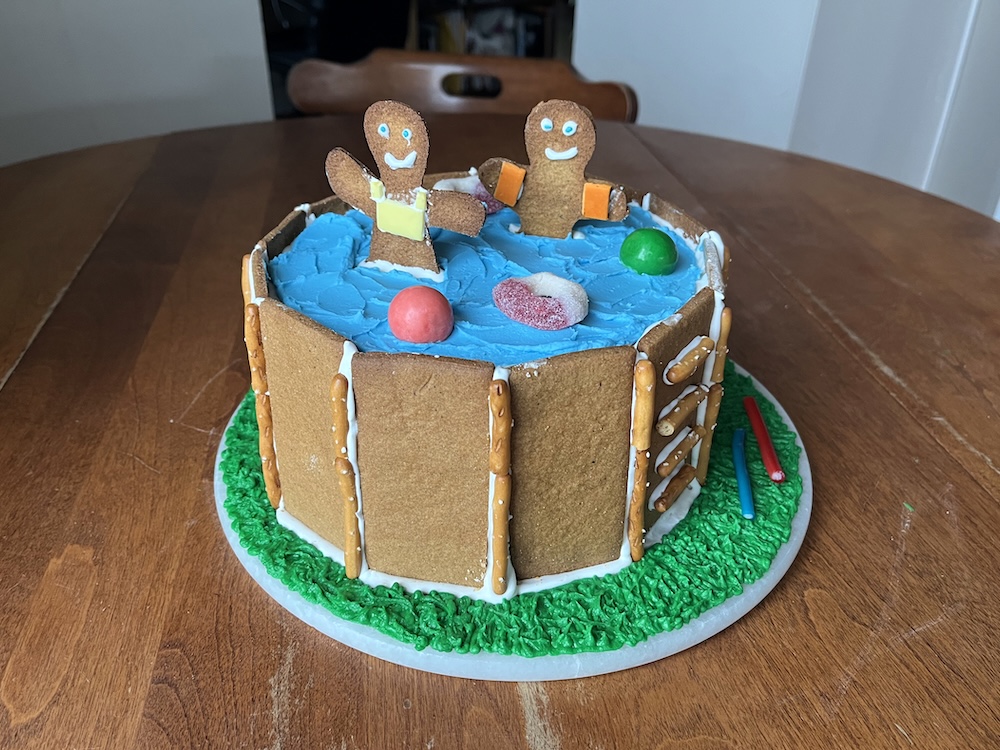
This year’s gingerbread project is an above-ground swimming pool. In years past, I’ve made a gingerbread Vancouver Special and a back-to-basics gingerbread house using a template I found on the internet. One particularly ambitious year, I made a gingerbread replica of our own house.
There are rules. Aesthetics are never to be prioritized above how good the project tastes. Challenge is good, but only to the extent that it feels satisfying.
Perfection is not to be sought.
And if it feels in any given year like the project will be a burden rather than a joy, I simply don’t do it.
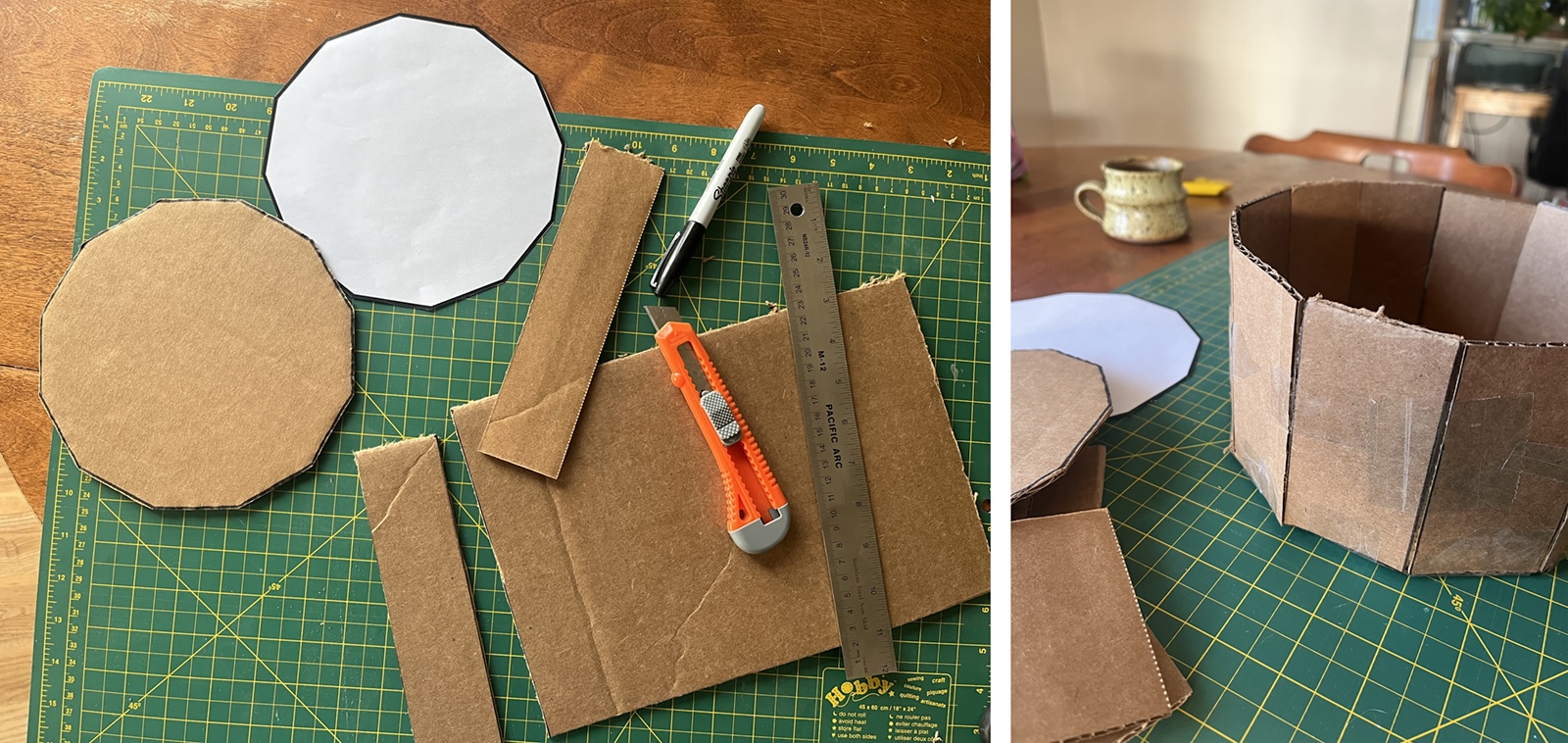
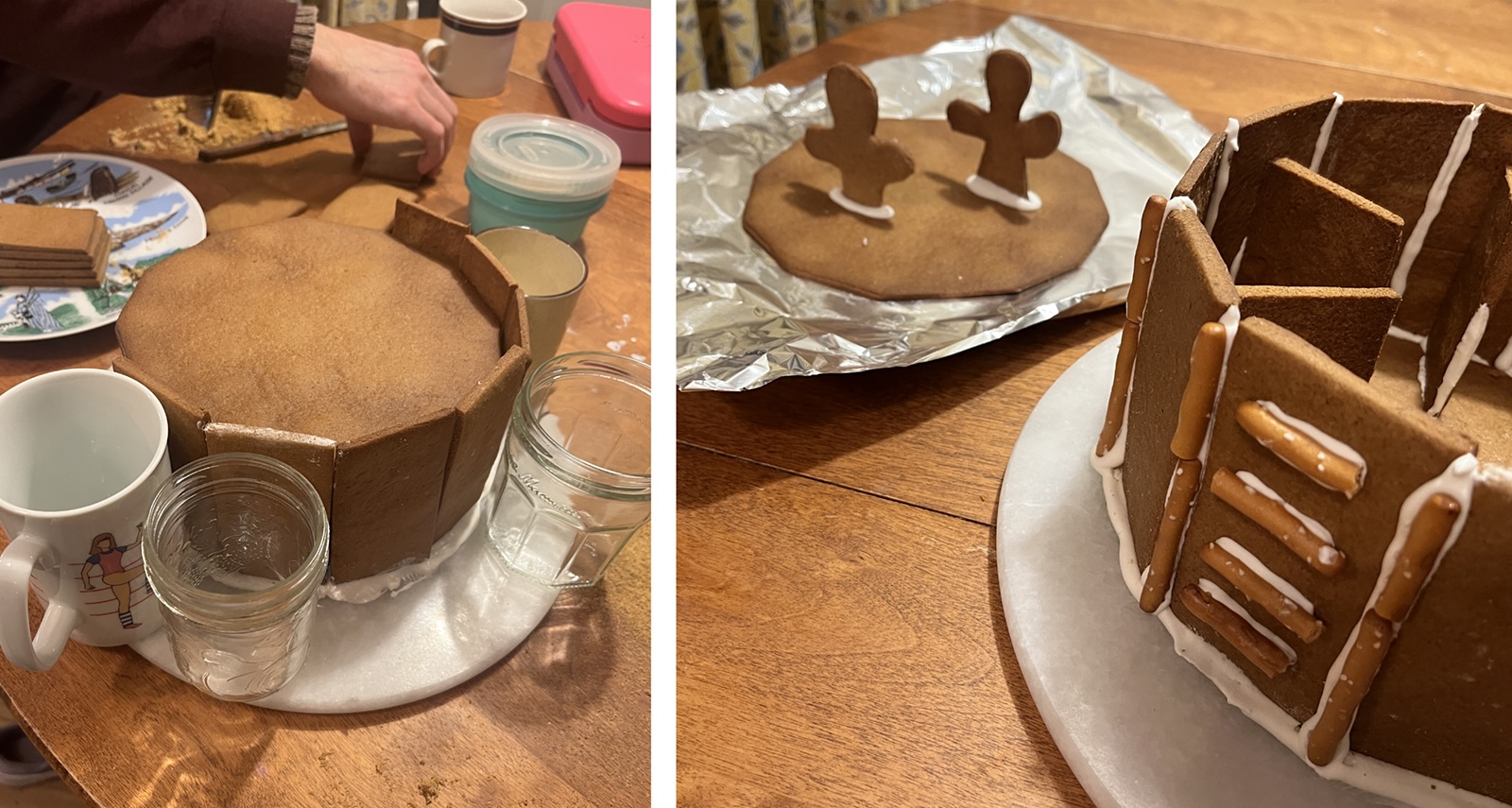
After I reset myself, Will and I begin installing the vertical panels of the pool around its base, which is a dodecahedron. Using a microplane, Will is addressing the issue that was at the root of my frustration — cookies do not naturally bake to straight lines and tight 90-degree corners.
I’d tested my design out using cardboard first, then used the cardboard pieces as templates to mark and cut out cookies from the chilled, rolled-out dough.
The pool begins to take shape. It’s not going to be a complete failure after all.
It begins to feel satisfying, rather than a terrible mistake.
Haters of the world, unite
I make gingerbread houses (and pools) because I hate Christmas.
The world is full of Christmas haters. Maybe you grew up in a household that took a “Quiet, piggy” approach to parenting. Maybe one with alcoholism, poverty, abuse. Maybe one where your gender was a disappointment.
Whatever fissures are there, they only get worse at Christmas, and it all happens as visions full of joy and twinkling lights and snowflakes pass by in every inhabitable public and media space.
In my 20s, I skipped the holiday entirely and kept to myself, opting for out-of-town house-sits. The more remote, the better. One year I stayed in the Okanagan and rolled out gluten-free tortellini with a friend whose family lived nearby. Another year, I took a Greyhound across B.C. to the flat middle of the country; in the early hours of the morning, somewhere near Golden, we passed an 18-wheeler that had flipped over in the icy conditions.
Spending Christmas alone carried a dual purpose; taking a trip by myself to a remote location meant I could surf the annual wave of emotions left over from childhood in a way that would have no cascading impact on innocent bystanders.
But then I became a parent, and it was no longer reasonable to spend the holiday alone. It was time to figure out how to make it enjoyable for my child. And for me. Because if we were going to have joyful moments, I wanted them to feel genuine. And that meant tending to my own needs, as well as hers.
Enter gingerbread. I love a good gingerbread. And I love baking. I love something that takes some planning, focus and concentration, and requires a few different small trips to the grocery store.
This year, for example, I sourced my pool noodles — livewires — from the 7-Eleven, and the beach balls (gumballs), bikini and water wings (licorice allsorts) and lifesaver-shaped pool floats (sour rings) from Save-On, which has a very useful bulk candy section. The meringue powder for my royal icing came from Walmart, the gel food dye for the water and grass from Gourmet Warehouse.
After I sketched out my plans and turned them into cardboard, I began the project in an unrushed, multi-day fashion. And not one that invited the participation of the household’s child, who cannot help but stick her fingers in things. No. We’ll make a gingerbread house together later, during the holiday break.
Enacting my own vision first helps me free up the mental space and emotional openness to let go and let God about the fingerprints and not-true-to-life design choices she’ll want to make when we collaborate.
The gingerbread is mine — until we eat it
When I was a kid, I soaked up the adults’ stress about Christmas like a Victoria sponge being drizzled with sherry for a trifle. My parents’ arguments about money intensified. The past-due notices my mother asked me to hide when they arrived in the mail accumulated; the calls from collections agencies grew more frequent.
My mother seemed to have a vision for Christmas that was so far away from the material reality of our actual family that it seemed absurd. I grew to resent everything about it — including, or maybe most of all, the pressure to act grateful and happy.
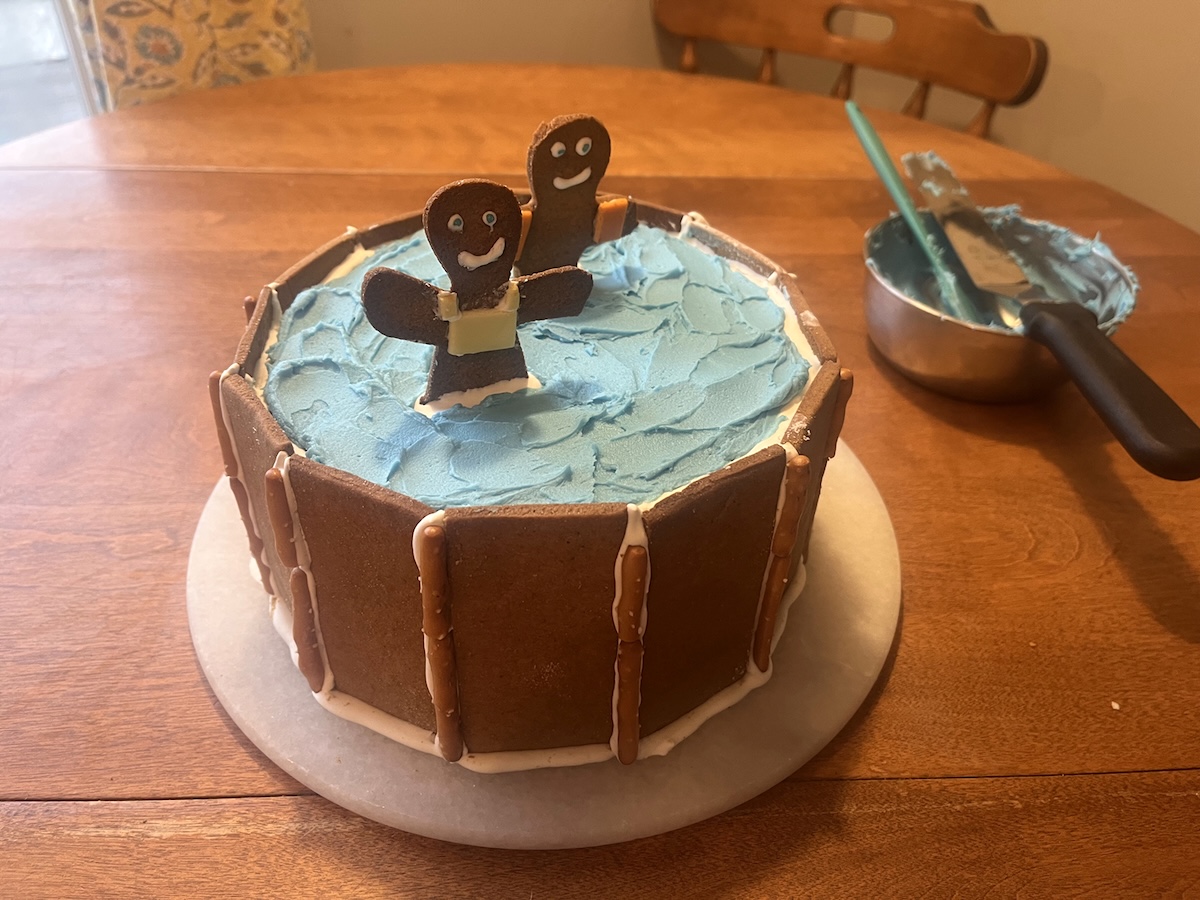
Kids can tell when you’re acting happy, but secretly miserable. Sometimes it makes sense to grit one’s teeth and bear it, like when your child is invited to a birthday party with a dozen other screaming children and you forgot your earplugs.
Other times, though — like when you are building your own family traditions — it makes far more sense to jettison what doesn’t work, and begin by attending to your own needs. Instead of modelling parenthood that demonstrates sacrifice, or adherence to norms and expectations in the creation of childhood wonder, what if we modelled one where joy and wonder can also extend into adulthood?
When Sinclair was young, we started small. Just a few presents, stockings, a scaled-back holiday meal and a string of lights around the rubber tree we already had in our living room. As she’s grown and begun to express her own preferences, we added Santa, a ceramic Christmas tree, a hallway garland, more ornaments and, usually, a weekend afternoon where we invite friends over to decorate cookies.
We don’t overextend ourselves, and I still avoid things like big holiday parties where people are drinking.
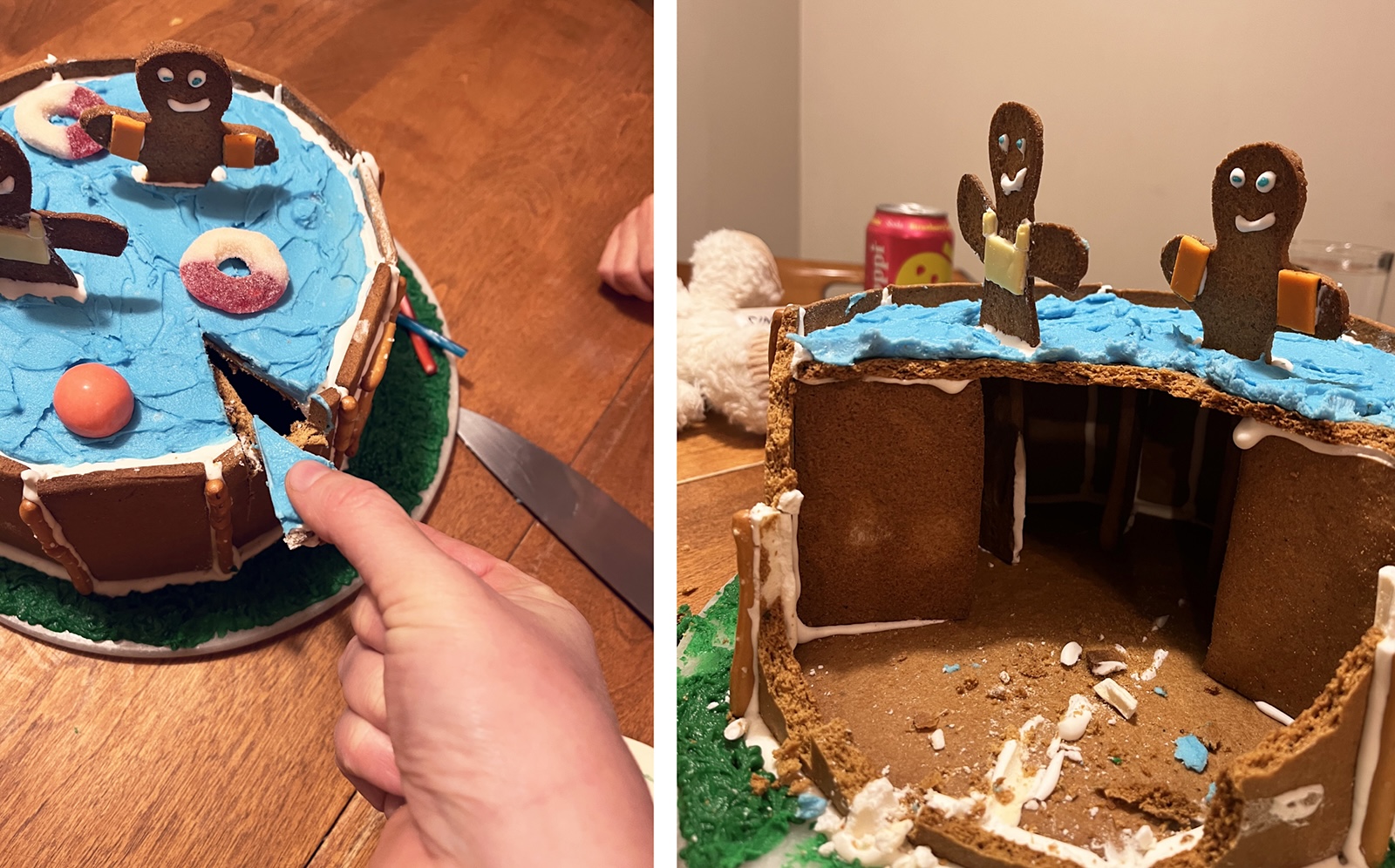
Christmas, now, is... nice. Some years, we visit Will’s dad’s side of the family, as they appreciate a similarly chill, no-stress holiday. Some years, we stay at home and sleep in as many days in a row as possible.
I don’t hate it. And Sinclair? She loves it. Even though — or maybe, in part, because — I kick her out of the kitchen so I can focus on a gingerbread project that is mine, and mine alone. That is, until it’s finished, and we begin to eat it. Then, it’s everyone’s. ![[Tyee]](/design-article.thetyee.ca/ui/img/yellowblob.png)












Notice about commenting changes
The Tyee’s commenting system will be moving to a new platform on Nov. 12. If you’re already a Tyee commenter you must register with the new system on or after Nov. 12 with your preferred username.More information can be found here.