

 SHARE:

Since being announced Monday, the hən̓q̓əmin̓əm̓ name of the new bridge joining Surrey and New Westminster — stal̓əw̓asəm — has drawn a wave of social media criticism.
One of the most ironic criticisms that has appeared is the claim that not reusing the name “Pattullo” for the bridge is erasing history. But those complaints miss the fact that the new name represents a more vital piece of history — the very first bit of shared history between First Nations people and Canadians in this land.
The name stal̓əw̓asəm (pronounced stall-o-awesome) was gifted to the province by the Kwantlen First Nation (my home First Nation) and the Musqueam Indian Band. Names in our culture are seen as valuable possessions, and gifting one is a big deal — it’s unheard of to disrespect that.
stal̓əw̓asəm is being built on the site of the former village of qiqéyt (pronounced “qay’qayt”). It's the place where First Contact was made between our peoples. And it’s where a single Kwantlen man named Whattlekainum used his fortune to buy Simon Fraser's life and allow him to return home with what he'd learned about the river that would one day bear his name.
‘Deathdeathville’
Of the several Kwantlen and Musqueam villages that the new bridge crosses, the most important was qiqéyt. The name comes from the word “qay,” meaning death. Repeated twice, it emphasizes death and describes the use of the site as one where bodies would be interred in trees to decay into bones before being placed in a mausoleum. It's a grim name, but then there is also a Deadwood, a Tombstone and a Hells Gate — so the morbidity is hardly unique.
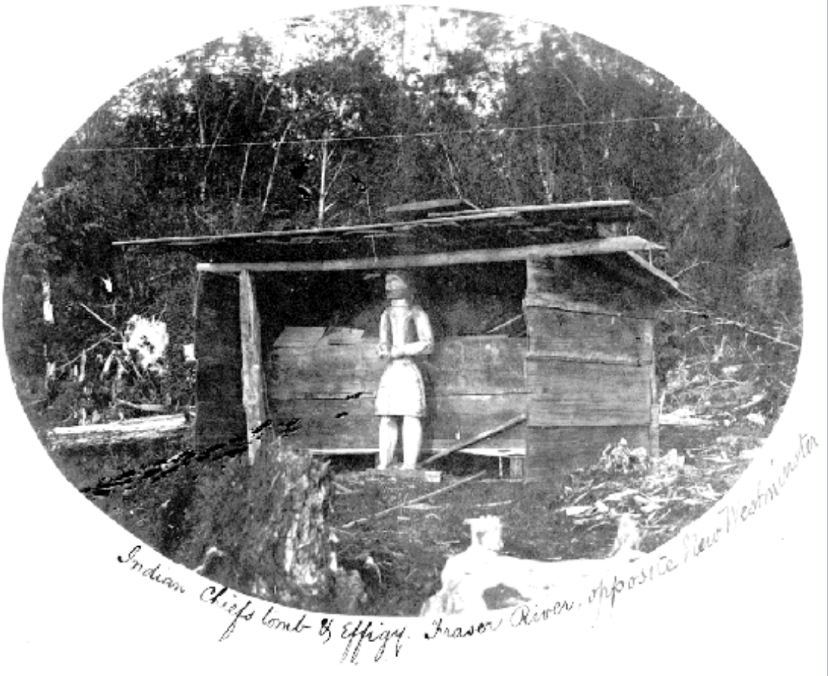
qiqéyt was a fishing village covered in red berries with a large central longhouse used as a place of worship. The salmon runs would begin at qiqéyt and draw people from throughout the region.
The original landscape of the site was quite different from what we see now, but what remains is one of the most notable First Nations public works projects in the area. Centuries ago, a famine struck the region. The Kwantlen — being wealthy and with vast territories — made it through with ample food stores. But the Kwikwetlem people didn't have the same scale of resources. They went hungry and were forced to appeal to the Kwantlen for food relief.
In exchange for food relief, the Kwikwetlem were moved to qiqéyt, where they laboured to reclaim the marshy land for a village and to extend the site into the river, creating a fishing station to more easily harvest fish from shore. That earthwork can now be found beneath the bridge's base.
What's most important about this site — at least for the purposes of this story — is its place in the history of contact. In 1808, the North West Co. of Montreal sent Simon Fraser on a journey to the Pacific with, among other things, the goal of determining whether the Fraser and the Columbia were connected or were different rivers. On June 28, 1808, Fraser crossed a locally built bridge near Spuzzum, in the Fraser Canyon, and entered Stó:lō territory.
On July 1, 1808, Fraser entered Kwantlen territory (the westernmost part of the Stó:lō territory) and made first contact. He was welcomed and feasted and spent the night in one of our villages. The next day, he awoke to see his belongings dragged away by dogs, and he believed some had been stolen by local men. He confronted them, kicking one. With the Kwantlen still seething, he departed on to the next Kwantlen village at qiqéyt.
While at qiqéyt, Fraser met a wealthy noble and village leader named Whattlekainum. Whattlekainum warned him against proceeding downriver, explaining that there were ongoing hostilities with Musqueam and any boat travelling downriver risked attack. Fraser ignored the warning and went anyway, believing in his crew’s “superiority.” His arrogance cost him, and he was stopped at the ocean's edge by enraged Musqueam. He had to flee back to qiqéyt.
By this time, the man who had been kicked had spread word of Fraser’s offence and stirred up feelings against him. People wanted the intruder’s blood. However, Whattlekainum believed that killing Fraser would only encourage more violence and retribution from Europeans. He gave an impassioned speech to the crowd; for those whom he couldn’t win with words, he paid. He opened his stores of goods and paid the aggrieved men not to attack. Goods were handed out as a sign of respect to quash the beef. Still, so many up and down the river were now enraged at Fraser that even with Whattlekainum’s wealth, escape wasn’t guaranteed. To ensure he got out, Whattlekainum had his men surround Fraser with canoes and escort him out of the territory.
If not for Whattlekainum's generosity at qiqéyt, there’s reason to believe that Fraser would have been killed. Coast Salish history (this is the culture that Stó:lō and Musqueam peoples are a part of) records other encounters with Europeans nearly two centuries before Fraser's arrival. While there is no note of this in western history books, our histories tell of pale hairy men who landed their ship off the Oregon coast, overstepped, and were quickly defeated. The few survivors of that first encounter were kept like zoo animals, visited by people from around the Coast Salish world. That would have been the fate of Fraser's crew had there been any survivors.
It’s impossible to guess how history would have unfolded then. With the North West Co. and later the Hudson’s Bay Co. afraid to set foot here, would it have been left to the Americans to try to set up a base, and then settlements later? Whatever might have happened, this river would not today be known as the Fraser.
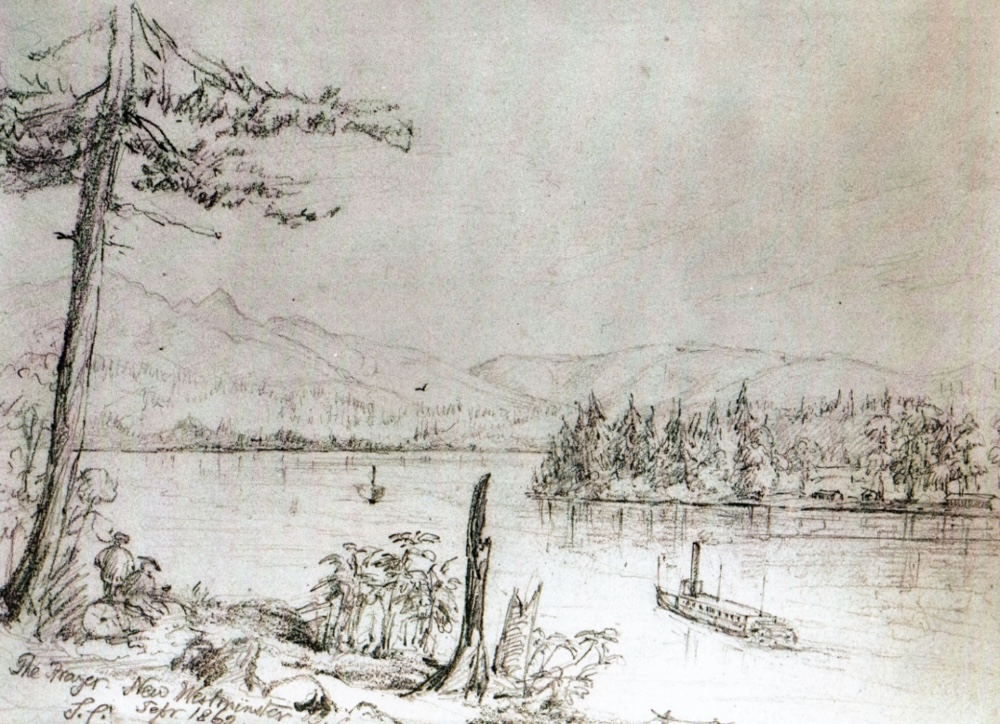
Where the stal̓əw̓asəm bridge now rises is a physical representation of Kwantlen (and, by extension, Indigenous) wealth and generosity, and labour. The area is also a tribute to friendship and common humanity — first between Kwantlen and Kwikwetlem who built enormous public works here, and then between Kwantlen and Simon Fraser.
In the decades following Fraser's visit, Europeans came in larger numbers. By the end of the century the village had been turned into reserves — one for Kwantlen and one for Musqueam. Others came too — each First Nation absorbed migrants from Hawaii and China, welcoming them and even adopting some of their practices. At one point, there were luaus and hula dancing where this bridge now stands.
Then the railroad came and cut the village off from the river. Then the settlers. Then the first bridge. At that point, the last residents were scattered to their nations’ other reserves.
The decision to give a new name to this new bridge has been in the works for years. I worked as a consultant on part of the project, and did so only because I wanted to try to influence the new name. It didn’t work out — for the record, I would have pushed for it to be called the Whattlekainum. But I think stal̓əw̓asəm is a good choice — even if I do agree with some critics about using the International Phonetic Alphabet writing system. (I would prefer that when we use the IPA, we also provide a transliterated version with it. For example, just as we have sc̓əwaθən and Tsawwassen, kʷikʷəƛ̓əm and Coquitlam, we could have had stal̓əw̓asəm and “Stalloassem,” instead of the solution they came to, translating it into “Riverview.”)
If there's anything useful to come of the hate and fear mongering, it's forcing people to look more closely at the name.
The name stal̓əw̓asəm is made of two parts: stal̓əw̓ and asəm. asəm refers to view or viewing point, while stal̓əw̓ refers to both the river and the people of this land — the Stó:lō, the river people, of whom Kwantlen is a part. From the bridge, your view is that too: not just a place to look at the river, but a place to view the people of the river, the Stó:lō, our history and our place in creating modern British Columbia.
This is where our common history began and where the first bridge between two worlds was formed. ![[Tyee]](/design-article.thetyee.ca/ui/img/yellowblob.png)
Read more: Indigenous, Transportation




Notice about commenting changes
The Tyee’s commenting system will be moving to a new platform on Nov. 12. If you’re already a Tyee commenter you must register with the new system on or after Nov. 12 with your preferred username.More information can be found here.