

 SHARE:
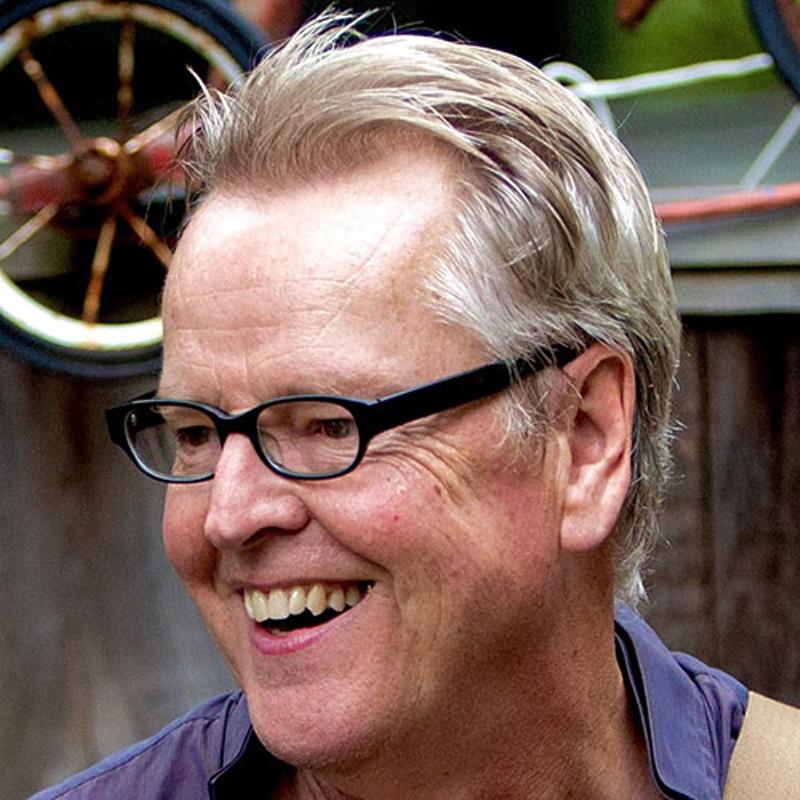
“Nasty people make nice things,” said Adam Gopnik. “That, for me, is the poster-slogan advertising the whole history of human culture.”
Gopnik, the New Yorker staff writer, author, and longtime cultural observer, was addressing a topic of particular relevance to Vancouver this season. At least a couple of recent spectacles have raised the issue of artists and their art. Should critical judgements be informed by our feelings about the people behind the work?
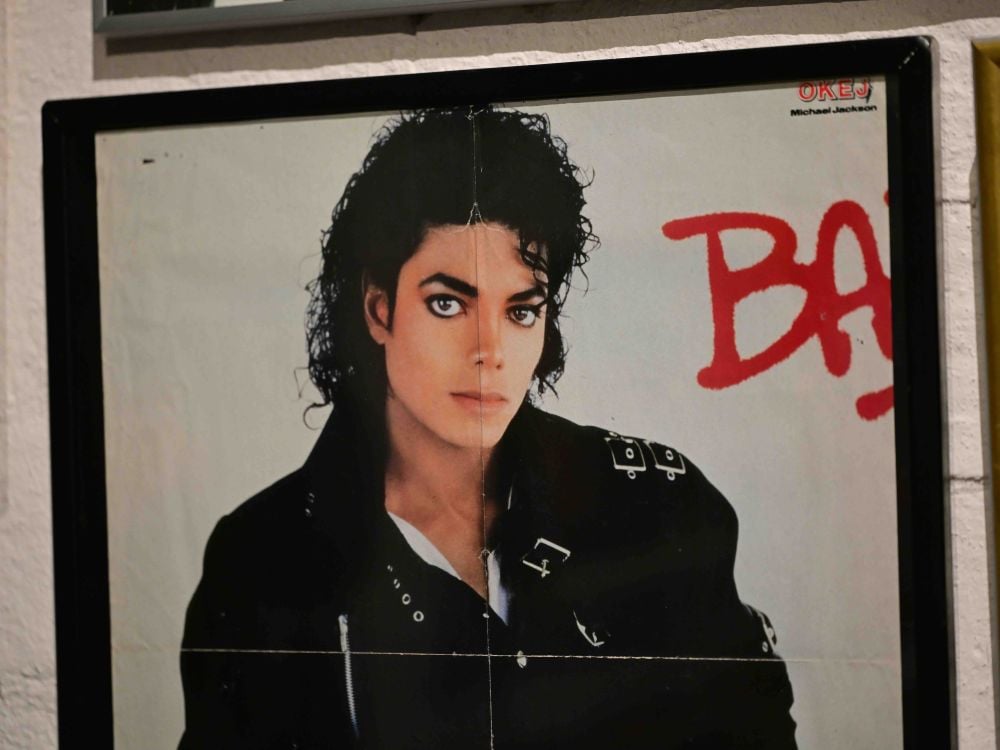
A musical theatre production celebrating the music and choreography of the late Michael Jackson played the Queen Elizabeth Theatre in the last week of November, and a new biopic about the late performer will be released in April.
In 1993 the so-called “King of Pop” faced a civil suit over allegations of sexually abusing a minor; he settled out of court. In 2005, Jackson was criminally charged with sexual abuse of a minor, but was acquitted. A 2019 documentary, Leaving Neverland, featured extensive testimony from his alleged victims.
Meanwhile, “Harry Potter: A Forbidden Forest Experience Vancouver” is drawing crowds in Stanley Park, despite protests from the trans community and their supporters against Harry Potter author J.K. Rowling’s gender-critical views.
Visitors wandering through the decorated trees might find themselves pondering that evergreen question: can creative works be separated from their creators? Or must we repudiate the work of those whose views and behaviour we find distasteful or worse?
From his home in Manhattan, Gopnik replied with an emphatic no. “I am an absolutist of the idea that what an artist makes and who an artist is are two utterly different, indeed, most often opposed, inquiries,” he said. “As with so many seemingly complicated cases in life, the French idiom Les adultes ont appris a compter jusqu a deux — ‘Grown up people have learned how to count to two’ — applies. The relationship between what people do and what they make is always right-angled, contradictory and mirror-imaged, so that the best work we do is almost always the reverse of the people we ‘naturally’ are.”
Does controversy affect popularity?
The debate recurs with depressing regularity.
American singer-songwriter and rapper Chris Brown was convicted of felony assault against former girlfriend Rihanna in 2009, and has since faced multiple charges of violent attacks. He is now on a sold-out European tour.
Sean “Diddy” Combs was given the key to New York City by then-mayor Eric Adams in September 2023. The mayor sheepishly asked for it back in June 2024 when video emerged of Combs assaulting his girlfriend in a hotel hallway. Combs is now serving a prison sentence in New Jersey.
Whether because of loyalty, emotional connection, critical appreciation, or simply a lack of public inclination to look beyond enjoyment of the work itself, controversy often seems to have little effect on enduring popularity.
Sixteen years after his death, Michael Jackson is within a few spins of the top 20 on Spotify’s most-streamed artists. Harry Potter remains the gold standard for young adult entertainment. Chris Brown is still packing audiences into stadiums.
Local criticism of the “Forbidden Forest” display did draw an unusual apology from the Vancouver Park Board, who “disavowed” Rowling in an October motion (without, however, cancelling the event). The move drew a bemused reaction from the British author herself, who posted on X: “I didn’t even know Vancouver Parks and Recreation had avowed me, so the disavowal hasn’t been much of a blow. Next time, send me a certificate of avowal.”
‘Both truths count’
For Gopnik, moral judgements do not factor into cultural ones. “If we discovered tomorrow that Shakespeare tormented small animals to stimulate his verse-making urges, or that Lennon and McCartney took their melodic ideas from a terrified Irish minstrel kept tied up in their basement,” he said, “it would not make a bit of difference to our delight in their work.”
He cites one of his own literary lodestars, the British poet Philip Larkin. “Larkin was a lonely and cold and bearish and sporadically racist man, but he was able to conjure up the melancholy of modern life in a way that no one else has, exactly because he was all of those things,” Gopnik said. “What made him a tetchy companion was exactly what made him a great poet. I’m glad I never met him, and my life would be infinitely poorer without him.”
“At the same time Larkin himself once wrote that our opinion of a writer is a mix of what we think about the work and what we think about the man (or woman, obviously). When the two opinions are too discordant, we, and the artist’s reputation, suffer. Both truths — that it matters, and that it doesn’t matter — count.”
It is a disconcerting reality that the darker aspects of a creator’s life may inform what we respond to in their work. After the death of Alice Munro, her daughter revealed that the acclaimed author had stayed with her partner despite his established history of sexual abuse, including abuse of Munro’s own children.
Gopnik suggests we should not have been too greatly surprised. “We love Alice Munro, among other reasons, for the way in which she was able to capture currents of strangeness, distress and Chekhovian tragedy beneath the seemingly placid surface of mid-Canadian, or mid-Ontario, manners,” he said. “To discover that there were indeed currents of strangeness and distress within her own seemingly placid Canadian manners only confirms the truth of the witness that she bore. I mean, really — read Alice Munro and ask, what else would one expect?”
“Michael Jackson for me is a peculiar case exactly because what is disturbing in his life is also what is disturbing in his work,” Gopnik said, “a kind of off-kilter emotional register that seems at moments weirdly angry and at moments strangely self-pitying. His is the work of an obviously damaged man — made so by being an obviously damaged kid.”
An age of polarized politics inevitably results in concomitant artistic divisions. President Trump’s takeover of the Kennedy Center in Washington, D.C. has transformed it into a setting for cultural warfare, and even drawn charges of outright corruption.
Vancouver author and playwright Mark Leiren-Young faced the agonizing but practical question of whether a trip to New York to attend the performance of his own play was advisable.
As for other literary figures, few noted writers have publicly supported Trump, playwright David Mamet being perhaps the most prominent.
But Gopnik points out that important literary and artistic figures have frequently shilled for monsters. “There are innumerable — OK, numerable, but many — writers and artists who gave themselves over to the worst regimes on earth,” he said.
“Celine, the French novelist, was not merely a crazed anti-Semite in the period leading up to and then throughout the German occupation of France, he was such a crazed anti-Semite that other anti-Semites worried that he might possibly be mocking their enterprise, so crazy were his published views. Nonetheless, the author of Voyage au bout du nuit remains one of the indispensable modern writers, who still gives us licence to bear witness with utter candour about our own inner lives and urges. And of course, one need not detail all of the writers and artists who made their honour hostage to Stalin and his regime. If we refused to look at Picasso, a stalwart of the party, or stopped reading W.E.B. Du Bois because of the eulogy he wrote on Stalin’s death, we would be impoverishing our own intellect and imagination.”
Can a trans person still find enjoyment in J.K. Rowling’s work? Can a gay person appreciate a book like Ender’s Game, the sci-fi epic penned by outspoken homophobe Orson Scott Card?
It’s a question that any Jewish reader must come to grips with, Gopnik said. “As in the case with Celine or for that matter Voltaire, or several hundred others, any Jew who reads world literature will be struck by the thought that a hatred of Jews is not merely an occasional ornament on great books but often seems to be central to their imaginative life. Even Trollope, most humane of novelists, is suspicious of Jewish influence.”
“We can either stop reading or start thinking,” Gopnik said.
“Start thinking, that is, that life is infinitely multifarious and we are better off recognizing this truth than trying to fence off our imaginations from the mixed-up and necessarily corrupted life of the world.” ![[Tyee]](/design-article.thetyee.ca/ui/img/yellowblob.png)
Read more: Media











Notice about commenting changes
The Tyee’s commenting system will be moving to a new platform on Nov. 12. If you’re already a Tyee commenter you must register with the new system on or after Nov. 12 with your preferred username.More information can be found here.