



 SHARE:
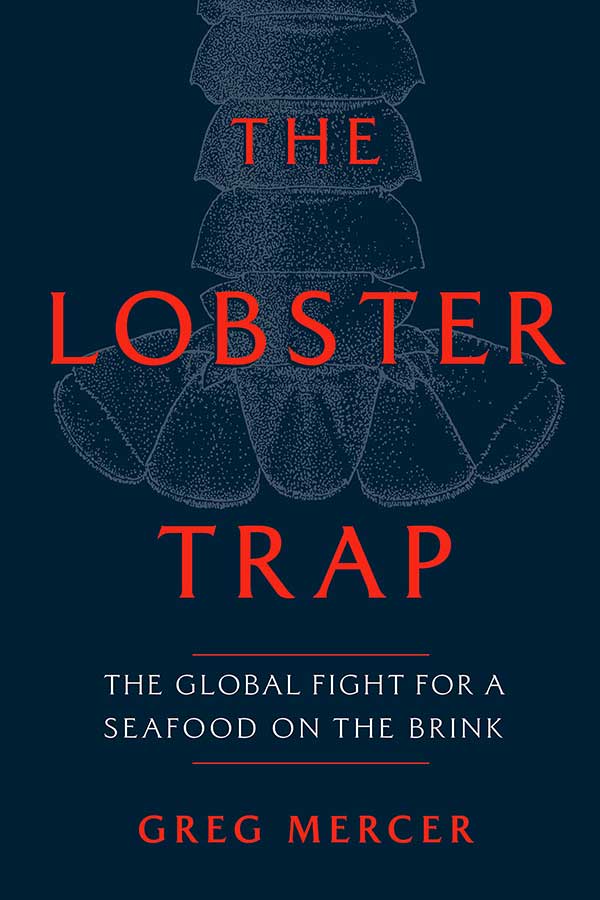
[Editor’s note: Compelling, ambitious and wide-ranging, journalist Greg Mercer’s new work of non-fiction takes readers around the world to show how a gold-rush mentality propelled lobster to become one of the world’s most sought-after luxury foods.
‘The Lobster Trap: The Global Fight for Seafood on the Brink’ is Mercer’s first book out now through McClelland & Stewart, a division of Penguin Random House Canada. It traces how climate change, overfishing and trade wars threaten the future of lobster, and takes readers into the lives of the lobster industry workers who have depended on the shellfish for generations.
In this excerpt from a chapter titled “The End of McLobster,” Mercer returns to the lobster boom of the 1990s, when a new fast-food sandwich took Atlantic Canada by storm.]
Danny Moore is not a lobster man. He prefers a good steak, and on occasions when he does have seafood, he likes fish, battered and fried. But Danny, a Moncton businessman who owns three McDonald’s franchises, has helped introduce thousands of people to one of the most iconic symbols of lobster’s great boom — the McLobster sandwich.
By the early 1990s, lobster catches were becoming so plentiful, and prices still low enough, that restaurant chains and frozen food processors around North America began finding new ways to add it to their menus. It was an age of cheap, abundant lobster in the supermarket, spawning an invasion of frozen lobster ravioli, lobster pot pie and breaded lobster bites into people’s freezers and onto their dinner tables.
There was a time in this golden era when you could walk into a McDonald’s on Canada’s East Coast and pay just $3.99 for the fast-food chain’s take on a traditional lobster roll. The original McLobster — or McHomard in francophone regions — was intended to be simple, using ingredients the restaurants already had on hand: a hotdog bun, shredded lettuce and sauce from the McBLT, along with two ounces of thawed lobster meat, all wrapped in a foil bag.
The idea for a low-cost, mass-produced lobster roll was spawned by Danny’s father, Gerry Moore, a former professional hockey player who owned McDonald’s franchises in Amherst, N.S., and in Sackville, N.B., a leafy university town.
He leaned on his contacts in the lobster industry from his years as an executive for a seafood company in St. George, N.B., gathered a group of franchise owners from around the region, ordered in a bunch of lobster, and the McLobster sandwich was born. It was sold as a healthier alternative to hamburgers, something that could be eaten cold, without the need for frying or heavy sauces.
“People were talking about what we could offer to be different,” Danny recalls. “At the time, a lot of people, especially seniors, were concerned about fast food. Lobster was seen as a healthy option.”
In the 1990s, lobster was ‘suddenly everywhere’
The rise of the McLobster in Canada and, for a shorter time, in the U.S. came at a time of unprecedented catches in the fishery. In Maine in the early 1990s, lobster was still just $2.20 a pound when fishermen there began breaking harvest records that had stood for over a century. Lobster was suddenly everywhere, and companies rushed to find new ways to incorporate this other white meat into their offerings.
It was the first wave in a campaign to make lobster a mass-market staple, an effort that also gave birth to lobster poutine, lobster burritos and lobster macaroni and cheese.
“The root cause of lobster’s slow migration from the white tablecloth to the drive-thru is that it simply isn’t the scarce commodity that it once was,” J.B. MacKinnon wrote in the New Yorker in 2015.
Part of that ubiquity was being caused by fishermen themselves. As catches rose in the 1990s, fishermen put more and more traps into the ocean, effectively feeding lobster with baitfish in a giant underwater farming operation. It’s estimated that some 90 per cent of lobster that enter a trap are able to eat the bait and escape before they’re pulled to the surface.
With three million lobster traps in use in Maine, that’s roughly 128,000 tons of bait delivered to lobsters every year in the state’s inshore waters alone — “equal to one-and-a-half billion Filet-O-Fish patties,” MacKinnon wrote. Fishermen had to import bait from as far away as Japan and Portugal.
Back in 1992, the McLobster sandwich was his father’s idea, but it was Danny who did most of the dealing with lobster wholesalers who could supply enough precooked, flash-frozen shellfish to feed the country’s largest restaurant chain. He was also the guy franchise owners went to with technical questions if their employees were having a hard time preparing the sandwiches and thawing the meat without waste.
Not every franchise manager loved it. Some found the cold sandwich too complicated to prepare and serve in a fast-food setting.
A family biz that went big
McDonald’s was always a family affair for the Moores. Danny was pulled into the business while still in university, when his father called him and told him to get in his car and drive the two hours to Amherst, where he’d been offered a chance to open a McDonald’s.
Soon, the Moores’ two-car garage was converted into a warehouse for the restaurant’s supplies — piled to the ceiling with ketchup and sauce packets, napkins, Big Mac containers, wrappers and other dry goods.
Gerry was an ideas man, a gregarious, personable owner who was happiest out in the front of the restaurant, meeting customers. Danny, who used to cook for his siblings and was more at home in the kitchen, had a head for numbers and was brought in as a partner.
“I don’t know if Dad even knew how to use a microwave,” Danny says. “He would come up with these big schemes and dreams, and Mom and I would have to sit down and figure it out.”
Danny had some experience with difficult ventures for McDonald’s. He’d been one of a group of restaurant managers sent to Russia in 1990 as part of the chain’s earliest forays into the former Communist state, helping to open the first McDonald’s in Moscow’s Pushkin Square. The company had to start from scratch, building a supply chain to service their massive restaurant, which was the largest in the world, and an army of 600 employees pumping out cheeseburgers, milkshakes and fries.
As the McDonald’s managers stumbled bleary-eyed onto an old Soviet Union–era bus, they were stunned at their first looks behind the Iron Curtain. And they were a surprising sight to the Russians, too, many of whom had never seen Westerners, clad in the neon ski jackets and other bright clothes of the early 1990s.
“Everything you saw around you was either grey or beige or brown,” Danny recalls. “It was like stepping back in time. People looked at us like we were beamed in from another planet.”
The campaign to expand into Russia began after the Montreal Olympics in 1976, when McDonald’s Canada CEO George Cohon lent a stranded Russian delegation a corporate bus.
Cohon saw an opportunity to get inside the Iron Curtain and hoped to expand into the Soviet Union in time for the 1980 Olympics in Moscow. But after three years of exhausting negotiations, the contract was killed after the U.S. and Canada boycotted the Games in protest of the Soviet invasion of Afghanistan. It was another six years before Cohon began to make headway with Soviet President Mikhail Gorbachev.
Two more years of negotiating, and Cohon finally had his deal. McDonald’s opened on Pushkin Square in January 1990, with television networks watching the whole thing.
By the end of the day, the restaurant had served 30,000 hamburgers — more than any other franchise opening in the chain’s 30-year history. Russians were paying half a day’s wages just to try a Big Mac meal.
“People were literally lined up for days,” Danny recalls. “I’ve never seen anything like it. They were just mesmerized.”

‘Lobster! Lobster! Lobster!’
The reaction to the McLobster wasn’t quite on that scale, but it was immediately a hit the first summer it appeared on the menu on Canada’s East Coast. In a little over two months, Danny and his family sold 17,000 sandwiches out of their Amherst location. Tour buses began stopping at the restaurant at the request of visitors who wanted to try the novelty sandwich.
“We’d see the buses pull in and we’d be shouting, ‘Lobster! Lobster! Lobster!’ We’d have a whole team of people in the back making lobster sandwiches,” he says.
Impressed with sales, the executives at McDonald’s Canadian headquarters in Toronto wanted to add the sandwich to their national menu, but felt they could improve on the recipe, Danny says. They hired a chef and began tinkering, adding green onions and celery and toasting the bun. The company switched the mayonnaise and fought with their lobster supplier on price.
“It kept changing and changing, but we’d already done the damage to ourselves,” Danny says. “We were our own worst enemy because we kept changing it.”
As the price of lobster rose, theft became another problem. McDonald’s stores would buy large bags of shelled lobster meat, a tempting sight for some employees who began walking off with them. Some owners found that keeping the valuable lobster meat on-site was too much of a risk, and they began dropping the time-consuming sandwiches from the menu.
“It was an expensive inventory item,” Danny explains. “Once you take it out of the freezer, you had two days to use it, and it took a day just to thaw it out.”
Eventually, the wholesale cost of lobster became prohibitive for a fast-food environment, Danny says.
By 2014, the company was paying $21.49 for a pound of shelled lobster meat — more than five times the price when the McLobster debuted two decades earlier, despite dramatically rising catches.
Food costs for a McDonald’s sandwich should be around 30 per cent. With lobster, it was more than half.
As the menu price rose and rose and the novelty wore off, customers were ordering fewer and fewer McLobsters.
The chain finally pulled the plug on the dream of cheap, fast and readily available lobster sandwiches served up from coast to coast.
“People don’t want to pay $10 for a sandwich at McDonald’s,” Danny says.
“Even if it’s lobster.”
Excerpted from ‘The Lobster Trap: The Global Fight for a Seafood on the Brink’ by Greg Mercer. Copyright © 2025 Greg Mercer. Published by McClelland & Stewart, a division of Penguin Random House Canada Limited. Reproduced by arrangement with the Publisher. All rights reserved. ![[Tyee]](/design-article.thetyee.ca/ui/img/yellowblob.png)
Read more: Food, Labour + Industry, Environment










.jpg)
Tyee Commenting Guidelines
Please note that email notifications for replies are not currently working due to a software issue which may be resolved in a future update.
Comments that violate guidelines risk being deleted, and violations may result in a temporary or permanent user ban. Maintain the spirit of good conversation to stay in the discussion and be patient with moderators. Comments are reviewed regularly but not in real time.
Do:
Do not: