


 SHARE:

- Before the Big Bang: The Origin of the Universe and What Lies Beyond
- Mariner Books (2022)
Every culture has its own creation myth, a description of how the world and humans came to be. The culture of science has such a myth as well, but it’s very recent and subject to change.
Laura Mersini-Houghton, a cosmologist and theoretical physicist, argues in her new book for a creation story in which multiple universes emerged 13.5 billion years ago, not just one. What’s more, the author claims she has evidence in this universe of the existence of its siblings.
The famous quantum physicist Niels Bohr once said of a colleague’s idea, “It’s crazy, but it’s not crazy enough.” The multiverse, which springs from quantum theory, may be a little too crazy. It’s not a new idea. But the first serious theorist of the multiverse lost his career over it. It certainly tests the limits of what is acceptable in science.
In the 1950s and ’60s, the British physicist Fred Hoyle argued that the universe had no beginning or end; it was a “steady state” universe in which new atoms kept appearing and eventually formed stars and planets. He invented the term “big bang” to put down his colleagues, who believed that the universe had suddenly exploded out of nothing.
Hoyle was wrong. But big-bang advocates still had a lot to explain. If atoms popping out of nothing sounded impossible, a universe out of nothing was not an improvement. A 1970s theory called inflation sounded even crazier: from a subatomic point, in a very small fraction of its first second of existence, the universe had “inflated” to occupy a space billions of light-years across.
That was crazy, all right, but inflation explained the strangely uniform cosmic microwave background that fills the sky in all directions. If the universe had expanded slowly, minor differences in the background would have grown to immense, uneven patches.
A prison state
When Laura Mersini-Houghton began her studies in the U.S. in the 1990s, she brought something of an outsider’s point of view: she had grown up in communist Albania. Political ideology got her father, a mathematician at Tirana University, in trouble more than once. Even minor questions about the party line could be dangerous, a lesson his daughter understood.
Mersini-Houghton spent her early years in a prison state, sequestered from a world she knew little of except through science and mathematics. But with the collapse of communism she was free to pursue her education elsewhere — and to wrestle with the problems of the big bang.
One problem was the source of the energy that so suddenly expanded to the universe. What was the “nothing” we were supposed to have erupted from? Others have called it the “quantum foam,” in which particles don’t quite exist until they pop out and then vanish again. Mersini-Houghton calls it a “landscape,” an abstract space which contains different energies. I have no idea what that means, but I’ll go with it.
Another problem: quantum physics makes a weird kind of sense in its own terms, and it’s been proven beyond a doubt. But it’s... weird. For one thing, subatomic particles can be “entangled” — even at great distances, they influence each other. Einstein hated the idea, calling it “spooky action at a distance,” but he was wrong.
Worse yet, Mersini-Houghton explains, the eminent physicist Roger Penrose had calculated that the odds against the appearance of a habitable universe like ours were so high that we shouldn’t even be here to ask questions about it.
I won’t try to paraphrase her long and mostly clear arguments, but one early explanation for the implications of quantum mechanics was a kind of preview of the multiverse. She cites a young physicist, Hugh Everett, who in 1956 published a PhD dissertation arguing “that a straightforward application of quantum mechanics to the universe predicted a complex and bizarre cosmos of multiple worlds, intricately entangled and wrapped.”
Quantum mechanics sees every subatomic particle as also a wave, existing in many different places. Since the universe had been the size of a subatomic particle, Everett said, “the whole universe, regardless of size, must be subject to the rules of quantum mechanics.”
That was too crazy an idea for Niels Bohr, who rejected it. Mersini-Houghton tells us that “Everett was squeezed out of an academic career and ended up working in the defence industry.”
Eventually, though, Everett’s ideas drew more support. They pointed the way to further thought about alternate universes (and to possible disaster for people who thought about them). Still, Mersini-Houghton and some of her colleagues pursued more evidence for a multiverse.
Infinite possibility
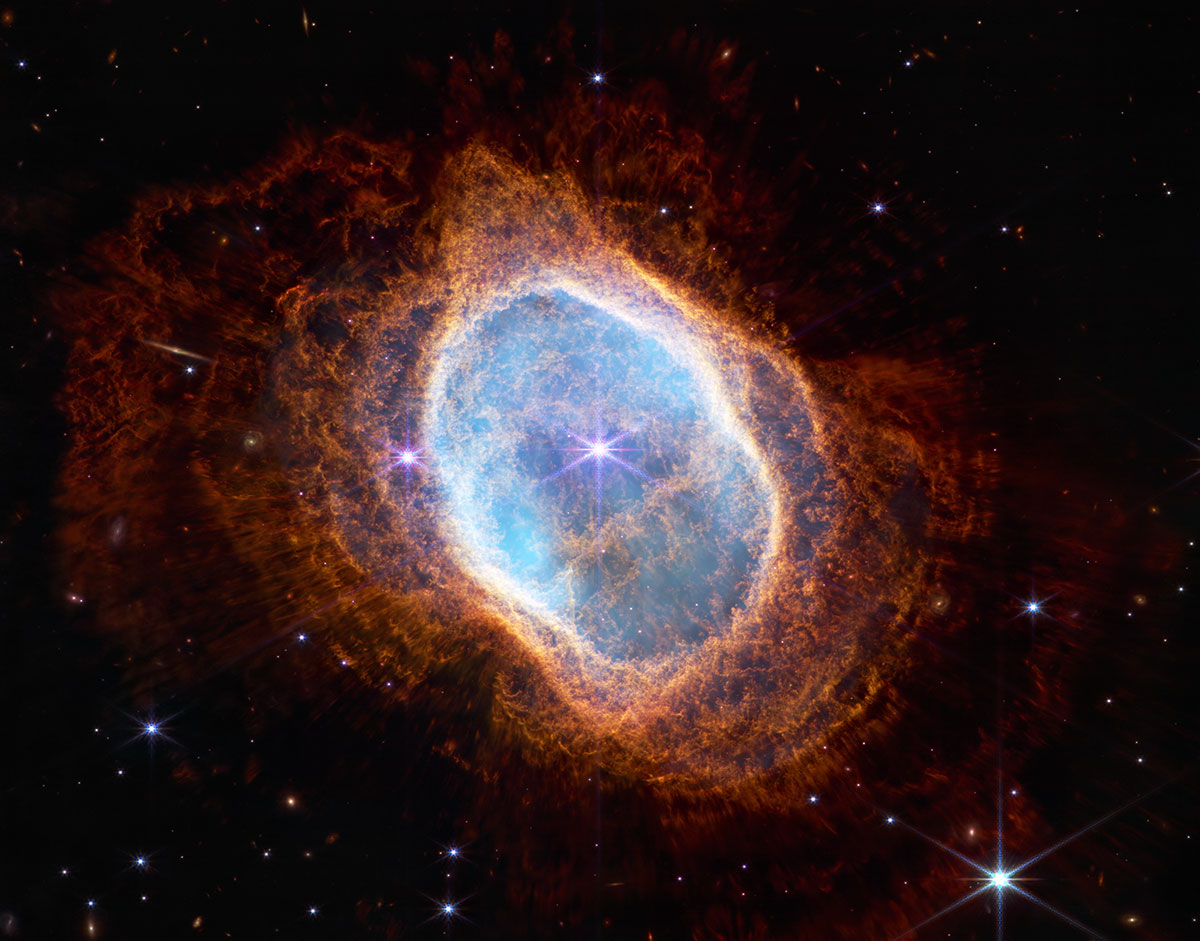
They found it in very slight variations in the cosmic microwave background, the faint echoes of the big bang. For a very brief moment, the universe existed as multiples of itself, as a wave that was in many places at once. These particles were entangled, and as they disentangled and inflated into their own spaces, they left “fingerprints” on one another in the background radiation.
Mersini-Houghton describes the current ferment in cosmology as others join in exploration of the idea of the multiverse. Not all agree with her, but all offer intriguing thoughts. One is that each universe is constantly budding new universes — suggesting that Fred Hoyle’s steady-state universe might not have been that far wrong after all.
Quite apart from the objective existence of a multiverse, Mersini-Houghton has been able to look for it with the support of major institutions like the Perimeter Institute in Waterloo, Ontario. That says something about the freedom of thought and expression scientists enjoy today.
It is also both dizzying and exhilarating to think that a universe, coming out of nothing, could eventually create elements that, at least on one planet, could come together in organisms that can see the universe and begin to understand it. When we look at the universe, it’s looking at itself through our eyes, and thinking about itself. Evidently it has begun thinking of itself as living in a prison state.
If Laura Mersini-Houghton and her colleagues are right, and universes are as countless as grains of sand, then many of them are using creatures like us (and very unlike us) to find one another. Whether we find them or they find us won’t matter; we will be out of the prison of our single universe. ![[Tyee]](/design-article.thetyee.ca/ui/img/yellowblob.png)
Read more: Media, Science + Tech












Tyee Commenting Guidelines
Comments that violate guidelines risk being deleted, and violations may result in a temporary or permanent user ban. Maintain the spirit of good conversation to stay in the discussion.
*Please note The Tyee is not a forum for spreading misinformation about COVID-19, denying its existence or minimizing its risk to public health.
Do:
Do not: