


 SHARE:
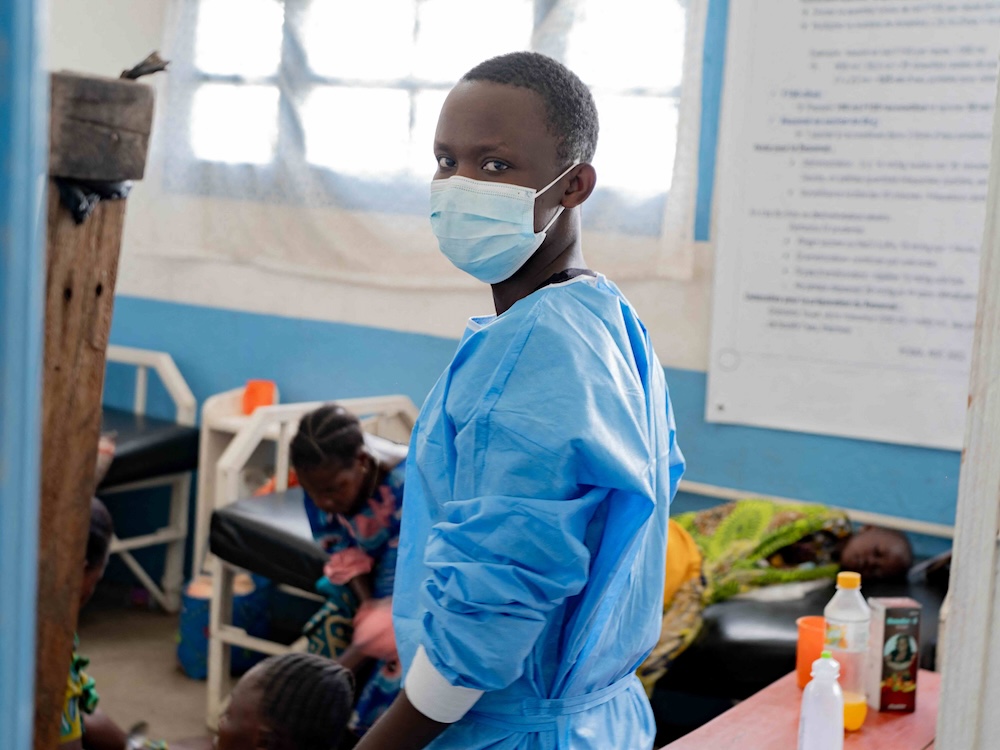
The Ebola outbreak in the Democratic Republic of Congo, which marks the 17th outbreak in the DRC since the first cases were discovered in 1976, is alarming for several reasons. But if we recall previous outbreaks, controlling the current one should be doable.
Ebola seems to have spread for weeks in the DRC’s northeastern Ituri province. Ituri has suffered for decades from the attacks of armed groups such as the Mouvement du 23 mars, or M23, and local militias. Part of Ituri is now controlled by M23 with support from Rwanda, a neighbouring country. As a result, the region has seen massive displacement of people.
When local health officials started testing cases early in May, they got negative results for Ebola because they were testing for Zaire, a more common strain of Ebola. Disease detection was further delayed because samples taken from patients for testing were stored and shipped badly, rendering them useless for testing in Kinshasa, capital of the DRC.
This current outbreak is of the rare Bundibugyo virus. It was discovered in 2007, causes death in 30 per cent of people who contract it and caused two previous outbreaks, one in the DRC and one on the border of DRC and Uganda.
While a vaccine is available for Zaire, there is no vaccine yet for Bundibugyo.
In some ways, the DRC and Uganda are well equipped to deal with Ebola after half a century of outbreaks. Jean-Jacques Muyembe-Tamfum, the director of the DRC National Institute of Biomedical Research, has been dealing with Ebola since the first outbreak in 1976 and was involved in development of the Zaire vaccine.
Congolese and Ugandan health-care workers have experience in fighting the disease and helped Guinea, Liberia and Sierra Leone when Ebola erupted in West Africa from 2013 to 2016.
West Africa also had rapid help from the United States. Then-president Barack Obama sent experts from the Centers for Disease Control and Prevention, the United States Agency for International Development, or USAID, and other agencies, and even built new hospitals in West Africa to care for Ebola patients.
But current President Donald Trump has dismantled USAID and left other health-care agencies stripped of expertise.
Trump has also withdrawn the United States from the World Health Organization, sharply reducing WHO’s ability to support the DRC and offer guidance to the rest of the world. (The United States still owes WHO an estimated $278 million in unpaid membership dues. Trump is notorious for stiffing his creditors.)
Given the turmoil in the region and the lack of medical surveillance, this Ebola Bundibugyo outbreak had weeks to spread unnoticed.
Now the question is whether we’ve learned the lessons of previous outbreaks and of the COVID-19 pandemic.
Here are eight lessons that we should remind our public health leaders, policymakers and politicians about in responding to the current Ebola outbreak.
1. Focus on the countries with Ebola, not the westerners with Ebola
Western media pays far too much attention to U.S., Canadian or European cases. The unspoken message is that Africans with Ebola, or any other disease, don’t matter.
2. Keep access open
In 2014, airlines serving Liberia, Guinea and Sierra Leone cancelled flights out of fear of Ebola. That made it hard for foreign experts and medical supplies to reach the places that needed them.
Local health-care workers who could be helped by overseas treatment should get it.
Wisely, Canada isn’t barring travellers from the DRC or Uganda.
3. Talk to people in the affected communities
Tell the truth, tell it often, tell it well. Then listen carefully.
People in former colonial countries are often suspicious of outside officials. In Guéckédou, Guinea, in 2014, young men threw stones at a clinic run by Médecins Sans Frontières, or MSF.
Also in 2014, inhabitants of the village of Womé, Guinea, murdered eight health-care workers and journalists who were trying to alert them to Ebola.
“Surveillance is important, but it is by itself insufficient,” wrote the author of a later MSF report.
“Getting the communities on board is a critical part of any Ebola intervention.”
4. Respect culture
In many parts of Africa, funeral rites involve bathing and caressing the body of the departed. That greatly enhances Ebola’s ability to jump from one person to another.
Local leaders and health-care workers should acknowledge these cultural customs while emphasizing the grave harms of Ebola, which make touching the dead very dangerous.
5. Stick with Ebola survivors after recovery
Ebola survivors face serious stigma and need long-term care including financial, psychological and medical support.
Many survivors have disabling symptoms: joint pain, fatigue, neurological problems and serious eye trouble. Some can transmit Ebola sexually, even months after the virus seems to have vanished.
Supporting survivors adds to health costs, just as with long COVID, but such support is medically and morally necessary.
6. Establish and sustain public health clinics at the community level
Clinics can prevent illness, treat diseases, maintain surveillance and build trust — all necessary for dealing with future outbreaks. Ideally, their staff should be local residents, agents of the community.
7. Apply these lessons in your own community
They apply to every health threat from measles to hantavirus to long COVID. Diseases, whether emerging, endemic or pandemic, inflict physical, psychological and social harm.
Health-care systems need to deal with those harms and continue post-infection support for as long as it takes.
8. Don’t ever have Donald Trump in charge
Trump presided over the first year of the COVID-19 pandemic, when an estimated 385,000 Americans died of the disease.
He actively made it worse through misinformation and wilful ignorance. U.S. public health is now in ruins as a result.
The Ebola Bundibugyo outbreak, the hantavirus cruise ship outbreak and the resurgence of measles cases in North America mean the world is now taking a final exam in global health.
Some countries will do well, others less well.
The countries that fail will be those that try to BS their way through the exam. ![[Tyee]](/design-article.thetyee.ca/ui/img/yellowblob.png)
Read more: Health, Rights + Justice











Tyee Commenting Guidelines
Please note that email notifications for replies are not currently working due to a software issue which may be resolved in a future update.
Comments that violate guidelines risk being deleted, and violations may result in a temporary or permanent user ban. Maintain the spirit of good conversation to stay in the discussion and be patient with moderators. Comments are reviewed regularly but not in real time.
Do:
Do not: