



 SHARE:
[Editor’s note: Join public engagement expert Richard Johnson and Tyee editor Jen St. Denis for a conversation about revitalizing Canadian democracy at the downtown Vancouver Public Library at 7 p.m. on April 15. Details here. This is article is adapted from ‘Democracy’s Second Act: Why Politics Needs the Public’ by Johnson and Peter MacLeod.]
For years, Canadians have been clamouring for a government — any government — to regulate the internet and push back against the fake news and dangerous and divisive content that floods our feeds and inboxes. In fact, starting in 2020, a special initiative inspired by the original B.C. Citizens’ Assembly on Electoral Reform set out to explain to the federal government the actions it should take.
That exercise, the Citizens’ Assembly on Democratic Expression, continues to upend many of the myths of modern publics: that policies have become too complicated and people are too busy to play more than a passive role in political life.
What happened in Canada — and what continues in the dozens of countries that have conducted more than 1,500 assemblies over the past 20 years — proves this myth not only wrong but deeply corrosive to democratic societies.
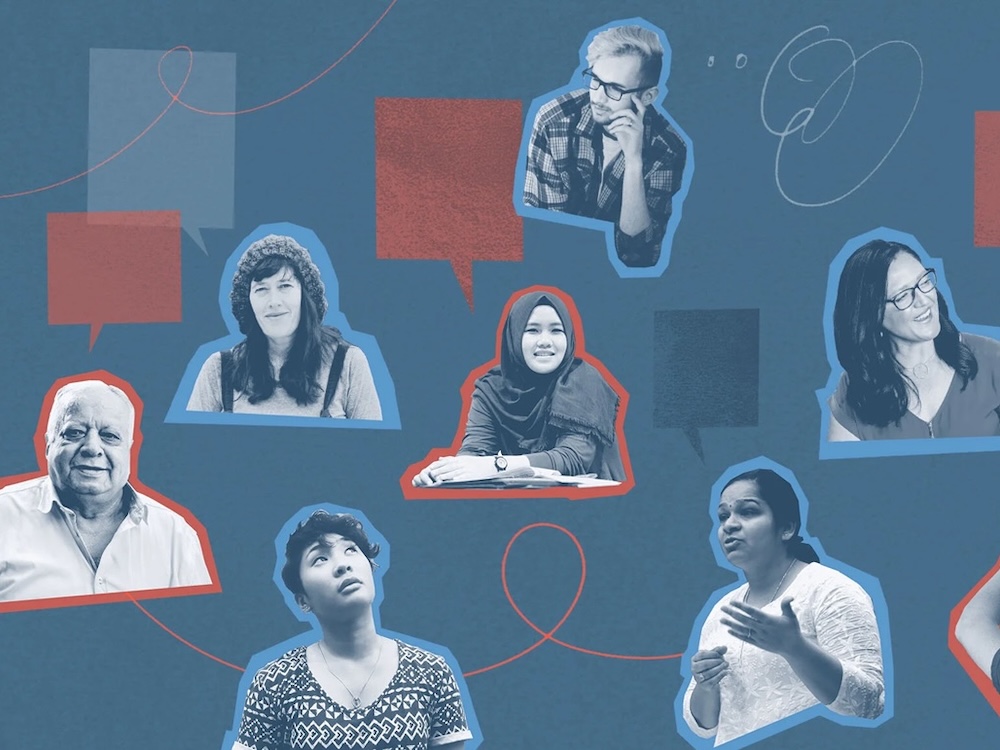
The Citizens’ Assembly on Democratic Expression, or CADE, was composed of 42 randomly selected Canadians from every province and territory who together spent more than 40 hours learning from experts and one another. Together, they considered how to regulate, legislate or otherwise limit the effects of online false information and harmful speech. After 17 sessions, the CADE members ultimately reached agreement on 43 recommendations. It’s a playbook that’s still relevant today.
The assembly determined that social media companies had a duty of care towards their users, and the platforms they create should be subject to a federal Digital Safety Commission that requires far greater transparency and steers them towards protecting the public good.
The recommendations also prescribed legislative solutions, such as strengthening privacy laws and updating the Criminal Code to include certain forms of hate speech, bullying, predation and incitements to violence expressed in online platforms that cause real harm in the real world, especially to children and other vulnerable people.
CADE members also described the roles and responsibilities of a digital public sphere in terms of human rights, arguing for privacy but not necessarily anonymity, data ownership and consent, investments in digital literacy, the promotion of civility, and freedom from emotional, psychological and physical harm.
The CADE report landed on the desk of Canada’s minister of Canadian heritage, advising the federal government on how to design a new legislative and regulatory framework to address harmful content online.
Civility, as the sociologist Richard Sennett put it, is what allows us to form social bonds with strangers. Sennett predicted that the decline of civility would mark the fall of the public and the rise of political tribalism. The CADE stood as a bulwark against that.
And, at a moment when democracies are strained by citizens feeling polarized and alienated from the workings of governance, citizens’ assemblies are one approach that can provide an antidote.
Consider the experience of participant Fauzia Bajwa, a gen-X software developer and first-generation Muslim immigrant living in Montreal. Bajwa had been reading books on politics and trying to be more engaged with social issues. She was deeply bothered by how Facebook seemed to track her every move, and how social media seemed to amplify outrage, misinformation and extremist views.
In the end, it was her husband who urged Bajwa to accept the invitation to join the Canadian Citizens’ Assembly on Democratic Expression. After reading the letter, he told her, “You know, you’re always complaining about things. Here’s your chance to do something about it.” With her husband’s wry encouragement, she decided to say yes.
Zooming towards collective insights
Walter Lippmann, the noted political journalist of the previous century, wasn’t wrong when he observed that most democratic citizens have neither the time nor the ability to participate. He was simply wrong when he assumed that it was everyone, all the time, and that they didn’t care.
He certainly neglected to consider the guiding spirit of volunteerism — the desire of people to participate in something purposeful, with the possibility of making a big impact on society. A rowdy (or boring) town hall meeting, such as Lippmann envisioned, surely does not inspire broad participation; but an assembly — something specific with a fixed time frame and the potential for high impact — just might.
The organizers of the Canadian assembly — which, full disclosure, included us, the authors — used a lottery model to select its members to be diverse and representative, balancing for gender parity, geographic representation from all 10 provinces and three territories, and representations of age groups, native language (English and French) and Indigenous communities. The candidates’ ethnicity, income, education level, familiarity with the topic or other attributes were not factored into the selection process.
The mandate of the assembly was specific and timely:
- learn about the principles of democratic expression and the social impact of digital technologies;
- examine existing institutions and regulations that safeguard both democratic speech and the public interest;
- consider the effectiveness of existing Canadian laws;
- explore how other countries are responding to this challenge;
- and, finally, issue a series of consensus recommendations concerning the measures the federal government and industry should take.
This last pillar of CADE was the linchpin and the ultimate measure of the effort’s success. As with a coroner’s jury or task force, the recommendations of a citizens’ assembly may be legally non-binding, but they still carry significant weight as they catalyze political courage and broad public effort to make change.
On Saturday, Sept. 12, 2020, 42 faces popped up on computer screens in a Zoom meeting. Some sat at their kitchen tables, cookbooks and frying pans visible behind them. Others joined from living rooms, home offices, bedrooms or basements — each person choosing a nook, away from the clatter of a typical weekend household, in which to be both alone and virtually connected to 41 strangers.
Fauzia Bajwa beamed in on her laptop from her dining room. She and many of her fellow members had arranged papers and writing instruments around them, as if preparing for a university lecture. People commented on each other’s houseplants or desk organizers as a way of breaking the ice. Some stroked cats; some knitted. One or two puffed on cigarettes.
The COVID global pandemic was still only months old; for many assembly members, this was the first time they’d used Zoom. People needed to be shown how to raise their virtual hands, how to use the chat function, how to click their way into a smaller breakout session and back to plenary again. They made each other laugh by frequently forgetting to turn off their mute button.
One by one, members introduced themselves and where they were from, sparking a rush of people opening up Google Maps to find places like Ormstown, Quebec; Frankville, Nova Scotia; and Ochre Beach, Manitoba. Canada is an enormous country and not always acquainted with its own vast geography.
There were a few gasps of excitement when someone mentioned they were joining from Iqaluit, on Nunavut’s Baffin Island; Corner Brook, near Newfoundland’s Gros Morne National Park; Eel Ground, the New Brunswick reserve of the Natoaganeg Mi’kmaq First Nation; or Inuvik, near the Arctic coast of the Northwest Territories.
Others hailed from big Canadian cities — Toronto, Montreal, Edmonton, Winnipeg — but all would say in their own way they were proud of representing their communities.
The essence of a representative, national citizens’ assembly was there — the whole country, if not in one room, at least in a common space. Fittingly, they were gathered to work out how to make digital spaces safer and more accessible for their fellow citizens.
Citizen input by design
As far back as 2018, Canada’s federal government had been trying to figure out how to responsibly regulate social media companies and their digital platforms — virtual spaces like Twitter, Facebook, YouTube, TikTok and more, which have become vital forums for information sharing, but whose harms included misinformation, abuse and other speech that threatens the health and safety of individuals and society.
That year, the Department of Canadian Heritage created a funding stream called the Digital Citizen Initiative to support innovative ways to gather input from citizens and civil society organizations on how to govern and improve the digital sphere.
With considerable effort from Taylor Owen, professor and director of McGill University’s Centre for Media, Technology and Democracy, as well as executives at the Public Policy Forum, the Department of Canadian Heritage agreed to support the creation of a Commission on Democratic Expression, chaired by former Supreme Court chief justice Beverley McLachlin, “to better understand, anticipate and respond to the effects of new digital technologies on public life and Canadian democracy.”
To support the efforts of the commission, they further agreed to support a series of citizens’ assemblies, which became affectionately known as CADE.
More than two years of planning came to a screeching halt in the spring of 2020, when the coronavirus compelled everyone to stay socially distant, to stock up on masks, to “be kind, be calm and be safe.”
But the pandemic also amplified the importance of CADE. The global health crisis would soon reveal itself as the most significant test of these digital platforms’ capacity to be hubs of safe, reliable information, while also protecting free expression. Lockdowns, mask mandates, school closures, vaccines — there were facts to follow, reports to verify, policy options to deliberate.
The massive health threat created a critical need to maintain trust between government and citizens, and to ensure the integrity of news and discussions about the disease and its countermeasures. For better or worse, digital platforms and social media became the places people congregated to follow news and opinion while the virus spread and scientists worked to stop it.
The citizens’ assembly was bilingual, with professional interpreters providing real-time translation alongside a team of professional facilitators, organizers and a tech support crew. The organizers arranged for a host of policy experts, academic researchers and stakeholders from government and industry to make presentations to the assembly, and to answer their questions.
Some of the key and vexing questions were what constitutes harmful speech and who decides, what is disinformation and who benefits from its spread, and what is the right balance to strike between government oversight, corporate profits and every democratic citizen’s freedom of speech and expression? Should there be harsher penalties for bad behaviour or business practices, better incentives for good?
CADE members heard from representatives from PEN Canada, the Canadian Civil Liberties Association, Facebook, Google, Twitter, OpenMedia and other organizations, in addition to various university and legal scholars, civil servants and current and former elected officials.
Technical knowledge, too, was an inevitable part of the assembly’s learning process — algorithms and data security, bots and echo chambers, privacy shields, phishing scams and more. In a sense, CADE was a graduate-level crash course in digital literacy.
CADE offered a direct rebuttal to Walter Lippmann’s assertion that, because ordinary citizens could not individually acquire the specialized knowledge to steer public policy towards better outcomes, they should not be engaged collectively. The ordinary citizen, he wrote, “does not know what is happening, why it is happening, and what ought to happen.”
Across an array of Zoom tiles, the Citizens’ Assembly on Democratic Expression proved that assertion terribly, even laughably, wrong. There were 42 randomly selected, representative citizens building bridges among them.
A model of learning and working together
“What was amazing is I remember we had this big debate about anonymity,” said Bajwa, the software engineer from Quebec. “And I was on the side of you should not have anonymity because we need accountability. And I recall [other members] narrating their experiences, some of them quite personal, about why they needed to keep their identity secret on social media, for safety or for a cause. So I had to change my position on that.”
The process of learning and changing one’s mind can often feel intimidating to anyone, especially in a public space. Yet learning and working together — discovering common ground and mutual solutions — can also be enriching, even thrilling, to assembly members. Most people come away with a sense that their lives are changed for the better, their sense of belonging to the community stronger, having experienced a well-run assembly process.
That is the opposite of the internet’s worst effects, as gauged by CADE members.
“As members of the Canadian Citizens’ Assembly on Democratic Expression,” they wrote in their final report, “we worry that the internet has connected us virtually but disconnected us from the real world and each other.”
Their finding proved a catalyst for a federal government stuck in idle. The ruling Liberal party had previously attempted to create an Online Harms Act (Bill C-36) that fell apart over the lack of public consultation and fears of government overreach. The singular impact of CADE was that it reignited the government’s will to act.
In 2024, the Liberals introduced a new version of the Online Harms Act (Bill C-63), drawing significantly from the citizens’ assembly’s report. The bill was not without its critics, including the Canadian Civil Liberties Association and renowned author Margaret Atwood, neither a stranger to the threat of dystopian governments controlling speech, who worried about the law’s limits on personal liberty.
Notwithstanding the risks of regulating or criminalizing certain forms of speech and disrupting the social media marketplace, Bill C-63’s introduction implied that not taking action was worse. And that was certainly the conclusion of the citizens’ assembly itself.
Unfortunately, in the frothy cauldron of Canadian federal politics, the Online Harms Act died when Prime Minister Justin Trudeau resigned on Jan. 6, 2025, and all legislation under debate was suspended while Parliament was prorogued. It will fall to a future government to reintroduce the law.
“You do want to see the results,” reflected Bajwa. “But I don’t see how you can force the government to listen to you. If they want to listen, they will. We’re just 42 people. We’re not going to tip the balance. I don’t see governments taking on assembly recommendations unless the electorate are also demanding it.”
Bajwa is right in one sense. For any assembly to succeed, it has to settle competing expectations between what the public wants and what power brokers are willing to concede. This process will, in the foreseeable future, likely remain a kite in the political crosswinds, flying high but never fully secure.
But in another sense, assemblies do tip the balance towards democracy’s second act. They are proof that people are capable of contributing meaningfully to policies that shape their lives, that they are willing to volunteer and represent their communities and nations.
The public is not simply an aggregate of personal preferences, opinions and identities but the sum of diverse communities, empathetic relationships, interactive dialogue, social knowledge and collective wisdom.
The work of replenishing the public is, at heart, imaginative. It requires a shared belief that democracy can still serve as a moral project — a collective effort to become better versions of ourselves, together.
This article is part of The Tyee’s reader-funded Reality Check project exposing and explaining the rise of digital disinformation. The project’s expert collaborators include the writers Richard Johnson and Peter MacLeod, who are co-authors of the new book ‘Democracy’s Second Act: Why Politics Needs the Public.’ They design and implement new approaches to citizen participation, including citizens’ assemblies, at their company MASS LBP.
Join Johnson and Tyee editor Jen St. Denis at the Vancouver Public Library for a free event on April 15. ![[Tyee]](/design-article.thetyee.ca/ui/img/yellowblob.png)












Tyee Commenting Guidelines
Please note that email notifications for replies are not currently working due to a software issue which may be resolved in a future update.
Comments that violate guidelines risk being deleted, and violations may result in a temporary or permanent user ban. Maintain the spirit of good conversation to stay in the discussion and be patient with moderators. Comments are reviewed regularly but not in real time.
Do:
Do not: