

 SHARE:
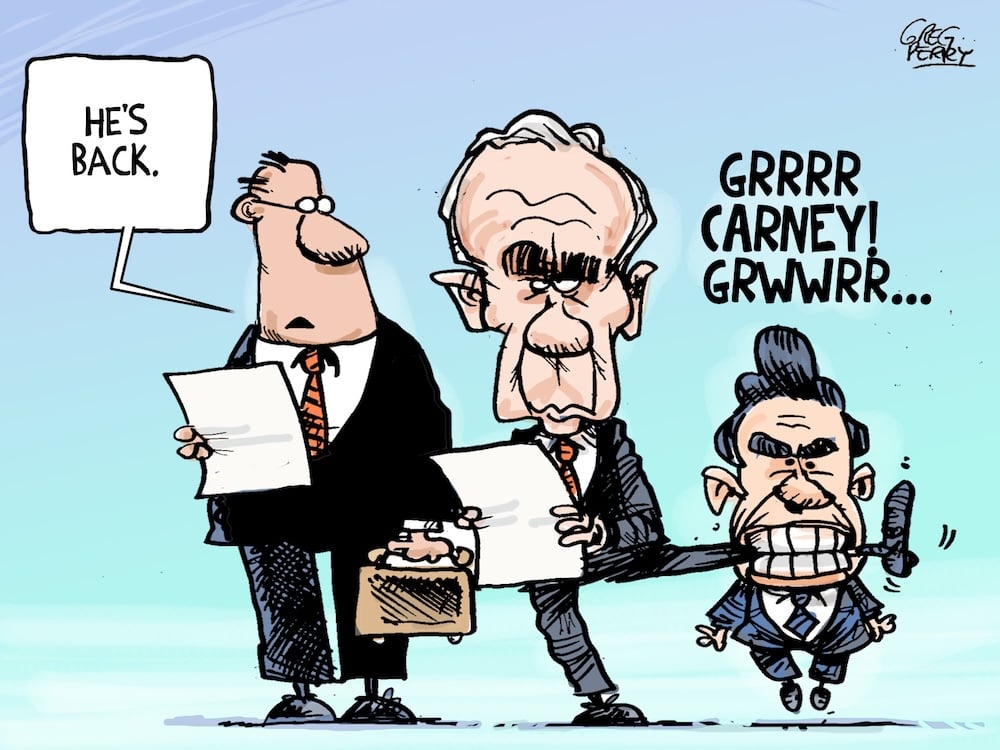
When Parliament returns on Sept. 15, the rematch will begin between Prime Minister Mark Carney and Conservative Leader Pierre Poilievre.
Normally, it is the government with the most on the line when the daily inquisition of question period resumes. And that is how it should be. But not this time.
For a variety of reasons, Poilievre, not the PM, faces the greatest scrutiny as Parliament resumes. And that scrutiny is at the most basic level. Everyone knows that Poilievre can deliver an insult with the best of them. But with a leadership review just a few short months away, the question is whether he still is the right person to lead the Conservative party back to government.
Recent polling by the Angus Reid Institute suggests that the answer is a resounding no. In fact, the latest Reid poll presents Poilievre and the Conservative Party of Canada with a nightmare scenario.
According to the poll, Poilievre has the support of 68 per cent of Conservative voters. But 50 per cent of Canadians would be “ashamed to call him PM.” That number represents a 10-point increase since 2023.
The CPC seemed to have realized Poilievre’s drag on the party during the last election. In the final week of that campaign, they stopped using the leader’s image in their advertising. Poilievre went on to lose both the election and the seat in Ontario he had held for 20 years.
In the end, the rejected leader was reduced to running in a byelection in an Alberta riding so safe that losing was virtually impossible. It was a predetermined victory that got him back into Parliament but did nothing to change Poilievre’s loser image with Canadians.
The man who stayed in Stornoway even after he was no longer leader of the Opposition has another polling problem. According to Nik Nanos, Poilievre’s bread-and-butter political pitch — aggrievement over affordability issues — is no longer the most important thing to Canadians.
“Concern about U.S. President Trump/U.S. relations has significantly increased now, overtaking jobs/the economy as the top issue,” Nanos writes. “Concern about Trump is up seven points in the last four weeks of tracking. The Liberals maintain an advantage over the Conservatives in ballot support. Likewise, Carney has a comfortable lead over Poilievre as the person Canadians would prefer as Prime Minister.”
The problem for Poilievre is that Canadians have already decided who is the best person to deal with the boor and bully in the red MAGA cap — and it wasn’t him.
Part of the reason for that was Poilievre’s total lack of real-world experience. As a lifelong politician, all he seemed to stand for was election.
But another reason Canadians chose Carney was how much Poilievre sounded like Trump.
Can Poilievre manage yet another makeover to attract more support and defy the polling gods?
Bye-bye, Byrne
One of the few signs that Poilievre understands that losers can’t stand pat is the departure of longtime confidante, adviser and colleague Jenni Byrne from his entourage.
Byrne herself recently announced she will not be managing the next campaign. That will come as music to the ears of many Conservatives who felt that Byrne badly mismanaged the last campaign, transforming it from a certain Tory majority win into yet another bitter loss.
Now Poilievre needs to look prime ministerial rather than terminally partisan. But changing himself will prove a lot tougher than changing his staff.
With his political life on the line in the coming months, the evidence is that the Conservative leader will return to his attack-dog persona once the cameras start rolling in question period.
Poilievre has already stepped up his attacks on Prime Minister Carney, despite advice from Ontario Premier Doug Ford to drop the partisan barbs and get on Team Canada, an appeal he made on national television.
Poilievre is personally going after the PM amidst ongoing negotiations aimed at securing a new trade and security agreement with the United States.
This arduous task is a dry run ahead of next year’s renegotiation of the vital and soon-to-expire Canada-United States-Mexico free-trade deal, or CUSMA.
Is Carney caving?
So far, Carney has not been able to persuade the Americans to drop or reduce Donald Trump’s punishing tariffs against Canada. Poilievre claims that the man who promised an “elbows up” approach to the negotiations has delivered an “elbows missing” policy.
As proof, the Conservative leader cites concessions Carney has made to Trump without getting anything in return. First, Canada dropped the digital services tax, and more recently, Carney suspended tariffs on all U.S. goods covered under CUSMA. The Americans already do the same for Canada.
Poilievre claims that the man who said he had a plan for dealing with Trump has instead caved to the U.S. president.
Poilievre conveniently forgets that Canada did get something from the concessions Carney made to Trump — continuation of the talks.
Trump had threatened to walk away from the negotiations if Canada didn’t change these policies. Would Poilievre really have chosen to walk away from a market Canada simply can’t replace?
Carney chose to keep the talks going, knowing that he still might pull off a last-minute deal — or perhaps secure a carve-out for certain strategic sectors such as steel, aluminum, lumber and auto parts, which employ millions of Canadians.
And there was another danger to sticking with Canada’s 25 per cent counter-tariffs on most U.S. goods. Trump could have used that as the excuse to raise his own tariffs even higher. All’s fair in love and trade war — especially when dealing with the mendacious and mercurial Trump.
The handling of Trump’s trade war is not the only target on Poilievre’s political dartboard. When Parliament returns, the Carney government will have to produce a budget that will almost certainly contain massive borrowing and spending.
While it is true that the Liberals have promised to balance government’s “operating” budget by 2028-29, the capital budget is the one Poilievre, ever the deficit hawk, will be watching.
That’s because the Carney government is committed to new spending on the military, megaprojects in Canada, and potentially huge subsidies to industries that may be hit hard by Trump’s tariffs depending on how trade talks turn out.
Poilievre clearly believes that if the talks fail, he can persuade Canadians that Mark Carney is to blame. An iffy proposition. The only way Canadians would blame Carney is if he were to sign a bad deal.
Short of that, if Canada ends up with the fuzzy end of the lollipop, everyone who is paying attention will know who the culprit is. The guy who started the trade war, the guy who wanted to make Canada the 51st state, the guy who said we were not a real country.
Pierre Poilievre keeps getting the big shapes wrong. An endless loop of slogans and snark won’t cut it. The only question that remains is whether the Conservative party will continue to be his partner in delusion. ![[Tyee]](/design-article.thetyee.ca/ui/img/yellowblob.png)
Read more: Federal Politics








Tyee Commenting Guidelines
Please note that email notifications for replies are not currently working due to a software issue which may be resolved in a future update.
Comments that violate guidelines risk being deleted, and violations may result in a temporary or permanent user ban. Maintain the spirit of good conversation to stay in the discussion and be patient with moderators. Comments are reviewed regularly but not in real time.
Do:
Do not: