
News

A Tyee Series

Climate Change, Ghost Issue of 2011 Election

First of three stories on matters of huge significance weirdly drawing scant attention.

By Geoff Dembicki, 27 Apr 2011, TheTyee.ca

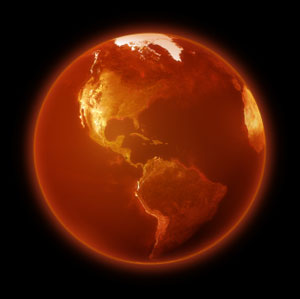
globalwarming-300.jpg

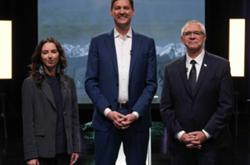
One of the world's best known climate scientists, an Australian, watched in amazement earlier this month as Canada's four federal leadership contenders debated the country's future.

"I was mystified to see that the environment just didn't rank at all," Tim Flannery, best-selling author of the Weather Makers, told Postmedia News after the televised debates.

Flannery's remarks underscore a strange reality lost on most Canadians: The international community appears to worry more about Canada's environmental commitments -- particularly around climate change -- than many of our own elected officials.

This is not just one Australian scientist's opinion. Over 400 green groups gave Canada a "Fossil of the Year" award at the 2009 Copenhagen summit, bequeathed for inaction on global warming.

And Canada received an equally dubious crown during the Cancun climate talks last November.

This trend has coincided with a growing awareness of Alberta's oil sands in Europe and the United States, where many legislators and environmentalists frame the industry as a step backwards for greenhouse gas reductions.

Even the New York Times weighed in on April 2 with a scathing editorial implying Canada's green leadership has been missing in action.

Blame it on Dion?

Yet these issues have barely registered during a federal election campaign so far focused mainly on healthcare, the economy and jobs.

"It's unfortunate," the Pembina Institute's Clare Demerse told the Tyee. "Climate change is definitely in the top handful of issues that Canadians do care about and expect their government to deliver on. We have not had a full discussion so far."

Observers have postulated several reasons for the lack of environmental impetus on the campaign trail.

They cite former Liberal leader Stephane Dion's disastrous embrace of a national carbon tax during the 2008 federal contest; or a country more concerned about post-recession recovery; or poll results putting the environment right near the bottom of election issue priorities.

Whatever the explanation, argues Demerse, Canadians should not think for a second that issues such as global warming have somehow become less urgent.

In fact, an Environment Canada report from earlier this year concluded that current government policies will only get us a quarter of the way towards our medium-term climate commitments.

And only last December, another federal government analysis questioned whether Canada even has a coherent global warming strategy.

All the while, Canadian officials have been lobbying legislators in Europe and the United States to hollow out climate change laws targeting Alberta's oil sands.

'Fossil of the year'

So how did we get here, exactly?

Canada's first major foray into global warming policy came with its signing onto the Kyoto Protocol in 1998, one the earliest countries to do so.

In effect, the federal Liberal government under Jean Chretien pledged to cut national greenhouse gas emissions six per cent below 1990 levels by 2012.

That commitment was dealt a deathblow in 2006 with the election of a Conservative minority government led by Stephen Harper.

His party had long argued for a "made-in-Canada" approach to global warming -- and indeed, the first Harper budget contained no mention of Kyoto.

Canada entered international climate talks in Copenhagen three years later with no clear strategy for reducing its carbon footprint.

By then more than 400 environmental organizations had taken notice, tagging Canada as "fossil of the year" and calling us "the absolute worst country at the talks."

Shortly afterwards, the Harper government signed on to the Copenhagen Accord, pledging to harmonize Canada's greenhouse gas policy with the United States.

This revised climate plan calls for a 17 per cent reduction in carbon emissions below 2005 levels by 2020. Though the government claims that to be progress, it's actually less stringent than the targets mandated by Kyoto, groups like Greenpeace pointed out.

In the midst of these developments, the Canadian government also solidified alliances with some of the planet's biggest oil companies.

Their goal? Lobby against any climate change policy in the U.S. or Europe which could hurt Alberta's oil sands.

No plan in place

It'd been a trend in effect since at least 2007, when Canada raised its first official objections to California's low carbon fuel standard, a plan to make road fuels cleaner.

The rationale was that such policies would undercut the market for Albertan oil, considered one of the most greenhouse-gas-intensive sources of road fuel on Earth.

In Washington, D.C., the lobbying push grew more intense by the year, as Canadian and Alberta government officials fought aggressively to counter any oil-sands opposition. (Read a major Tyee series reported from America's capitol here).

During one skirmish last December, Canada's U.S. ambassador, Gary Doer, shrugged off concerns about the industry's carbon footprint.

Writing to a Democrat congressmen concerned about Keystone XL, a major proposed oil sands pipeline, Doer trumpeted the Harper government's Copenhagen commitments.

"[This is] a benchmark we intend to meet," he wrote.

Doer's statements appeared to ignore the urgent conclusions issued by Canada's federal environment commissioner, Scott Vaughan, only 10 days earlier.

If Canada had a coherent climate change plan, Vaughan couldn't find it.

And his scathing federal audit identified "a pattern of unclear and uncoordinated actions" that was "aggravated by the overriding problem of a lack of sustained leadership."

Ambassador Doer's politely firm letter also failed to mention that Canada had once again been awarded "Fossil of the Year" at November's international climate talks in Cancun. (Or that Canada went into those talks empty-handed after the conservative-leaning Senate voted down new climate legislation right before they began).

But most troubling of all for some green observers was an Environment Canada report released just last February.

Based on existing federal and provincial policies, the department concluded, Canada risked falling 75 per cent short of its 2020 climate goals.

A major factor is the rapid expansion of Alberta's unconventional fossil fuel industry.

"[Greenhouse gas] emissions from oil-sands production will almost triple between 2006 and 2020," Environment Canada once warned, "making it the largest single contributor to Canada's medium-term emissions growth."

'No escaping these issues'

Opinion makers within the United States have grown increasingly aware of the industry's carbon footprint -- and Canada's apparent reluctance to regulate it.

As week one of the federal election kicked off, the New York Times urged American policymakers to strike down a proposed oil sands pipeline, Keystone XL, which would stretch south to Gulf Coast refineries.

"The environmental risks, for both countries, are enormous," read an editorial that cited greenhouse gases as a major worry.

Beyond the odd isolated comment along the campaign trail, climate change concerns have not influenced the ongoing federal election's narrative.

But whether Canada's elected officials choose to address them now or later, "there's no escaping these issues," said Flannery, the Australian climate scientist.

"Year on year, decade on decade," he added, "[They're] only going to keep growing."

Interested in where each party stands on the environment? Check out the results of a detailed questionnaire issued by four Canadian green groups.

And for an in-depth Pembina Institute analysis of each party's greenhouse gas platform, click here.  [Tyee]

20  Comments:

Login or register to post comments

  • Meme Mine

    2 years ago

    Criminal Charges

    In the United States at least, former climate change believers are now demanding that politicians and law makers have the leading scientists and especially the unconscionable leading news editors, subjected to criminal charges for knowingly sustaining the criminal exaggerations of the CO2 mistake for the last 25 years. It is now appearing that issuing CO2 death threats to billions of children unnecessarily has not gone unnoticed and unlike Bush getting away with his false war in Iraq, the false war of climate change will sooner or later be dealt with in the courts. Treason charges for leading a country to a false war is one option now being looked at as politicians always need an enemy to blame.
    And keep in mind that it was the scientists themselves that made environmental protection necessary in the first place when they supposedly polluted the planet with their evil chemicals and cancer causing pesticides and so how ironic is it that we bowed like fools to our Gods of science for 25 years of “unstoppable warming”?
    Scientists are not gods and don’t forget that scientists also produced cruise missiles, cancer causing chemicals, land mine technology, nuclear weapons, germ warfare, cluster bombs, strip mining technology, Y2K, Y2Kyoto, deep sea drilling technology and now climate control. Proof of consensus not being real is the fact that scientists did not march in the streets when IPCC funding was pulled, the EPA was castrated and Obama’s not even mentioning the “crisis” in his state of the union speech. Consensus was a myth because if it were true, the consensus scientists declaring a climate emergency would act like it was an emergency and demand their CO2 mitigation be taken seriously. We believed a handful of lab coat consultants who said we could CONTROL the planet’s temperature and prevent it from boiling. Pure insanity as history will call this modern day witch burning. The new denier is anyone still believing voters will vote YES to taxing the air to make the weather colder. Not going to happen.
    REAL planet lovers are happy and relieved a crisis was averted and real planet lovers don't hold scientists as Gods and bow to politicians promising to make colder and lower the seas and scare kids with such doomsday glee.
    Stay tuned. Call the courthouse.

  • Lawrence

    2 years ago

    Pesky environmental groups

    The cons have a solution for all those noisy enviro groups.

    He plans to remove The tax status from any charity not dealing directly with humans.

    In other words you can get a tax receipt if you give money to say breast cancer or a soccer group, but for environmental groups or anyone else, no receipt.

    This would be devastating to all the enviro groups in Canada.

    Boot the free trade traitors...

  • OhCanada

    2 years ago

    Suicide

    There is no economy without a healthy environment. Political parties are talking about economy and growth but not mentioning anything about their plan to protect the environment. Totally idiotic!

    Anyone believeing that a country can just grow and grow while environmental destruction is at its maximum, exploitation of resources are unprecedented is a serious candidate to the psycho clinic!

    Most Canadians do care yet they are not prepared to do much about it. Buying big gas guzzlers is still a norm here. Putting solar panels on a roof not so much. Never seen it here. In Europe in some countries every second house has a solar panel on it. Solar must be cheaper there I guess.

    Europe is phasing out chemicals in cosmetics by 2012. What about here? Chemicals in cosmetics are one of the biggest cancer causing agents. Yet, no step has been taken to regulate them here. Same goes for chemicals in food.

    In some reason the majority of 'economists' believe that if we go the green route and protect the environment, bring in laws that should have been brought in decades ago, we will be broke. The economy will go down and we will starve to death and loose our jobs etc. A bunch of big BS.

    Countinuing down the path we are currently on will bring us nothing but disastrous consequences. And our children will pay for it dearly.

    When will Canadians act and vote in the right government? The Conservatives didn't even respond to the questionnaire. How pathetic and unintelligent is that at a time when around the World people are trying to make changes and the number one thing on many people's mind is Global Warming and its effect on our lives and on our living environment.

    It is time to wake up Canada. It is time to protect our lakes, rivers and our forests before they are GONE. Or you know what they say - you don't know what you have until you lose it. Once it's gone it is gone. It is very very sad and down right suicidal.

  • snert

    2 years ago

    Maybe people are waking up

    to the fact that climate change issues that we can do anything about do not have the same sense of urgency in Canada as they might elsewhere.

    Although Canadians are one of the highest per capita producers of 'green house gases' we are no where near the worst when viewed in the context of population density.

    What this means is, quite simply put, any lifestyle changes we make, major or otherwise, will have negligible affect on the planet.

    There is no need for Canadians to panic. We must learn to adapt, however, as events that we have no control over will certainly unfold down the road.

    There is always a need for more energy efficient and less environmentally destructive practices but that does not mean we have to roll over and play dead just to keep the rest of the misguided world happy.

    Global overpopulation is the major issue when dealing with any possible solutions to the problem of human induced climate change.

    Work on ways to reduce birth rates peacefully before it happens otherwise.

  • VivianLea Doubt

    2 years ago

    what Canadians think...

    "Climate change is definitely in the top handful of issues that Canadians do care about and expect their government to deliver on."

    In a real democracy, an issue that people demonstrate their concern over would be debated and discussed. It appears we must ressurect our democracy before any further progress can be achieved in this country...climate change or otherwise.

  • freebear

    2 years ago

    More of the same only Vision being proffered!

    By all the parties, and even the Greens adopt growth philosophy so.......

  • de Falla

    2 years ago

    Puzzled by a Couple of Things

    1. You report the Pembina Institute's Clare Demerse told the Tyee. "Climate change is definitely in the top handful of issues that Canadians do care about", and two paragraphs later report, poll results putting the environment right near the bottom of election issue priorities. Is Demerse able to read the minds of Canadians better than repeated polling and if so how?

    2. Chretien set targets and then did nothing to meet them. Not sure why you’d want the reader to come away with the impression the Liberals were any better than the Harper Conservatives.

  • Countrytype

    2 years ago

    Climate strategies

    Since the deep-pocketed oil lobby runs the Conservative party in more ways than merely it's environmental policy, might it not be wise to give the appearance that climate issues are off of the top ten campaign topics to avoid inciting another spin fest as we saw against Dion? Let someone else win the election, and then at least we have a chance of approaching the Liberals or NDP or both about reviving their climate policy. After all if there are no promises made either way in the campaign, no-one can accuse them of lying when they fish up a background core value under public pressure later. Look on the bright side! Let sleeping dogs lie without getting the climate doubt spinners out in full force to scare everyone about gas taxes again... This issue should be about reinvestment in our infrastructure, communities and economies with green jobs and secure supplies so we can redirect our energy path. I don't think the tar sands will close the day after that policy happens, but at least there will be a chance of action.

  • woodworker

    2 years ago

    deep pocketed environmentalists

    Lots of talk about the deep pockets of the oil industry. What I see is even deeper pockets of the evironmental industry. Advertising isn't cheap and there is article after article in the news about climate change and they are all written by "climate scientists" or environmental lobbyists. That takes bucks.

  • woodworker

    2 years ago

    non issue

    Climate change is the bottom of the heap because most people have woken up to the fact that 1) we can't as Canadians really do much of anything about it.
    2) it is just a cash cow for the enviromental lobbyists.
    3) it is so cold in Canada 8 months of the year that a warmer climate is really a good thing. Bring back the 600 year medieval warm period.

  • Lawrence

    2 years ago

    Industry?

    Oh I don't know, I haven't seen an environmental industry.

    What I have seen is a bunch of small groups working in a specific area and paying for things mainly out of their own pockets.

    I have one of the first Greenpeace handwritten membership cards and I know nobody made a nickel from that organization until it left for Europe.

    It's always been hand to mouth in the environmental movement.

    Same with Watson.

    Same with Suzuki.

    Same forty years ago.

    Same now.

    ''Industry'' indeed.

  • Lawrence

    2 years ago

    except

    I'm not too sure about the World Wildlife Fund.

    The problem I have with them is they take money from large very environmentally unfriendly companies.

    Rich folks like the WWF. I know this guy that wears an ascot and calls himself an environmentalist but the first thing he'll tell you about is the last time he saw Prince Charles.

    Most of the enviros I know go out in the cold rain and get dirty on their own dime.

  • Fish-counter

    2 years ago

    "There are no jobs on a dead planet"

    Someone said that yesterday on the televised debate for the Nanaimo-Alberni riding. It sums it all up for me.

    I enjoyed the news coverage of the giant storm that just tore the Midwest USA a new one with over 240 tornados. Perhaps when the next one hits, spawning (let's say) 500 killer tornados, then will some Americans start to connect the synapses between their ears and think, Uh, maybe the climate is er, changing?"

    If a few million of them die, and a few more cities get tossed in the storm, they might just start to think about starting to think about doing something about it.

    Canada needs to throw Harper to the wild dogs and get going on real climate change initiatives. Fat chance of that! Maybe Mad Jack Layton will do something aobut it when he gets into Susses Place.

  • VivianLea Doubt

    2 years ago

    @ woodworker

    but climate change IS an issue for Canadians - whether you agree or not. Study after study after poll will tell you that, as does the article. Since we do live in a democracy, however flawed, that means neither you nor Mr. Harper get to decide the issues we debate. Hard, isn't it?

  • realisticman

    2 years ago

    A Myth?

    "He said scientific data on how carbon in the atmosphere relates to temperature has been skewed by scientists who profit from global warming, and repeated by world leaders using global warming for political gain.

    “There is an industry of global warming,” Dexter said. “There has been a deliberate deception.”

    http://stevengoddard.wordpress.com/2011/04/27/arctic-explorer-global-warming-a-myth/

  • snert

    2 years ago

    Fish-counter

    So, what are some of these "real climate change initiatives" that will actually matter in the grand scheme of things?

  • OhCanada

    2 years ago

    Dexter said what?

    Sorry but this Dexter guy seems to be missing some clicks. Sea ice is not melting as fast, man made climate change is exaggerated, species are not endangered etc.

    There must be a psycho clinic where this man can check in and get a check up. Please!

    There are 3 possible outcomes - it isn't really that complicated.

    http://forestsofhope.wordpress.com/2010/06/03/three-possible-outcomes/

    The planet is getting over populated. Resources are used up faster than ever. Environmental degradation happens faster than nature can get back to balance.

    What an earth makes you think that these actions will have no consequences??????

    So I guess if you live in a house and your family just gets bigger and bigger it is no problem. There will be enough space for everybody, all the time. No furniture, appliances etc. will have to be protected or used carefully. Those things just will last forever, right? The garden and the yard will always be perfect regardless of how many family member will use it, right?

    Even if this is a stupid comparison it still makes sense if you project this into a bigger scale.

    If you don't see a need for change then you should check in with Dexter into that psycho clinic.

  • Fish-counter

    2 years ago

    The dinosaurs thought everything was great till the last day....

    Just go to Asia, South America or Europe to see overcrowding. There were 3 billion people when I was born and now there are close to 7 billion and we are twice as wasteful with our use of resources.

    One man cannot turn the tides, but 7 billion can, and we already have. Bring on the tornados in the Mid-West USA. This is better than any disaster movie because people are really dying and the survivors are really crying. It is like a really good movie. Where are the people from the Westoboro United Church when we need them? They should be preaching to the storms.

  • woodworker

    2 years ago

    NO longer small business

    Suzuki foundation 2010 income from the annual report. $7,749,419. That is a pretty good sized company. Not counting all the free press they get from the newspapaers. 29% of that is spent on propaganda (Puplic engagement for the politically correct) Drop that to 5% and maybe they could do some good however I doubt it as I have read many of his articles in newspapers and he offers not much for intelligent solutions. If fact all he usually does is whine about the problem with no suggested solution. 63 staff also make this no longer a small business. http://www.davidsuzuki.org/publications/downloads/2010/annual-report%2009-10_web.pdf
    I read the report and see that they have accomplished almost nothing of significance and have posed few if any solutions.

  • OwlRol

    2 years ago

    Woodworker, c'mon

    I don't see ads on TV, where the big bucks are, to reduce our fossil fuel consumption. But I see numerous greenwashes on how clean our Tar Sands operations are becoming and incessantly repetitive ads for trucks and other gas guzzlers to buy and burn that gas. Those commercials cost far more than Suzuki's entire budget.

    How about comparing his foundation's budget with that of Exxon Mobil or Syncrude.

    You obviously don't watch "The Nature of Things" very often or you would see how he brings into our living rooms the best of what other nations are doing to reduce greenhouse gas emissions.

    Aside from bigger and more frequent storms, El Nino, and this year, La Nina events, warming also results in continental interior droughts, especially as those alpine glaciers that feed so many of our major rivers, continue to recede. (Been up there lately? - All but one of 18 Vancouver North Shore glaciers are gone and the GVRD is raising their watershed dams to trap more winter rainfall, never mind the Athabasca glacier.) Some of our best crop and rangelands are hurting from drought in places. Even the tar sands operations had to suspend operations late last summer for lack of sufficient water.

    The Australians get it. The Chinese get it as the Gobi desert creeps toward Beijing. Even the Texicans get it as they move toward greater wind, solar and plug-in hybrids.

    We are now the Pariahs of the OECD on this file.

    World population has more than doubled since I was born, but it is slowing down in many nations. Poverty reduction, literacy and empowerment of women are prime drivers.

    But communications now allow people to see how we live and they want the same. (I'll never forget the guys from Shanghai who want Harleys and Hummers on their shopping lists.) Consumer growth is now a more serious problem than population growth.

    It is here that Canadians could make a significant impact by modelling more appropriate and efficient energy use and conservation techniques, but for the most part, we're not doing it. Big oil and big money surely hinder our efforts.

    Some think that Suzuki and the WWF have sold out to big corporations. I'm still undecided. Perhaps working with big business is better than opposing them, unless it's just Greenwash. How about certified Rona lumber, woodworker? You may know more on this.

    • The discussion for this story is closed. No more comments can be added.