
Books

Return to the Vertigo Years

It's beginning to look a lot like 1900 again. Yikes.

By Crawford Kilian, 13 Jan 2009, TheTyee.ca

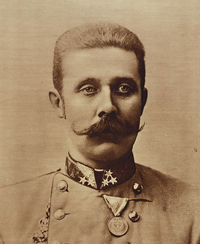
Franz Ferdinand

Franz Ferdinand: Don't look down?

  • The Vertigo Years: Change and Culture in the West, 1900-1914
  • Philipp Blom
  • McClelland and Stewart (2008)

For some reason, we still think that the 20th century began in August 1914, when Europe went to war.

The years between the death of Queen Victoria and the death of Archduke Franz Ferdinand are somehow unimportant. If we think of that decade and a half, it's just clips from early movies: people in silly uniforms, strutting around in black and white at twice normal speed. We look at them ironically. They don't know what's going to happen to them, and we do.

German writer Philipp Blom takes a very different view of our great-grandfathers, and it's a persuasive one. His focus is on Europe, as it should be, but his insights apply to North America as well. He shows us a culture disturbingly like our own.

The world in the first years of the 20th century was grappling with the consequences of 19th-century technology. Telegraphy put Paris in touch with New York and Tokyo. New media -- film, cheap newspapers, radio -- showed urban workers a new world and hinted at a better life built on global trade. They might well reach that life in one of those new, clattering, amazingly swift automobiles, or even an airplane.

But this new technology also threatened the values that Europeans and North Americans had inherited from the middle ages: respect for church, for social order, for racial and male supremacy.

'The bed is the battlefield'

Blom shows us a world with sexual hang-ups much like our own. France and Britain fretted about their declining birthrates and their uppity women. Very unladylike British suffragettes threw bricks and got thrown in jail. Men seemed to have lost their confident grasp on life.

The disease of the 19th century had been tuberculosis. In the early 20th century, something called "neurasthenia" or nervous exhaustion was a new plague, brought on by overwork and the dizzying pace of modern life. It blighted the victim's sex life: "The bed is the real battlefield of the neurasthenic," said one German patient.

Blom gives each year its own chapter, but it's not a simple chronicle. Instead, each chapter focuses on some development of the period: Einstein's and Curie's early work in 1903, for example, and the aborted Russian revolution in 1905. It's an effective way to organize an immense amount of material, and Blom handles it very well. We learn something new even about familiar figures like Picasso and Freud.

From nudism to Nazism

While he carefully avoids foreshadowing the Great War, Blom vividly describes the ideas and movements that would soon crystallize into fascism, Nazism and communism. Fascism emerged from an avant-garde Italian love of powerful new machines. Nazism drew on pre-war racism and even nudism. The young Lenin was part of a generation of "jihadists of the revolution" who saw violence and terrorism as the only means to overthrow Tsarism.

Blom clearly sees the irony of a widespread attitude in the prewar years: The most powerful, advanced and secure countries nonetheless saw themselves as weak. Germany was the leader in technology, but poured its wealth into a money-losing empire and a fleet of battleships to protect it. The British, feeling equally feeble after the failures of the Boer War, joined the arms race.

In 1897 the Polish industrialist Ivan Bloch had foretold unwinnable "industrial" wars that could lead only to revolution. That worried everyone and helped launch the first peace movement, but it did not stave off such wars. The general staff of every great power made plans for short, sharp wars that even the weaker power could win -- if it was faster and more brutal than its opponents.

Same issues, same failed solutions

Argument by analogy is often dubious, and we shouldn't force too many parallels with the powerful but anxious world of a century ago. Still, it seems clear from Blom's book that we deal with very similar issues, as individuals and as societies. The "Thirty Years' War" of 1914-1945 didn't resolve those issues. Nor have the Cold War and the present War on Terrorism.

We might consider the prewar vertigo years as offering examples of what doesn't solve problems. They include militarism, authoritarianism, love of technology, commercialism, imperialism, and simple-minded ideologies based on the last century's pop science. They were all offered as personal and national solutions. They all failed.

Philipp Blom's important book implies that we should look elsewhere for answers, or accept stress and anxiety as simply part of the human condition.

 [Tyee]

5  Comments:

Login or register to post comments

  • Fiat lux

    3 years ago

    Of course, they all failed,

    Of course, they all failed, yet are still pushed on humanity by miseducated economists and their multinational owners, who have always been and still are the only winners.

    There's no point in blaming ideologues and politicians for the daily increasing terror and destruction of civilization, without also going after the universities and professors, who are teaching this destructive crap as some form of science.

    Ed Deak, Big Lake.

  • ME2

    3 years ago

    There's more to it than that, Ed

    When Marx first devised his Dialectic, "Class Struggle" lay at the base of it. And so, any student of politics or economics ever since has had to deal with Marx, regardless of where else his / her political leanings might lie.

    Power elites routinely deny all evidence that points to the fact that the wealthy have forever sought to enrich themselves at the expense of the poor. Throughout time they have employed many strategems to do this, such as enlisting religion, allying with aristocracies and despots, and in our times, by monopolizing the monetary system.

    So, while I agree with Ed that our modern Capitalism has enlisted false criteria in defining monetary values, and that adopting different criteria might correct the distortions we see today, this will do nothing to constrain the wealthy power elites who consistently visit upon us the societal ills Crawford Killian enumerates below :

    "They include militarism, authoritarianism, love of technology, commercialism, imperialism, and simple-minded ideologies based on the last century's pop science. They were all offered as personal and national solutions. They all failed."

  • Fiat lux

    3 years ago

    Me....I have seen how the

    Me....I have seen how the distorted tenets of Marx, and of any and all economic and religious prophets worked, ruining and destroying the lives of billions.

    Marx was an incompetent jerk, who allowed his children to starve to death, while he was sitting in the British Museum, or begging handouts from his friends, as he was trying to get into the pants of their wives. He would do anything for the "working class" except join it.

    So, whatever he, or any other ideological prophets said should have been buried with their carcasses.

    Here I have to repeat myself for the umpteenth time.

    Human history has always been ruled by the conspiracy of 3 sectors:
    --------------------------------------
    The Merchants who invent the demands.

    The Priesthoods who develop the legalization of crimes.

    The Military who do the dirty work.
    --------------------------------------
    Wealth is the temporary control of energy.

    Wealth can not be created, only taken from other sectors, the environment and the future.

    Monetary values are not realities, but often violence induced, temporary perceptions that can not be used for economic calculations.

    Costs can not be cut, only transferred on other sectors...etc.

    War and crime are the ultimate forms of economic competition for the acquisition of energy control.

    Ideologies are pseudo religions for the legalization of energy theft, legalized by the priesthood of economists, whether they call themselves communists, nazis, or capitalists.

    The legalization of all wars etc. was always based on scriptural justifications, claiming "divine orders", as they are now based on the scriptural tenets of neoclassical market economics in the service of the Money God, the biggest crime wave in history, destroying the ecology and humanity.

    And this garbage is being taught as a "science" in our universities.

    There's no need to write hundreds and thousands of pages to satisfy the verbal diarrhea of academic eggheads who couldn't fight themselves out of paper bags, and to mislead the public into voluntary servitude.

    The whole fraud can be killed on a single page, but it has to start at the university levels, reverting them into institutions of learning, instead of teaching and brainwash.

    Until this is done, the crooked politicians, and ruling classes, have all the scriptural justifications and weapons to collectivize, conquer and steal.

    Ed Deak.

  • Birch

    3 years ago

    American Weimar

    Thanks, Crawford, for this piece. Blom (and you) are correct: the period from 1900 to 1914 is vastly underrated with respect to its importance to the rest of the century and today.

    Further parallels may be found between the Weimar Germany of the 1920's and the decline of the US during the period of GW Bush. It's hard to know whether the polarization of political opinion is cause or effect (completely) in either situation. The likely superinflation heading toward the US dollar is similar to the decline of the Mark in the 1920's. War debts?

    I'd like to look at Blom's book.

  • ME2

    3 years ago

    Fiat

    Same game, just different names.

    • The discussion for this story is closed. No more comments can be added.