


The British Columbia Court of Appeal has struck down the latest attempt of the government to restrict advertising ahead of provincial elections.
"The definition of election advertising is overly broad," found chief justice Lance Finch, justice Peter Lowry and justice Christopher Hinkson in their ruling. "It captures virtually all political expression regardless of whether such is intended to influence the election, and ... all individuals and organizations are affected even if their election advertising is voluntary."
Nor, if the goal is to protect fair elections, was there a clear and compelling reason to limit election advertising and political expression during the pre-campaign period, they found.
In May, 2012, as part of a miscellaneous statutes amendment act, the government put forward changes that would have limited election advertising in the 40 days before the official campaign period. The limit would not, however, have been in effect if the legislature were sitting or for 21 days following a sitting.
The change was an attempt to fix similar legislation that in 2009 the court had ruled unconstitutional following a challenge led by the B.C. Teachers' Federation.
"With respect to what constitutes the content of election advertising, the definition has ... not been altered in the current amendments," the justices found. "The current amendments address the concern with respect to the sitting of the Legislative Assembly but, by virtue of the definition of election advertising, they continue to apply to a broad range of advertising unconnected with the election."
The amendments "unjustly interfere" during the pre-campaign period with rights guaranteed in the Canadian Charter of Rights and Freedoms, they said.
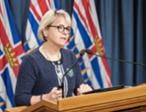
Justice Minister Shirley Bond was unavailable for an interview, but a spokesperson provided a statement on her behalf. "The court has clearly outlined its decision regarding pre-election spending," she said. "It has provided us with clear reasons and a thoughtful analysis. I accept its decision and we do not intend to appeal."
Bond noted the courts acknowledged fixed election dates are new in Canada and pre-election spending will need to be dealt with, but that it's a matter of how. The government argued in court the limits are needed to prevent the wealthy from dominating discussions, she said.
Intervenors in the case welcomed the ruling. “While God may have needed 40 days and 40 nights to cleanse the world, fortunately the court concluded that the B.C. government didn't,” said Integrity BC executive Dermod Travis in a press release.
The executive director of the Freedom of Information and Privacy Association, Vincent Gogolek, said, “The government has been told quite clearly that their attempt to restrict free speech is unconstitutional.”
The government should also address the "chill effect" from election laws requiring small spenders like non-profits and charities to register with Elections B.C. even if they don't intend to spend any money on election advertising.
Andrew MacLeod is The Tyee’s Legislative Bureau Chief in Victoria. Find him on Twitter or reach him here.







What have we missed? What do you think? We want to know. Comment below. Keep in mind:
Do:
Do not: