



 SHARE:
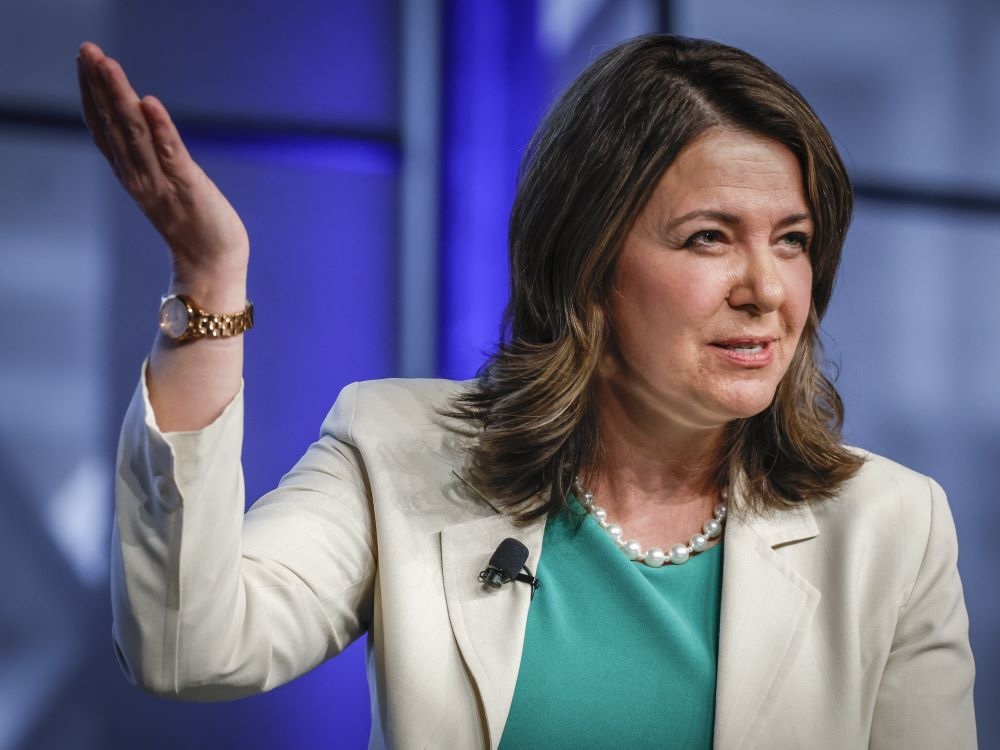
The Alberta government under Premier Danielle Smith has banned gender-affirming health care for youth in the province.
This legislation bans access to puberty blockers and gender-affirming hormone replacement therapy for youths 15 and younger for the treatment of gender dysphoria, with few exceptions.
In 2024, two organizations, Skipping Stone and Egale Canada, challenged the legislation in court and secured a temporary injunction on the grounds that the ban would inflict irreparable harm.
Instead of appealing this decision, in December 2025, the Alberta government invoked the notwithstanding clause to guard Bill 26, along with two other anti-2SLGBTQIA+ bills (Bill 27 and Bill 29), from court oversight.
As a result, these laws cannot be challenged in court as unconstitutional under the Canadian Charter of Rights and Freedoms for five years.
Smith and her government claim that their ban on gender-affirming care is “following the science,” saying it reflects findings from the United Kingdom suggesting there is insufficient clinical evidence about both the benefits and the risks of gender-affirming care for youth.
In a media interview, Smith stated: “If we want to take a science-based approach, we’ve got to use the best information available.”
But is Alberta actually using the best available evidence?
How UK research is being used
Much of Alberta’s justification for its restrictions draws on the Cass Review — an independent but controversial review of gender identity services for children and youth in the U.K. published in 2024.
The final report called on limits for routine prescription of puberty blockers to treat gender dysphoria.
Following the publication of the Cass Review, England’s National Health Service closed the Tavistock clinic, the only specialized youth gender clinic in the U.K. at the time. Since then, NHS England has made puberty blockers available only for clinical trials, the first of which has recently been halted.
Data from England’s National Child Mortality Database shows that suicides among trans youth surged to 22 in 2021-22, the same year NHS England announced it would close the Tavistock clinic. In the two previous years, the number of trans youth suicides were four in 2020 and five in 2019.
This outcome raises serious concerns about the potential consequences of limiting access to gender-affirming health care.
What the global evidence shows
Recent research from other jurisdictions has emerged about the effectiveness of gender-affirming care for youth and the harms of restricting access to it.
In 2024, a peer-reviewed study illustrated the effects of anti-trans legislation in the United States, where 48 such laws were enacted across 19 states between 2018 and 2022. Using national data from 61,000 trans and non-binary youths, the researchers found that anti-trans laws were associated with increases in suicide attempts of up to 72 per cent.
At the same time, clinical research on gender-affirming care has found that it has a positive impact on youth mental health. A 2025 study examined suicidality outcomes among 432 youths receiving hormone therapy.
The study found that hormone therapy correlated with a decrease in suicidality scores. Youths who received puberty blockers prior to hormone therapy showed lower suicidality compared with the overall sample.
When governments dismiss their own evidence
Alberta is not alone in selectively interpreting evidence for political reasons. In 2023, Utah lawmakers introduced a moratorium on gender-affirming care for trans youth, citing potential health and safety risks. The legislature commissioned a comprehensive review of existing research into the effects of hormone treatments.
The resulting 2025 report — based on 277 studies and more than 28,000 pediatric patients globally — concluded that puberty blockers and hormone replacement therapy are effective and safe, pose minimal risk and have low regret rates. It found there is no evidence-based justification for limiting access.
Despite this, Utah lawmakers dismissed their own 1,000-page report and have permanently banned gender-affirming care for youth.
This dismissal of evidence reflects a disturbing trend of politicians being unwilling to engage with information that is inconvenient to their interests while claiming they are following “the science.”
What does Canadian evidence tell us?
In Canada, research is also beginning to document the impacts of these policies. Since 2024, our research team has been collecting data about the impacts of the anti-2SLGBTQIA+ legislation in Alberta.
Using focus groups, interviews and a survey, we have engaged with more than 100 parents and caregivers of trans and gender-diverse youths across the province. Our research illustrates the immediate and ongoing effects of legislating trans youths’ lives.
In our survey, 56 per cent of parents of trans and gender-diverse youths reported that their child’s mental health has deteriorated since the announcement of the ban on gender-affirming care.
In focus groups and interviews, parents and caregivers reported a steep decline in their children’s mental health and well-being, including increased anxiety, school absenteeism, self-harm and suicidal ideation.
Reports of bullying and harassment have also increased, and families reported that public support — including from neighbours, schools and places of worship — has declined across the province.
According to our survey, 95.6 per cent of parents and caregivers believe the current negative climate for 2SLGBTQIA+ youth is directly related to the Alberta legislation.
The stakes are high for Alberta’s youth
There is now clear and growing evidence that restricting access to gender-affirming care in Alberta is actively harming trans and gender-diverse youth, most notably via declines in mental health and an increased risk of suicidality.
If Alberta’s government is committed to following the science, it must engage with the full body of evidence, not selectively cite it. That includes research showing the risks of denying it.
The implications extend beyond Alberta. Given what we have seen globally and in Alberta, changes in governments in other provinces and territories could bring about similar policies, even in places currently seen as supportive of 2SLGBTQIA+ youth.
The question facing policymakers is no longer whether evidence supporting gender-affirming care for youth exists, but whether they are willing to act on it.
![[Tyee]](/design-article.thetyee.ca/ui/img/yellowblob.png)
Read more: Health, Rights + Justice, Alberta, Gender + Sexuality












Tyee Commenting Guidelines
Please note that email notifications for replies are not currently working due to a software issue which may be resolved in a future update.
Comments that violate guidelines risk being deleted, and violations may result in a temporary or permanent user ban. Maintain the spirit of good conversation to stay in the discussion and be patient with moderators. Comments are reviewed regularly but not in real time.
Do:
Do not: