


 SHARE:
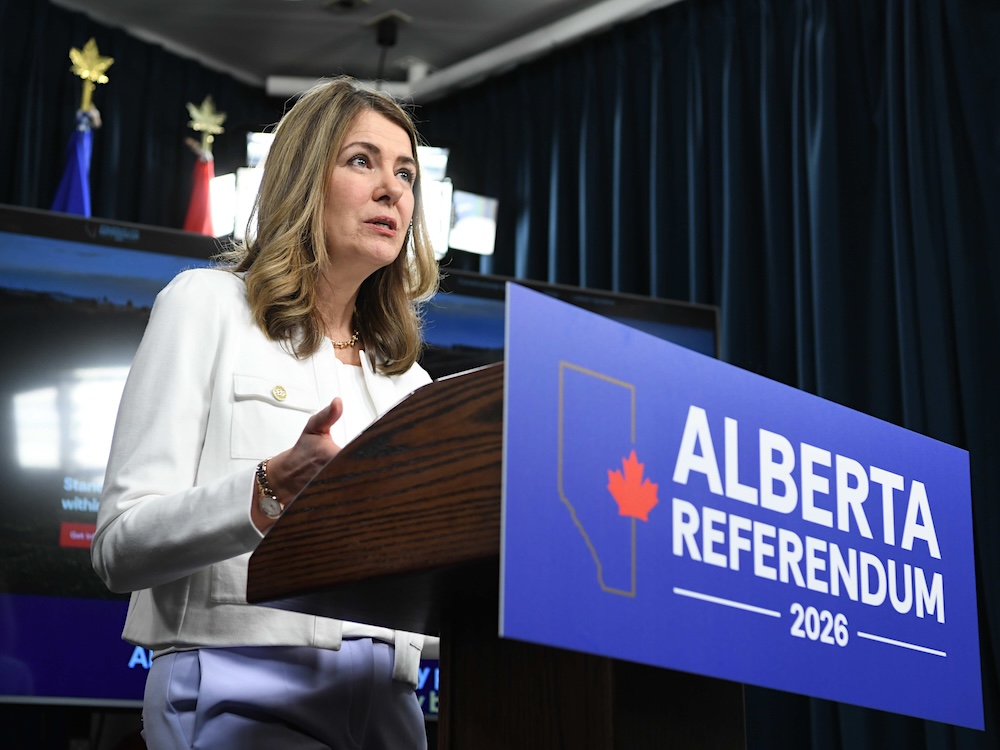
The alleged misuse and online exposure of millions of Albertans’ personal information spans well beyond normal politics or campaign trickery. They go to the heart of our privacy as individuals and the foundations of our democracy.
Multiple investigations are underway. The RCMP will take years to investigate possible crimes. Elections Alberta, itself a player in this story, can act only within the increasingly narrow limits of its mandate and capacity. A legislative committee would turn this into political theatre.
But — not unlike the CorruptCare scandal — none of these separate investigations can provide Albertans the whole story in a timely and public fashion.
Only a full public inquiry can do that. And Albertans deserve one before they cast another ballot.
What we know so far
Elections Alberta believes the Republican Party of Alberta’s copy of the list of all eligible voters and their personal information was given to the Centurion Project, a pro-separation group led by David Parker (leader of Take Back Alberta). A judge ordered Centurion to remove from the internet a searchable database containing the names and home addresses of close to three million provincial voters.
Despite Parker’s disingenuous claim to the contrary, that database was not as harmless as a phone book. It listed names and home addresses of nearly every eligible voter. This includes prominent politicians, election officials, senators, judges, Crown prosecutors, journalists and other public figures.
It also lists other folks who have good reasons not to have their personal information broadcast to the world. Parents of adopted or foster children. Health-care workers involved in providing abortions or gender-affirming care. Teachers and school administrators. Researchers. Activists. Public servants. Members of marginalized communities. People escaping stalkers or abusive family members. All are more vulnerable today than they were before the list was leaked.
This is not to mention ordinary Albertans who simply do not want their home address turned over to political organizers. Or the millions who are now at risk of identity theft or fraud, particularly if (when) the list falls into the hands of criminal elements.
It also exposes anyone with whom a custodian of the list has an axe to grind. This raises the prospect of political intimidation, threats of violence or worse.
A breach like this has the potential to affect every eligible voter in Alberta in ways beyond their vote. For some, it’s an inconvenience. For others, it is downright dangerous.
Why existing investigations are not enough
Multiple investigations may be underway, but none will necessarily tell the full story. We may get a lot of details and still lose the forest for the trees.
Police investigations are too narrow and take years. They ask whether specific individuals committed specific offences that can be proven to a criminal standard.
But a criminal investigation will not answer the broader democratic questions: How did the list move from an authorized recipient to unauthorized hands? Who accessed it? Who copied it? Who used it? Was it used to support petition, referendum, party-building, separatist or electoral activity? What legislative choices made this possible? What institutional safeguards failed? What reforms are required before Albertans vote again?
An RCMP investigation into fraud may be necessary. But it is not sufficient.
Privacy investigations are also limited. Alberta’s privacy commissioner has already identified a major gap. Alberta’s Personal Information Protection Act does not apply to political parties. The commissioner has said this leaves her office without jurisdiction over personal information from the list of electors if it was disclosed by a political party, and she has renewed her call for Alberta to bring political parties under privacy law.
Elections Alberta’s investigation is essential, but it, too, is constrained. The chief electoral officer has said the agency is working “within the limits of the legislation.” He has also explained that Elections Alberta cannot simply investigate whatever looks suspicious. It now needs “reasonable grounds to believe an offence has occurred” before starting an investigation — a much higher threshold than the previous “grounds to warrant” standard and, in the CEO’s own comparison, similar to the level of evidence police would need to make an arrest.
That is a remarkable admission. The province’s election agency is telling Albertans it may not have the legal tools it needs to investigate threats to the integrity of our election system.
That, combined with their resource constraints and the fact that several referendums are looming, suggests we should not leave it solely to an under-resourced agency to complete the necessary investigations into wrongdoing.
Elections Alberta cannot investigate itself
To be clear: Elections Alberta appears to have acted once it had the evidence it believed it needed. It issued a cease-and-desist letter on April 28, sent representatives to a Centurion event on April 29 and obtained an emergency injunction from the Court of King’s Bench on April 30.
Could it have acted on earlier credible tips? Absolutely. Why it didn’t should be a core question of a public inquiry.
The agency is the custodian of the list of electors. It distributes the list to authorized political actors. It seeds copies of the list to track misuse. It is responsible for enforcing parts of the Election Act. It is constrained by legislation passed by the government. It is now defending its own response, its own mandate and the integrity of the democratic system it administers.
All of this places Elections Alberta inside the scandal. Whether it acted properly or not, it is an actor in this saga. This doesn’t mean Elections Alberta has done anything wrong. But it does mean it cannot be the sole vehicle for public accountability.
As both investigator and witness, Elections Alberta needs support, not scapegoating. The best way to provide that is through a public inquiry with a broader mandate than Elections Alberta itself possesses.
This is bigger than the separatist petition
Much of the reporting thus far has focused on how the scandal impacts the prospects of the separatist movement. Centurion’s own stated purpose was to identify and recruit Albertans supportive of separation ahead of a possible referendum. A court injunction is preventing Elections Alberta from validating those signatures, and a ruling later this week could put a stop to the petition altogether.
This leaves us to trust the petitioner, Stay Free Alberta, which claims it has the requisite number of signatures to meet the threshold for a referendum.
For a variety of reasons, not limited to the scandal, we should be skeptical of its claim.
Premier Danielle Smith should bear all of this in mind as she decides whether or not to legitimize the separatist cause by holding a referendum.
I have argued that referendums in general, and a separatist referendum in particular, should not be held under these conditions.
But if Smith is intent on proceeding, she should first call a public inquiry into the voters-list scandal and allow the commission to do its work before Albertans are asked to weigh in on the merits of separation.
Albertans should not be asked to vote in a referendum — especially one concerning the possible breakup of the country — while basic questions remain unanswered about whether the province’s voters list, petition process, election agency, referendum machinery and proponent organizations have been compromised.
Were seeded names used to pad the petition? Did anyone use the list of electors to find, target, pressure or mobilize voters in ways the law does not allow? Did any organization use privileged electoral data to accelerate petition collection? Were voters’ home addresses used to build political networks outside the law? Who had access to the database before the injunction? Was it downloaded, scraped, copied or redistributed? Does anyone still have it?
These fundamental questions cannot wait years for criminal or civil proceedings to wind through the system. And Elections Alberta does not have the capacity or authority to investigate them.
Holding a referendum with these many unanswered questions will lend credence to those who challenge the outcome and deny losers’ consent to the victor.
Everyone should welcome an inquiry
A public inquiry is a truth-seeking process, and all parties to this scandal should have an interest in clearing the air.
The premier says she wants accountability. No better way than to call an inquiry empowered to get to the bottom of the scandal.
The United Conservative Party says it did not provide the list of electors to any unauthorized outside group or individual. Good. It should welcome an inquiry, given the close connections between separatist leaders and their party.
The Republican Party of Alberta says it will co-operate. Good. It, too, should welcome an inquiry.
The Centurion Project says it relied on a third-party data provider and will comply with Elections Alberta’s investigation. If so, they should welcome an inquiry.
Despite social media posts confirming that they encouraged their own canvassers to use the Centurion app, the Alberta Prosperity Project and Stay Free Alberta say they had no improper connection to Parker’s database or any unauthorized use of the voters list. Fine. They should welcome an inquiry to make their case to the public.
Separatist organizers and canvassers say they did not use the list of electors to boost, manipulate or fudge the signature collection process. Good. They should welcome an inquiry to clear the air.
Those alleging that the NDP, Elections Alberta or any other actor has behaved improperly should also welcome an inquiry. Allegations should be tested with evidence, not amplified through insinuation.
Right now, the scandal is breeding distrust from every direction. Separatists accuse Elections Alberta of bias. Critics accuse separatists of undermining democracy and privacy. Political parties deny involvement. Public agencies defend their integrity. Citizens are left wondering whether their personal information is in unknown hands. That is exactly the kind of situation public inquiries are designed for.
Why a legislative committee will not work
Some may suggest sending this matter to a committee of the legislature. That would be a mistake.
A legislative committee would almost certainly break down along party lines and turn this into partisan theatre. Government MLAs would defend the premier. Opposition MLAs would attack the government. Witnesses would be selected, framed and questioned through partisan lenses. Their credibility would be dragged through the mud by the opposing side. One wonders who would agree to participate voluntarily in such a spectacle.
This scandal is too important for that.
When democratic processes and institutions are under threat, the repair process must rise above ordinary partisanship and processes.
A public inquiry can do what a legislative committee cannot: appoint independent commissioners, retain non-partisan counsel, summon witnesses, compel documents, hear testimony under oath, lend support and legitimacy to those who testify, hold public hearings, protect sensitive evidence where necessary and produce recommendations grounded in a complete evidentiary record.
Most importantly, an independent public inquiry would — beyond the setting of its mandate — be free to investigate without direction from the government.
This moment requires that level of power and independence.
What the inquiry should examine
The terms of reference for the public inquiry should be broad enough to connect the dots, but focused enough to report quickly.
The inquiry, itself, would take months to complete its work. Six, at least. Which means it would not be completed in time for the Oct. 19 referendums.
At a minimum, any referendum on separatism should be held after this public inquiry. The petition and petitioners are at the centre of a scandal that deserves to be resolved before they are permitted to campaign. And Elections Alberta’s integrity needs to be affirmed before we head again to the polls.
That means not holding a vote on separatism at the same time as the other nine referendums in October.
I would go further to suggest no referendum or provincial election whatsoever should be held until we have cleared the air on the voters list and addressed concerns through reform.
Any nefarious actors — domestic or foreign — could otherwise exploit our vulnerability. This would throw any result into question, further eroding losers’ consent.
At a minimum, the public inquiry should examine the following.
First, the chain of custody. How did the list of electors move from Elections Alberta to authorized recipients, and from there to any unauthorized users, vendors, apps, databases, campaigns, organizations or volunteers?
Second, the scope of exposure. Who accessed the database? Who searched it? Who downloaded, copied, retained, scraped, exported or redistributed it? Were copies created before the injunction? Where are they now? (The answer to these questions might well be “We have no way of knowing,” but even that information is important for Albertans to hear and lawmakers to base reforms upon.)
Third, the political use of the data. Was the list used for petition collection, referendum organizing, party recruitment, separatist mobilization, fundraising, voter contact or any other political purpose outside the law?
Fourth, the role of organizations and individuals. What role, if any, was played by the Republican Party of Alberta, Centurion Project, Alberta Prosperity Project, Stay Free Alberta, third-party advertisers, app developers, data vendors, political consultants, campaign volunteers, Take Back Alberta figures, other partisan actors or anyone else connected to the matter? Could Elections Alberta have done more to protect the voters list, given its current mandate and resources?
There are other questions that may be hived off to a post-inquiry commission, given the time sensitivities involved. These could include:
The adequacy of the law. Did Alberta’s Election Act, Citizen Initiative Act, Referendum Act, privacy statutes and political-finance rules provide sufficient protection? Did recent legislative amendments weaken Elections Alberta’s ability to investigate? Are penalties strong enough? Are rules around political data clear enough?
The capacity of Elections Alberta. Does the agency have the resources, staffing, technology, forensic capacity and legal authority required to protect the list of electors and investigate its misuse?
The privacy-law gap. Given that political parties hold some of the most sensitive information about citizens, why are they excluded from Alberta’s Personal Information Protection Act? What would it take to regulate political parties’ collection, use, retention, disclosure and destruction of personal information?
Remedies for harmed Albertans. What immediate protections should be offered to vulnerable people whose addresses may have been exposed? What notification, support, relocation, legal or security remedies are necessary?
Finally, the inquiry should recommend what must change before Albertans are asked to vote in another referendum or provincial election.
Smith should call a public inquiry now
On behalf of all Albertans, Smith should demand the accountability she says we deserve.
The premier should not wait for the RCMP. She should not wait for lawsuits. She should not defer to Elections Alberta. She should not send this to a partisan committee.
She should call a public inquiry now.
If the government is serious about protecting democracy, it should want the full truth to restore confidence in the integrity of our electoral processes and institutions.
If the government is serious about the integrity of referendums (one of its policy tools of choice), it should want to know whether the petition and referendum process has been irrevocably compromised.
If the government is serious about restoring public trust, it should embrace an inquiry with the power to compel documents, hear testimony under oath and report publicly.
If the government is serious about privacy, it should want to know how the personal information of nearly three million Albertans became searchable online and how it could be used to undermine our democratic processes and our safety.
Before Albertans are asked to sign another petition, vote in another referendum or cast another ballot in a provincial election under this cloud, they deserve the full truth.
Only a public inquiry can provide it. ![[Tyee]](/design-article.thetyee.ca/ui/img/yellowblob.png)
Read more: Alberta









Tyee Commenting Guidelines
Please note that email notifications for replies are not currently working due to a software issue which may be resolved in a future update.
Comments that violate guidelines risk being deleted, and violations may result in a temporary or permanent user ban. Maintain the spirit of good conversation to stay in the discussion and be patient with moderators. Comments are reviewed regularly but not in real time.
Do:
Do not: