

 SHARE:
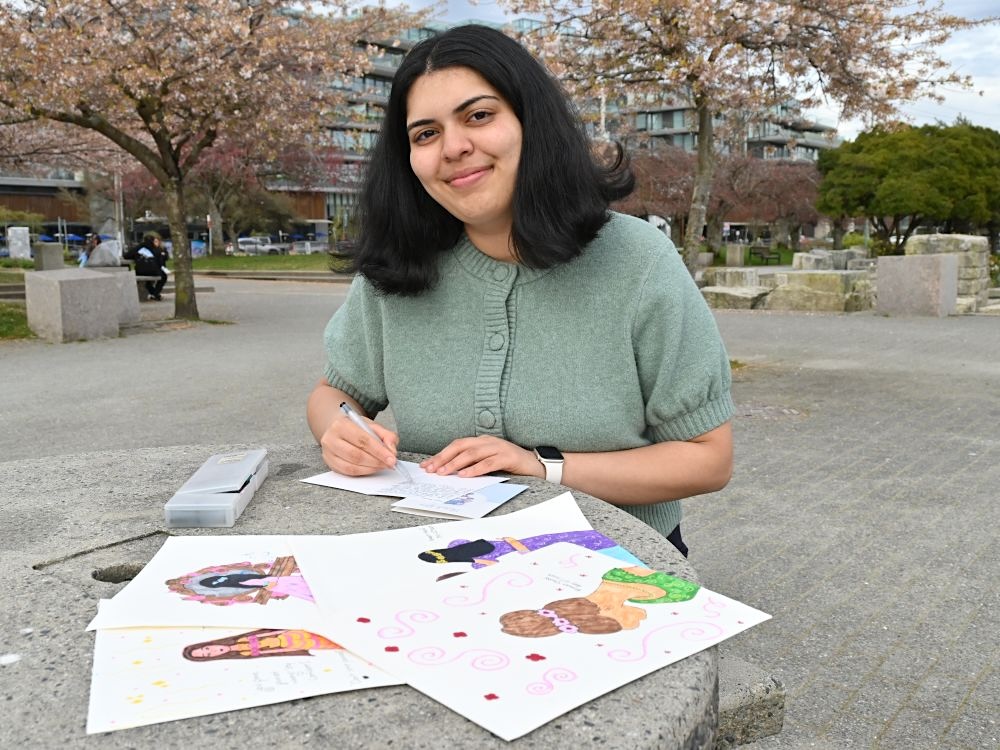
Ever since I was little, I’ve loved to draw and paint. My parents first began enrolling me in art classes on Granville Island when I was three years old.
Writing has also been a big passion of mine — I even published an ebook with the West Vancouver Memorial Library when I was 10 — and I’m still obsessed with reading. I also volunteer at the library, reading to young children to help enhance their reading skills and designing the library’s television slides.
One day six years ago, while I was at the Vancouver Public Library, I found a poster requesting community-made care cards for isolated seniors who were in care homes or living at home but unable to be mobile enough to get out often. The program was partnered with Canada Post, and the cards would be delivered free of charge.
This was during the height of the COVID-19 pandemic in 2020. Community centres were closed and my sports programs were shut down. I felt isolated, too. Being with family wasn’t the same as attending school in person or having play dates. I realized seniors were silently suffering, and the call for cards intrigued me.
There was a small plastic box with a slot beside the poster, and I noticed it was empty. No one had yet taken initiative to make even one card. The librarian told me that the need is much higher than many realize. That made me want to try to fill it with cards.
Care cards were to be anonymous, could not have glitter or stickers and were to be hand-drawn. Otherwise, they could be anything you envisioned, as long as they had a bright message to uplift someone’s day. I was excited to think I could make something meaningful that combined my skills for a good cause.
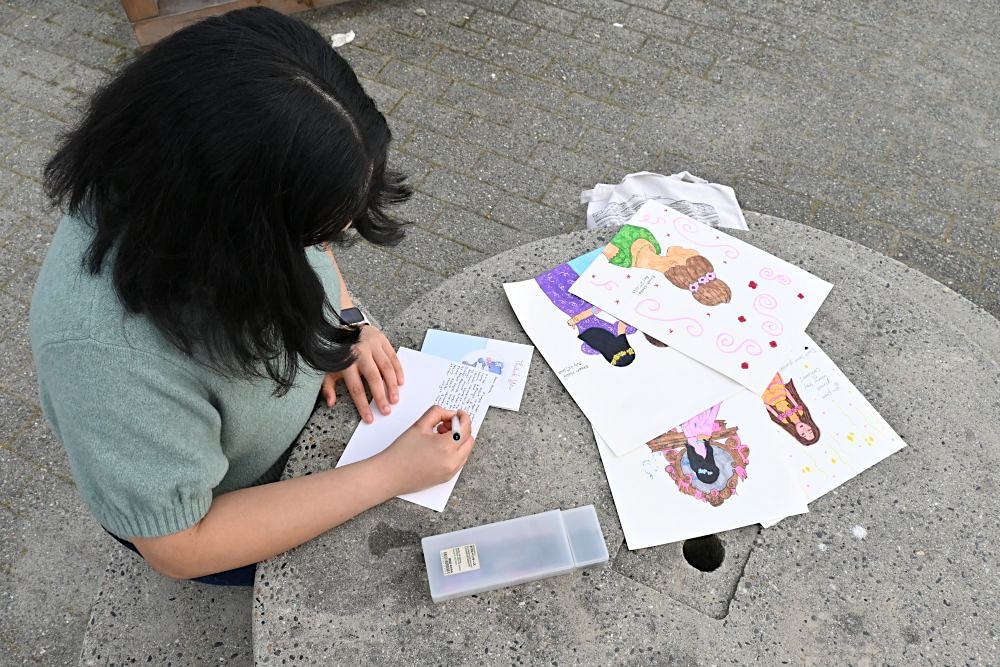
Ever since then, I’ve drawn cards depending on the season: festive for the holidays, bright and vibrant during the warm months.
I’ve enjoyed making care cards and writing letters by hand to a broad scope of seniors in B.C. and beyond. This experience has shaped how I think about the “care” in health care and what it means to truly care for someone.
The power of handwriting
I’ve often wondered how much these care cards and letters mean to the people receiving them.
A few months ago, I came across a Canadian charity known as Sending Sunshine. Through Sending Sunshine, I began writing letters for seniors across Canada and the United States. This time, I was able to write to them using my name, and I was given a bit of info about each senior in order to inform my letters.
Handwriting a letter, with ink to paper, felt more authentic and had a different effect than texting or sending an email.
Senior loneliness, especially in care homes, is on the rise, the director of the care card program at Vancouver Public Library told me, and technology and social media can be barriers for connection.
Writing a letter by hand takes time and shows compassion. I didn’t realize just how much that would mean to seniors.
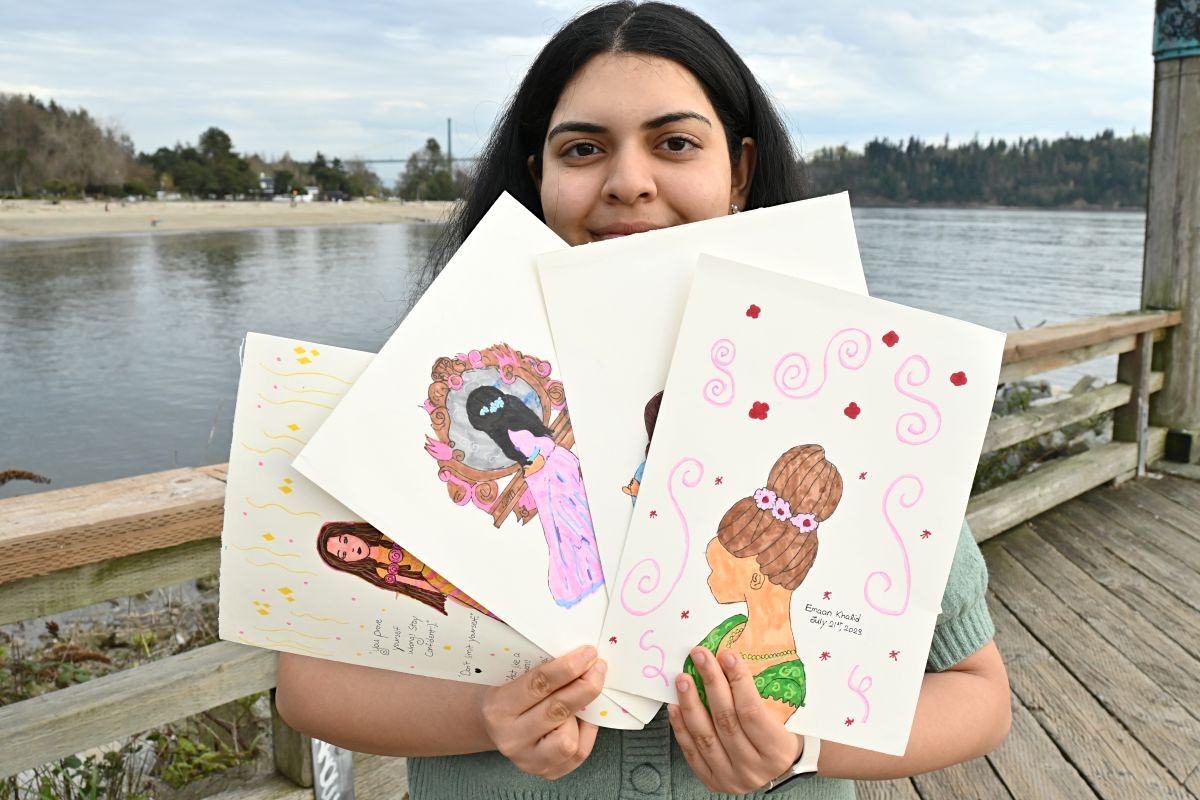
The senior nomination program manager from Sending Sunshine told me handwritten cards “offer a tangible and personal experience that digital communication often cannot replicate. Seniors can hold the card, display it in their room and reread the message.”
In a world where we are technologically advancing at rapid rates, seniors who aren’t comfortable with technology can feel like they are getting left behind. Writing letters can help make them feel seen again — alongside hospitals and medical attention, it can be good medicine.
Aspiring to be a doctor
My experience drawing cards and writing letters, as well as some other key events over the last six years, have shaped my perspective and inspired me to become a doctor when I am older.
One of those key events was the start of the COVID-19 pandemic. At its height, nurses and doctors were all put to the frontlines. As a 10-year-old, I remember watching Dr. Bonnie Henry on the news daily giving reports regarding the number of hospitalized and deceased people that day.
Seniors were among the first to be seriously affected by the virus — both medically and socially. COVID-19 made me realize resilience and community are the threads holding our province together. Today, I think these values are more critical than ever before.
The Canada Post strike was another key event that shaped my worldview. I was worried about how it would affect people who rely on the mail for social connection.
And then my grandmother recently started to have minor memory loss. If not taken care of, this loss could lead to dementia. This experience solidified my desire to become a doctor, because I want to be on the frontlines. I want to be proactive and have a tangible effect on people’s lives.
Seniors are the soul and roots of our community but are often overlooked. By combining my passions, I’ve used my skills to help support them. With some patience, attention and passion, care can transcend boundaries that we might not have even known were there.
Care is really about the simplest human connections. The doctor I want to become is one who values empathy and kindness as much as scientific research, statistics and facts. ![[Tyee]](/design-article.thetyee.ca/ui/img/yellowblob.png)




Tyee Commenting Guidelines
Please note that email notifications for replies are not currently working due to a software issue which may be resolved in a future update.
Comments that violate guidelines risk being deleted, and violations may result in a temporary or permanent user ban. Maintain the spirit of good conversation to stay in the discussion and be patient with moderators. Comments are reviewed regularly but not in real time.
Do:
Do not: