

 SHARE:
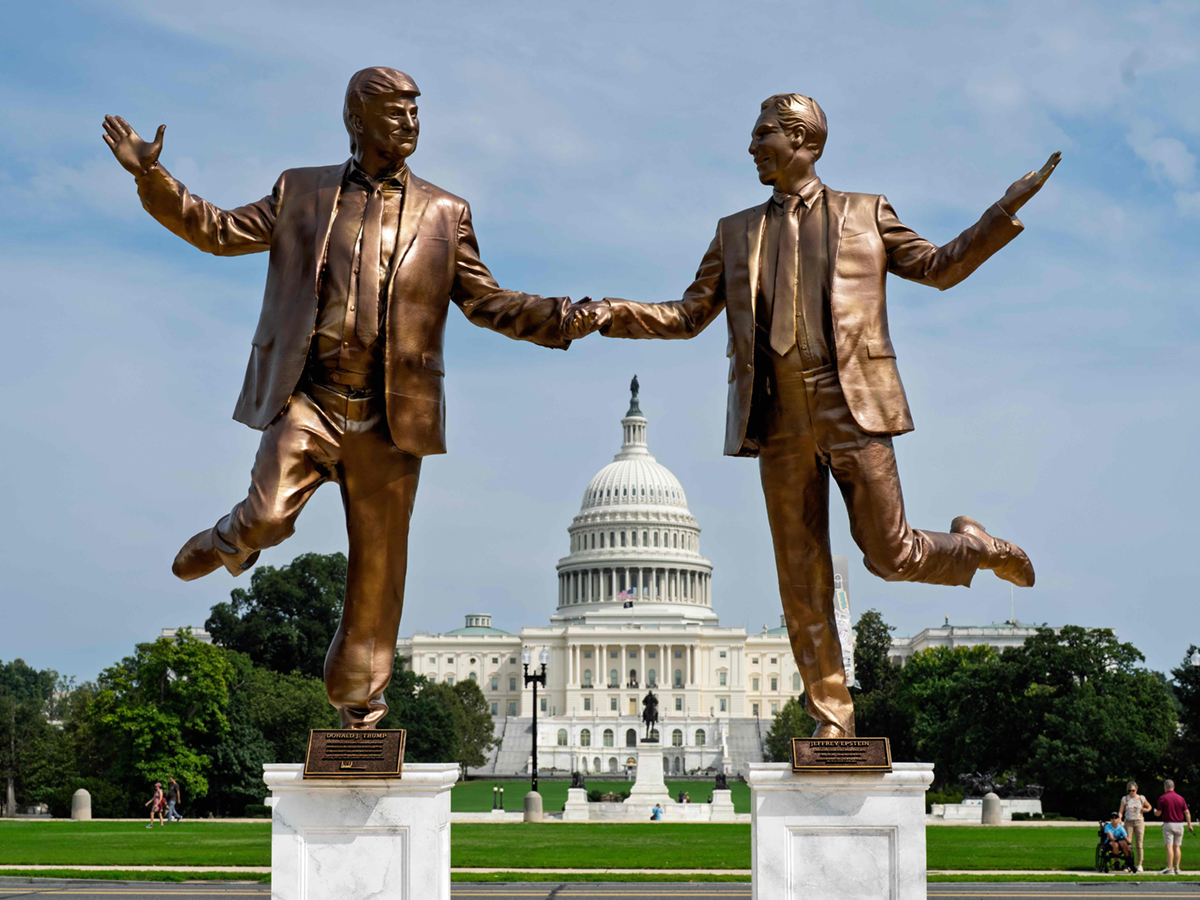
Following horrifying revelations about Jeffrey Epstein’s systematic sexual assaults and trafficking of underage girls, the United States Department of Justice has been forced to publicly release millions of the late sex offender’s emails and texts.
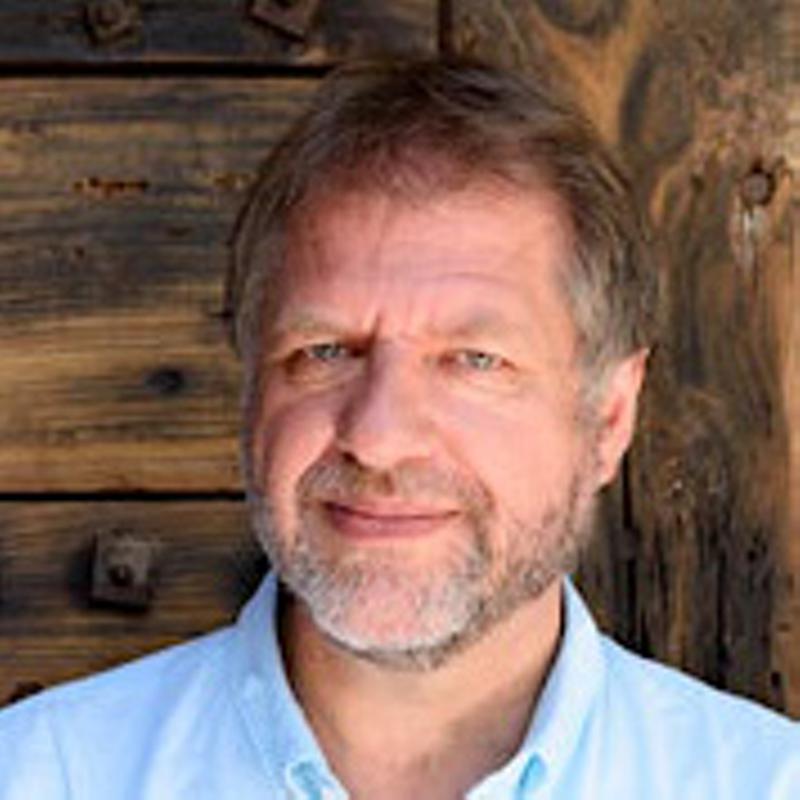
I am an anthropologist of elites who conducted field work among the secretive community of nuclear weapons scientists. The Epstein files open a window into the even more closely guarded world of capitalism’s 0.1 per cent.
Anthropologists study people through what renowned American anthropologist Clifford Geertz called “deep hanging out” — mingling informally and taking notes on what we see. We call this “participant observation.”
People like Bill Gates and Elon Musk do not welcome anthropologists bearing notebooks. But the Epstein files, where the global elite are talking to each other in private — or so they thought — open a peephole into their world.
And what do we find there?
On a mundane level, we can see how they spend sums of money most of us can only dream about.
For example, we learn that in 2011, billionaire Mortimer Zuckerman, owner of the New York Post and U.S. News & World Report, spent US$219,000 on his collection of horses, $50,000 on skiing and $86,000 to insure his private art collection.
But the Epstein files are most interesting for what they reveal about a web of gifts, favours and financial transactions that knit together what would otherwise be a disparate sprawl of bankers, developers, tech bros, media personalities and high-profile academics.
A century ago, French anthropologist Marcel Mauss argued in The Gift that, across cultures, gifts are a way to create relationships of solidarity and obligation.
“No gift is given but in the expectation of a return,” he wrote.
This is evident in Epstein’s relationship with Leon Black, at the time the billionaire CEO of Apollo Global Management and chairman of the Museum of Modern Art in New York.
Epstein claimed his advice on Black’s finances saved the billionaire as much as $2 billion. In exchange, Black steered at least $158 million to Epstein and gave $10 million to one of Epstein’s charities, Gratitude America.
Black then made Epstein a trustee of the Debra and Leon Black Family Foundation, and Epstein invested in a startup where two of Black’s sons were on the board.
Epstein also helped Black manage his $2.8-billion art collection. He advised on selling individual works at a profit, getting paid by museums for loaning artworks and using art as collateral for bank loans.
Incidentally, one of the lessons I take from this is that billionaires do not look at art the way I do. I may buy (modestly priced) artworks because I like to look at them. Billionaires like Black and Zuckerman see them as investments.
Favours could also be exchanged, zig-zag style, among several people to create network solidarity. Epstein asked Leon Botstein, president of Bard College, to make sure Woody Allen’s daughter was admitted, while also gifting Allen $10,000 worth of shirts and luxury underwear.
Brad Karp, head of the Paul, Weiss law firm, asked Epstein if he could intercede with Allen to get a job on his movie set for his son. In turn, Epstein asked Karp for help with a woman’s visa, and Karp steered $158 million from his client, the aforementioned Leon Black, to Epstein.
Collecting academics
When there is an asymmetry among the resources of two people, gifts lead to subordination, not reciprocity. Mauss referred to this as the “poison in the gift.”
We see this in Epstein’s transactions with academics whose research he bankrolled. He collected academics the way his billionaire friends collected artwork — Botstein, president of Bard; Larry Summers, president of Harvard; Lawrence Krauss, celebrity physicist; Dan Ariely, organizational psychologist; and the evolutionary psychologists and biologists Steven Pinker, Robert Trivers, Stephen Kosslyn, Martin Nowak, Joscha Bach and Nathan Wolfe, to name a few.
Epstein was drawn to these academics because of his interest in eugenics, which he needed them to legitimize. He thought Black people were intellectually inferior and wondered if they could be improved through genetic modification. In a typo-ridden message, he texted German cognitive scientist Bach:
Maybe climate change is a good way of dealing with overpopulation.. The earths forest fire… too many people, so many mass executions of the elderly and infirm make sense… if the brain discards unused neurons, why shold society keep their equivalent.
And he talked about creating new superhumans by seeding batches of women with his own sperm.
After spending days reading Epstein’s messages to his associates, it reveals something essential about the contemptuous way they view the rest of the world.
One of them, lawyer Kathryn Ruemmler, texted Epstein that she would “get gas at a rest stop on the New Jersey Turnpike, will observe all of the people there who are at least 100 pounds overweight… and will then decide that I am not eating another bite of food for the rest of my life out of fear that I will end up like one of these people.”
Hopefully, most of the world is not like them.
![[Tyee]](/design-article.thetyee.ca/ui/img/yellowblob.png)
Read more: Rights + Justice, Politics









Tyee Commenting Guidelines
Please note that email notifications for replies are not currently working due to a software issue which may be resolved in a future update.
Comments that violate guidelines risk being deleted, and violations may result in a temporary or permanent user ban. Maintain the spirit of good conversation to stay in the discussion and be patient with moderators. Comments are reviewed regularly but not in real time.
Do:
Do not: