

 SHARE:
“Dear Jeannine, you asked me if we feel lonely now. Yes we do.”
The text is from Dr. Liubka Perez Medero, who heads the neurology department at a hospital in Santa Clara, Cuba. She’s answering my question about the impact of the U.S. fuel embargo, now that Canadians and others can no longer fly there. Do Cubans feel more isolated now from the world?
“We feel isolated even inside the country. Any distance is far away when there is no sufficient transport,” she writes. “We cannot personally see our beloved family members even if they need us, if they live in other cities.”
Cubans are likely to face further isolation after crew on a U.S. speedboat exchanged fire today with Cuban border guards patrolling their nation’s waters. Cuba says four on the U.S. boat were killed and crew members were injured aboard both vessels, according to reports.
Meanwhile, Medero’s co-workers and fellow students are saying goodbye to each other as the lack of fuel compels a switch to workplaces and schools near home.
Elderly people and others needing support can’t make phone calls when their power is gone, which is most of the time.
And how are patients reaching the hospital? Medero explains that fuel is being prioritized for patient buses and ambulances — but soon, even this could run out.
People are scared, Medero writes.
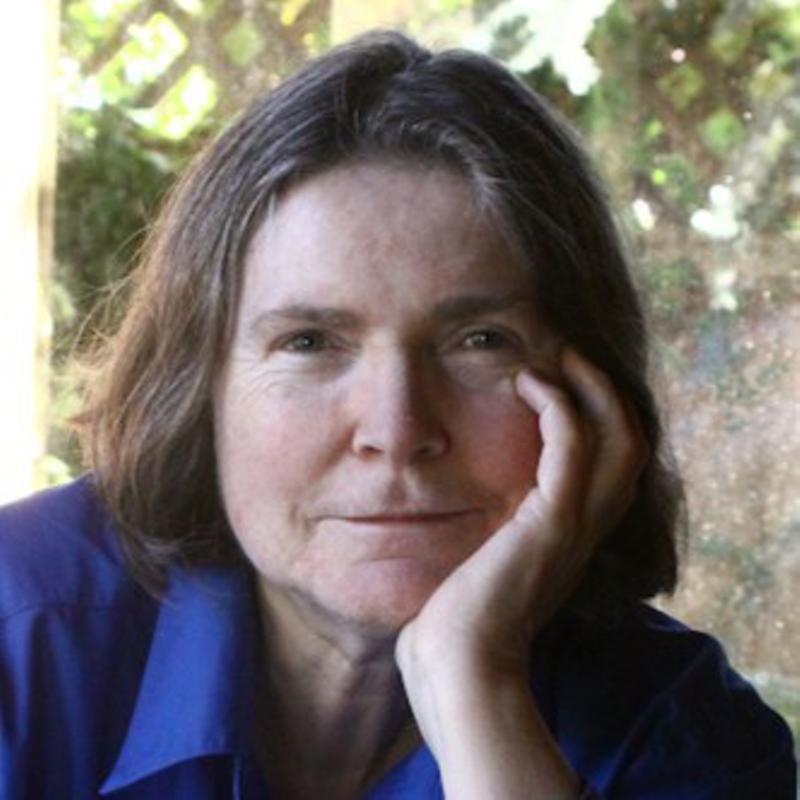
As Vancouver director for the medical charity Not Just Tourists, I’ve come to admire Medero and the other doctors who are struggling now to provide Cuba’s health care.
A once-celebrated medical system in trouble
Once, Cuba generously gave medical aid and supplies to other countries.
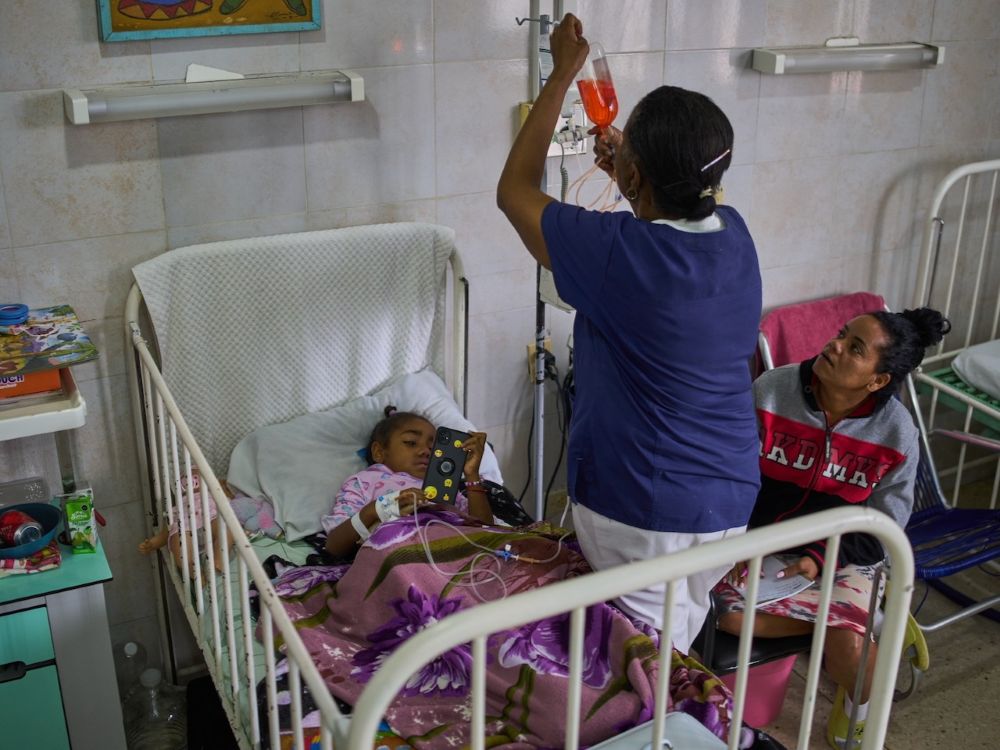
Now, its renowned medical system is desperately short of supplies.
Until recently, Canadians provided a critical lifeline by bringing medical supplies down to Cuba. Those supplies saved lives and encouraged demoralized health workers. So it’s been painful telling my Cuban medical friends that Canada’s flights to Cuba have been stopped for several months — right when they need us most.
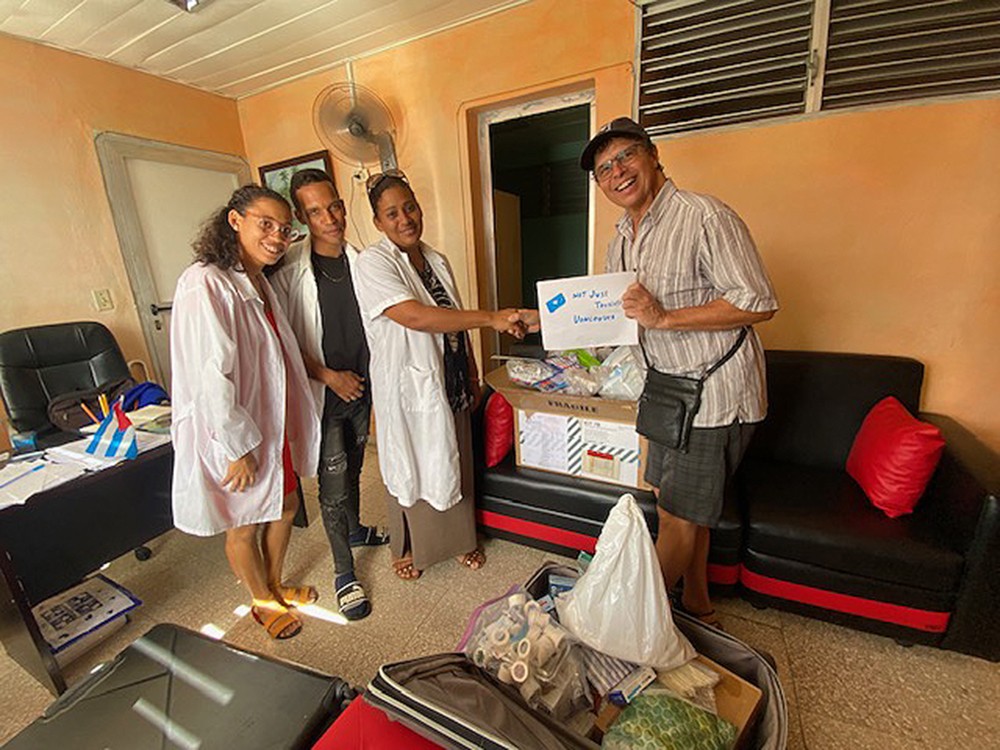
None of them complained; they thanked us for trying. But when you understand what they are enduring, it’s heartbreaking and infuriating to be kept from giving them support.
Millions go without power up to 22 hours a day. Some walk miles for water because water pumps need power. Others walk because buses have no fuel.
Despite the skill of Cuban doctors, supplies and equipment can make the difference between healing patients or losing them.
That’s where Canadians can help. Not Just Tourists, a volunteer-run non-profit, collects free medical supplies and equipment for clinics and hospitals in countries in need. And there are few countries more in need now than Cuba.
Not Just Tourists was founded by Canadians Dr. Ken Taylor and Denise Taylor after visiting Cuba. It has chapters across Canada and the U.S., plus two in England.
We’re best known for the medical suitcases that travellers deliver on their holidays. Our supplies come from many sources, including hospitals and individuals. Most of the donated supplies would otherwise get wasted. We also team up with others via medical missions or shipping containers. Last year, we sent 220,000 pounds of medical supplies to clinics and hospitals in 64 countries across the world.
Cuba was easily our top recipient. And our supplies have been saving lives there. Along with wound care products, needles, personal protective equipment and IV supplies, we send critical items such as resuscitation devices and sutures. Sutures are so scarce in Cuba that a surgeon recently confided that he could no longer find vascular sutures in the country.
Some of our last travellers before the airlines stopped mentioned doctors exclaiming with relief when they found in the suitcase an item long-sought and unavailable. One recalled a doctor immediately rushing out with something for a patient down the hall.
Under the embargo, Medero thinks things will quickly get worse. By the time Canada’s flights restart, she says, they’ll be “desperate” for supplies. In the meantime, they’re trying to cope despite the embargo.
Surgery, Medero tells me, is now “only for emergencies.”
Through decades of grinding sanctions, doctors like Medero have worked ever-harder despite earning a fraction of what they’d earn as a cabbie or maid. She and her partner, who’s also a doctor, can only support their family by running a bed and breakfast on the side. But now that Cuba’s fuel is blocked, how will their guests arrive?
Can even the famously resilient people of Cuba get through this siege alone?
What Canada should be doing to help
As an organization, Not Just Tourists is non-political and non-religious.
I’m just one director. But speaking for myself, I’m shocked that Canada won’t defend the right of Cuban people simply to survive.
Without fuel, Cubans will struggle to grow and distribute food, to get water, and to run key hospital infrastructure, such as ICUs, operating rooms and incubators.
Already, Cuba’s health minister has suspended energy-reliant services such as CT scans, MRIs and lab tests.
How many Cubans will die because of this?
Most Cubans feel abandoned. They saw Canadians as friends for good reason. Cuba is Canada’s top export market in the Caribbean. Canada is Cuba’s top source of tourists and its second-biggest direct investor, with interests from mining and tourism to renewable energy. Canada and Cuba have maintained peaceful diplomatic relations for 80 years straight.
Shouldn’t all this mean something now?
I recall the praise last month for Prime Minister Carney’s speech at Davos. In the face of threats from great powers, he said, middle powers should collaborate and protect international norms. Besieging an entire population does not meet international norms. But despite Carney’s rhetoric at Davos and Canada’s ties with Cuba, our prime minister has said and done nothing for weeks. Some eventual aid, while nice, is not enough. The real leader here is Mexico’s president, Claudia Sheinbaum. On this continent, she’s been standing alone.
Yes, the politics could get complicated if the U.S. won’t relent. And yes, Canada is in Trump’s crosshairs.
But so is Mexico. And yet Mexican President Claudia Sheinbaum has spoken passionately against the U.S. fuel embargo. She backed up her words by sending naval ships bringing humanitarian aid. Following the embargo, Mexico did stop sending the oil Cuba needs. But Sheinbaum has promised more aid and offered an air bridge to Cuba and mediation.
Can middle-power Canada find the grit to stand with middle-power Mexico?
Dr. Medero hopes for peace in a country that stays sovereign.
“We have already faced many crises and we can resist [for] a long time,” she messages.
“We are happy people who are used to living simply.” ![[Tyee]](/design-article.thetyee.ca/ui/img/yellowblob.png)





Tyee Commenting Guidelines
Please note that email notifications for replies are not currently working due to a software issue which may be resolved in a future update.
Comments that violate guidelines risk being deleted, and violations may result in a temporary or permanent user ban. Maintain the spirit of good conversation to stay in the discussion and be patient with moderators. Comments are reviewed regularly but not in real time.
Do:
Do not: