


 SHARE:
The federal New Democratic Party is entering a moment of reflection. Following its worst-ever election result, in which the NDP won just seven seats in the 2025 federal election and lost official party status, the party faces hard questions about its future.
While the leadership race hasn’t formally begun, rumours of potential candidates are circulating, and members across the country are asking what kind of party the NDP will become in the years ahead.
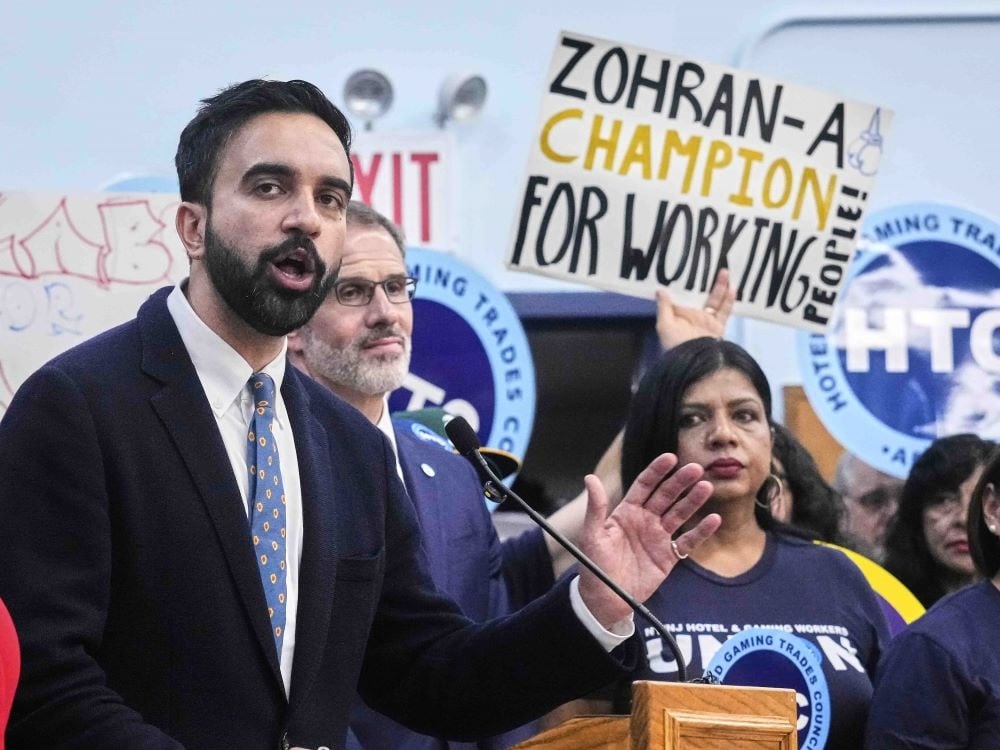
Meanwhile, thousands of kilometres away in late June, New York City witnessed something rare: a working-class, movement-backed candidate defeating the political establishment. Zohran Mamdani, a democratic socialist and tenant organizer, won the Democratic primary for mayor by doing what many say can’t be done anymore: running a campaign rooted in clarity, organizing and trust.
He didn’t just win votes. He made people feel seen.
As the New Democrats consider how to rebuild, Mamdani’s victory offers more than a headline. It offers lessons about how a progressive party can reconnect if it’s willing to meet people where they are, and invite them back in.
What Mamdani did differently
Mamdani was never the front-runner in New York’s mayoral primary. A dark horse by most accounts, he faced long odds.
But two key dynamics propelled him to victory. First, his main opponent was weighed down by scandal and offered little beyond more of the status quo.
Second, and more importantly, Mamdani ran a campaign powered by people, not platitudes. He listened instead of lectured, organizing around the concerns of working-class New Yorkers: rising rents, unreliable transit, unaffordable health care and stagnant wages. He entered their world and spoke with a clarity rooted in their daily struggle.
In a moment when the Democratic party was struggling to inspire its base, Mamdani’s campaign offered something different: a sense of renewal.
He represented generational change and a new political energy, one that didn’t just re-engage longtime supporters but brought previously disengaged voters back into the fold. Crucially, he did this without compromising his values. Mamdani maintained strong platform commitments to LGBTQ2S+ communities — including a landmark proposal to fund trans health care — showing that it’s possible to expand a political coalition without abandoning the rights of marginalized people.
His success was not just about policy, but about presence, conviction and trust.
For the NDP, the lesson is clear: survival depends on more than leadership. It requires rebuilding relationships, reigniting belief and making space for new voices to help shape the path forward.
The NDP’s recent setbacks at the federal level have been painful, but they don’t erase the party’s legacy or its potential. It still has thousands of dedicated members, deep policy roots and a proud history of standing with workers, renters and those often left out of traditional politics.
The NDP’s strongest moments have always come when it leads with bold ideas grounded in everyday realities, from medicare to public pensions to climate justice. What it needs now is renewal, not reinvention.
The March 2026 NDP leadership race offers that opportunity — not just to choose a new leader, but to reopen a conversation with the people the party exists to serve. That means creating space for new voices, listening to local associations and embracing the idea that members and communities should help shape the party’s future.
Lessons from NYC for the NDP
There is no one-size-fits-all solution to rebuilding a party. But Mamdani’s victory in New York City offers some useful steps forward for the federal NDP.
Lesson 1: Speak plainly about the issues of the day
Mamdani’s campaign was unambiguous; he said what he meant and meant what he said. Voters may not have agreed with every policy, but they responded to his unapologetic authenticity.
At a time when politics is often dominated by platitudes, Mamdani stood out for his conviction and plainspoken solutions.
Lesson 2: Organize before you advertise
Trust is earned on the ground, not through airwaves. Mamdani’s campaign succeeded because it prioritized local, sustained organizing over polished messaging.
For the NDP, that means strengthening riding associations, training volunteers and empowering community leaders well before the next election begins.
Real engagement starts long before the campaign signs go up.
Lesson 3: Let the leadership race be open and participatory
This race shouldn’t be fast-tracked. It should be a time to engage members, welcome a range of candidates and spark debate about where the party goes next.
The process should reflect the democratic values the NDP stands for.
Lesson 4: Show up for people who stopped showing up
Many voters didn’t turn against the NDP so much as they stopped seeing the party show up in their communities, especially on federal issues.
Over time, the NDP’s presence has become more centralized, its messaging more tightly managed, and its reach more limited outside traditional strongholds.
Mamdani’s campaign showed that people will re-engage when they feel heard, respected and genuinely included. His team didn’t just target reliable voters. They made a point of reaching out to those who had become disillusioned with the political process, including former Donald Trump voters who had once backed the Democrats.
They didn’t write people off because of past votes; they asked what issues mattered and built from there.
For the NDP, that means expanding beyond its usual circles and reconnecting with groups it has struggled to reach in recent years, including many blue-collar workers who have supported the Conservatives.
Rebuilding trust in those places won’t happen overnight, but it starts with showing up consistently, listening without judgment and offering a politics rooted in people’s real experiences.
The road ahead
A leadership race offers more than a reset; it’s a chance to renew relationships, rebuild trust and reflect honestly on how to connect with voters on the everyday challenges they’re facing.
As the political landscape shifts both at home and abroad, the NDP has an opportunity to begin that work by expanding its reach beyond its traditional base.
That means actively engaging voters who have drifted away in recent years and building new relationships in communities where the party’s presence has faded.
Rebuilding trust will require showing up consistently and speaking directly to the issues shaping people’s lives — affordability, health care, housing and wages — with clarity and conviction.
The leadership race hasn’t officially begun, but the rebuilding already can. Mamdani’s win reminds us that there’s still space for a politics that speaks honestly about inequality and dares to organize around hope.
The NDP doesn’t need to become something new. It needs to return to what made it matter in the first place: being a party that shows up, speaks clearly and builds power with support from the people who need it most. ![[Tyee]](/design-article.thetyee.ca/ui/img/yellowblob.png)
Read more: Politics










Tyee Commenting Guidelines
Please note that email notifications for replies are not currently working due to a software issue which may be resolved in a future update.
Comments that violate guidelines risk being deleted, and violations may result in a temporary or permanent user ban. Maintain the spirit of good conversation to stay in the discussion and be patient with moderators. Comments are reviewed regularly but not in real time.
Do:
Do not: