


 SHARE:
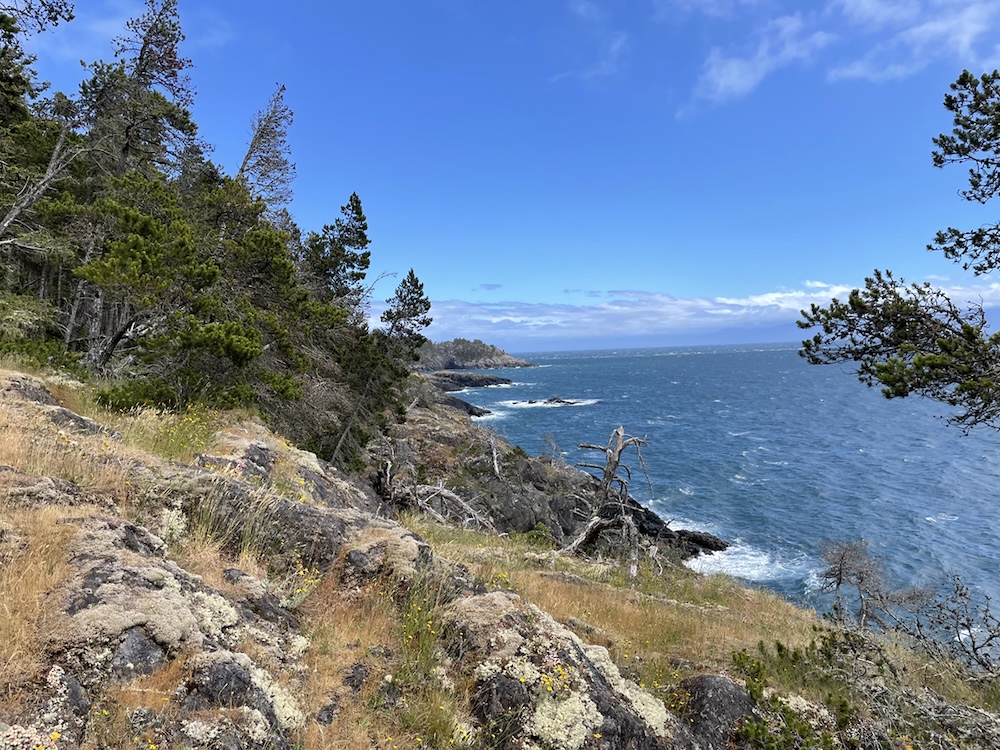
A private company is seeking exclusive rights to part of a treasured coastal park near Victoria, sparking concerns about the B.C. government’s priorities for public wilderness areas.
One With Nature Corp. aims to use 72 hectares of East Sooke Regional Park, an area rich in wildlife, for an outdoor education and wilderness survival skills school.
Five hectares near a popular hiking trail would be used for overnight accommodation and would be off limits to the public if the company’s plan is approved. The total area of the park is just under 1,500 hectares, about the size of four Stanley Parks.
The school would include a bow and arrow shooting range, an outbuilding to process animals, a learning centre, a camping area, seven bathrooms, a boat dock and five cabins built with trees the company would cut down in its exclusive use area, according to One With Nature’s application to the B.C. government.
Misinformation about the proposal is widespread on social media, with some people suggesting the wilderness school would be run by Americans and asking if the site could be “one of those U.S. military camps” or “prime real estate for future billionaires.”
Vitaliy Svetlichnyy, owner of One With Nature Corp., told The Tyee he’s receiving hate messages and his small business has been targeted by people giving one-star Google reviews, even though they’ve never been customers.
Svetlichnyy, who is originally from Kazakhstan, is also bearing the brunt of an anti-immigrant backlash, with some social media users asking how long he’s been in Canada, calling him “unhinged” and telling him to “move along.”
While the Capital Regional District owns most of East Sooke park, the parcel where Svetlichnyy aims to set up his school is owned by the province and open for approved commercial use.
Svetlichnyy said he’s followed all the steps outlined by the B.C. Ministry of Water, Land and Resource Stewardship in his application to use the land for 10 to 30 years, including contacting First Nations.
“I just followed the simple rules which were provided by the government. And now I am the enemy for what? For trying to help people. I don’t understand that,” Svetlichnyy told The Tyee.
The commercialization of parks in B.C. has been a touchy issue for decades. Friends of Strathcona Park, a group dedicated to protecting nature in Strathcona Provincial Park on Vancouver Island, has opposed various proposals for commercial activity in the mountainous wilderness park. Most recently, Forests Minister Ravi Parmar floated the idea of logging in parks and old-growth forest areas to increase wildfire resilience, an idea shelved by the government following an outcry.
A haven for wildlife
East Sooke park, a 45-minute drive southwest of Victoria, hugs the jagged, rocky coastline of the Strait of Juan de Fuca in the Salish Sea. On a clear day, the park offers sweeping views of the snow-tipped Olympic Mountains in Washington state.
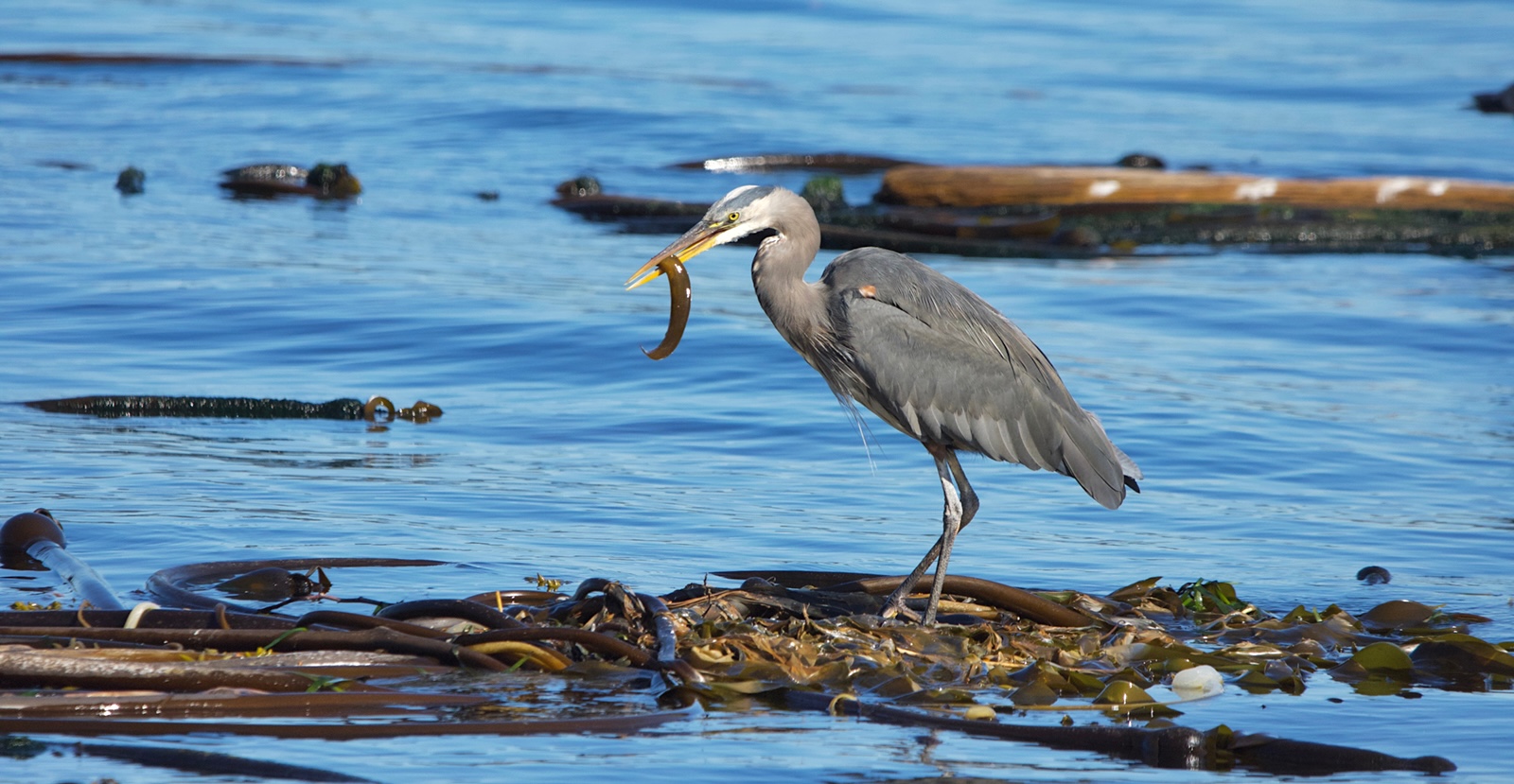
The park is a haven for wildlife, including black bears, wolves, cougars, Roosevelt elk and numerous bird species. Orca and humpback whales, dolphins, otters, sea lions and seals can be spotted from a coastal trail that takes hikers along rocky windswept bluffs, into lush rainforest ravines and across pocket beaches teeming with intertidal life.
A stopover for migrating birds, the park also shelters wildlife at risk of extinction, including northern goshawks and smaller creatures such as the warty jumping slug.
Svetlichnyy said One With Nature, which offers hands-on skills training for adults and children, wants to expand from its current location in Metchosin, a rural community near Victoria, and the provincial government confirmed the land in East Sooke park was available for approved commercial use.
“It is Crown land which is available for anyone,” Svetlichnyy said. “I am not the corporation with hundreds of employees. I just work by myself, and I'm working as a teacher and training people.”
A spokesperson for the B.C. Ministry of Water, Land and Resource Stewardship told The Tyee the land is available because it was never transferred to the regional district or dedicated as park land when the East Sooke protected area was created in 1970.
That comes as a surprise to many of the park’s 250,000 annual users, because park maps include the largely forested Crown land parcel, which includes a stretch of coastline.
It also comes as a surprise to the regional district, which owns the surrounding park land and manages public use of trails across the parcel Svetlichnyy hopes to use for his wilderness school.
Al Wickheim, director for the Juan de Fuca electoral area on southwest Vancouver Island where East Sooke park is located, said he found out the parcel isn’t protected in late March only after Svetlichnyy bought an ad in a local newspaper as part of his application process.
“So many years have gone by, and new map layers put on top... I think everybody sort of forgot,” Wickheim told The Tyee.
The ministry spokesperson said many parks in the regional district have been pieced together over the past 60 years, including East Sooke park. Several other parks also contain parcels of Crown land, the spokesperson noted, adding the land isn’t normally identified “to ensure maps remain easy to read and follow.”
Wickheim said he met with Svetlichnyy and respects his work teaching wilderness survival skills — but added that any type of commercial activity in East Sooke park is “out of the question.”
“This is just the wrong place. We can't be having trees cut down, multiple toilet sites, fire starting and management, classes and game preparation,” Wickheim said.
Wickheim added that he’s received hundreds of emails opposed to Svetlichnyy’s plans, and only one supportive email. “It’s very obviously being completely rejected by the population.”
Svetlichnyy’s application to build a dock at the foot of the Crown land parcel for kayaking lessons and to bring in supplies is also concerning, Wickheim said.
The proposed dock area is directly exposed to storms, which can be fierce along that part of the coast, he pointed out, noting a permanent structure on that part of the coastline “would either have to be very, very robust and intrusive to the landscape, or it would just fail fairly quickly.”
Andy Orr, a spokesperson for the Capital Regional District, told The Tyee the district is “strongly opposed” to the application and encourages people to voice their opinions before the May 6 deadline for public comment.
“The proposal intersects two official trails, including the busiest trail within the park, and would impact public use and access,” Orr, the regional district’s senior manager for corporate communications and engagement, noted in an email.
‘Zero animals will be killed there’
Svetlichnyy, who also runs an immigration services company, said most of One With Nature’s activities would be on public land, “which allows us to walk through with our clients and guide and show the plants and so on.” He said the company requires an area off limits to the public for storing gear, overnight stays and teaching.
The shooting range would be for bows and arrows, while the animal processing shop would teach clients how to process store-bought whole animals such as chickens, fish and crabs, Svetlichnyy said.
“You're not allowed to hunt in that area, you're not allowed to kill anything. And I guarantee you zero animals will be killed there,” Svetlichnyy said.
Melissa Lem, a family physician and past president of the Canadian Association of Physicians for the Environment, said she supports organizations that seek to protect nature and connect people to nature in a responsible way.
But any initiative that seeks to cut down trees to help people access nature is “unlikely to be the right kind of an initiative,” Lem, who is also an assistant clinical professor at the University of British Columbia, told The Tyee.
“Although I support nature education and skills building, I would rather see an organization or an initiative not affect other people’s access to nature, or harm the current nature that exists in a space,” Lem said.
Lem said intact and biodiverse nature should be considered essential health-care infrastructure because people experience better physical and mental health outcomes when they have access to high-quality natural areas. “If we don’t have healthy, green spaces and forests that we can access, our health suffers.”
Prioritizing biodiversity and access to nature in places close to urban areas, such as East Sooke park, is even more important, Lem said.
“We can’t take nature for granted. We can’t take nature access for granted. We need to make sure these areas are protected.”
If Svetlichnyy’s plans to expand his wilderness school to East Sooke park are rejected, he said he’ll look for available land elsewhere.
“I can consider any options which are available,” he said. “I just want to do the simple thing, teaching people to be connected to nature.” ![[Tyee]](/design-article.thetyee.ca/ui/img/yellowblob.png)
Read more: Environment








Tyee Commenting Guidelines
Please note that email notifications for replies are not currently working due to a software issue which may be resolved in a future update.
Comments that violate guidelines risk being deleted, and violations may result in a temporary or permanent user ban. Maintain the spirit of good conversation to stay in the discussion and be patient with moderators. Comments are reviewed regularly but not in real time.
Do:
Do not: