

 SHARE:
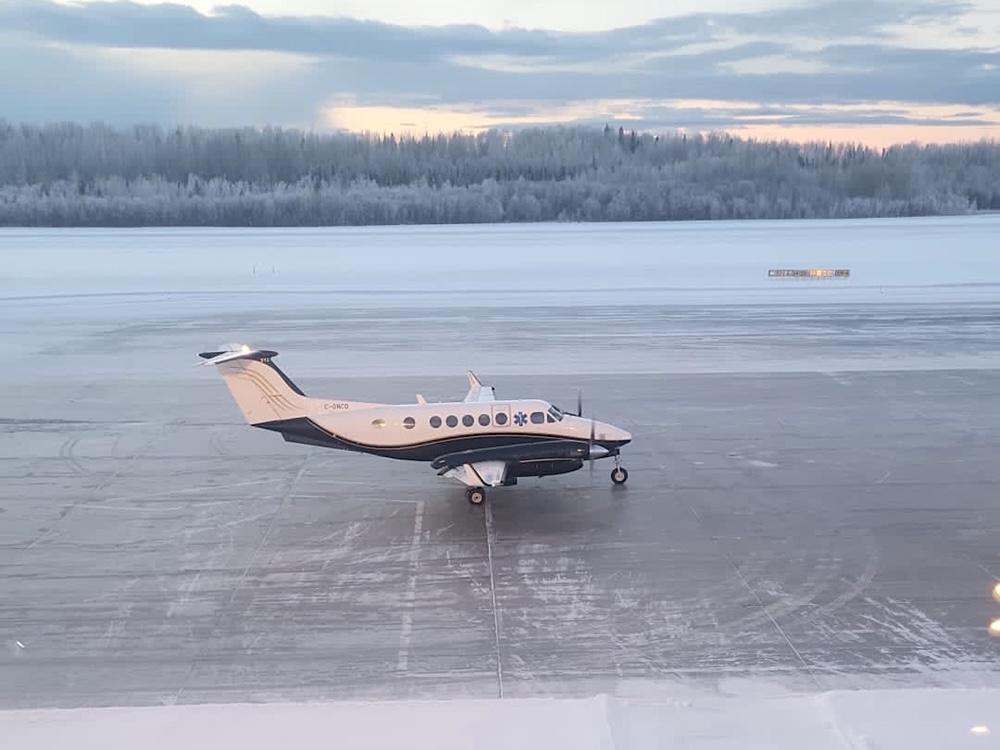
A preventive health-care solution that could benefit rural, remote and Indigenous communities across B.C. is struggling to find staff.
More than half of 101 full-time community paramedic positions in B.C. are currently unfilled. These paramedics are assigned to 95 stations across the province, supporting 65 communities. Of the 101 positions, 53 are open and seven are supported by temporary backfill coverage, according to BC Emergency Health Services.
Community paramedics are trained and licensed B.C. paramedics who focus on preventive rather than emergency medicine. The role varies slightly depending on the needs of a community but can include home visits for seniors and others with chronic health conditions, wound care, blood pressure and medication monitoring, and in general identifying and addressing health complaints before they become a crisis.
“Any municipality or small district would be way better off with a community paramedic,” Owen Torgerson, mayor of the Village of Valemount, told The Tyee.
Valemount is located a little over an hour’s drive from Jasper, Alberta. The resort town “has more pillows than people,” Torgerson said, and its population of about 1,000 can swell to four times its size in the summer.
The village has a community health centre staffed by five full-time doctors, support staff, lab technicians and nurses, and a paramedic station with nine full-time paramedics, he said. When patients can’t be cared for locally they’re sent to the village of McBride, about an hour’s drive away, or Prince George, which is more than a three-hour drive from Valemount.
The remoteness of small towns is in part why community paramedics are such a critical part of health care. They work alongside local care teams who help triage which patients might need a visit, and can travel between small communities to offer care. This helps reduce the amount a sick or injured patient has to commute to access care.
Torgerson said Valemount has worked with two community paramedics who “rock.” He said they supported vulnerable community members, often with mobility issues, and did home visits to change wound dressings and check in on people who had seen a doctor and needed followup care but weren’t sick enough to require a hospital stay.
Paramedics’ training and experience mean they can quickly adapt to a lot of different situations, Torgerson added, including entering people’s homes and offering care there.
How community paramedics help in the Northern Rockies
The Northern Rockies Regional Municipality similarly benefited from the community paramedic program. On top of home visits, the paramedic set up a “track social” that encouraged seniors to come out and walk around an indoor track together twice a week.
At its height the track social brought together 75 seniors who were encouraged to exercise, have their blood pressure checked and combat loneliness all in one go, Lorraine Gerwing, deputy mayor for the municipality, told The Tyee.
Located in the northeastern corner of the province, the Northern Rockies Regional Municipality covers 10 per cent of B.C.’s geographic area and sits at the foothills of the stunning Rocky Mountains.
“It’s like Banff but without the crowds,” Gerwing said.
The municipality has a population of 5,400, most of which is concentrated in Fort Nelson.
Fort Nelson has five doctors and a 22-bed hospital, with 15 acute care beds and seven long-term care beds, Gerwing said.
Despite that, patients often are sent out of town for care. Local doctors make about 400 CT referrals annually and the closest CT scanner is in Fort St. John, about a four-hour drive away on a road that is frequently without cell service, she said.
Gerwing said that in 2025 there were six service interruptions at the local hospital, closing the emergency department for more than 63 hours. There were 153 medical evacuations in 2025, Gerwing added, where patients were transported by air ambulance to higher-acuity care centres in other parts of the province.
When a patient is transported by medevac one way, they have to find their own way home, she added.
Which is why preventive medicine offered by the community paramedics is so important, she said. People might not seek out a doctor because their health is fine, which means they can miss important precursors to illness or disease.
She said her own high blood pressure was flagged by the community paramedic at a track social event. That moment could have saved her from a stroke 10 years down the line, she said.
The Northern Rockies Regional Municipality is currently struggling to retain a community paramedic and in January sent a letter to BC Emergency Health Services advocating for more hires to fill positions across the province.
What BC is doing to fill the gaps
In an emailed statement sent to The Tyee, BC Emergency Health Services said it is committed to developing a long-term and sustainable approach to the community paramedic program and that it is working with the Ministry of Health to increase frontline staffing, recruit workers from rural and Indigenous communities to work close to home, and do outreach in high schools.
“We recognize that it can take time for remote community members to obtain the training and certifications required to join BCEHS,” the statement read. “To reduce this barrier, we work closely with third-party training organizations to co-ordinate local training whenever possible.”
This has already helped train paramedics in Dease Lake and Valemount and is currently training people in Stewart, Kitwanga, Bella Bella, Zeballos and Anahim Lake, it added.
Health-care services are struggling to recruit and retain staff across the province, and paramedicine is no different, said Ian Tait, communications director with the Ambulance Paramedics of BC, or CUPE 873.
His union represents about 6,000 paramedics, call takers and dispatchers. There are about 400 unfilled full-time paramedic positions across the province, Tait said.
Tait estimates between 100 and 200 paramedics are currently trained as community paramedics, but that doesn’t necessarily mean they want to work in a smaller community.
“When you live super remote you don’t always have a grocery store or a public pool, and that only attracts a certain kind of person who wants to move there,” he said. “That’s not always why someone goes into health care.”
At the same time he said rural communities and BC Emergency Health Services are working on solutions to make their communities, and the job, more attractive.
When the community paramedic program was introduced about 10 years ago, BC Emergency Health Services hired a lot of part-time workers because there wasn’t enough demand for full time in smaller communities, he said. But workers struggled to make ends meet, and now a lot of those positions are being changed to full time, with community paramedics covering more than one community.
Community paramedics might be coming to more urban centres too. In Surrey, community paramedics visited Ted Kuhn Towers, which provides supportive housing to low-income individuals, twice a week for a year. This translated to 38 per cent fewer 911 calls and an estimated cost savings of $450,000 to the health-care system, according to Global News. ![[Tyee]](/design-article.thetyee.ca/ui/img/yellowblob.png)
Read more: Health






Tyee Commenting Guidelines
Please note that email notifications for replies are not currently working due to a software issue which may be resolved in a future update.
Comments that violate guidelines risk being deleted, and violations may result in a temporary or permanent user ban. Maintain the spirit of good conversation to stay in the discussion and be patient with moderators. Comments are reviewed regularly but not in real time.
Do:
Do not: