


 SHARE:
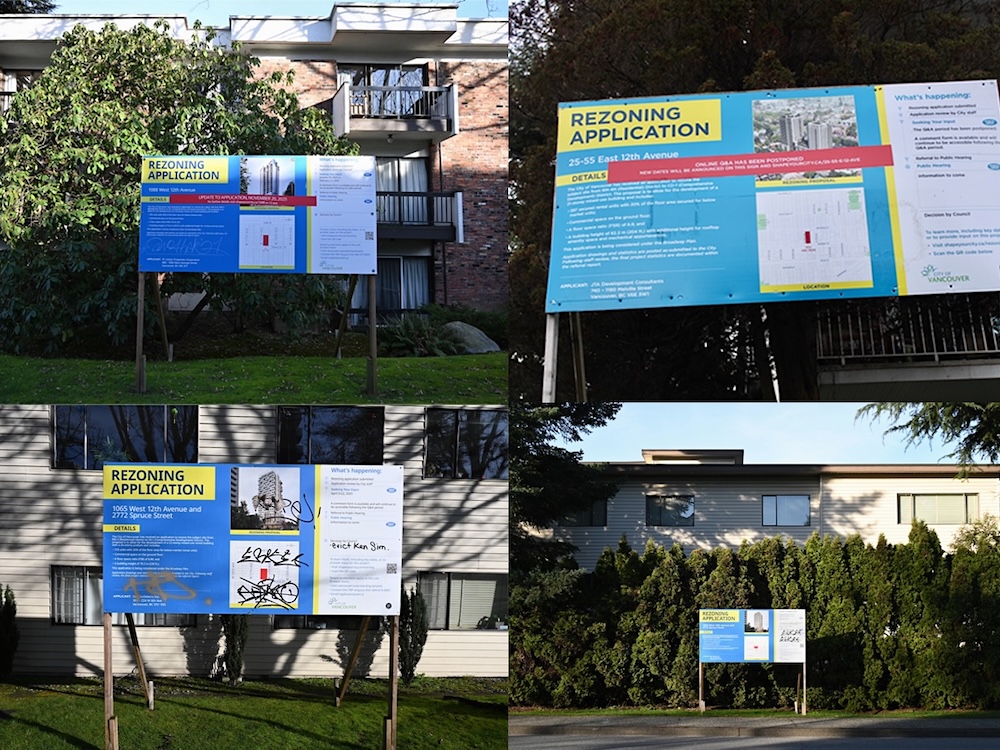
Sadie Stephens was owed thousands of dollars after moving out of a Mount Pleasant building up for redevelopment.
But after trying to chase down a company hired to support and help secure compensation for renters displaced by new housing development, she didn’t think she’d ever see the money.
“They just left me hanging,” the 32-year-old marketing professional said of her “really frustrating” experience last winter with Sommerville Community Relations.
It wasn’t until after Stephens sought help from the Vancouver Tenants Union and threatened to involve the city and the provincial tenancy branch that she received a cheque last March — nearly three months after she had moved, the last stage at which departing tenants must be compensated, according to Vancouver’s much-touted tenant relocation and protection rules.
“My honest opinion is that if I hadn't put pressure on them, I wouldn't have got anything,” she told The Tyee.
Rather than helping Stephens navigate Vancouver’s web of policies, the company proved “a barrier to even receiving the compensation,” she said. “The whole thing felt kind of sketch.”
She’s not the only renter who was frustrated when dealing with Sommerville, which the city says is involved in the most development applications across the ambitious Broadway Plan among so-called “tenant relocation co-ordinators.”

Across 500 blocks on the busy arterial south of downtown, Vancouver is embarking on a decades-long push to build more than 40,000 new homes, displacing thousands from affordable rental units in the process.
City council passed the plan in 2022 after the approval of a new subway line along Broadway. Along with the push for higher-density development came enhanced renter protections to blunt the impact on tenants in what is home to the city’s largest stock of purpose-built rental housing.
These policies, which former mayor Kennedy Stewart hailed as the “strongest” renter protections in Canada, require that tenants be generously compensated if they permanently move. Tenants who want to return when the new building is completed are entitled to compensation to cover the difference in rent while they wait, and then are supposed to be offered a similar-sized unit in the new building at about the same rent they were previously paying.
However, The Tyee’s reporting raises questions about potential holes in Vancouver’s Tenant Relocation and Protection Policy, or TRPP, and revealed tension between the city and Sommerville, whose founder’s development firm is also heavily involved in the Broadway Plan, including on several projects where Sommerville is handling tenant relocation services. The city’s tenant relocation policy is up for review this year.
In addition to Stephens, The Tyee spoke with two other tenants at different buildings connected to Sommerville who have also struggled to secure compensation they’re entitled to. One said she nearly defaulted on a loan because the funds arrived months late. Another is still fighting to be paid.
Other tenants Sommerville has been assigned to help told The Tyee they had a hard time getting hold of the company’s employees and were sometimes given confusing or inaccurate information about city policy.
In response to The Tyee’s questions, Sommerville maintained that it “diligently helps” tenants it is designated to support, adding that the company rarely receives complaints.
Tenants currently seeking compensation opted to move years before they would have received formal eviction notices, the company also noted, with many projects still far from shovels in the ground.
“We are committed to the highest standards of communication,” Sommerville said in a statement shared through the public relations firm Hill & Knowlton. “We are genuinely concerned to hear that several tenants feel we have fallen short.”
Sommerville also suggested that city staff’s evolving TRPP guidance hasn’t always been clearly communicated and is partly to blame for tenant frustrations.
Nor should Sommerville be considered responsible if its clients refuse to compensate tenants in a timely manner, the company said.
When reached by The Tyee, the city challenged both claims.
Although development applicants — either a landowner or a developer working on their behalf — are ultimately responsible for issuing compensation to tenants, a City of Vancouver spokesperson said Sommerville and other tenant relocation co-ordinators are the primary liaison.
“As such, responsibility for timely compensation rests in part with [Sommerville],” Kirsten Langan, a city spokesperson, said in an email to The Tyee.
Any guidance intended to clarify Vancouver’s tenant protection rules has been “shared directly” with Sommerville, Langan added.
Tenant relocation company and real estate developer share owner
Sommerville bills itself as a “boutique firm” that strives to make “tenant relocation a more personable and collaborative process.”
The Vancouver-based company was founded in 2020 after local developer James Tod recognized a growing demand to assist renters, municipalities and developers navigate layers of policy, according to the company’s managing director, Matthew Thiesen.
Since then, Sommerville, which employs “four to five” staff members, says it’s assisted thousands of households across six B.C. municipalities and is on track to support hundreds of tenants affected by the Broadway Plan.
Of the more than 150 projects currently proposed in the Broadway Plan area, Sommerville is co-ordinating tenant relocation for 26, more than any other tenant relocation co-ordinator, according to the city.
Meanwhile, JTA Development Consultants — the real estate development company Tod founded — is leading 11 development applications across the Broadway Plan, more than any other developer, the city told The Tyee. Sommerville is handling tenant relocation for all but one project, which doesn’t include rental housing.
That means Sommerville is responsible for helping explain to eligible tenants in those buildings what entitlements they’ve been granted through Vancouver’s citywide TRPP, as well as enhanced protections the city has extended to renters affected by the Broadway Plan, Rupert and Renfrew Station Area Plan and some other projects.
Renters in the Broadway Plan area — running from Clark Drive to Vine Street, between First and 16th avenues — whose current building will be redeveloped or replaced with new rentals could be eligible for some or all of the following:
- Option to come back to the new rental building at the same rent you are currently paying or a 20 per cent discount to citywide average rents, whichever is lower
- Option of a monetary rent top-up to avoid paying more in rent while you wait to come back to the new building
- Financial compensation of between four to 24 months’ rent based on how long you have lived in your rental home
- Payment of your moving expenses with a flat rate of $750 for a studio or one bedroom apartment, and $1,000 for two or more bedroom apartments
- Help finding a new rental home that meets your needs
- Additional financial compensation and assistance if you have a low income or face other barriers to housing
“The social acceptance of the Broadway Plan, and the pretty major redevelopment that's going to happen as a result, depends on these policies working as they’re meant to work,” said Craig Jones, associate director of the University of British Columbia’s Housing Assessment Resource Tools project.
And they’re “quite generous,” added Jones — as long as they’re adhered to.
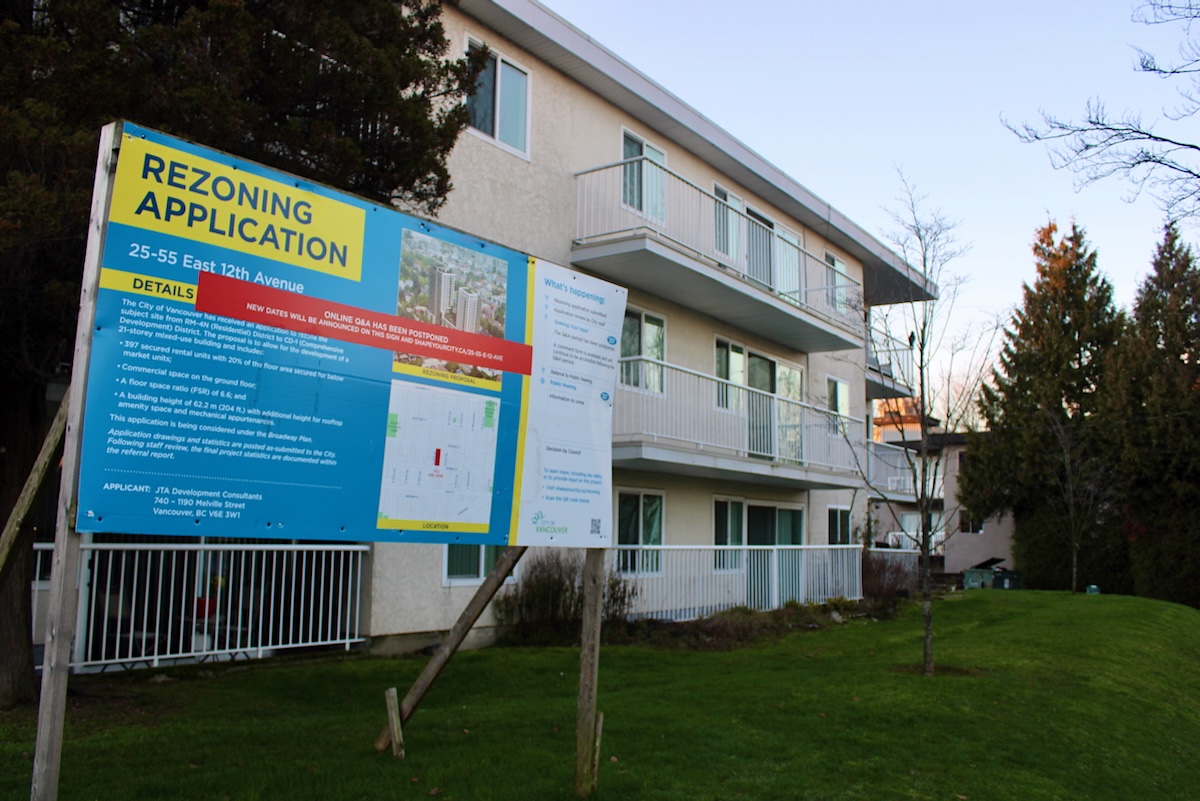
The city requires development applicants to show they’ve followed the tenant protection rules in order to secure permits necessary to start building, he noted.
While the city said its tenant protection policies have remained “largely unchanged” since they were approved by council in 2019, a bulletin to clarify how they should be implemented has been updated periodically.
“We've counted six changes in two years to the policy bulletin, and that's extremely frustrating for people,” said Sommerville’s Thiesen, who, according to his LinkedIn profile, previously worked for JTA Development Consultants.
A few weeks before Stephens received her compensation last March, the city updated its bulletin to clarify that tenants who have opted not to return to the redeveloped building must be compensated before or on the day they move out.
“That update was a clarification intended to formally document what had already been standard practice through implementation,” Langan, the city spokesperson, told The Tyee.
But even after the city made clear that departing tenants must be paid before they move, some tenants have continued to face delays.
A wild goose chase
Nicole’s experience with Sommerville felt like a wild goose chase.
After hearing that her building in Kitsilano would be redeveloped, she opted to move last May. But it took several months and bypassing Sommerville — which she described as “impossible to get a hold of” — before she secured more than $9,000 in owed compensation.
The Tyee agreed not to publish Nicole’s surname due to concerns she could face repercussions at work for speaking out publicly.
The 32-year-old first responder had informed Sommerville about her plans to move in early April 2025. In July, the company told Nicole it had contacted the property owner applicant regarding her compensation on a weekly basis without success, according to emails reviewed by The Tyee.
By early September, Nicole’s cheque finally appeared to be ready — except it included the name of her ex-partner, who no longer lived with her. (She told The Tyee she had previously flagged that the company appeared to be working off an old lease.)
A Sommerville representative said she could simply cross his name out, but the bank still rejected the cheque.
When she alerted Sommerville, a representative suggested her former partner’s departure sounded “informal,” said they had again contacted the development applicant and encouraged Nicole to follow up in a month’s time, according to an email shared with The Tyee.
“After I heard that I just went, ‘Fuck this,’” said Nicole.
She decided to contact the owner of her former building and said she was told Sommerville had only requested the first cheque earlier that month. The Tyee reached out to the building owner for comment but did not hear back.
Then, she said, a receptionist working for the building’s owner called her saying Sommerville had now instructed them not to issue a new cheque because of lingering confusion about her old partner and that the payment would have to go through Sommerville.
Nicole then reached out to her former building manager, who sent her the updated lease, which she passed on to the building owner. She was finally paid by them a few days later.
“I had to go and take a loan out because I was relying on that money,” said Nicole, who has since moved away from Vancouver. “That shouldn't be a position people are put in.”
Sommerville said it could not publicly discuss specific tenant cases.
After not hearing from Sommerville for several months, Nicole recently received a letter from JTA saying the proposed redevelopment at her former building was now “dormant” and that Sommerville’s “involvement will be on hiatus until the project returns to an active status.”
JTA would not clarify to The Tyee whether Sommerville continues to be active on other projects.
Another tenant named Sam is still seeking thousands of dollars in compensation after moving out of a different building this past November. The Tyee has changed their name because the tenant fears their decision to speak out could compromise their compensation.
After Sam let Sommerville know they’d be moving, they were informed the building’s redevelopment had entered a “dormant stage.”
“While tenants will remain eligible for the TRPP, the applicant is not providing payments [at this time],” Sommerville said in emails shared with The Tyee.
“If the applicant is choosing not to compensate, we do not have any ability or mechanism within policy to force them to comply,” Sommerville later told Sam.
The city, however, told Sam that unless a development application has been formally withdrawn, applicants are still required to compensate tenants who choose to permanently move or risk being denied necessary permits.
“I just want to get my money and cut ties,” said Sam, who’s now planning to reach out to a lawyer to discuss their options.
Unlike the other tenants in this story, Grant Roberts has chosen not to leave his low-rise Kitsilano building. He plans to stay until he’s evicted and return once it’s redeveloped in a few years.
The 71-year-old, who described himself as a low-income senior, has lived in his one-bedroom apartment steps from Kitsilano Beach since 2002. That means Roberts must be offered a choice between a one-bedroom and a studio, according to the city’s tenant protection guidelines.
But initially, he said, Sommerville told him he would be given a studio in the new building instead of a one-bedroom unit. When Roberts told Sommerville he’d spoken to a tenancy lawyer about the offer, he said the company changed its tune.
“They said I would be eligible for a one-bedroom, but that's only after I called them on it.”
In an emailed statement, Sommerville said it was unaware of such a case, but again pointed to the city’s evolving guidance on its tenant protection rules, noting that language in the bulletin saying one-person households must be offered a choice between a studio and a one-bedroom only came later.
“Sommerville has been advocating for years to the city to take better steps to clarify policy,” the company said.
In correspondence with The Tyee, Langan, the city spokesperson, said the city “consistently advised” that returning tenants must be given that option if both unit types are available in the redeveloped building, calling it “long-standing practice.”
Updates to the policy bulletin “do not introduce new requirements,” Cecilia Ho, another city spokesperson, later added.
Emails involving other renters confused about the city’s policy also show city staff refuting information Sommerville had provided tenants.
“The applicant’s interpretation is their own and not supported by the policy nor by city staff,” an employee with Vancouver’s planning department told a tenant who had reached out for help this past summer, according to emails reviewed by The Tyee.
Sommerville says it prevents homelessness
Tenant relocation specialists are not necessarily a new phenomenon.
And “there’s nothing necessarily untoward about a tenant relocation company being a subsidiary of a developer,” said Jones, the UBC researcher. Many development firms do this work in-house, he noted.
But some tenants The Tyee spoke to felt differently about the ties between JTA and Sommerville — or at least what they considered a lack of transparency.
During a tenant town hall meeting, Jane asked a Sommerville representative about the company’s connection to JTA, the project's developer. According to meeting minutes Sommerville provided to tenants, the company refused to answer: “That’s a question that is outside of [the] purpose of the meeting here.”
That answer left Jane — whose name The Tyee has changed to ensure her tenant entitlements are not compromised — wondering whether Sommerville has her and her neighbours’ backs.
“It’s impossible for me to trust a group who says they’re here for us tenants when they’re tied to the people uprooting us in the first place,” she said.
Sommerville said the companies’ ties are not a secret. During meetings with tenants, which are also attended by city staff, the company said it tries to keep focused on the topic at hand, including city policy, tenant assistance and project timelines.
“We do our best to answer folks' questions,” Thiesen said. “We answer that question regularly when folks ask it. We’re not hiding that.”
Sommerville co-founder Tod currently sits on the city’s renters advisory committee, which, among other things, “advises council on strategic city priorities relating to renters.” He’s not the only committee member involved in property development.
When asked whether his business interest in the city’s tenant policy could represent a potential conflict, Tod pushed back.
“I have long been an advocate for tenant rights, and unapologetically support increas[ing] supply of rental housing,” he said over email.
“I am also uniquely aware of issues that arise throughout the relocation process that others may not be, which means I am uniquely positioned to advocate for the flexibility that is often required in working with tenants with varied barriers to housing.”
At the end of the day, the ultimate goal of Vancouver’s tenant protection rules is to prevent people from falling through the cracks into homelessness.
And that has never happened on Sommerville’s watch, Thiesen said, crediting the company’s success to the “individualized approach that we take.”
Stephens, who has since moved to Toronto, had heard the same thing from Thiesen. It caught her off guard. She didn’t think she was at risk of becoming homeless.
She also never felt as if the company were looking out for her.
“Even after my experience working with them, I'm still sort of unclear what their role is.” ![[Tyee]](/design-article.thetyee.ca/ui/img/yellowblob.png)
Read more: Rights + Justice, Municipal Politics, Urban Planning








Tyee Commenting Guidelines
Please note that email notifications for replies are not currently working due to a software issue which may be resolved in a future update.
Comments that violate guidelines risk being deleted, and violations may result in a temporary or permanent user ban. Maintain the spirit of good conversation to stay in the discussion and be patient with moderators. Comments are reviewed regularly but not in real time.
Do:
Do not: