


 SHARE:
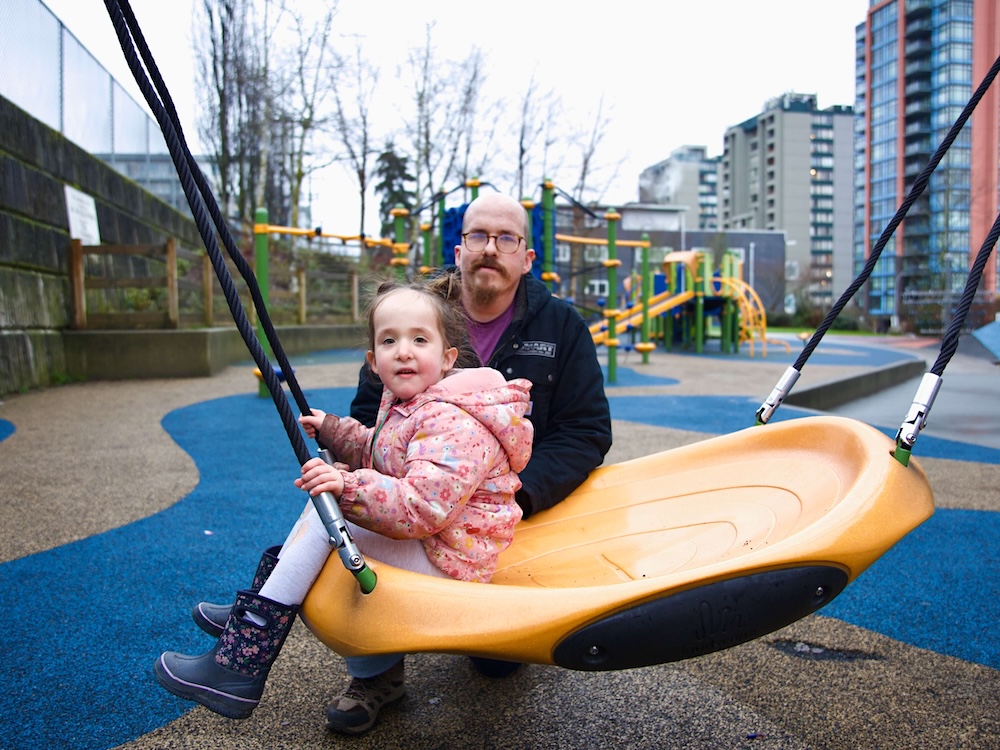
When James Plett’s eldest daughter began kindergarten at École Qayqayt Elementary in New Westminster School District 40 in September, she found the transition to school difficult.
“She was born in December, so she’s the youngest kid in school,” he said, adding his daughter started showing some learning issues after starting kindergarten.
“She’s very high energy and she’s very loving, but it’s a brand new environment.”
But the extra care and attention she received from the early childhood educator, or ECE, assigned to her class — part of the Seamless Day Kindergarten program that puts an ECE in the kindergarten classroom for child care before, during and after school hours — helped Plett’s daughter quickly adjust to her new surroundings.
“She just loves school now,” Plett said, adding his daughter connects emotionally to the ECE in a way she can’t with a teacher who has 21 other students.
Starting in just four kindergarten classrooms in 2019 before expanding to 45 by the 2023-24 school year, Seamless Day Kindergarten is an Education Ministry pilot program funding an ECE in the kindergarten classroom during school hours, while parents paid for the before- and after-school care. The provincial funding has now been discontinued, but some districts are choosing to keep all or a portion of the program out of a combination of their own budget and parents' fees.
“All the students are benefiting from that,” Plett said, even those not enrolled in the Seamless Day program. Without the early childhood educator, he added, “it is one kindergarten teacher looking after 24 kindergarteners: it’s chaos.”
In many before- and after-school care programs, children have to transition to either a different space in school or a different building that can be located blocks away. But children in Seamless Day Kindergarten remain in the same familiar kindergarten classroom for the whole day.
The presence of an early childhood educator in the kindergarten classroom before, during and after school makes for an easier or “seamless” transition for kids than relocating to and from separate school and child-care spaces, said Emily Mlieczko, executive director of the Early Childhood Educators of BC.
“They get information that transfers across the full day, which is very good for children,” said Mlieczko, adding that having both a teacher and an early childhood educator in the classroom helps incorporate both the B.C. curriculum and the B.C. Early Learning Framework. “Two key documents that keep the child’s interest at the heart of the matter. So looking at children’s overall development, their social cues, their connection to each other.”
In New Westminster, Seamless Day Kindergarten is offered only at École Qayqayt Elementary, where it also includes some Grade 1 and 2 students for 24 students in total.
But the program will shut down in the district at the end of this school year, when provincial funding for the program runs out.
Next September the district will expand its existing partnership with a third-party non-profit child-care provider already running on site for before- and after-school care for students in Grade 2 to age 12. That expansion will open up spaces for kids in kindergarten and Grade 1.
But they will no longer have early childhood educators in the kindergarten classroom during school hours.
The decision was reached without consulting parents, said school district superintendent Mark Davidson, because Seamless Day Kindergarten was a provincial program.
“When the money went away, the notion of continuing it was prohibited by the cost,” he said, adding he is not aware of any other school district continuing with the Seamless Day Kindergarten program after the funding runs out.
“To consult would have been a process without substance, because we would not have been able to afford to continue the program.”
The Tyee reached out to the BC School Trustees Association to ask what was happening in other districts that ran the pilot program but did not hear back by publication time.
How the program works
Parents like Plett pay $10 a day for the before- and after-school care portion in the New Westminster school district, a total of $200 a month, for Seamless Day Kindergarten.
According to a district report included in the agenda for its Jan. 27 board meeting, the district receives $110,800 annually from the province and $117,600 a year from parents’ fees to run the Seamless Day program.
But while the province passed legislation last year that made it easier for school districts to open their own on-site before- and after-school child care, the district’s report says they are still waiting to find out from the province what the regulations will be, including what fees they can charge and the size requirements of child-care spaces.
In the meantime, the district is proposing an expansion of its existing partnership with the Westminster Children's After School Society, which has been running Kids Korner, a before- and after-school child-care program for 30 students in grade 2 to age 12 at École Qayqayt Elementary since 2014.
While the Fraser Health Authority, responsible for the child-care licences in the region, will ultimately decide whether Kids Korner can expand, the district says expansion would allow the society to care for 54 kids, encompassing those kindergarteners and Grade 1 and 2 students who are currently in the Seamless Day program.
But it won’t include the benefit of having an early childhood educator in the classroom, as Seamless Day Kindergarten currently does. That setup creates a community of care around the child and their family, Mlieczko said, with early childhood educators gaining awareness of how kids behave in different settings, enabling them to answer any questions parents may have about their kids’ education.
And on the flip side, working with an early childhood educator in the classroom provides teachers with additional support for engaging with 24 kids with a diversity of needs, developmental stages, family backgrounds and life experiences.
Mlieczko added that Ontario has already successfully integrated early childhood educators into kindergarten classrooms with more than 16 students.
Seamless Day is something B.C. should consider expanding into Grade 1 classrooms, not eliminating altogether, she said.
This is not the first time Plett’s daughter has lost access to ECE support at École Qayqayt Elementary.
Two years ago, before she was old enough to go to school, Plett’s daughter attended a daycare at École Qayqayt.
But it was shut down to provide more classroom space in the overcrowded school, which Davidson told The Tyee was at 130 per cent capacity at the time, as the ministry expected the district to prioritize space for educating school-aged kids.
This whole situation is giving Plett flashbacks to his daughter losing her child-care space two years ago.
“Maybe in a dozen years we’ll have a new government that talks about putting in Seamless Day and we’ll do it all over again,” he said. “It makes me pretty angry, because it is such a great program.” ![[Tyee]](/design-article.thetyee.ca/ui/img/yellowblob.png)
Read more: Education












Notice about commenting changes
The Tyee’s commenting system will be moving to a new platform on Nov. 12. If you’re already a Tyee commenter you must register with the new system on or after Nov. 12 with your preferred username.More information can be found here.