


 SHARE:
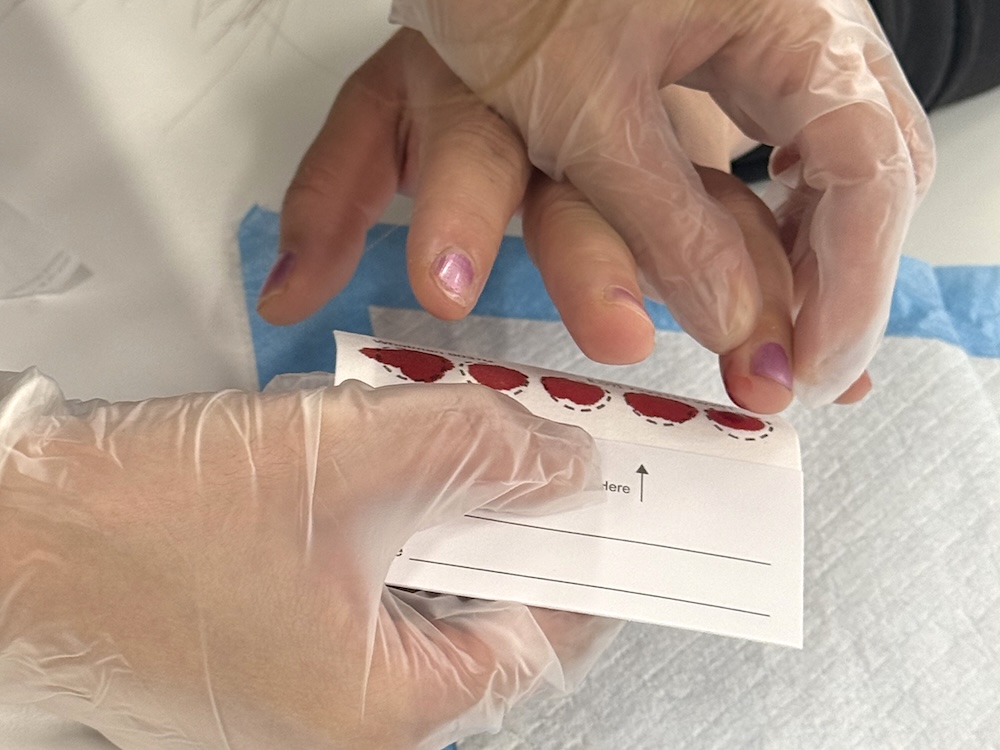
A new mobile sexual health testing service is now accessible for immigrant and migrant sex workers across the Lower Mainland.
SWAN Vancouver, a non-profit that supports immigrant and migrant women who do indoor sex work, partnered with the Vancouver Infectious Diseases Centre to create a program to bring a testing service to 90 massage businesses across 13 municipalities. The testing service also goes to private residences.
Immigrants have Canadian citizenship or permanent resident status, and migrants are in Canada with a temporary residence permit, for example international students or people with a work or travel permit. SWAN is trans-inclusive and supports women and gender-diverse sex workers.
Immigration rules prohibit temporary foreign residents, including visitors, students, workers and temporary resident permit holders, from doing sex work.
Criminalizing sex work in this way makes women afraid of being identified, arrested and deported if they access health care or social services, said Crystal Laderas, communications manager for SWAN.
This fear can be so strong that there were multiple cases in the last year where women were assaulted while at work and didn’t go to an emergency department, Laderas said. Instead they asked for help from friends or neighbours.
To overcome this fear, SWAN is bringing health-care services such as testing for sexually transmitted and blood-borne infections, or STBBIs, to women while they are at work.
SWAN has been partnering with and supporting immigrant and migrant sex workers for nearly 23 years, so there’s a foundation of trust that helps women know they can use this health-care service and have their identify protected, Laderas said.
How the service works
SWAN visits each site that they service in the Lower Mainland about once a month. They arrive in plain clothes and an unmarked vehicle to drop off safer sex and harm reduction supplies. They can now also collect samples from women wanting to be tested.
Outreach workers collect urine samples, which can be tested for chlamydia and gonorrhea, and blood, which is collected by pricking a finger and doing a dried blood spot test. This can be tested for hepatitis C and HIV.
The dried blood spot method of testing is just as effective as getting a blood test at a doctor’s office or LifeLabs clinic, said Shana Yi, executive director of the Vancouver Infectious Diseases Centre.
As an added bonus the test is quick, efficient and cost-effective and provides answers right away, Yi said.
SWAN goes above and beyond to protect the identity of the women it works with, she added.
The samples are sent to the BC Centre for Disease Control Public Health Laboratory for testing, and then SWAN, working with the Vancouver Infectious Diseases Centre, will inform women of their test results in Mandarin, Cantonese, Japanese or English. Women will be connected with treatment as needed.
Hepatitis C, chlamydia and gonorrhea can all be cured at no cost to the patient in B.C. Medications can reduce the presence of HIV in a body to a level that cannot be detected or transmitted.
Other anonymous testing options in BC
Other anonymous sexual health testing services exist in B.C.
GetCheckedOnline is a free and anonymous provincial program that lets people get tested for any STBBIs they may be at risk for without ever having to see a doctor or provide their name. The only requirement is an email address where the test results can be sent to.
However, this program is offered only at LifeLabs locations in Nanaimo, Victoria, Kamloops, Nelson, Kimberley, Dawson Creek and the Lower Mainland. A person does not have to provide their name, but LifeLabs technicians may automatically ask for a name when checking a person in. If the person says they are there for a GetCheckedOnline test, they will not have to give their name.
However, immigrant and migrant sex workers are often navigating these programs in a language that isn’t their own. They don’t want to lie but also don’t want to out themselves as sex workers, Laderas said.
SWAN can support women who want to visit in-person clinics by accompanying them to appointments and helping translate while also offering valuable context to what they are translating, which is more than health-care translators are tasked with doing, she said.
The best way to offer low-barrier testing is to take the option for testing to the patient, rather than waiting for the patient to come to the testing service, Yi said.
“We’ve seen that when low-barrier testing isn’t offered within communities there is a general increase of disease trends overall from a public health perspective. Epidemiologically speaking it’s also shown that there’s an increase in high-risk behaviours,” Yi said. “When low-barrier testing isn’t available people tend to not know their disease status, hence spreading it further within the community.”
When low-barrier testing is available people are more engaged in health care, have better health outcomes and have a lower risk of overdose, she said, adding “health care is a basic human right, not a privilege.”
Laderas said that so far 41 women have been tested, with the number of women interested in being tested steadily increasing as news about the service goes around.
SWAN expects there will be at least 200 more tests by the time the pilot project wraps up in March 2026. The pilot project is funded by the Provincial Health Services Authority.
How SWAN says Canada could better protect sex workers
Canada’s sex work laws are complicated. While selling sex in a private residence is decriminalized, buying sex and third-party support of sex workers is illegal.
These laws don’t protect women from exploitation and can actually put them at higher risk of harms — especially immigrant and migrant workers, Laderas said.
“If a migrant worker who is facing multiple layers of criminalization is robbed or attacked by a client, that [perpetrator] knows they could get away with that with impunity because they know [the sex worker] is too scared to call the police, even when they’re a victim of a crime,” she said.
When women do call the police they “often become the subject of an investigation, they could be arrested or they could be deported,” she said.
SWAN says Canada could better protect vulnerable women by decriminalizing sex work, which has been done in parts of Australia, and repealing the ban on immigrants and migrants doing sex work.
New Zealand has also decriminalized sex work but still bans immigrants and migrants from doing sex work.
All levels of government need to do more to support services that support sex workers, Laderas said.
Organizations such as PACE Society, WISH Drop-In Centre Society and the Kingsway Community Station have had a hard year and have had to close or scale back services or are facing uncertain futures.
SWAN has also faced struggles and had to lay off some staff in 2024.
SWAN has also been dealing with increasing levels of violence experienced by the women it supports, Laderas said.
These organizations do essential work and sex workers feel safe accessing these services; it’s critical then to support these organizations “before there’s a crisis... or a high-profile tragedy,” she said. ![[Tyee]](/design-article.thetyee.ca/ui/img/yellowblob.png)
Read more: Health










Notice about commenting changes
The Tyee’s commenting system will be moving to a new platform on Nov. 12. If you’re already a Tyee commenter you must register with the new system on or after Nov. 12 with your preferred username.More information can be found here.