


 SHARE:
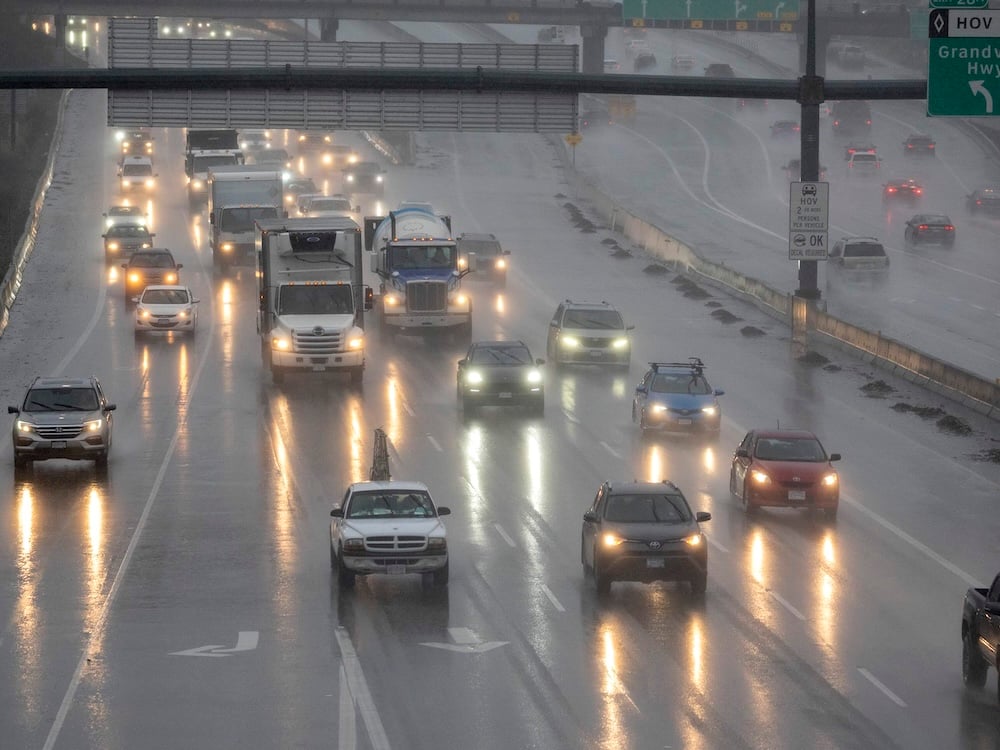
If the federal government caves to automakers’ pressure and cancels the electric vehicle sales mandate, there will be significant negative impacts to Canadians’ health, medical professionals and researchers warn.
The federal policy — which requires hybrids and EVs to make up 20 per cent of sales in 2026 and 100 per cent by 2035 — will save Canada more than $90 billion and 11,000 premature deaths over the next 25 years, according to analysis by the Atmospheric Fund, a Toronto-based non-profit focused on climate change and air pollution.
“We are devastating the future generation,” said registered nurse Doris Grinspun in an interview. And as if the death toll of pollution wasn’t enough, she said, hospitalizations also impose significant costs on already strained health-care systems.
“While the EV availability standard has been communicated from the beginning as a climate policy, we think it's equally if not more compelling as a health policy,” said Bryan Purcell, the vice-president of policy and programs for the Atmospheric Fund.
“When you look at these kind of numbers of avoided deaths that can be achieved and other health benefits, I think it could purely justify the policy on health grounds, even if we didn't have a climate crisis on our hands,” he added.
Climate change and health are inextricably linked. Gas- and diesel-powered vehicles release harmful pollutants into the air, including planet-warming greenhouse gas emissions. Burning fossil fuels such as coal, oil and gas is a main driver of climate change, and as the planet warms, wildfires become more frequent and severe, often blanketing vast swaths of land in acrid smoke while pollen and other allergens become more prevalent.
Air pollution is undeniably bad for humans: long-term exposure increases the risk of developing all manner of conditions, including lung diseases, heart disease and cancer.
Health Canada warns that exposure to traffic-related air pollution (from vehicle exhaust, tire and brake wear and tear and other particles) leads to the development and worsening of asthma symptoms in children, lung cancer in adults and premature deaths. It also likely causes childhood leukemia and cardiovascular diseases.
Some people — including children, pregnant women, people with pre-existing conditions and seniors — are more vulnerable to air pollution, and communities located near major roads or industrial areas are more likely to be Indigenous, racialized or poorer, said Grinspun.
Take asthma, for example.
“I used to have it when I was a kid, it feels like you're dying to the child and to the parents,” Grinspun said.
Compared with lung cancer, a respiratory disease like asthma may sound less serious, but it is still devastating to human health and puts a huge burden on Canada’s health-care systems, said Grinspun, who is CEO of the Registered Nurses’ Association of Ontario.
Asthma causes an estimated 300 deaths and 80,000 emergency room visits each year, according to advocacy group Asthma Canada’s 2024 report. Asthma Canada estimates this disease alone will cost the Canadian economy $4.2 billion by 2033. Unless countries, including Canada, take major steps to curb greenhouse gas emissions and phase out fossil fuels, climate change will keep accelerating and with it air pollution and the associated negative health impacts and loss of life.
The Atmospheric Fund’s analysis only examined the impacts of reduced air pollution from gas vehicles in two major Canadian corridors: southwestern British Columbia and the Windsor-Quebec City corridor. The estimated $90-plus billion savings and 11,000 avoided premature deaths would be even higher if applied across the whole country, explained Purcell.
Automakers lobbying the federal government say they cannot meet the targets in the Electric Vehicle Availability Standard, pointing to the ongoing trade war with the United States and dip in EV sales in early 2025.
“Putting seat belts in cars was opposed by every North American automaker as a regulation and they used the same kinds of arguments they're using today,” Purcell said. Arguments that it should be up to consumer choice were also part of the seat belt and airbags conversation, he noted.
“Ultimately, governments decided that that wasn't the case, that actually there was a role for public policy to protect the public interest and public safety and we really see this regulation very similarly,” Purcell said.
The dip in EV sales coincided with the federal government ending its $5,000 EV rebate program. At the same time, Quebec — a major player in the EV market — paused its rebate program when funds ran dry, causing a dip in sales, Purcell added.
In June, federal Environment and Climate Change Minister Julie Dabrusin said the government was working to bring back some type of EV rebate but what exactly that will look like is unknown.
“Many other parts of the country, including Ontario, saw modest increases in sales or flat sales,” Purcell said, indicating the slowdown in the first quarter of 2025 is likely associated with the changes to those rebate programs.
The transportation sector is Canada’s second-largest source of greenhouse gas emissions at 23 per cent, trailing the oil and gas sector at 30 per cent of national emissions. More than half the transport sector’s emissions are from passenger cars and trucks. Passenger buses, trains and other transit make up a comparatively tiny share even though aviation emissions are included in the same category. ![[Tyee]](/design-article.thetyee.ca/ui/img/yellowblob.png)
Read more: Health, Transportation, Environment










Tyee Commenting Guidelines
Please note that email notifications for replies are not currently working due to a software issue which may be resolved in a future update.
Comments that violate guidelines risk being deleted, and violations may result in a temporary or permanent user ban. Maintain the spirit of good conversation to stay in the discussion and be patient with moderators. Comments are reviewed regularly but not in real time.
Do:
Do not: