

 SHARE:
Not all neighbourhood infrastructure comes from city hall.
Across the streets of Vancouver — and beyond — people have been quietly installing their own small-scale public works: free, non-commercial, open 24/7 and powered entirely by goodwill. These are gifts to the street — part mutual aid, part whimsy, part, I think, a gesture to community-building in the midst of an ongoing housing crisis.
Here are a few of my favourite examples. Please share your favourites in the comments.
The dog stick library
We’ve all seen a little library — maybe even photographed a particularly pleasing iteration.
Why not a library for something more esoteric than books?
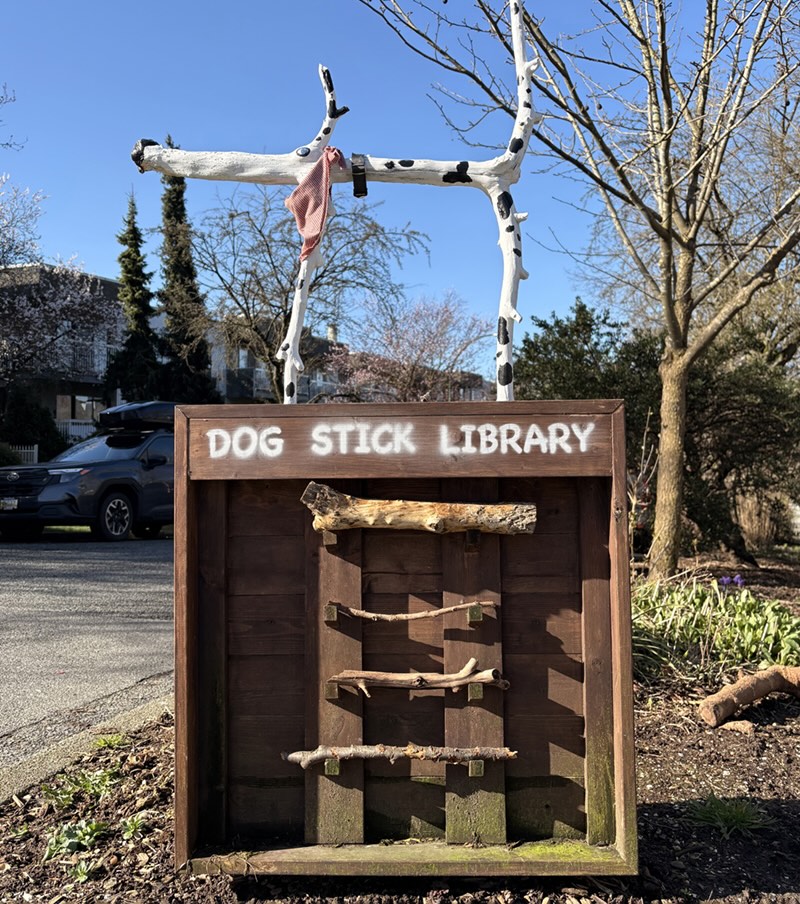
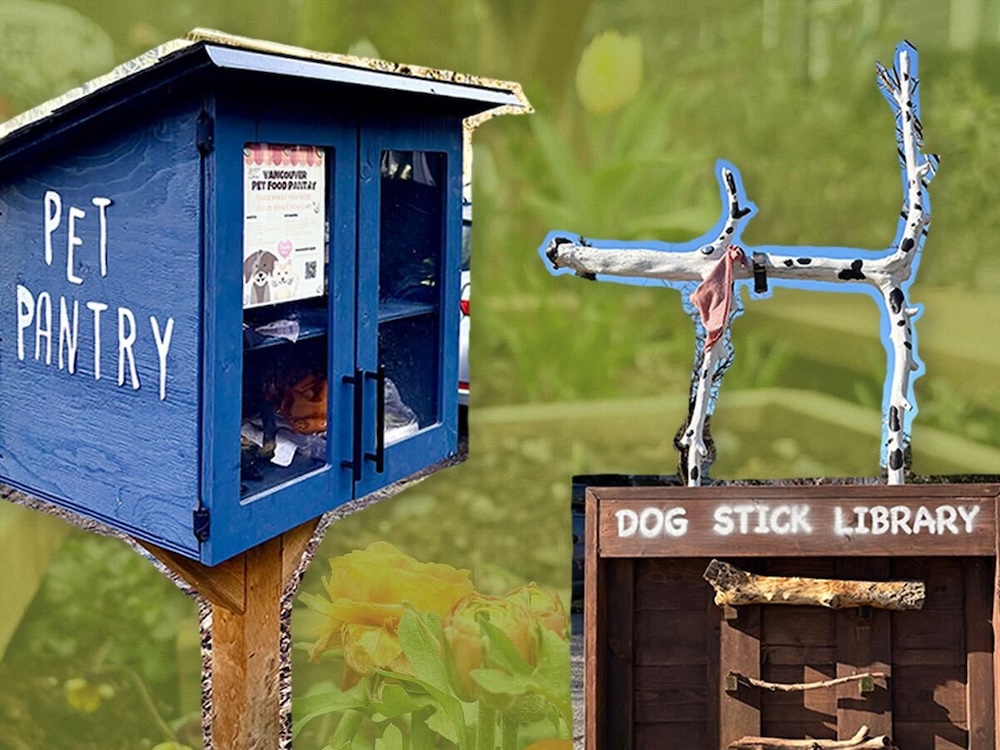
At a busy street corner near my house in East Vancouver, a Dalmatian made from painted sticks stands tall above a homemade shelving unit that resembles a mounted case for pool cues. Labelled “Dog Stick Library,” this version of a little free library is within short walking distance of several parks.
Despite having a dog who’s unwilling to fetch anything but food, I keep my eye on the Dog Stick Library’s contents every time I walk past. The library’s sticks are always in flux, in heavy use by the neighbourhood’s canines and their owners.
The perpetually decorated house
Three blocks from the Dog Stick Library, travelling southwards, is a home that treats every holiday — major, minor or vaguely seasonal — as a full production. St. Patrick’s Day, “spring has sprung,” “summer vacation,” Thanksgiving: these and more all receive maximalist wraparound effort.
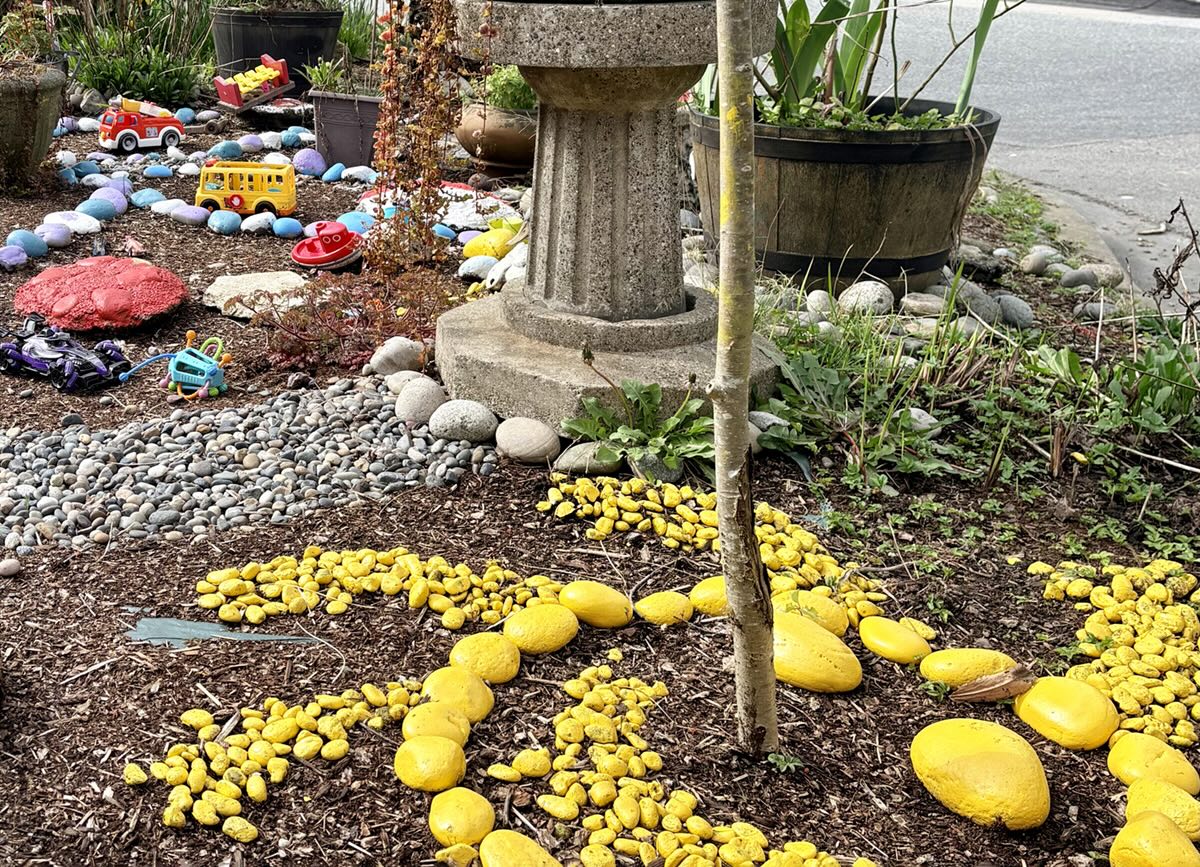
Every instance in the year is a cause for revelry to this homeowner, who invests in all manner of decorations including street furniture, specialized landscaping and Valentine’s Day hearts that flutter above our heads like hummingbirds. Year-round, this homeowner even offers a three-tier Italianesque fountain of a boy astride a dolphin, which in turn spouts water onto an oyster shell. The boy often gets a new outfit to go with the season.
I always walk out of my way to catch the latest showcase.
The Grandview-Woodland food connection harvest stand
At the gates of Nexway̓s wa lh7áy̓nexw (Transformed Life Garden), nestled between the Britannia Community Centre’s skateboard park and McLean Drive, sits the “Grandview-Woodland Food Connection Harvest Stand.”
Occasionally, volunteers lay out freshly harvested bounty for community members to take as they need. The Grandview-Woodland Food Connection refers to this stand as part of their work to create a “hyper-local food system,” a neighbourhood-centred response to the rising cost of fruit and veg.
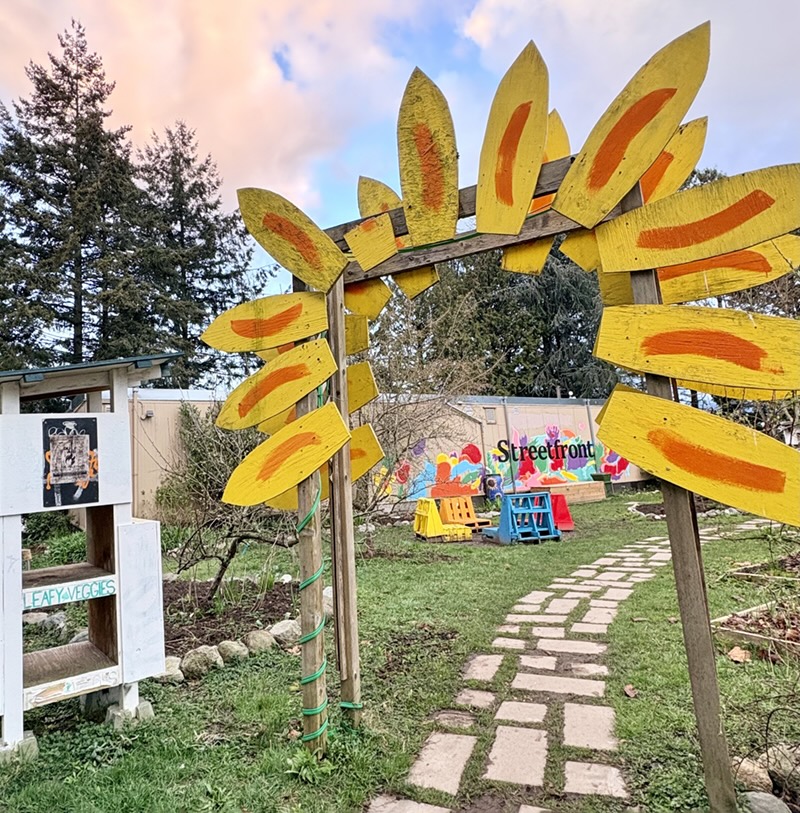
My favourite part of the spartan sign advertising the stand is a tacked-on poster that lets us know: “MORE iNFO COMiNG… WHEN WE FiND SOMEONE THAT CAN PAiNT BETTER.”
Given that food insecurity and Indigenous food sovereignty are of rising concern in our neighbourhood and many others, this program is a meaningful exercise. Seeing it always makes my day.
The pet pantry
A few blocks southeast of the Dog Stick Library sits the sturdy “Pet Pantry,” painted a beautiful shade of cerulean blue. Inside the glass front of the cupboard hangs a sign with a QR code as well as a full list of items accepted and not accepted.
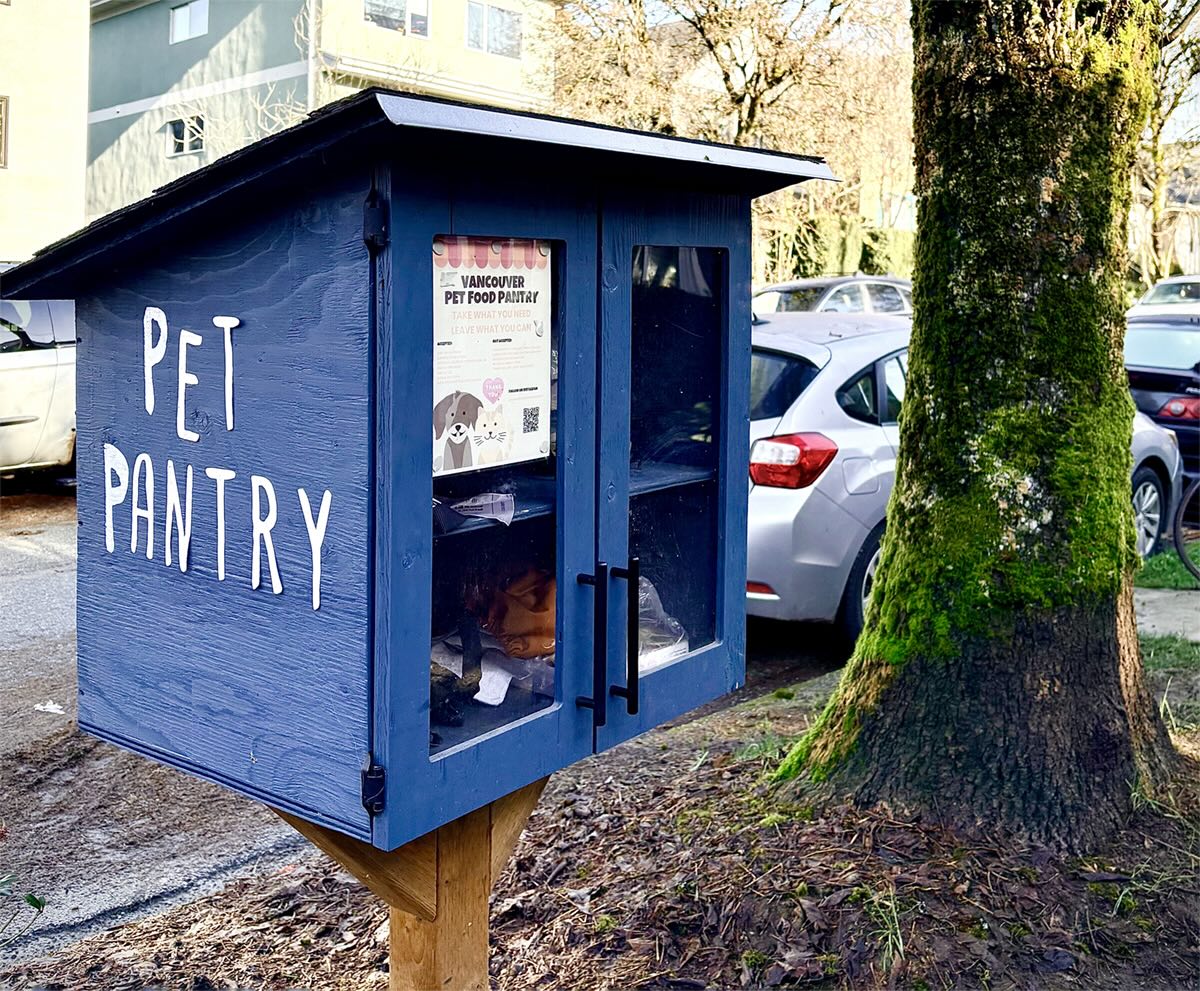
The “P”s in Pet and Pantry are painted a lighter shade of blue. The remaining letters are made of peeling white vinyl, the only incongruity in the otherwise polished effort. The cupboard sits across the sidewalk from the sage green Mah Milk Bar — a relatively new addition to the neighbourhood. This shop is part cozy café, part neighbourhood grocery store. Like all neighbourly shops, it takes good care of the space between itself and the street curb — the whole adjoining area, including the Pet Pantry.
I’m one of the many residents who loves to drop off unused and little-used items — the sweater my dog outgrew, the food my cat refuses, the chicken-flavoured pet toothpaste I was too lazy to use on their teeth. This mutual-aid model for the four-legged members of the community makes my heart glad.
The boulevard sandbox
Many municipalities allow private landscaping in their boulevards — the publicly owned space located between the sidewalk and the curb. One family in Victoria has chosen to go further.
Like the Perpetually Decorated House in East Vancouver, which includes a sandbox and toys in as part of its “summer vacation” decorating theme, the owners of a bright purple home set up a sandbox in the boulevard when their kids were young… and kept right on going and growing the sandbox even after their kids were past the playground stage.
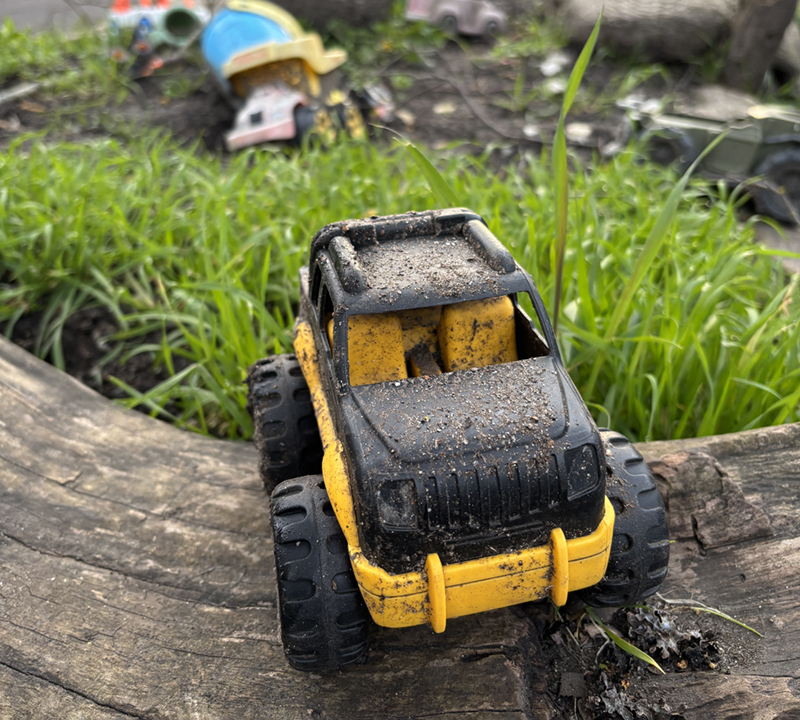
You can find a rotation of cars and trucks (they affectionately call the sandbox their “Truck Garden”), but other toys have made their way into the sand over time: pails, shovels, a toy helicopter, a construction hat, watering cans and rubber duckies. For a while, they also had a kids’ desk and chair, a toy box, a wee basketball net and some artificial turf. This boulevard sandbox is a delightful find for all of the neighbourhood’s young kids — and their parents.
The gift that takes a village
The Kitsilano Neighbourhood House features a children’s book exchange tucked beside the daycare. Bike racks that verge on public art. Brightly painted Adirondack chairs angled perfectly toward the morning and afternoon sun. Water fountains calibrated for adults, kids and dogs. And — the pièce de résistance — a sprawling food pantry, complete with shelving, fridge and freezer, alongside a standalone toiletries cupboard.
And yet, when I stopped by, the pantry shelves were bare — save for a single, slightly suspect jar of salsa — and the toiletries cupboard had drifted into something closer to a holding space for miscellaneous junk.
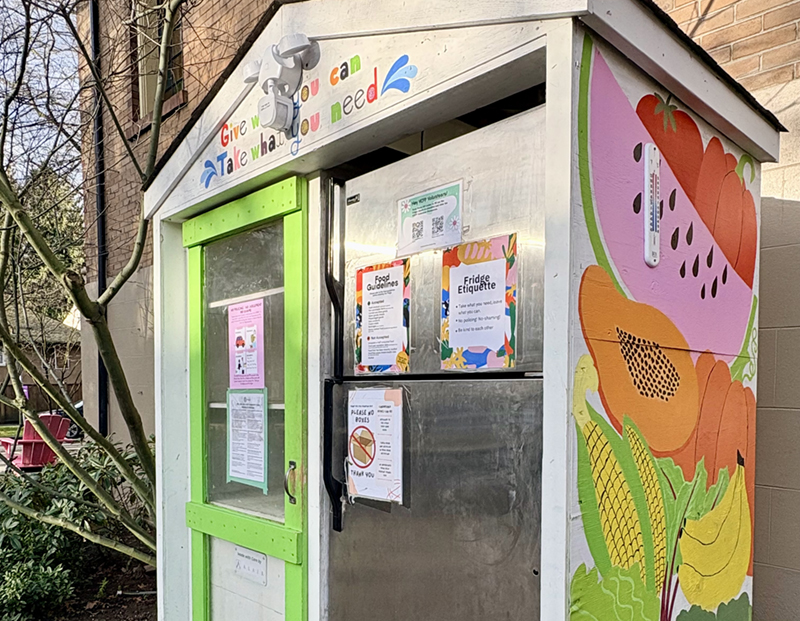
Which raises a more complicated truth about public gifts. As municipalities have learned, they don’t work as one-time offerings. They require maintenance. They need to be living systems.
Unlike the Dog Stick Library, where the sticks circulate and replenish, or the Pet Pantry, where neighbours quietly keep the shelves in motion, larger food pantries depend on ongoing participation from larger groups of people. On neighbours showing up — not just to take, but to give, sort, maintain and care.
The Kitsilano Neighbourhood House has built something extraordinary. But like anything in the commons, it only becomes a true gift when the neighbourhood meets it halfway.
What neighbourly gifts show up in your ‘hood? Please share stories and photos in the comments. ![[Tyee]](/design-article.thetyee.ca/ui/img/yellowblob.png)
Read more: Urban Planning








Tyee Commenting Guidelines
Please note that email notifications for replies are not currently working due to a software issue which may be resolved in a future update.
Comments that violate guidelines risk being deleted, and violations may result in a temporary or permanent user ban. Maintain the spirit of good conversation to stay in the discussion and be patient with moderators. Comments are reviewed regularly but not in real time.
Do:
Do not: