


 SHARE:
On Sports
David Macfarlane
Biblioasis (2026)
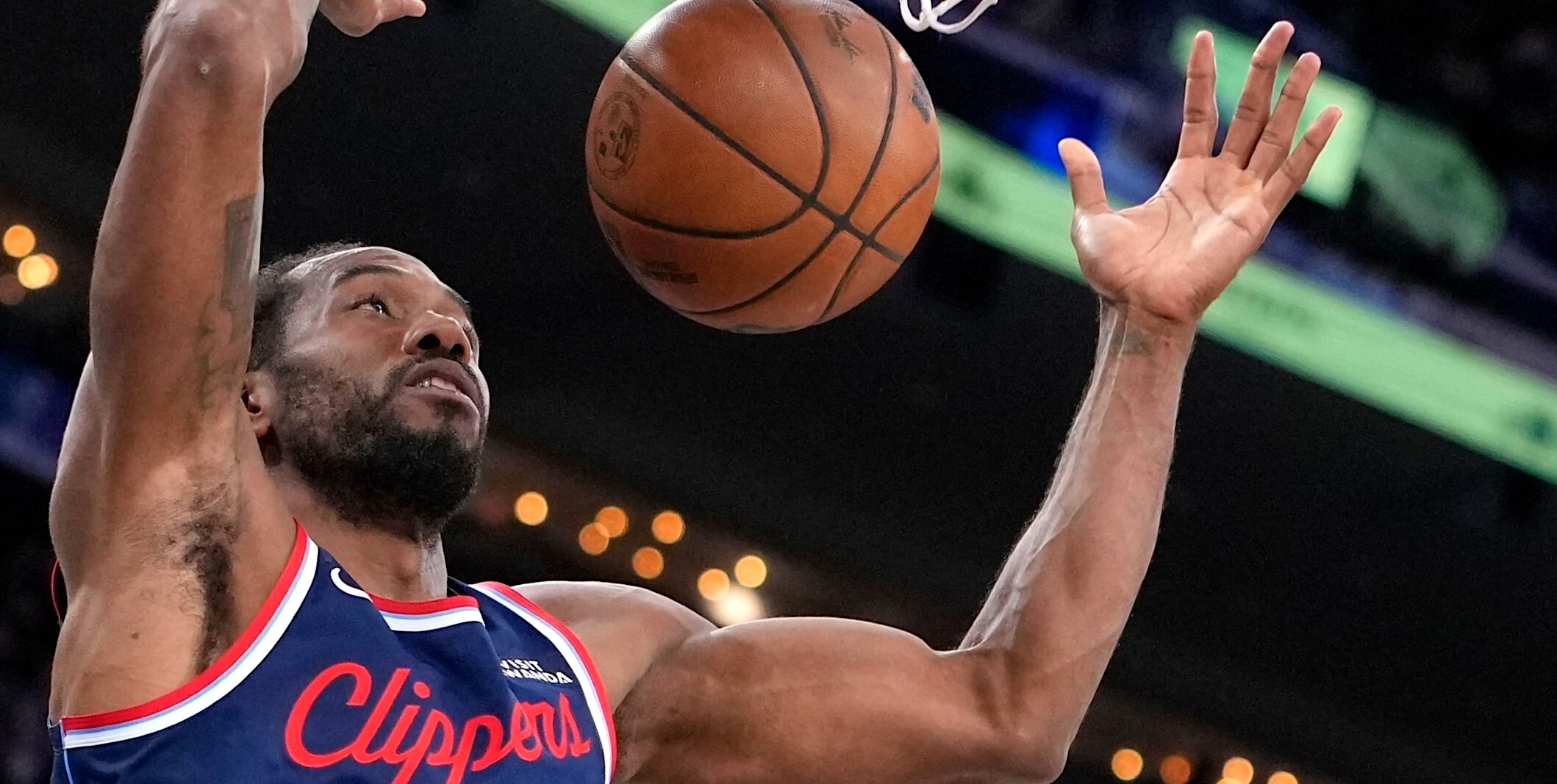
There were 6.9 seconds left on the clock in the fourth quarter of a regular-season match-up between the Los Angeles Clippers and the Houston Rockets. It was a nothing game, really. The second of a back-to-back set. Wednesday-night filler before the NBA All-Star break that Sunday. The Rockets had taken the first game on Tuesday and looked set to take the second as they headed into the final stretch.
Then Clippers forward Kawhi Leonard rumbled to life. The superstar has been plagued by injuries since bringing a championship to Toronto in 2019 and promptly departing for Los Angeles during the offseason. This year has proved to be different. The stat lines are starting to whisper that this might be Leonard’s best offensive season ever, after 14 years in the league.
However, that night in Houston, he’d made just three field goals in the first 36 minutes of play. A worrying quiet before something clicked. He’d double that number in the next 12, and he evened the score 102 to 102 in the final seconds.
While not a sterling performance from Leonard overall, how that game ended was nothing short of brilliant. A flash of expertise and execution refined by a lifetime of dedication.
Leonard received the inbound pass and drove past his defender, Amen Thompson, a supreme young athlete 11 years his junior. Thompson routinely teases his awe-inspiring potential with head-shaking displays of the sublime.
But not here. After driving left, Leonard spun right and pulled up on a fadeaway jumper to take the lead with two seconds to go. He’d got fouled. Then he made the free throw. That was the game; the Clippers won.
This sequence might be ordinary as far as the NBA goes, but if you watch the replay, and watch it over and over again, you see something closer to the divine.
It’s enough to make just another regular-season game feel like something.
Sports speak to something deep within us
It’s difficult to write about sports. Not the mere box scores and play-by-plays of it all, but conveying what that thing is that carries through these variously structured physical acts into a person’s entire being, like an electric charge.
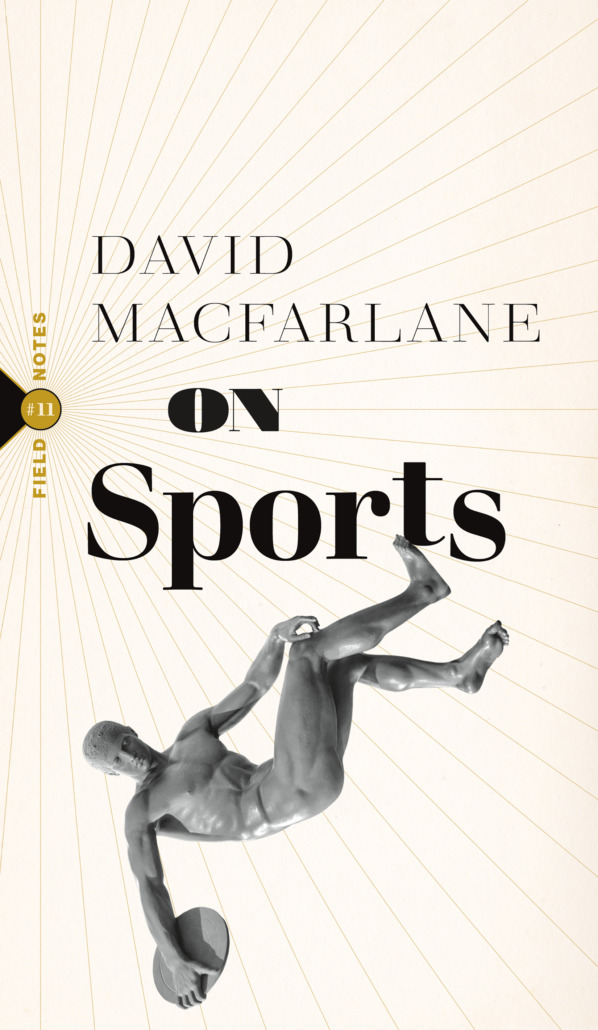
Canadian author and journalist David Macfarlane, who has covered sports in numerous capacities for decades, describes this “essential problem” as “impossible” in his latest book, On Sports, out now through Biblioasis.
“It’s like explaining sculpture with a paint brush, music with a bowling ball,” Macfarlane writes. “Much as we like to think there is a connection between Roger Federer’s miraculous shot and language, there isn’t. Not really. David Foster Wallace can draw our attention to how good Federer is. He observes — very keenly observes — tennis greatness. But he can’t explain it.”
On the court, pitch, ice, track — wherever — there is something about watching greatness unfurl in front of you that becomes transcendent. It’s why sports are as big as they are, how they command so much cultural attention, and the reason they can be parlayed into a $2.3-trillion global economy: sports speak to something deep within us.
“Sacred wouldn’t be too strong a word. It’s not one I’d use in my out-loud voice in the context of, let’s say, a bar, with friends, watching a basketball game,” writes Macfarlane. “But privately, in my personal ledger of what is and isn’t holy, a beautifully executed crossover or alley-oop or fadeaway is on the saintly side of things.”
How does a person make sense of such a visual, experiential force on paper? As the English art critic and novelist John Berger said, “seeing comes before words.” So language is a natural disadvantage. It might require approaching from an odd angle.
“Watching a good swimmer is the visual equivalent of patting a dog’s smooth head — something naturally, wondrously sweet and perfect,” offers artist and author Leanne Shapton in Swimming Studies, a memoir about her experience as a competitive swimmer.
That I can picture, as strange as it may be. The personal as a portal to understanding.
Messy, beautiful, burning communion
When I watch Kawhi Leonard play, there is always vestigial emotion attached to his one season spent with the Toronto Raptors.
Casual would be too strong a word to describe my fandom for basketball and the NBA in 2018. If it were on, I’d watch. Maybe. However, that year, it had become part of my routine: I’d finish up work, ride my bike to Kingsgate Mall to grab a few tall cans, and then roll down to my friend’s place to hang out and watch the game.
Then the Raptors started making a run. By the time Leonard’s iconic buzzer beater finished its four-bounce dance on the rim and dropped through the hoop to take Game 7 of their second-round playoff series over the Philadelphia 76ers, I was hooked.
The moment the Raptors won the championship, my friend’s small two-bedroom apartment became a blur of bodies in motion, approaching ecstasy. Dancing, jumping into one another’s arms, attempting keg stands for as long as one’s person could hold. I had never experienced a feeling quite like it.
That, to me, is the absolute apex of what sports can offer: messy, beautiful, burning communion.
And that’s the hook. If you are a person concerned with the best parts of being human, those feelings and that sense of community are hard to put a dollar amount on.
That’s exactly why the business of sport is so profitable.
What sells better than late capitalism? Earnest fandom
“Pro sports sell themselves (very successfully) by a drum-beating, trumpet-sounding, string-soaring impersonation of something with a greater motivation than money,” writes Macfarlane.
“In all sports, hometown pride and national aspiration are easier sells than late capitalism and corporate greed. Dedication has a nicer ring than quarterly earnings. Courage. Discipline. Endurance. Noble words are preferred.”
That facade was obvious before, but it was easier to overlook. On Sports wrestles with that once uneasy, now-odious and inescapable dynamic. Commodification that has become a dogpile of extraction, taking the form of “online gambling, broadcast catchments, pay-walled streaming, dynamic pricing, targeted merchandizing, focused advertising, purchased media and (as night follows day) ever-higher ticket and subscription prices,” and much more.
As Macfarlane puts it, “when considering the subject of sports: Athleticism is what redeems them. And money is what fucks them up.”
Two days before Leonard’s game-winning sequence against the Rockets, journalist Pablo Torre released another entry in his investigation into the deal that brought Leonard from the Raptors to the Clippers.
The saga alleges that billionaire Clippers owner Steve Ballmer and various associates, through dubious, bizarre and potentially illegal means, sought to circumvent the NBA’s salary cap by offering Leonard a $28-million “no-show” endorsement deal.
While you can’t put an asterisk beside Leonard’s athletic achievements, the stench of this scandal, one fuelled by a level of greed completely unnecessary for someone already worth hundreds of millions of dollars, can’t be ignored. It is now as much a part of his legacy as his championship rings.
It would be naive to say that this is somehow a new phenomenon — people have been dickying with the rules of sport, or outright cheating at them for financial gain, for as long as there have been sports. But right now, it’s approaching a society-wide debasement.
Online gambling has financialized every aspect of professional competition with expected consequences. There are the NBA’s own dire gambling scandals that involve alleged insider betting and a series of allegedly rigged poker games.
In the Ultimate Fighting Championship, there have been multiple instances of pre-fight betting lines swinging so wildly that regulators have sounded the alarm, indicating a fix might be in.
That came to a dramatic head last November, when now-former UFC fighter Isaac Dulgarian appeared to forget basic defensive techniques and was easily submitted by his opponent in an upset.
It was so egregious that major sportsbooks Caesars and William Hill issued refunds to gamblers, and analyst Michael Chiesa called Dulgarian’s eyebrow-raising effort “an F-minus performance” and “absolute trash” during the event’s broadcast, stopping just short of saying what everyone was thinking.
For many, sports betting makes the sports themselves more exciting. You, the viewer, now have a personal stake in the outcome. And who doesn’t like the prospect of winning some dough?
But the results for most are grim. According to a University of California study, 96 per cent of gamblers lose money on their online bets — and there are a lot of gamblers out there.
A Siena College Research Institute poll, found that “[22 per cent] of Americans, including 48 per cent of men 18 to 49 years of age, have an account with at least one of the online sportsbooks.”
Results from a Fairleigh Dickinson University poll showed that online betting has become especially dangerous for young men, with 10 per cent aged 18 to 30 in the United States having behaviours that indicate a serious gambling problem, as opposed to three per cent of the overall population.
And for athletes like Dulgarian, who languish financially in the UFC — where base pay sits around a meagre $12,000 to show up and another $12,000 if you win your fight, despite the UFC generating billions of dollars per year — it’s not surprising that they might, allegedly, consider this a reasonable means to augment their paltry income.
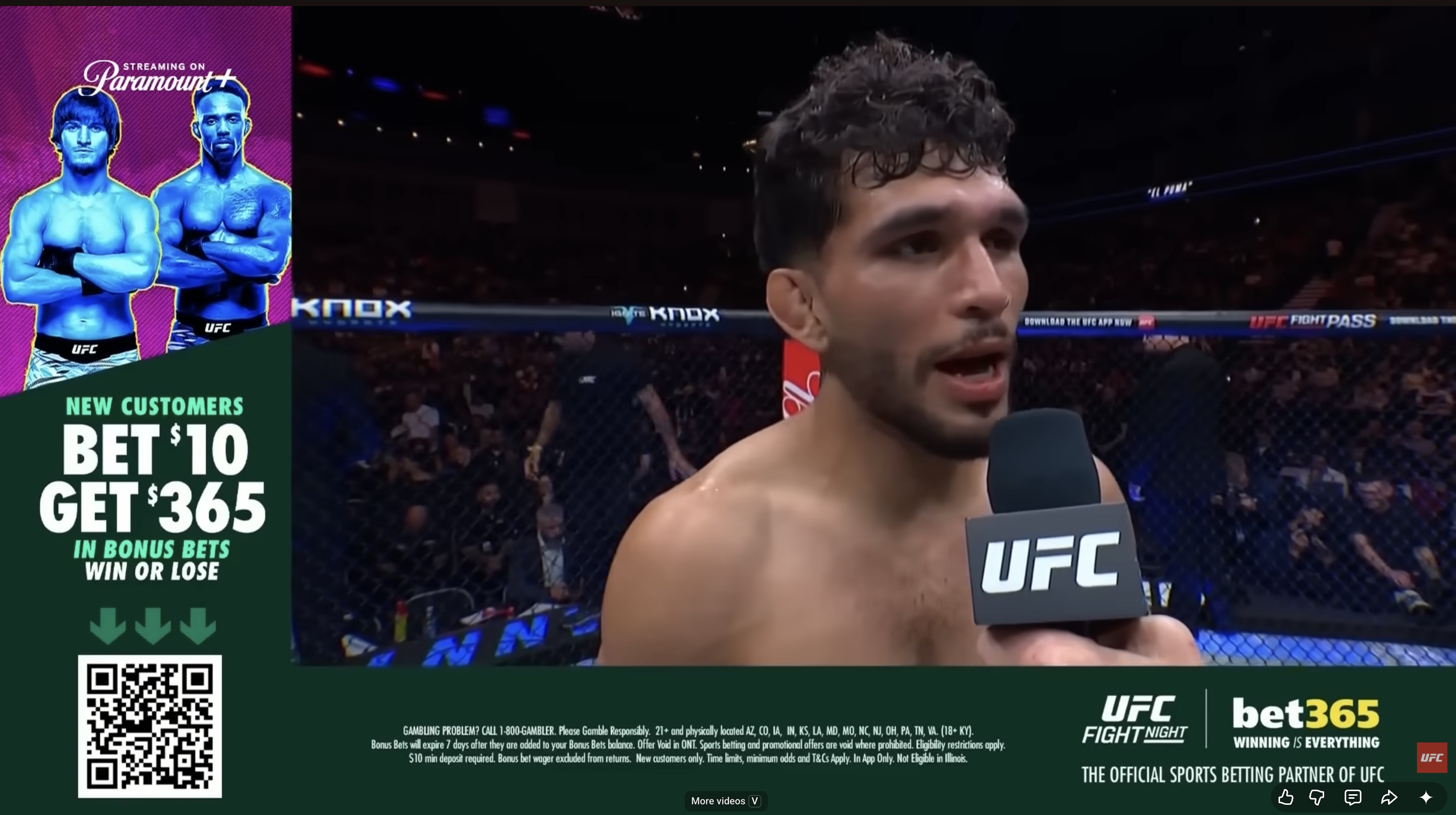
On March 21, rising UFC featherweight prospect Danny Silva, who had just delivered a brutal knockout in London, England’s O2 Arena, told the 18,000 fans in attendance during his post-fight interview, “I’m broke,” and begged for a bonus.
All around Silva, pasted to the stanchions and the canvas of the Octagon, were logos for Stake and Polymarket, an online casino and a “prediction market” respectively. On Silva’s mandatory uniform was Crypto.com’s logo.
During his interview, an ad for Bet365, “the official sports betting partner of the UFC,” took over the screen.
In the middle of it all was Silva, surrounded by mirages of financial freedom as he pleaded for his own.
Gambling has flooded the zone
You can no longer watch sports without being exposed to sports betting or speculative schemes like cryptocurrency.
Inevitably, this onslaught changes our relationship to sports. Liz Franczak, co-host of the politics and true crime podcast TrueAnon, spoke about the extreme financialization of sports viewership in an interview with Nick Catucci for Embedded, his newsletter.
“The [NBA] spent decades turning the game into data — tracking every moment, modelling every possession — and for a long time there was just this surplus of data with nowhere to go. Gambling gets legalized and suddenly, boom, there’s a market for all this information,” Franczak told Catucci.
“Once that happens, you don’t really watch basketball anymore. You watch micro-events resolve. The game becomes the underlying asset, and your attention shifts to the derivative: props, odds, whether the world is conforming to the model,” she continued.
“It’s subtle, but it changes spectatorship in a way that’s hard to undo. But this is all part of a much larger epistemic shift and sports betting (along with Polymarket, Kalshi, etc.) just makes this shift legible — how we’re increasingly trained to experience the world through models and odds and expected outcomes. I think it alters subjectivity in ways we’re barely naming yet.”
So-called “prediction market” platforms like Polymarket and Kalshi are the worst manifestation of that worldview: They allow you to bet on anything.
In February, you could open Kalshi on your phone and place a bet on whether NBA superstar Giannis Antetokounmpo would get traded from the Milwaukee Bucks before the 2026 trade deadline. He wouldn’t, but after the deadline and fuelling those rumours, he did curiously announce an ownership stake in Kalshi.
On the cryptocurrency-based betting platform Polymarket, you can bet against bets on the second coming of Jesus Christ.
Israeli military officials were allegedly using classified information to place Polymarket bets on when Israel would bomb Iran, per NPR.
That article also notes that, “In January, a Polymarket trader turned a $32,000 bet into a $400,000 payday after correctly guessing that the U.S. would topple Venezuelan leader Nicolás Maduro before the operation was made public.”
Once regulators opened the door to online sports betting, platforms like Polymarket and Kalshi took it off its hinges. Greed and desperation have now flooded the professional sports experience.
If you plug your nose, hold your breath and wade through the muck, you might find a ball game on in there.
Amidst the noise, a divine frequency
Throughout On Sports, Macfarlane downplays his understanding of the subject at hand. He writes, “I don’t know much about sports — not in the way that people who know about sports know about sports.”
And while he may call his relationship with them “inconsistent,” On Sports is a showcase of his breezy control over the nuts and bolts of professional and amateur athletics, their cultural import as well as the rhythms (and seasons) of sports writing.
The book makes its most memorable connections when Macfarlane, with his often beautiful prose, tunes into that deeper emotional frequency — the personal, communal, spiritual and profound — that sports are uniquely capable of hitting.
A young Macfarlane drinks 7Up out of the Grey Cup, which was kept for safekeeping at the back of his friends’ parents’ china cabinet in suburban Hamilton, Ont., during the offseason.
“In 1963, nobody yet saw the spirit of monetization lurking, like a tree sprite, in its soul. The Grey Cup would have no purpose for the next few months. It would be safe across the street in my friend’s house.”
An assignment for a magazine story required Macfarlane to spend “an entire night in Maple Leaf Gardens watching the ice go in.” That might seem to live in the same experiential category as watching paint dry, but no.
“I was struck by the unhurried simplicity of the process. The method wasn’t so different from the method my uncle used to flood the driveway for the games of shinny that were (emphatic pauses required) just (pause) so (pause) much (pause) fun when we visited our cousins in Dundas on a Saturday night. In winter.”
While in Florida to profile a young tennis player, Macfarlane worried that there was no story there. His subject was talented and polite as could be, but she just didn’t have much to say, as teenagers often don’t.
In a last-ditch effort to pull something out of nothing, he decided to sit in on her drill sessions. There, he was struck by an observation that has stayed with him since, and he “never thought of athletes the same way again.”
“It’s a Tuesday afternoon, and a 15-year-old who has recently turned pro is hitting forehands and backhands, cross-court and down the line. This is her fifth hour on the court.”
He wrote a single word in his notepad: Work. “All upper case. A Bic ballpoint as I recall.”
That might seem banal or obvious, but that’s the point. What speaks to us about sports is always on the surface, glowing. Once you see the light, you can’t unsee it.
“All it takes to be a sports fan is the capacity to be amazed at how good a human can be at something, and at how much work — how much relentless, lonely, determined, exhausting, tedious, crazy work — it takes to get that good,” writes Macfarlane.
A lifetime of dedication was required before Kawhi Leonard could lead Toronto to a championship. The valuation of that divine effort ultimately led to a scandalous $28-million signing bonus.
The combined salary of the entire 2025 WNBA championship-winning Las Vegas Aces team, on the other hand, was $1,530,746.
WNBA players toiled and entertained audiences for generations before the WNBPA reached its historic, long-deserved Collective Bargaining Agreement last month.
We know that money devalues the spirit of sport. Some athletes earn millions while generating billions for suits. Most get nowhere near. To much of the public, these exceptional humans are mere components, and the sports they play are just a series of micro-events they can lose their rent money on.
That space between awe and extraction is where the business of sport thrives. We’ve arrived at a point where it’s almost impossible to tell the two apart.
To do so also requires work. It demands patience, observation and perhaps most importantly, a willingness to be amazed. ![[Tyee]](/design-article.thetyee.ca/ui/img/yellowblob.png)










Tyee Commenting Guidelines
Please note that email notifications for replies are not currently working due to a software issue which may be resolved in a future update.
Comments that violate guidelines risk being deleted, and violations may result in a temporary or permanent user ban. Maintain the spirit of good conversation to stay in the discussion and be patient with moderators. Comments are reviewed regularly but not in real time.
Do:
Do not: