



 SHARE:
[Editor’s note: In collaboration with CreativeMornings/Vancouver, The Tyee launched its Creative Forces series last fall to showcase the people in our region who are using their creativity as a force for good.
We posted a call for nominations inviting readers to nominate a ‘Creative Force’ to be profiled in The Tyee. Thanks to all who have sent submissions from across B.C. Nominations are still open and editors review them on a rolling basis.]
Fifteen years ago, award-winning B.C. writer Jenn Farrell felt stuck.
As her 40th birthday loomed, Farrell was writing the followup to her critically acclaimed short story collections Sugar Bush & Other Stories and The Devil You Know. But she hated it.
“My daughter said, ‘Mom, it’s weird that when I leave in the morning, you’re in your pyjamas. And when I come home in the afternoon, you’re still in your pyjamas.’
“And I was like, ‘Oh yeah, that’s clinical depression,’” Farrell said with a laugh.
“Kind of snuck up on me there.”
Her friends suggested Farrell pursue a new career based on what brought her joy: group dance fitness classes. Why not become a personal trainer?
“I was like, ‘Well, that’s the stupidest idea I’ve ever heard,’” she recalled. “Four days later, I had signed up for a course in group fitness instruction and personal training, and did a complete 180. I was just like, ‘I’m all in, baby!’”
Over the next nine years Farrell worked as a trainer and group fitness instructor in gyms around Metro Vancouver, from community centres to corporate gyms to the YWCA. She even had a three year-stint as a competitive body builder, making it all the way to the Canadian nationals.
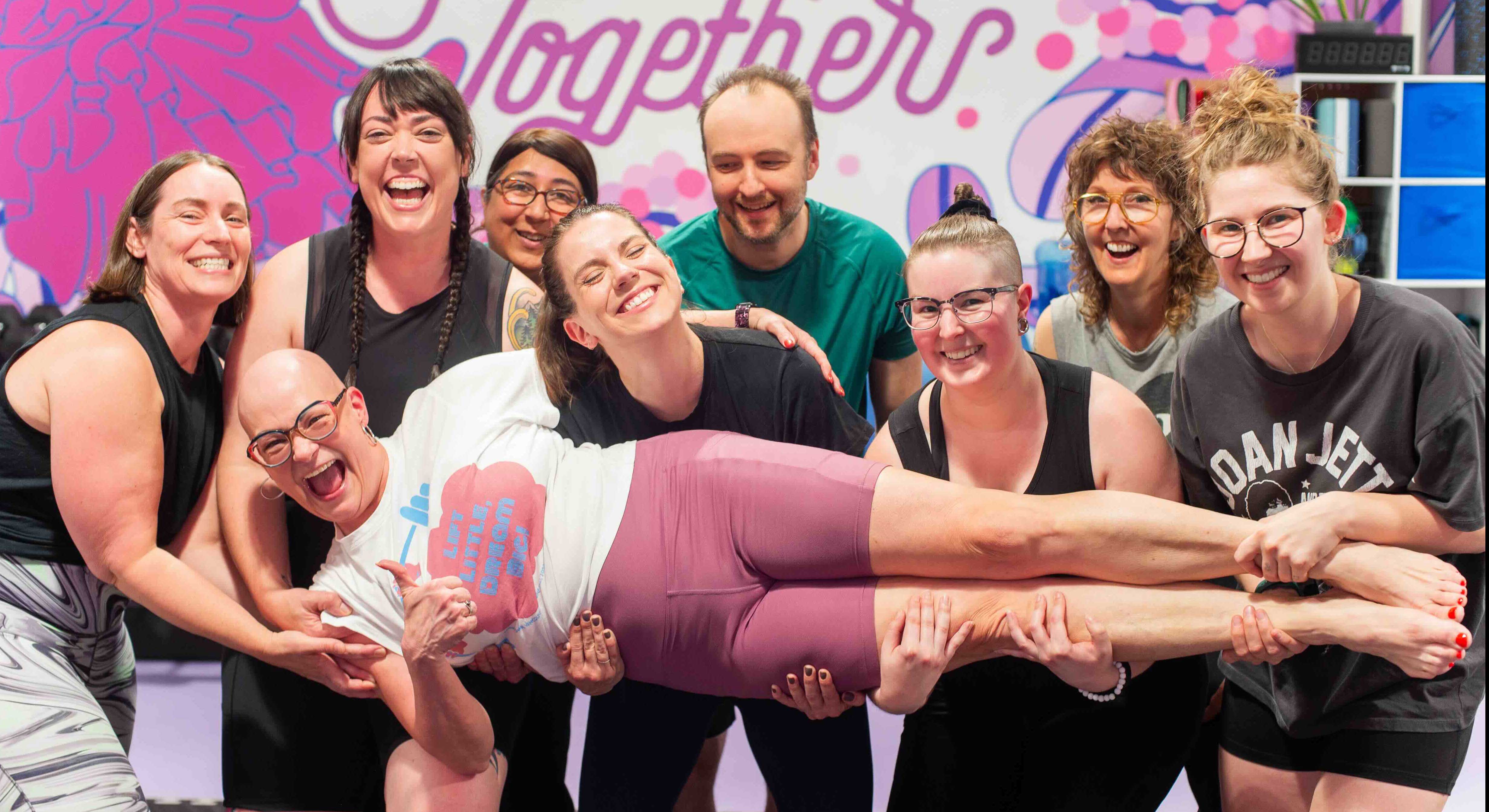
Then, in 2020, the owner of a Chinatown gym could not afford to keep it open during the COVID-19 shutdown. Farrell, who worked out of the space, bought the 1,000-square-foot gym in the Sun Wah building basement and started Witness The Fitness, a women- and LGBTQ2S(IA)+-centred gym that opened in the summer of 2020. She started with about 20 clients.
“I was like, ‘This is going to be a train wreck. I’m not going to make any money for at least a year, probably two, and that’s okay,’” she said. “It’s that weird, misplaced sense of self-confidence that has kept this thing going through those early years. And now we’re almost successful.”
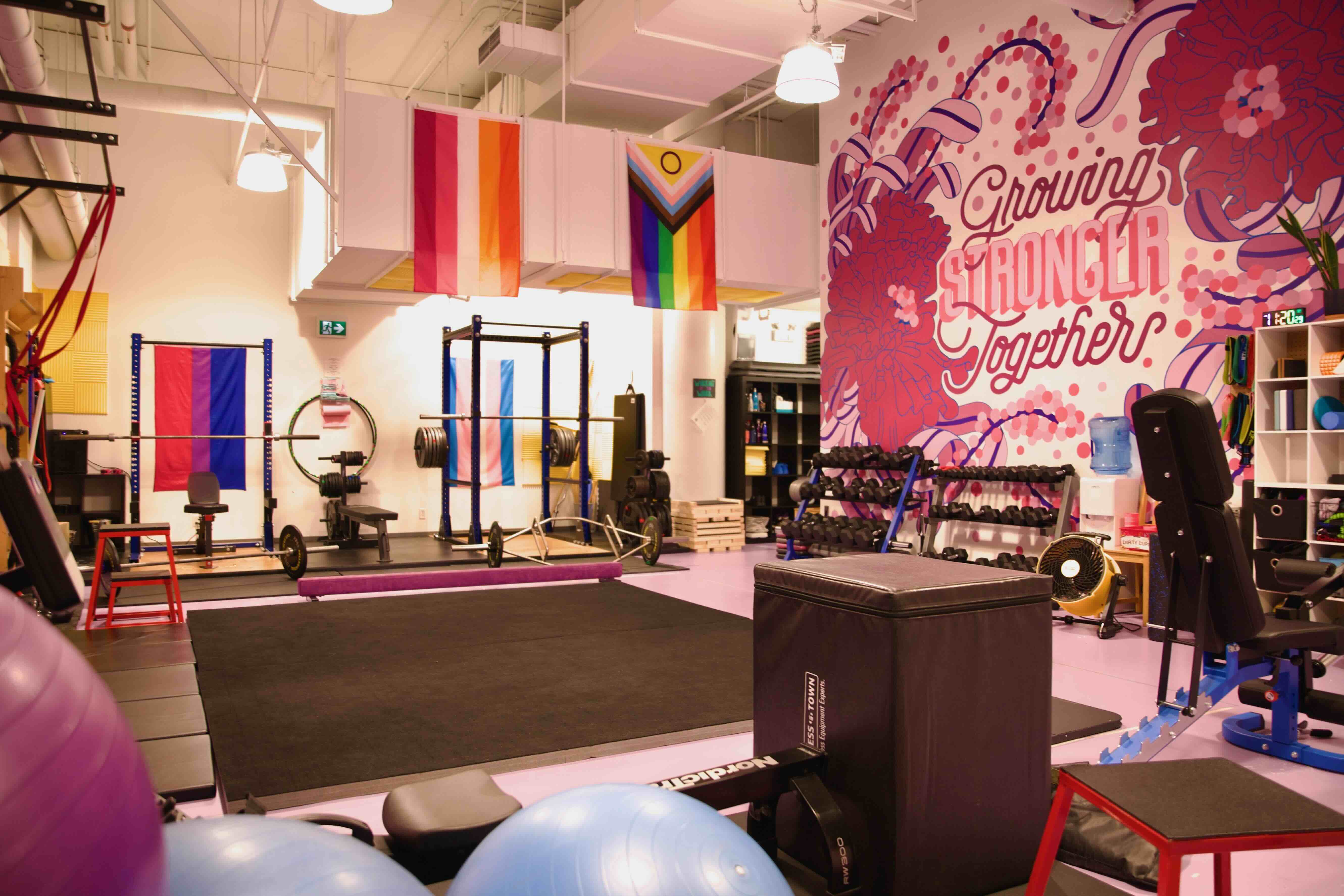
Today, just a month past Farrell’s 55th birthday, being “almost successful” means Witness The Fitness has five paid staff, and another 600-square-foot space for trans and non-binary boxing classes on Sun Wah’s fourth floor. All the bills are paid, and Farrell hasn’t covered expenses with her own money since 2024. And her membership has grown from the dozens to the hundreds.
The Tyee met with Farrell at Witness The Fitness to talk about the varying definitions of fitness, why women and LGBTQ2S+ people need their own gyms and the extensive library of fitness DVDs and VHS tapes that inspired Farrell’s fitness journey.
This interview has been edited and condensed for length and clarity.
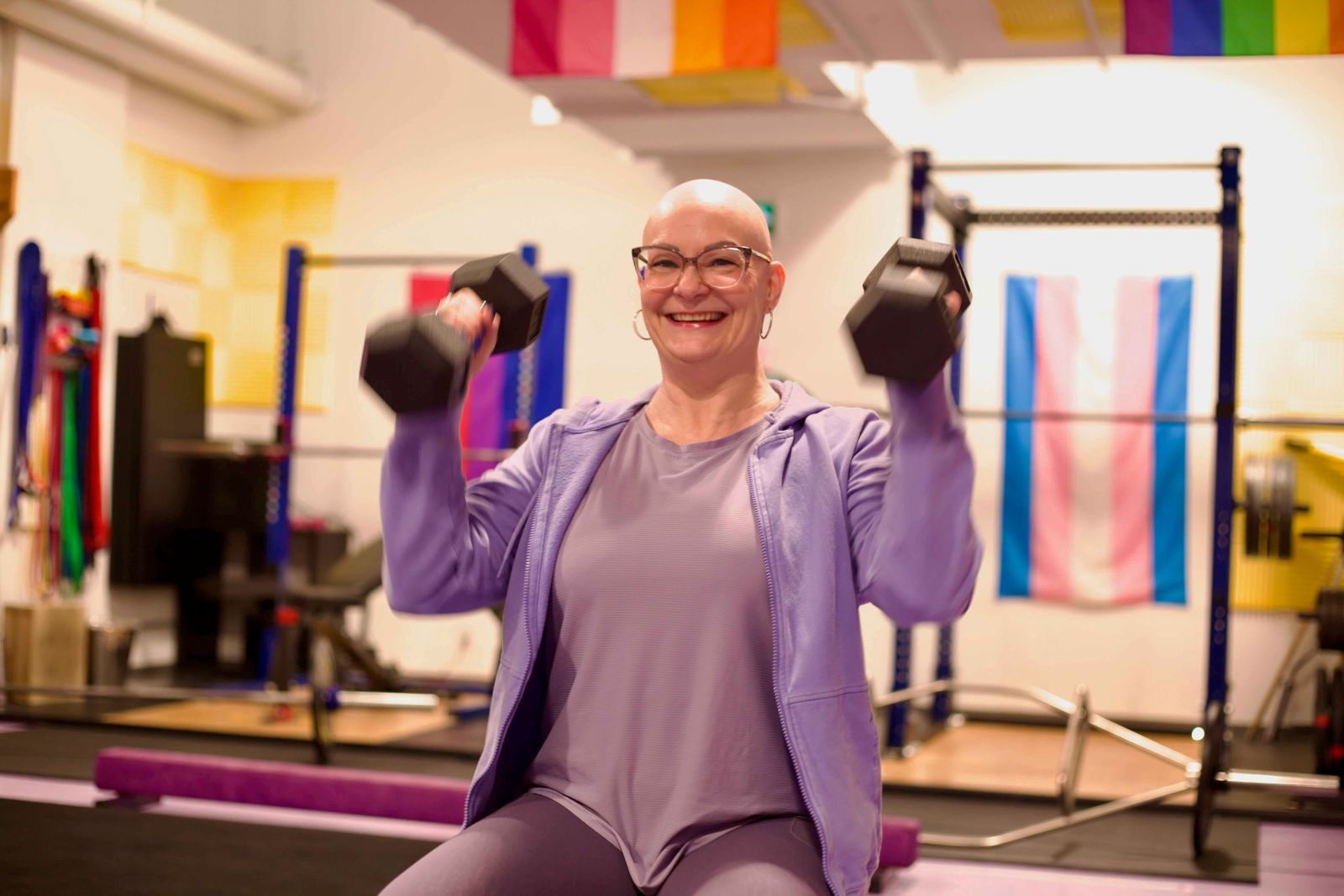
The Tyee: What is your personal definition of physical fitness?
Jenn Farrell: The sort of professional definition of that is your fullest capacity to perform the daily activities of life, whatever that is for you. For me personally, that’s a nice generic definition that also is ableist and ignores the social determinants of health.
So I think physical fitness is whatever helps you feel present and good in your body at any given moment in time. Sometimes that’s exercising. Sometimes that’s lying on the floor. We all need to lie on the floor sometimes.
Definitely. Would you consider yourself a fit person?
Not especially, but that could just be me setting the bar impossibly high for myself all the time. I’ve always been a dabbler, I’ve always enjoyed group fitness classes. I had a stack of VHS tapes or DVDs that I would do at home, because I just found it really joyful. And I would cut out the workouts from a fitness magazine, take them to the community centre and follow along.
But I’d certainly never thought of it as a career, and I’d never done anything formal with it.
I wasn’t an athlete in high school. I was smoking hash in the bleachers and skipping gym class. I was not like, ‘Oh, I can’t wait to go up for the track and field team.’ I hated those people, and they hated me.
Was that professional definition of fitness your personal definition when you were growing up? Or were you always like, ‘I don't buy this view of fitness?’
When I was in high school in the ‘80’s, fitness as a way to make your bodies smaller was the reason women did virtually anything. That was just the air that we breathed. It was hard to conceive of anything other than that.
I had a really interesting relationship with my body because I’m adopted. But also my adoptive mother was a fat woman and lived her whole life on and off diets. She gained and lost 100 pounds multiple times in my life. That informed me in a way that has been very helpful now, because I’ve mostly lived my life in a relatively thin, able body.
Even though I had tons of internalized fatphobia growing up, I knew that the world was shitty to fat people. But I wasn’t able to articulate why. Don’t get me wrong, I was also shitty to fat women. But I knew on some level that there was something on the other side of that. I just wasn’t smart enough to figure it out yet.
When did that change for you?
When I started doing this work. I had a number of personal training clients who asked for things that were not in line with what I had been taught to do. Clients who were recovering from eating disorders or were fat activists, were like, ‘I don’t want to be weighed, measured or photographed in any of those before and after, check-your-progress kind of ways.’
I thought, ‘If it makes some people feel bad, there’s a pretty good chance it makes everybody feel bad or at least weird. And what am I doing with this information? What am I telling people by collecting this information?’ That was the beginning of me realizing that maybe for some people those are valuable tools, but I could just completely discard them.
What if we didn’t make it about losing weight or changing what you look like? What if we made it about the 10,000 other more interesting things that this process can do? I owe it all to my fat friends for calling me on my shit.
What’s the story behind the name Witness The Fitness?
I stole it. My friend Mike hosted “cardio-ke,” where you ride an exercise bike on stage while doing your karaoke number. The person who burned the most calories or watts won a free pizza. In his promotional material, he said something like, ‘witness the fitness.’ I never forgot that.
I messaged him: ‘Hey, I know this is yours, but can I take it?’ And he was like, 'I barely remember this. Feel free.’ And then once I realized that Witness The Fitness’s acronym was WTF, I was like, ‘Oh my god, this is working out really well.’
I did a business course for fitness professionals, and they tried really hard to talk me out of that name. And I was like, ‘Pffft, absolutely not.’ They were like, ‘It’s just kind of weird.’ And I was like, ‘Yeah! It is kind of weird.’
Vancouver has a lot of gyms, a lot of yoga and Pilates studios, etc. How is Witness The Fitness different?
One of the slogans we’ve given ourselves is, ‘The gym for people who hate the gym.’ I’ve tried really hard to make a gym that people don’t dread coming to, aesthetically and in terms of what happens under our roof. We have a way more relaxed approach to fitness.
We want people to come as they are, and we’ll meet you there, even if you’ve never done any exercise in your life. We won’t make you feel weird about it; we won’t make you do things you don’t feel comfortable or safe doing.
And we’re super gay: well over 75 per cent of our clients identify as queer. The Pride and trans flags [make it so that] when people walk in, it’s like, ‘Social justice warriors are being woke in here. And if you don’t like that, you probably shouldn’t work out here.’ So it’s a very clear communication when you walk in the door that this is for us, not for people who want to violate your human rights.
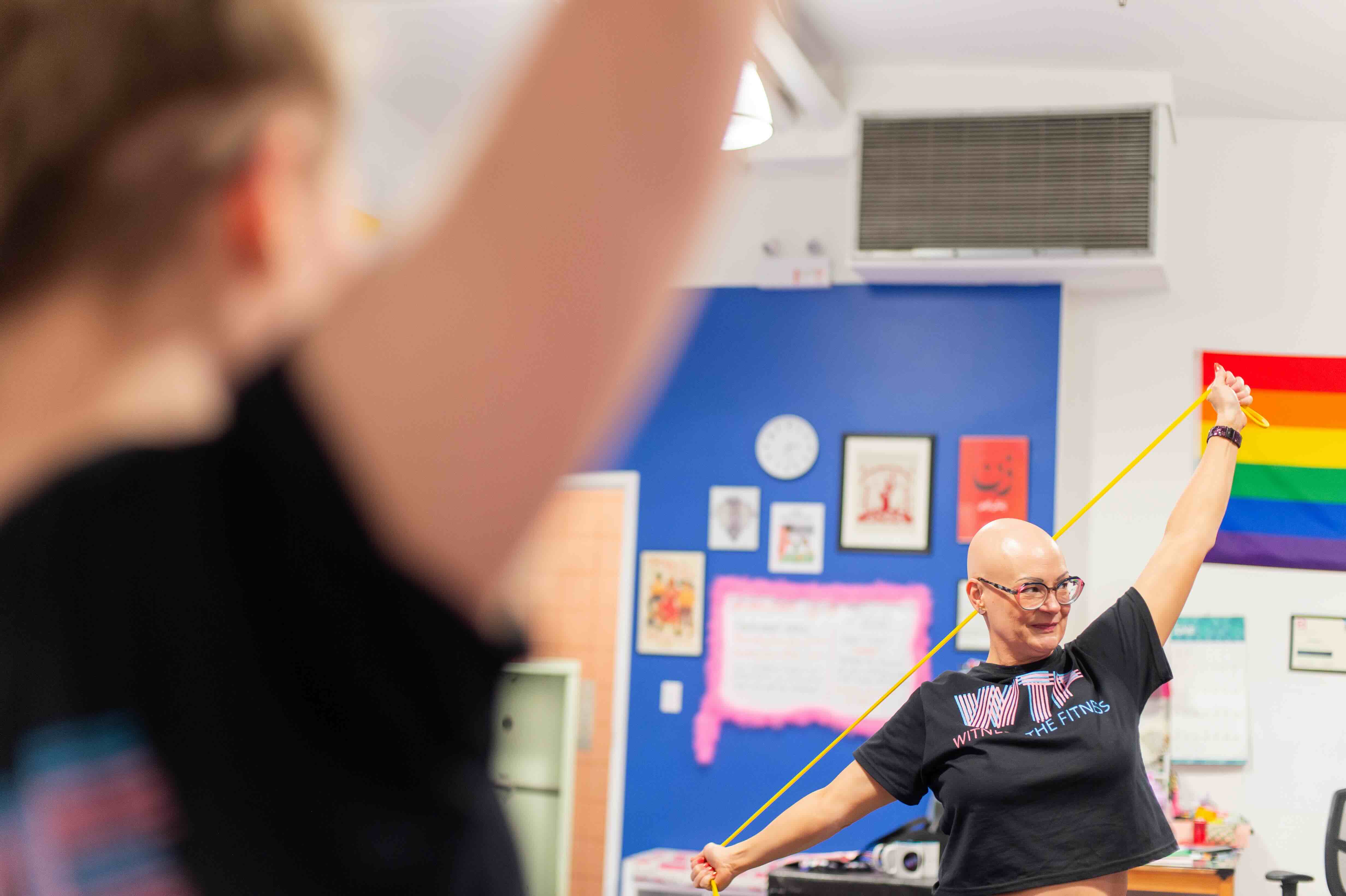
Vancouver is often seen as this really progressive place for queer people and women. Why would these communities need their own space to work out in?
While we are a progressive city, that doesn’t necessarily translate over to the fitness spaces. The design of fitness spaces, even by people with very good intentions, is generally a very straight and masculine environment. There’s nothing wrong with that. It’s just that there’s a lot more room for other ways to do this work.
And I don’t think we can discount the fact that a lot of queer-identified people, especially, are made vulnerable by body policing. Whether that’s fitness-related or just existence-related. [It's important] to have femme and queer-focused spaces that avoid that. Particularly for cis women, we don’t have mirrors, scales, before and after photos. You’ll never find a weight loss challenge here.
But our queer, trans and non-binary trainers bring a lot of knowledge about helping people who are transitioning, for example, train in such a way that reinforces their gender identity. If you’re working with people who don’t have that awareness, they might be inadvertently creating more body dysmorphia.
What are the challenges facing small gym owners in Vancouver?
Any business in Vancouver is incredibly expensive to run. Rent is your single biggest expense, then your staffing costs and then equipment. It’s been like, ‘We can buy x number of dumbbells this month. Let’s make sure we actually have enough and all our bills are paid before we do that.’
The other part is finding new people: we are a 90 per cent referral-based business. That’s been great, but at some point you close that loop. In terms of finding our customers, it’s already happening with our different classes and workshops.
Chanel teaches a workshop called Queer Weightlifting 101, which is based off of Women’s Weightlifting 101, an introduction to barbell-based strength training I’ve taught since 2018. But Chanel is non-binary and brings their own unique perspective to things. That course has not only fully sold out, it oversold. So we’ve run two workshops back to back.
One day we’ll be above ground, and one day we’ll have a big old facility. But right now, we just want to pack this room with people.
Is your dream to be above ground and have a bigger space?
Shelby and I do a class together periodically called Retro Cardio Dance Party, off-site because there’s not enough space. Now we teach it once a month at Container Brewing, and your ticket includes a beer. It's delightful. My dream would be to be able to have a facility that has all of this in it and has a separate group fitness room, because I would love to be able to have a few more group fitness classes.
All movement is joyful to me. Anything that makes you feel good in your body is great. But one of the easiest ways to feel good for me is to do some kind of dance-based or old-school, aerobic-style cardio.
You mentioned having dance fitness DVDs and VHSs at one time. Were any of them Jane Fonda?
I had a ton of stuff. I had the original Crunch Fitness videos. Those were great half-hour workouts. Remember Tae Bo?
Billy Blanks?
Billy Blanks. I had the Chalene Johnson workout Turbo Jam. I had some Jane Fonda. I had —
Buns of Steel?
Buns of Steel, Thighs of Steel, Arms of Steel. I had The Firm with Janet Jones Gretzky in the white leotard. Oh, my God, it’s all coming back to me. My knowledge of group fitness instructors is deep and arcane, so I’m gonna stop talking now.
So what’s next?
I’m in the process of getting a menopause coaching certification. A lot of people have been reaching out to me around health and fitness-related information for people in that life transition. And menopause is so hot right now.
I think my next fitness course is probably going to be Menopause 101, a six- or eight-week course where I sit down with a group of women in midlife and hash out what lifestyle changes people can make to navigate the shit storm. Again, without all of the weird body judgment stuff.
A lot of menopause marketing I see is like, ‘You need to look like you did 15 years ago.’ It’s disturbing how we frame our current self as never the real self.
‘Here we are with the bodies we have now. What are we doing today?’ is much needed right now. ![[Tyee]](/design-article.thetyee.ca/ui/img/yellowblob.png)
Read more: Health, Gender + Sexuality, Sports, Media




Tyee Commenting Guidelines
Please note that email notifications for replies are not currently working due to a software issue which may be resolved in a future update.
Comments that violate guidelines risk being deleted, and violations may result in a temporary or permanent user ban. Maintain the spirit of good conversation to stay in the discussion and be patient with moderators. Comments are reviewed regularly but not in real time.
Do:
Do not: