

 SHARE:
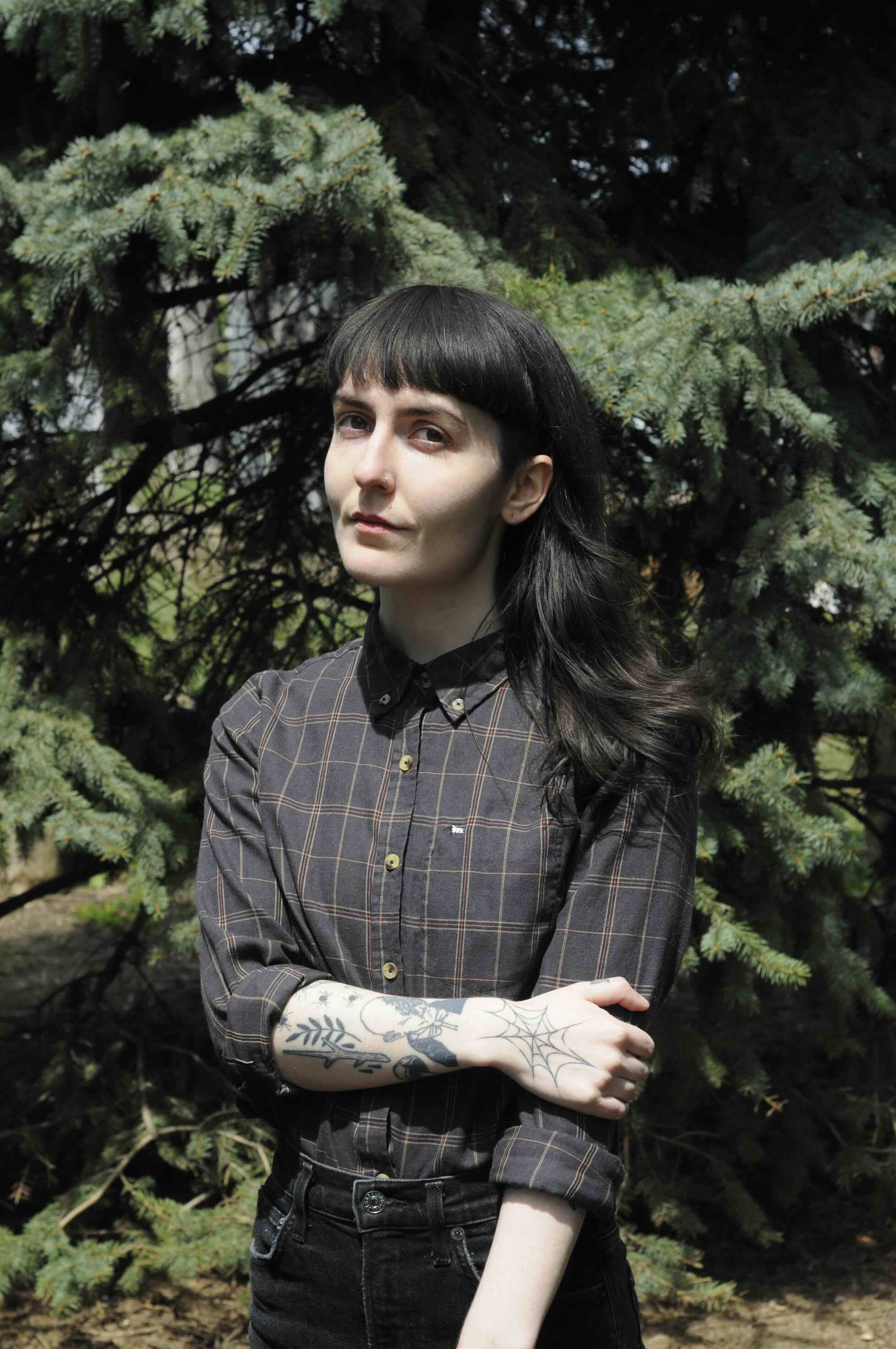
Sid Sharp’s work is an utter delight.
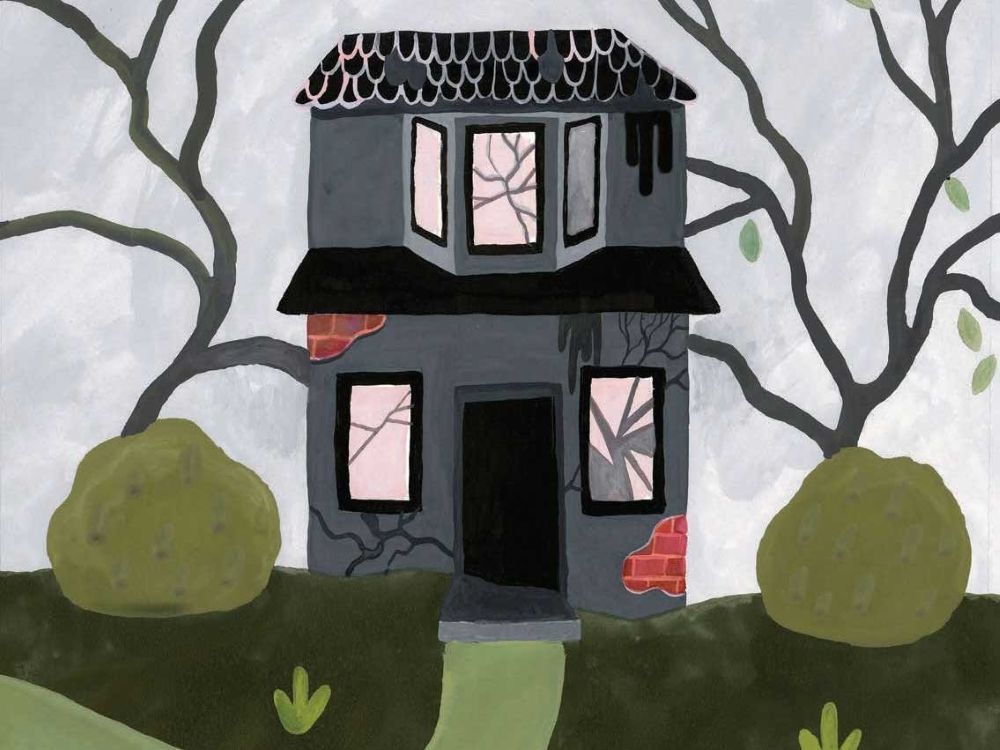
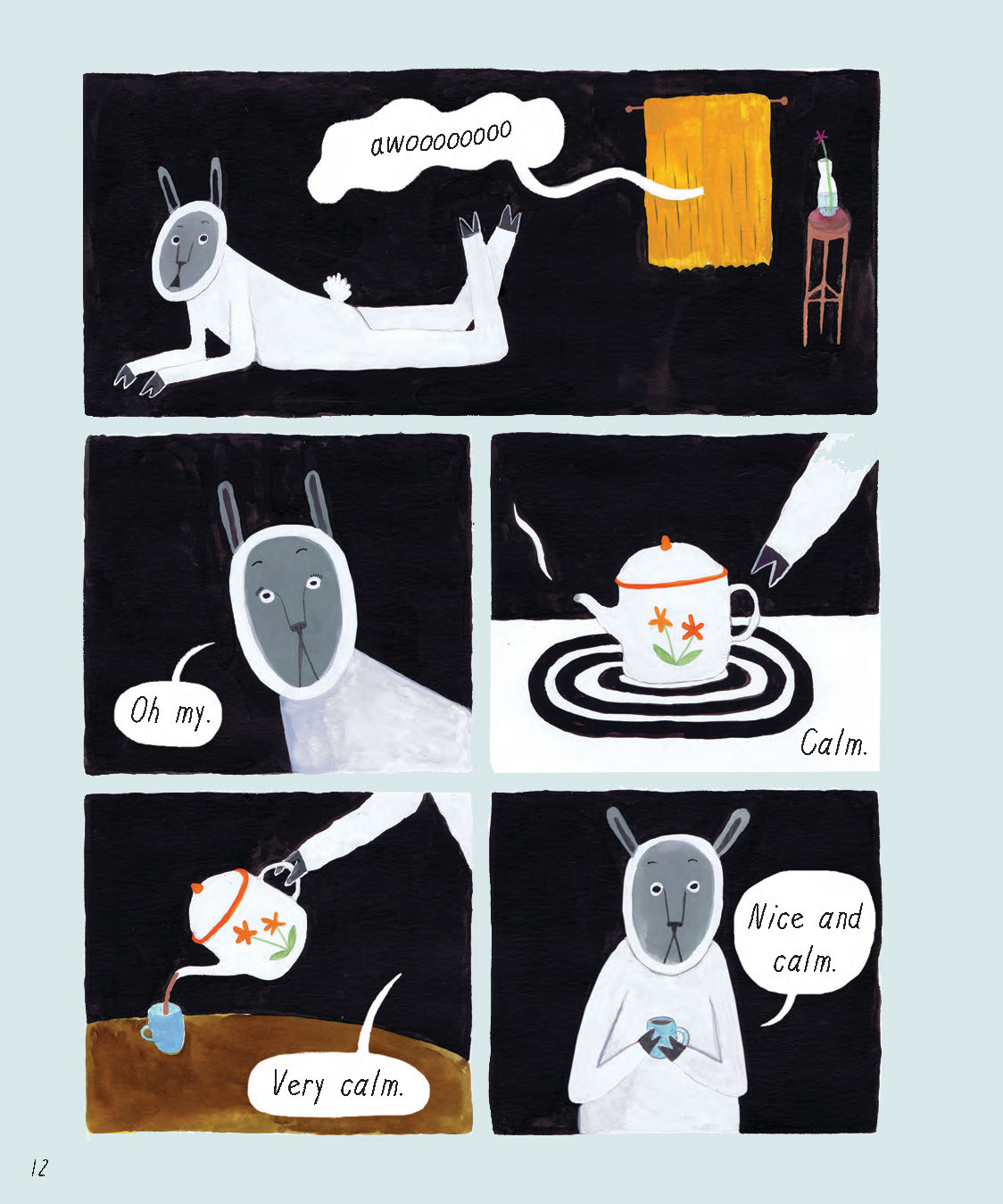
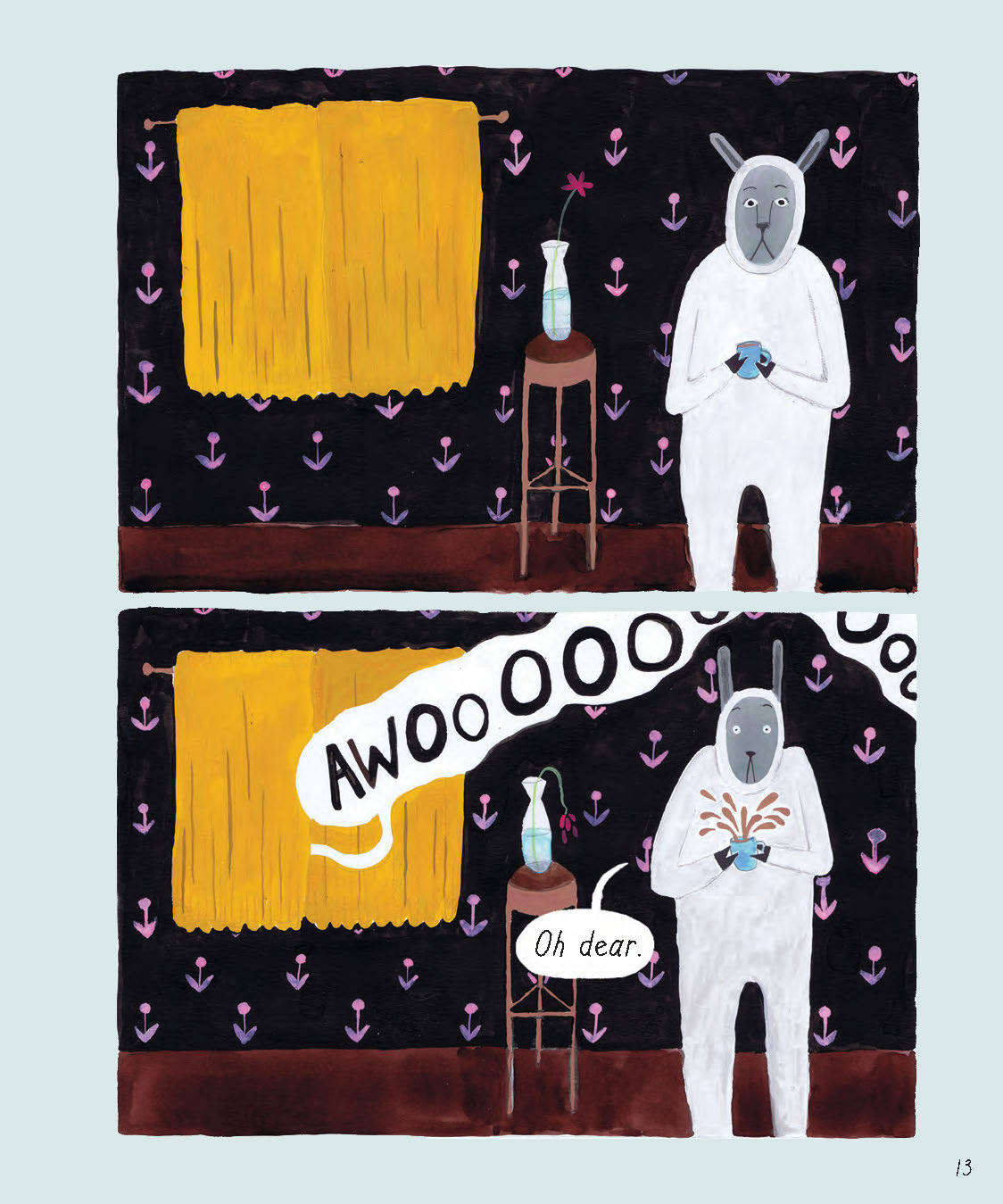
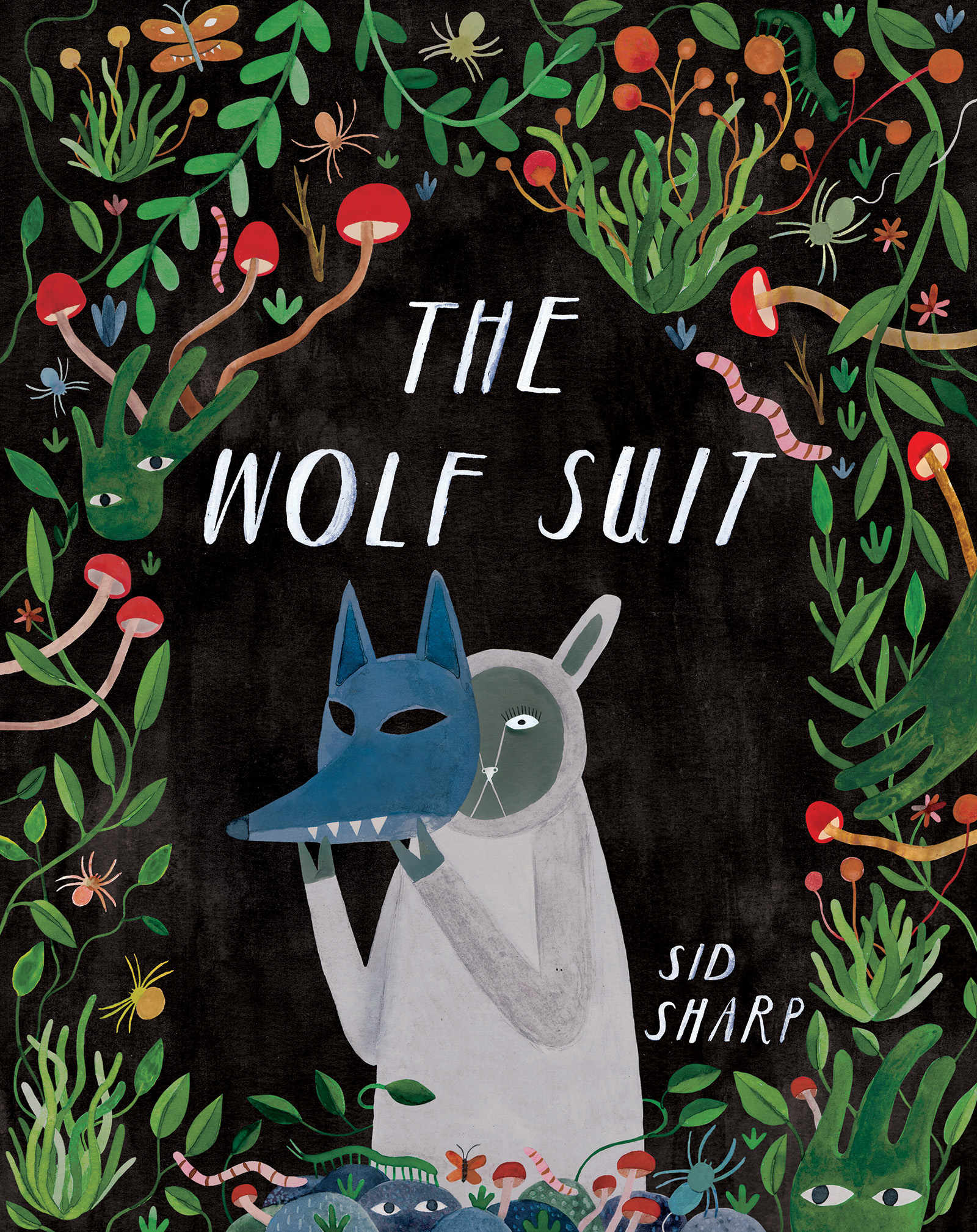
The Toronto author and illustrator’s debut young-adult graphic novel, The Wolf Suit, is the story of an apprehensive, crafty sheep who makes a plan, and then a costume, to walk in the forest disguised as a sheep in wolf’s clothing. Embraced by the wolves they encounter, the sheep tries to keep their true identity a secret. Eventually, the truth comes out, and when it does, we learn that every other wolf is in disguise as well. The sheep is not alone.
Published by Annick Press in 2022, The Wolf Suit was named a top book of the year by the New York Public Library, American Booksellers Association and School Library Journal, as well as a Junior Library Guild Gold Standard Selection.
My kids and I adored it too. The Wolf Suit is hilarious and creepy, and its nonconformist message is clearly being practiced by the artist: Sharp’s watercolours are visually lush but a little off-putting. One is reminded of the work of Maurice Sendak or Jon Klassen — not in its content, necessarily, but its willingness to squick the reader out.
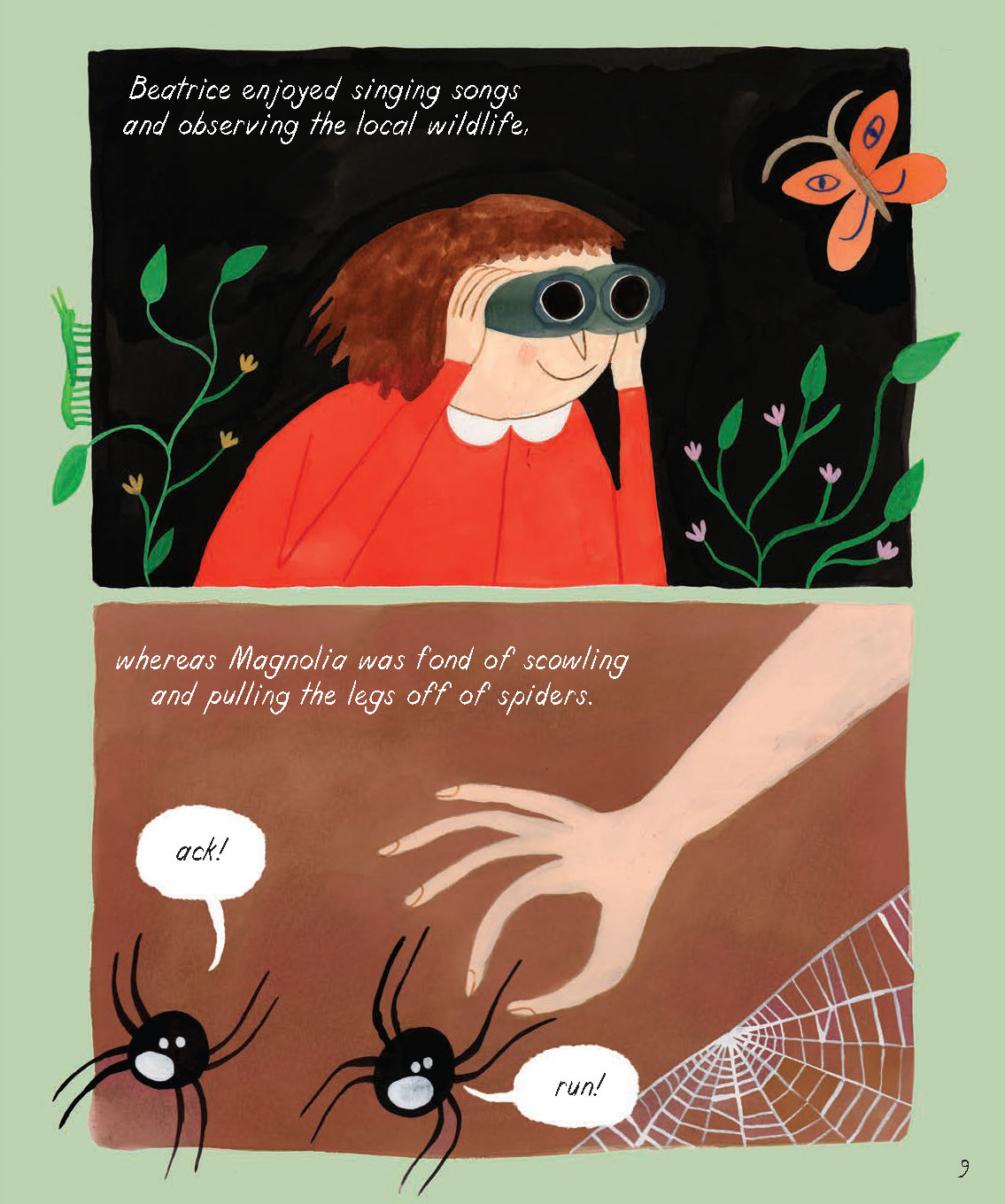
Sharp’s follow-up, Bog Myrtle, another Junior Library Guild Gold Standard Selection, was released by Annick Press last fall. It might be even better. Loosely inspired by the Hans Christian Andersen fable, “The Girl Who Trod on the Loaf,” Bog Myrtle is the story of two sisters who encounter a spidery witch in the woods.
The witch is all about sustainability. She’s scary if you’re rude to her, but otherwise a pretty thoughtful monster.
Bog Myrtle shares some DNA with folk and fairy tales, but honestly, there’s only one comparable: Sharp’s prior book. The stories even seem to overlap. One wonders if both graphic novels are set in the same otherworldly woods, at the same time.
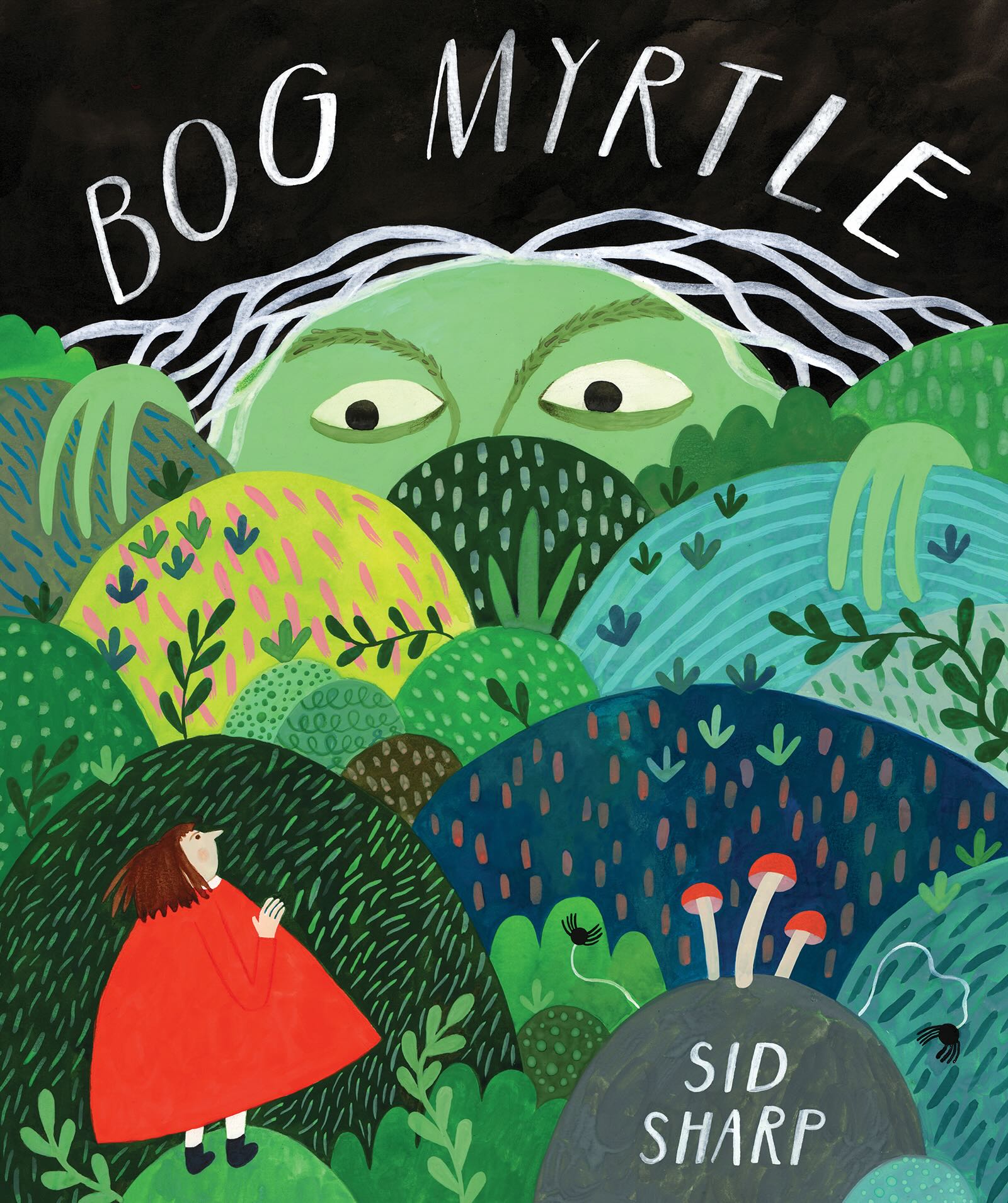
Keen to confirm my suspicions, and seeking a reason to gush about Sharp in The Tyee, I recently reached out to chat about fairy tales, forests and the art of scaring children. In the time since we talked, Sharp’s Bog Myrtle was nominated for the 2025 Governor General’s Literary Awards in the “Young People’s Literature — Illustrated Books” category.
This interview has been edited for length and clarity.
The Tyee: Sid, I love your work! The Wolf Suit was one of the first YA graphic novels I read to my kids, and for a minute, I thought it might be representative of what’s going on with the genre these days. We’ve read other stuff since, and it totally isn't.
Yeah, I think I’m weird.
Super weird.
I got really lucky with my editor, my publisher and stuff, that they were willing to have something that was a little bit between genres, a little bit… not what the general trend is. I know that for a lot of, like, gigantic bookstores, anything a little bit confusing or straying from the normal path of maximum marketability is not a good goal. So I feel pretty lucky that I ended up where I did, where a little bit of weirdness is actually kind of encouraged, rather than snuffed out.
At some point in the publishing process, you have to come up with a list of comparables. Or your agent does. Somebody does. Who were your comparables?
For The Wolf Suit, it was stuff that is nothing like The Wolf Suit. My editor reassured me, like, it doesn't actually have to be like those. I think I get Jon Klassen, mainly. What we do is pretty different, but I take it as a compliment because The Skull is one of my favorite books in the world.
He's creepy, you’re creepy. I see it. The Wolf Suit was scary. That page where the sheep sees the wolf for the first time, after wandering through this terrifying forest full of eyes? It didn't scare me, but I thought it might freak out my kids. Turns out they can handle it. Was there ever any concern that what you were doing was too spooky for young readers?
I definitely had some of those concerns myself. I wanted to make sure that it was only delving into fear in a way that felt like the book saying, yeah, sometimes scary stuff happens, and how do we feel about that? Rather than, I mean, I wish that I could be like my hero, R.L. Stine. I think someone asked him at some point if there was a moral or a lesson for children in his books, and the answer he gave was, like, run. That’s punk as hell.
Yeah, your books don’t feel scary for the sake of being scary, especially when everything's eventually revealed to be not that scary, really, if you're kind and a little bit brave. It’s very Scooby-Doo. Did you watch a lot of Scooby-Doo growing up?
No, but I think it's a sick formula. When I was a kid, I was, for the most part, pretty annoying and pretentious. I didn't like children's media. I felt patronized by it. What I did instead was watch a ton of scary stuff that was actually too old for me and gave me lots of nightmares. I started watching The X-Files around age nine or something and, like, having my heart stricken.
Yeah, that show was scary for real.
So now I like contributing to the genre of creepy stuff for creepy kids that is not going to traumatize them.
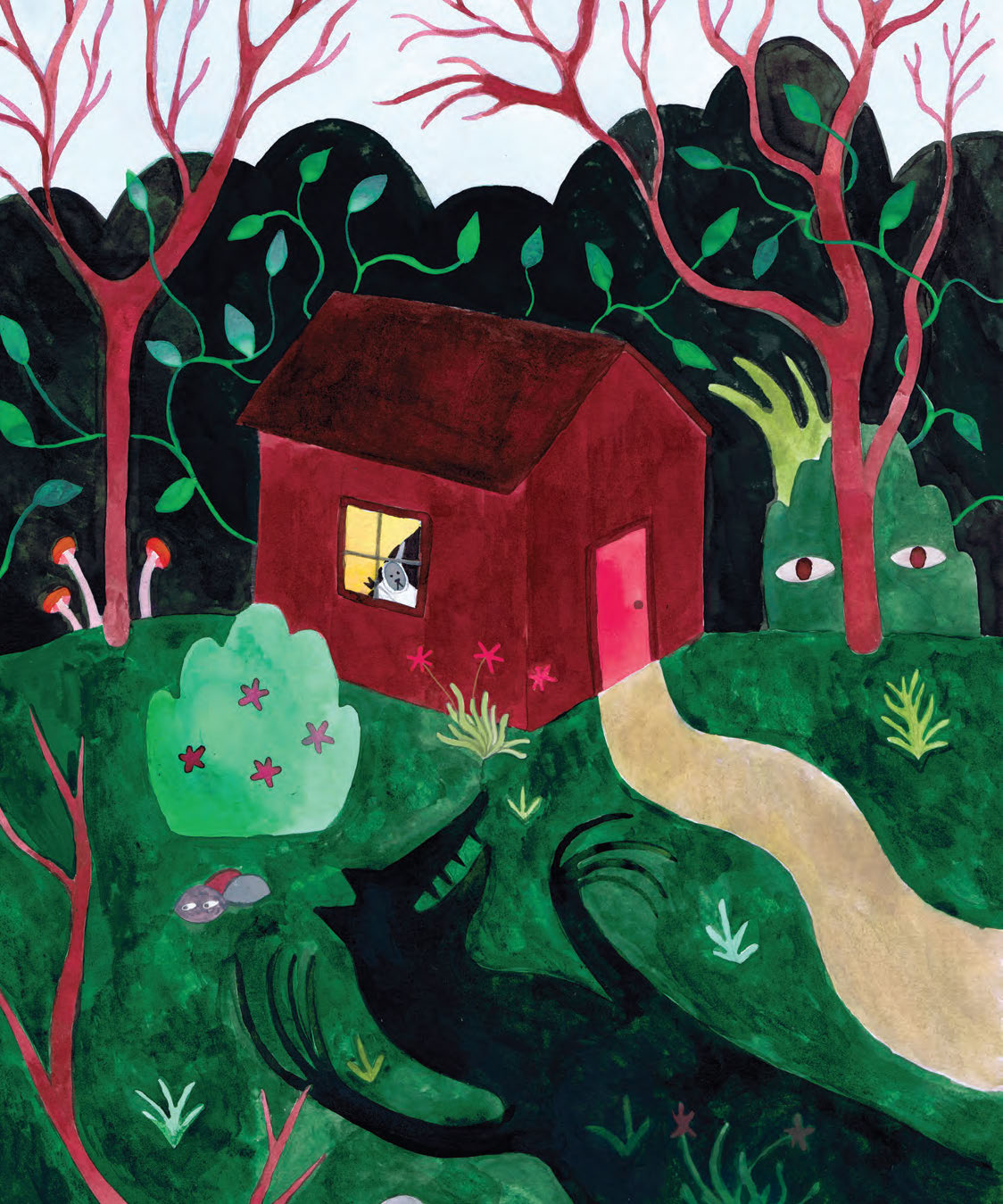
Both your books take place in, frankly, terrifying forests. Black pages full of dark greens, faces everywhere. What’s your deal? What’s that about?
It’s sort of intimidating to talk to a writer from B.C. about this. I'm like, oh no, he actually knows what forests look like.
Yeah, I’ve seen forests, and they don't have this many eyes at all.
I’m from Toronto. I just grew up going to the Brick Works.
So you’re really just guessing.
It's what forests look like in my imagination.
Are we to assume that it's the same forest in Bog Myrtle and The Wolf Suit? It sure looks like the same forest, and at one point, we see Bellwether — or maybe a real wolf! — in the background of one of the pages. I get the sense we’ve never left the Sid Sharp Universe.
It is the same forest. Again, it's a forest that exists in my mind, so it's not extremely well-governed by rules of reality. Definitely, everything in the forest is alive. That's why I like putting eyes everywhere. I like the feeling of walking through nature and feeling like everything around you is breathing and moving and watching. I have a plan that I almost feel like I shouldn't talk about yet, but I have a plan to make at least one more book.
You’re closing out the trilogy!
I have a plan to make at least one more thing set in this forest. We had, like, weird animals-within-animals perspectives, and then we had basically a human perspective on the forest. The next one I want to do is from the perspective of something much, much, much, much smaller.
How long does each book take you?
It's a fairly arduous process, so far, of going back and forth between drawing and writing. I draw until I hit a wall, and then I think I'm ready to make a script. I start doing that until it stops working. And then I’m like, I really just like drawing. It's an inefficient process, but it’s served me well so far. I think of myself as more of an illustrator than a writer.
That comes up surprisingly often when I talk to author/illustrators. Most of y’all seem to be, like, illustrators first and writers second, by necessity.
Not to put words in other people’s mouths, but for me, at least, I think it’s because a lot of people learn to draw their ideas because they feel like words are a bit insufficient.
Drawing is communication, and I think it’s how a lot of drawing-inclined people have chosen to communicate their ideas to everyone. I felt uncomfortable at first when I was writing The Wolf Suit. By the time I'd finished writing it and was working on Bog Myrtle, I felt a lot more in myself. I felt like I was writing in my own voice. It was nice.
I eventually came to the conclusion that I liked writing, whereas I already knew that I liked drawing.
Bog Myrtle is also concerned with issues of capitalism, sustainability, labour and other progressive ideas one might think would land with a thud for young readers, but they totally don't. I got to have a wonderful conversation with my son about striking and scabbing, picket lines and class solidarity. I don't know what he retained, but it struck me that children's literature actually is a pretty good medium for a little bit of sneaky pamphleteering.
Kids are so used to being told to do random stuff that doesn't make any sense, just because somebody told them to, right? I think if anyone can grasp the concept of unfair labour practices, it's children.
Children go on strike all the time. Mine will be like: We're not doing it! We're not doing it! And honestly, they have a point. Who put me in charge? So help me if they unionize because they read Bog Myrtle. Like, I’ll be proud, but I don’t want to pay them.
I used to fret a lot about didacticism versus non-didacticism in children's books. It feels a little bit dorky or uncool to have a passionate opinion about something that you're sort of, like, preaching to children. But I’ve turned around on that. All children's media is didactic. You're presenting a version of the world to people who have not been alive that long, so they’re going to absorb what you tell them.
You might as well make that world a kind place where the point is that we need to look out for each other.
Tell me about how you came up with a design for Myrtle, the bog witch. This heart-shaped spider lady who pulls silk out of her butt. I feel like I’ve seen something like this before.
I started drawing giant women with high shoulders that reach up past their heads at some point. I don't remember why I did that. I thought it looked cool and kind of fashion-y. I think there's a bit of Jean Paul Gaultier in there. Once I realized that I wanted her to be a big witch that was also kind of a spider that was also kind of Baba Yaga, I mostly fretted about whether she had six arms and two legs, or four arms and four legs. Various leg configurations and distributions. I think she's also heavily inspired by — accidentally, but in retrospect, definitely — the spider in the James and the Giant Peach. The cool French spider who I think I had a crush on.
We all had a crush on the cool French spider. How could you not? She was voiced by Susan Sarandon, whose every word invokes, for me, The Rocky Horror Picture Show. Speaking of which, I noticed that your stuff on Instagram is, uh, much more adult-oriented. Which is good! It’s so inventive and, actually, reading The Wolf Suit, I did think, at one point, I bet this person also does smut.
I think that a few readers caught on as well and were displeased about it. Goodreads reviews I caught here and there were, like, I don't know about how many butts there are.
There were a couple pages where I really did notice the sheep’s little butt.
To be honest, one of those pages, I just couldn't think of a joke to end the page with. And I was like, well, you know what kids think is the funniest thing in the world, and funnier than any joke I could write?
My son pointed to it and said, that's his butt! I’d call that success. Keeping that in mind, though, and perusing all your other stuff, I do find myself wondering what drew you to KidLit.
My editor — I kind of knew from life — Serah-Marie McMahon. She's very brilliant. She became an acquiring editor at Annick. It was kind of serendipitous, actually. She came into the bookstore where I was working and saw me doing my homework for OCAD at the front desk. She asked if I had ever considered making something for children. I was like, are you crazy? Have you seen what I do? And she was really encouraging. Like, obviously we keep it age-appropriate, but some kids are spooky, and they like eccentric stuff. What kind of books did you like when you were a kid? And I was like, oh yeah, Roald Dahl and Edward Gorey, mainly. And she was like: we can make a kids' book like that.
At some point, I told her about a short comic for adults that I had drawn, based on this nightmare I had. It was The Wolf Suit, but a little bit different. In the adult comic, the wolf gets up and goes to their wolf job, and hangs out with their wolf friends and their wolf boyfriend. Something seems a little bit off the whole time but you don't know what it is. Then they go home at the end of the day, and they unzip their wolf suit, and it's a sheep just standing there. So it's a lot more bleak in the adult version.
I mentioned that, if that were a children's story, it would end with the reveal that that's how everyone feels. They're doing this, but actually, there's something else inside. And she was like: make that children's book.
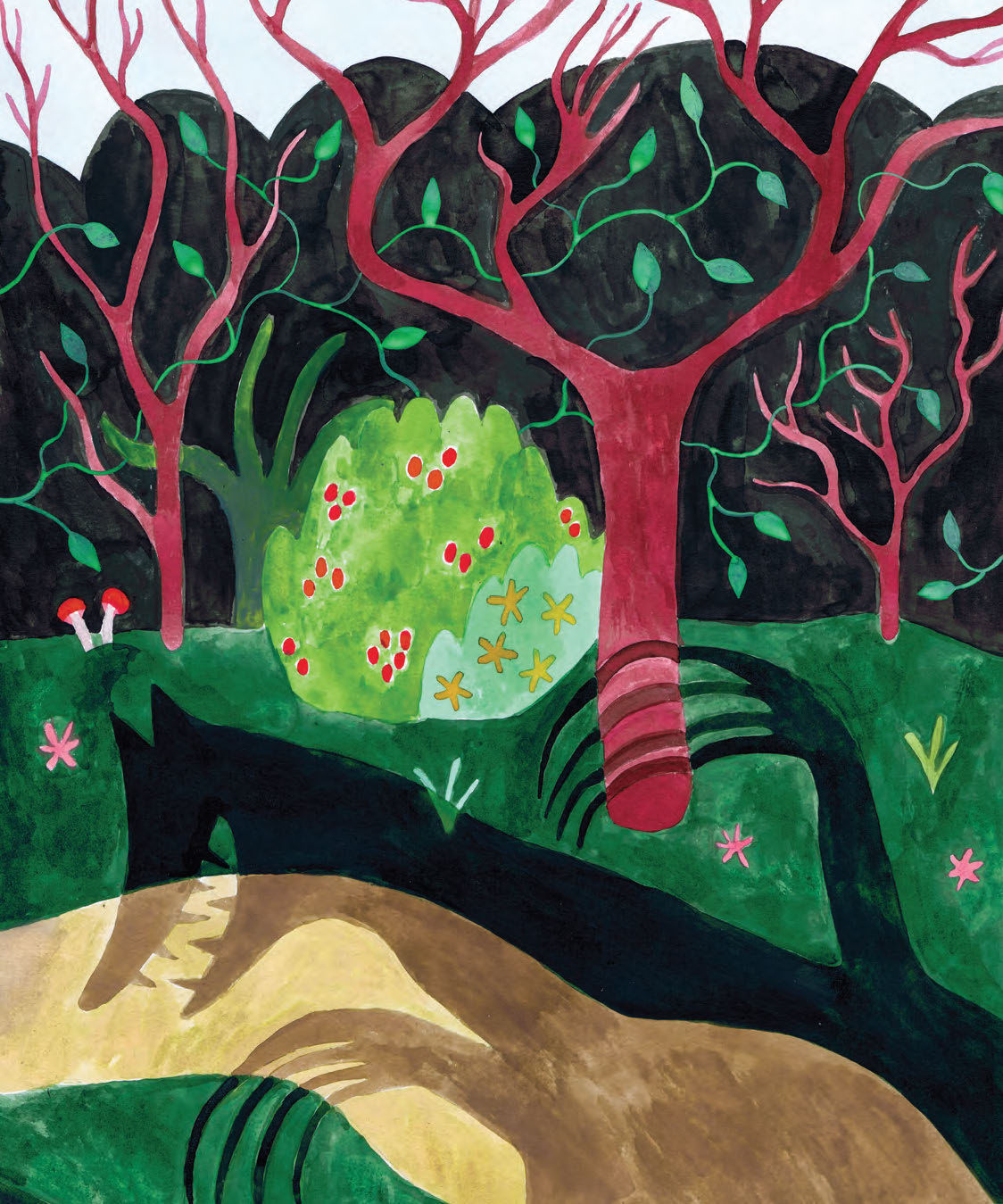
Your art is so Canadian to me. I’m reminded of those NFB shorts I grew up with: The Cat Came Back, Log Driver's Waltz, or The Big Snit. You alluded to authors like Gorey and Dahl, but who are your illustrative inspirations? Am I making any sense with these comparisons?
I think those things are more of an unconscious inspiration. They were just some of my early examples of what cartooning looked like, so of course they were absorbed into the fibre of it. There's a mischief to all of those cartoons that I think is really powerful, and that I try to hold onto. A sort of childlike irreverence. Someone told me that their little sibling was having a conversation about someone that the family knew, and they said, so and so is going to art school to learn to draw. And the kid said, what, did they forget?
Kids are awesome.
Trying to recapture the wonder and the magic of childhood is, I think, a really huge part of being an adult illustrator who makes things for kids. You have it, and then the rules and processes of how you're supposed to do illustration or design stamp it out of you a little bit. You have to know what you've learned, but recapture the magic [of not knowing] too. ![[Tyee]](/design-article.thetyee.ca/ui/img/yellowblob.png)
Read more: Books



Tyee Commenting Guidelines
Please note that email notifications for replies are not currently working due to a software issue which may be resolved in a future update.
Comments that violate guidelines risk being deleted, and violations may result in a temporary or permanent user ban. Maintain the spirit of good conversation to stay in the discussion and be patient with moderators. Comments are reviewed regularly but not in real time.
Do:
Do not: