


 SHARE:
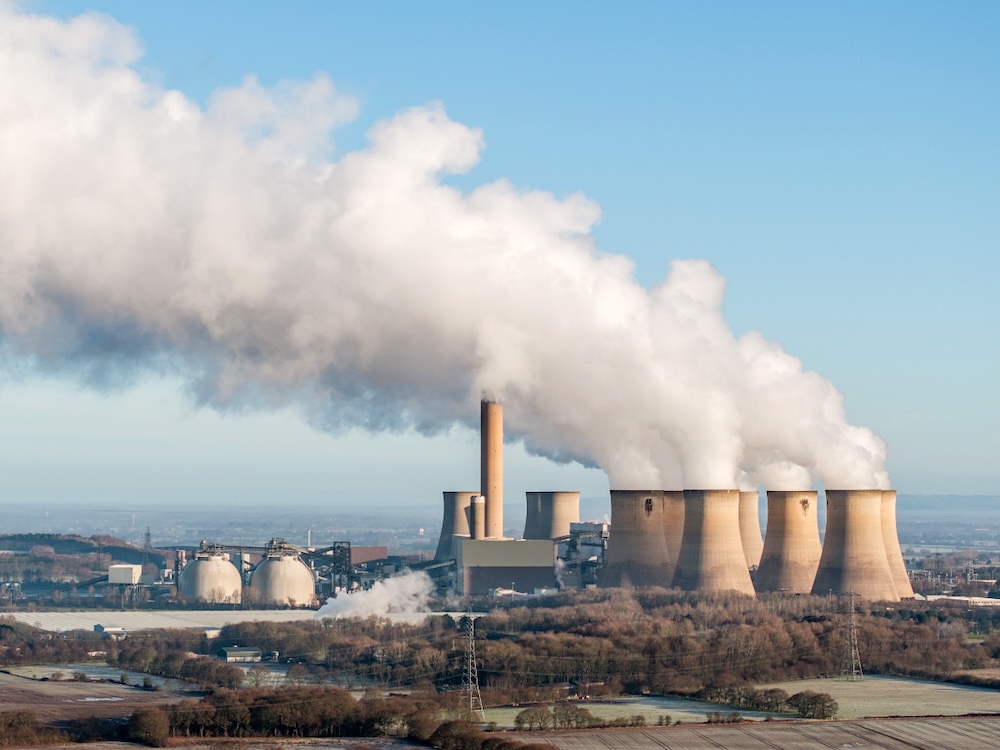
Drax, the U.K. company that operates the world’s largest wood-fired power plant, recently made headlines when it said that it will stop using trees cut down in Canada as part of its feedstock.
But the move, which has been hailed by some in the environmental community as a huge milestone, won’t make an iota of difference on the ground in Canada — or anywhere else for that matter.
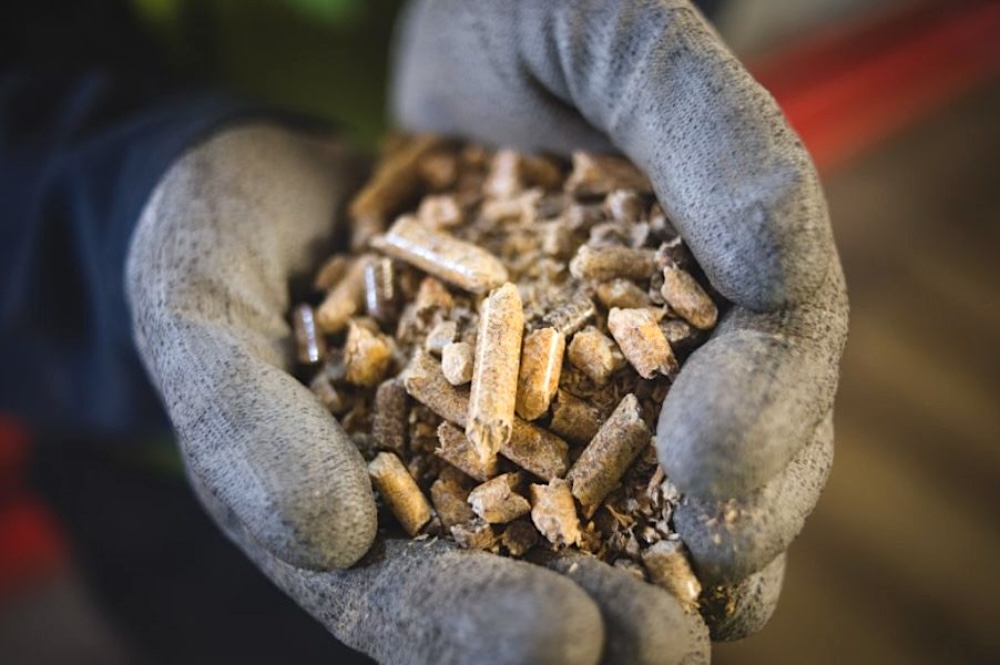
That’s because Drax is both a major consumer and producer of wood pellets, which are burned like coal, natural gas and oil in thermal power plants around the world to produce electricity.
When the Guardian reported that Drax would phase out its use of Canadian wood, the company made no claim that it intends to reduce its overall consumption of wood. Far from it. All that will happen, the Guardian reported, is that it will shift to sourcing those pellets from elsewhere.
Last year, 2.1 million tonnes of wood pellets were exported from British Columbia, according to Statistics Canada data. About three-quarters of those pellets originated at mills Drax owns or co-owns in Armstrong, Burns Lake, Meadowbank, Houston, Lavington and Smithers.
That tonnage is roughly equal to the number of trees that would have had to come down to make that many pellets.
Nearly two-thirds of those pellets went to Japan, 20 per cent went to South Korea, and 13 per cent were sent to the United Kingdom, according to export data available from Statistics Canada.
A problem of optics
Drax says that by 2027, Canadian content in its operations will be gone, made up for with more pellets from the United States, where Drax already gets the majority of its pellets.
All that changes for Drax with this announcement is that it may be able to lay to rest one persistent critique of its operations: that the company cuts down trees in Canada’s primary forests (forests that were not previously industrially logged) with the express aim of converting them to wood pellets for burning.
The optics on this were always terrible for Drax. The company claimed that most of the wood it used to make pellets came from “residuals” — the mountains of sawdust, shavings and wood chips generated at sawmills when round logs are broken down into rectangular products.
Yet imagery in two televised documentaries that aired back to back in October 2022 — one on BBC’s Panorama, the other on CBC’s The Fifth Estate — showed walls of logs at Drax’s B.C. operations awaiting conversion to pellets.
Logs are not residuals, and the residual effect of the documentaries was to torpedo Drax’s claims that it was not complicit in the ongoing loss of animal and plant life in B.C. as natural forests were cut down and replaced with biologically depauperate tree plantations.
Even Drax’s own records show that while residuals do, indeed, form an important part of its feedstock, trees directly logged to convert to pellets are equally important.
According to the company’s 2024 annual financial report, Drax used 4.2 million tonnes of “low grade” logs and trees cut down in thinning operations to make pellets that year, compared with an almost identical volume of raw material sourced from mill residuals.
A cross-Canada shag rug of pellets
Reporters who have travelled to Drax’s thermal electricity plant in North Yorkshire have walked away stunned by the operation’s huge footprint. In a 2021 report for the New Yorker magazine, Sarah Miller described the facility’s “12 cooling tower children, each 350 feet tall, but dwarfed by their mean and looming dad, an 850-foot chimney.”
The plant used to be fired by coal until the British government and European Union found religion on climate change and declared that wood was a clean, green, sustainable alternative to the black stuff.
Drax was able to monetize that to an astonishing degree, securing 6.2 billion British pounds (about $11 billion) in U.K. government subsidies to help it convert its coal-burning operations to wood.
In recent years, Drax has imported more than eight million tonnes of wood pellets from facilities around the world. That’s enough wood to bury two lanes of the Trans-Canada Highway’s 7,821-kilometre length in a thick shag carpet of pellets.
The world’s forests must provide that every year just to supply Drax’s U.K. plant. Add to that skyrocketing demand in Japan and elsewhere for woody biomass, and it translates into significant and growing pressure on forests and tree plantations the world over.
The myth of fuel switching
One consequential but almost completely ignored aspect of the Drax story is that “switching” from coal to wood hasn’t made so much as a dent in global demand for coal — or greenhouse gas emissions. In fact, worldwide use of both wood and coal continues to rise.
In 2025, global coal consumption was expected to hit 8.9 billion tonnes, the highest level ever recorded.
Worldwide wood consumption, meanwhile, is at record levels, with about four billion cubic metres consumed each year. One projection estimates that consumption could double by 2100.
The simultaneous increase in both coal and wood consumption is one focus of Jean-Baptiste Fressoz’s latest book, More and More and More: An All-Consuming History of Energy. In it, Fressoz lays bare the notion that we have in the past or likely will in the future “transition” from one energy source to another.
The Age of Wood doesn’t end and the Age of Coal begin any more than the Age of Oil gives way to the Age of Renewables, Fressoz writes.
The French science and technology historian notes that wood consumption exploded in lockstep with increasing coal production in the late 1700s. The notoriously unstable walls and ceilings of coal shafts had to be shored up if the deaths of children and adults working below ground were to be kept to a minimum. Giant timbers of wood were used to do that job.
As that “subterranean forest” grew, global trade in wood shot up because Britain had long ago logged most of its forests and did not have enough timber at home to meet the increased demand.
Much the same happened with the rising use of petroleum as a light source in the 1890s. Petroleum was extracted using “wooden derricks, it was pumped by steam engines, it crossed the Atlantic in sailing ships, it was stored in wooden barrels that required coal and muscle power to make,” Fressoz writes.
Green transition?
Despite all the talk of a “green” energy transition centred on solar power and wind, Fressoz notes that wood remains a vital energy source with no sign of that ending any time soon.
In sub-Saharan Africa in the 1950s, no city in the region was home to more than half a million residents. By 2020, 50 cities had more than one million residents, with Kinshasa home to 11 million.
Many of Kinshasa’s residents rely on wood-derived charcoal for both cooking and heating. The charcoal is far more readily available and less subject to price swings than oil or natural gas. That wood, of course, comes from forests.
It is estimated that 17 million tonnes of wood per year are used to make the 2.15 million tonnes of charcoal consumed annually by Kinshasa’s residents, Fressoz writes. All of that production is in turn made possible by the oil needed to power the logging equipment, road-building bulldozers and trucks to move the logs out, to say nothing of the social and business networks that make that production possible.
Drax, like Kinshasa’s residents, would not have a stick of wood were it not for oil, “which fuels the forestry machines, lorries, crushers and ships that cross the Atlantic,” Fressoz writes.
In 2021, Fressoz writes, Drax burned more wood than all of England’s residents consumed in the mid-18th century, when the country was allegedly transitioning from wood to coal.
“A fine result,” Fressoz sardonically notes, “after 200 years of energy transitions.”
An end to the Age of Wood? Don’t count on it. Or any other Age of, for that matter. ![[Tyee]](/design-article.thetyee.ca/ui/img/yellowblob.png)
Read more: Energy, Environment












Tyee Commenting Guidelines
Please note that email notifications for replies are not currently working due to a software issue which may be resolved in a future update.
Comments that violate guidelines risk being deleted, and violations may result in a temporary or permanent user ban. Maintain the spirit of good conversation to stay in the discussion and be patient with moderators. Comments are reviewed regularly but not in real time.
Do:
Do not: