


 SHARE:
“The world is a large theatre with a small exit door. The definition of the sucker is someone who focuses on the size of the theatre, not the size of the door.”
— Nassim Taleb
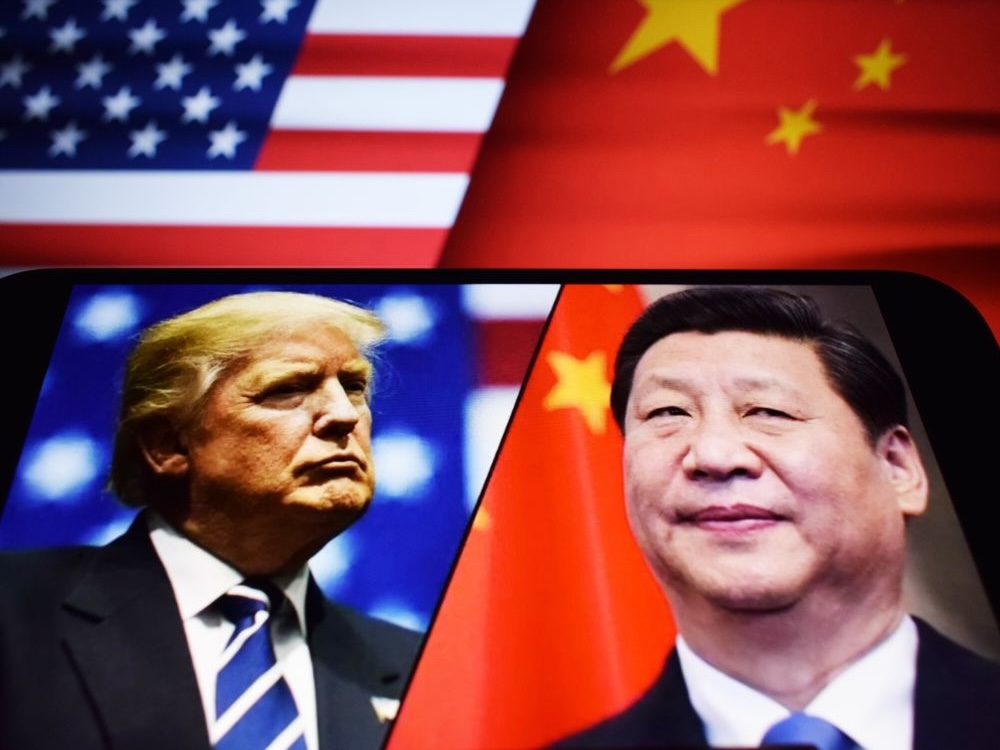
The ill-planned Israel-U.S. military “excursion” into Iran (which Donald Trump claims is also a war) promises to disrupt the global economy as profoundly as did the COVID-19 pandemic. And more than the oil shocks of the 1970s when the world used much less energy, held much less debt and contained five billion fewer people.
The upheaval will have a long tail and may also lead to Trump’s undoing — although the carnival barker has as many lives as a circus cat.
Some experts, such as U.S. oil analyst Art Berman, are calling the regional war a “civilizational reset” to some kind of new energy world order where state intervention and outright aggression secure and direct the use of key fuels and materials. In other words, markets aren’t going to solve the problems this war has set in motion.
In this brave new world one question matters most. Can a nation make the stuff it needs to defend itself from the gathering storms without relying on protracted supply chains? Every middle power should be asking itself whether it wants to be a failing England or a robust Finland.
What sense can we make of a war started by the petrostate regime of an impulsive Donald Trump (think of him as a reverse Mikhail Gorbachev who promises the opposite of perestroika) and waged against another dysfunctional petrostate of some 90 million people at the urging of another state led by unhinged Zionists?
In this war of attrition led by nihilists on all sides there appears to be no clear strategy, no viable plan and no defined exit. Iran commands a strategic corridor and has acted accordingly. And yet there are early conclusions to be drawn. Here are seven.
1. Bombing doesn’t win wars
One hundred years of historical evidence on the impact of aerial warfare shows that strategic bombing can indeed destroy cities and shatter infrastructure. What it cannot do is produce regime change.
U.S. historian Robert Pape, the author of Bombing to Win: Air Power and Coercion in War, emphasizes that “political collapse happens when ruling coalitions fracture under internal pressure, not when buildings burn.” Both Israel and the United States face an escalation trap in which “the war expands not because bombing works — but because it does not.”
Given Trump’s air power delusion and other high-tech hubris, the Iran war could well become the kind of event that marks the end of historical epochs, humbles empires and ushers in new ones. Whenever an aging empire must burn through its finite stockpile of million-dollar missiles to shoot down $10,000 Shahed drones, a Vietnam-inspired question arises. Which side can bleed the most and still keep on fighting? Asymmetrical warfare rarely favours the Goliath.
2. Trump is unravelling any coherence to MAGA politics
In the midst of this chaos the populist Trump regime, which has clearly underestimated the resolve of the Iranian regime to survive another day, has incinerated his domestic political promises not to start wars or raise energy prices.
This foundational betrayal has deeply rattled Trump’s isolationist Make America Great Again base. Even the populist Tucker Carlson is so aghast and appalled by the war that he sounds almost as morally incensed on his podcasts as the anti-fascist academic Timothy Snyder in his Substack musings.
In any case the American caudillo has chosen to put a dissipating empire in harm’s way with little regard for the consequences.
3. The machine can’t be starved for long
The war has already altered critical flows of fuels and commodities essential to maintain the global metabolic industrial system otherwise known as the technosphere or the machine.
The technosphere, an artificial environment composed of steel, glass and concrete, depends on the constant supply of oil, sulphur, helium, methane, ammonia, diesel and aluminum that flows through the Persian Gulf. Now that a substantial war has subtracted nine million barrels of oil a day from the system, four per cent of global energy in the form of methane from Qatar’s North Field and one-third of the world’s fertilizer production, many of the global technosphere’s interconnected parts and components are already experiencing contractions, convulsions and rationing.
Here’s another reality to ponder: Ed Conway, the author of Material World: The Six Raw Materials That Shape Modern Civilization (an essential read), calculates that Qatar’s North Field contains more energy “than every solar panel and wind turbine in the world combined.”
Trump’s war has now placed much of Asia and Europe (all highly indebted nations) on a beach with no place to hide from economic tsunamis. About 80 to 90 per cent of Asia's oil and methane imports must pass through the Strait of Hormuz, and it is now blocked.
As a consequence, the Philippine government has reduced the workweek to four days, Pakistan has closed schools, Bangladesh has banned the use of air conditioning, and Indian restaurants and cafés have eliminated deep-fried items from their menus due to shortages of liquefied petroleum gas. And that’s just the beginning. In an industrial system designed for exponential growth and endless consumption, an oil shock translates into instant and painful degrowth. Without constant flows of energy, the industrial machine screeches and sputters.
4. Oil remains king
Like it or hate it, fossil fuels still account for 80 per cent of the world’s primary energy consumption. Trillions of dollars have been spent on the construction of energy-intensive renewables, but they have not made a dent in that reality. No energy transition has transpired because the metabolism of the technosphere requires more energy resources to expand and grow. It does not know how to subtract.
As such, oil remains the master resource. Just five countries command more than 60 per cent of the world’s oil: Venezuela, Saudi Arabia, Canada, Iran and Iraq. And only three countries own about half of its methane reserves: Russia, Iran and Qatar.
The United States, which dominates global oil production, has seized Venezuela’s oil with a kidnapping and bribes. It has threatened to annex Canada, and members of its government speak glowingly of the separatist movement in Alberta, home to the second-largest oil reserve in the world. Now the United States, whose shale revolution has peaked, is attacking Iran, the world’s ninth major oil producer. Can there be any reason to this madness?
According to Michael Every, a global strategist at Rabobank, there is a strategy, however incoherent or incomplete. The Trump regime regards China as an imperial rival and is trying to play catch-up by securing access to oil in the same way China has strategically monopolized the production of rare earth minerals.
Right now, China controls the refining and processing of essential metals from gallium to magnesium needed to make phones, missiles, solar panels and electric vehicles. It controls about 90 per cent of this trade. To restabilize things, the United States is seeking to dominate oil production while it catches up on critical metal mining with radical talk about the Monroe Doctrine, the seizure of Greenland and the annexation of Canada.
Perhaps no resource better illustrates the primacy of oil than diesel. Gulf oil, heavy medium crude, is essential for global diesel production. In recent years diesel shortages have plagued parts of the globe because light oils such as those from Texas produce a lower yield of this portable fuel. As the world’s aging oilfields produce poorer crudes (light and heavy oil) it becomes more difficult for complex refineries to make diesel.
Meanwhile Iran's blockade of the Strait of Hormuz has choked off between 10 and 20 per cent of total global seaborne diesel supplies. The Norwegian analyst firm Rystad Energy recently warned: “As far as our analysis shows, there are no viable replacements for Arab Heavy and Arab Medium in the near term, triggering a historic supply crisis if the conflict is not resolved in the coming weeks.”
Diesel runs not only the global transport industry (trucks, ships and trains) but also vehicles and other machinery used by agriculture, heavy mining and the military. Without diesel many of the world’s industrial crops from soybeans to wheat can’t be planted, fertilized and harvested.
Since the war with Iran, U.S. diesel prices hit $4.86 per gallon on March 9, a jump of nearly 96 cents in a single week, and have now surpassed $5 a gallon. Those are some of the largest weekly increases recorded since the U.S. government started to track diesel prices in 1994. A nation without diesel is a nation that does not move, does not eat and can’t defend itself.
5. China has prepared for this moment
China procures about 10 per cent of its oil from Iran, but the rest comes from Russia and other Middle Eastern countries. Although the war has disrupted the flow of 38 per cent of China’s oil from the Middle East, the red dragon doesn’t run on oil the same way the U.S. economy does. Oil accounts for only about 20 per cent of primary demand, and renewables, including hydro, add slightly more than that. The heavy lifting in the Chinese economy is done by coal, which accounts for more than half of the nation’s energy consumption. China has also invested heavily in strategic oil reserves.
This explains why China’s imperial masters calmly drink tea while Trump’s war disassembles parts of the global energy infrastructure. The Chinese have already calculated that, as one Israeli journalist put it, “every war America fights for Israel costs trillions, destabilizes energy markets, alienates Gulf partners and pushes the entire Global South closer to a system Beijing spent two decades building” with its Belt and Road Initiative — the construction of infrastructure to support China’s dominance of high-tech materials.
Napoleon once said never interrupt your enemy when he is making a grave mistake.
6. Post-industrial society was a mirage
The Australian entrepreneur Craig Tindale adds another dimension to the rising tide of chaos in a world dominated by three spheres of influence: the United States, China and the artificial intelligence mafia.
In a recent provocative essay, Tindale argued the West (the United States and Europe) has operated under the assumption that screens, markets and money run the world. As a result, they deindustrialized and outsourced “the physical processes of industrialism, the dirty, energy-intensive work of mining, refining, smelting, and alloying stuff.” Canada exemplifies this mistake by exporting raw, diluted bitumen to U.S. refineries that add all the value and reap the greatest profits.
This era, however, has ended as the world enters a period of “complex constraints, where the physical availability of matter, not the availability of credit, sets the limit on national power.”
To Tindale, Russia’s invasion of Ukraine exposed the hollowness of the western defence-industrial base, revealing an inability to replenish basic munitions. At the same time the rapid expansion of energy-intensive AI data centres and green energy grids has created a "cannibalization" effect. As a result, civilian and military sectors now compete fiercely for the same dwindling stockpiles of refined metals including copper. A tomahawk missile and advanced solar cells, for example, both depend on refined silver for their operation.
By failing to invest in smelters, refineries, separators and furnaces, the West gave up the material sovereignty that underwrites democracy, argues Tindale. “A society that can’t make the metals, magnets, semiconductors and fuels it relies on,” adds Tindale, “won’t remain free — it will be managed.”
If you add the ecological crisis onto this mess, it is plain there is nothing sustainable about the growing weight of our carbon-spewing industrial system. By any measure the predicament humans face is unprecedented.
7. The prospects should spur personal reflection
What, then, should guide our own plans as citizens?
Expect all parties involved to be diminished by its outcome.
Expect Iran to become more extreme.
Expect China and Russia to emerge stronger.
Expect the pricing of hydrocarbons to become more volatile.
Given the dependence of industrial agriculture on fossil fuels and machines, expect food shortages or rationing in some parts of the world.
Expect more inflation, not less.
And given these material realities, expect more military posturing and explosive politics.
In other words, expect energy to become a core national security issue for almost every major nation. Where that leaves the world’s inarticulate response to climate disruption, which is intensifying by leaps and bounds, is anyone’s guess.
In recent podcasts Nate Hagens, the host of The Great Simplification, has asked, in various ways, “What do you do when the world is falling apart?” For years now he has interviewed ecologists, economists and thinkers of all kinds about ecological overshoot. That is, too many people consuming too many resources on a finite planet increasingly engineered and ruled by machines. Like many other social critics, Hagens views the Iran war as another critical tipping point.
The questions Hagens asks are uncomfortable yet essential.
Do you know your vulnerability to events you can’t control?
Have you asked yourself what material things you can do without?
Have you simplified your life?
How long can you live without electricity? Or running water?
Can you plant a garden and repair your most important tools?
Do you know what fears prevent you from engaging in community life to address its vulnerabilities and fragilities for the storms ahead?
What are you doing to resist the anti-human forces of technology in your daily life?
Have you a faith other than blind consumption?
He offers this advice:
“Get your own house in order, both your actual house or living situation, but also your inner house. And begin to cultivate equanimity, not detachment, or resignation, but equanimity.”
Equanimity, Hagens explains, has the capacity to hold difficult things without being destroyed by them and “to act without needing certainty.”
That is a good word to end with. Equanimity. ![[Tyee]](/design-article.thetyee.ca/ui/img/yellowblob.png)
Read more: Politics









Tyee Commenting Guidelines
Please note that email notifications for replies are not currently working due to a software issue which may be resolved in a future update.
Comments that violate guidelines risk being deleted, and violations may result in a temporary or permanent user ban. Maintain the spirit of good conversation to stay in the discussion and be patient with moderators. Comments are reviewed regularly but not in real time.
Do:
Do not: