Opinion

Everyone Seems to Pick Christy Clark, but not Will McMartin

And if your inner wonk is up to it, here are calculations that make our pundit a contrarian.

By Will McMartin, 25 Feb 2011, TheTyee.ca

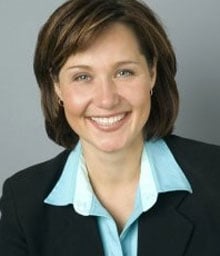
Christy Clark

Christy Clark: Way ahead in popular polls.

Surely it's a mug's game to try to pick the winner of the BC Liberal leadership contest taking place on Saturday.

But, since when did The Tyee play it safe? After earlier predicting the odds of victory for our top three picks -- 4-1 for Christy Clark (see here), 3-1 for Kevin Falcon (see here) and 5-2 for our top choice, George Abbott (see here) -- there's little point in not going further and contemplating (guessing?) how the actual voting will play out this weekend.

(The Tyee did not rate three of the six declared candidates: Mike de Jong, Moira Stilwell and Ed Mayne. The latter two have since withdrawn from the contest, and both have endorsed Abbott. De Jong remains in the race but few expect him to win.)

100 votes per district

British Columbia has 85 provincial electoral districts. The BC Liberals have decided that each riding should have an equal voice (100 votes apiece) in the selection of their new party leader.

This is not as weird as some of the mainstream media have purported. Each riding, after all, elects the same number of representatives (one) to the Legislative Assembly, because all electoral districts (in theory) are supposed to have an equal voice in our province's affairs.

Of course, riding populations vary considerably. Analysing the 2006 census, BC Stats has reported that the number of residents ranges from a low of 20,530 in Stikine, to a high of 59,140 in Comox Valley.

On top of that, some electoral districts are BC Liberal bastions where the number of party members is in the thousands, while others are veritable wastelands with supporters counted in the dozens.

Vancouver Sun columnist Vaughn Palmer reported a few months ago that when the leadership contest got underway, Kelowna-Mission had the greatest number of BC Liberal members, 2,506, and Port Coquitlam and Vancouver-Hastings had the fewest, 43 apiece.

Naturally, the different leadership contestants and their campaign teams sold tens of thousands of new memberships over the past three months. On Feb. 8, the BC Liberal party reported that from a base of 36,000 in early November, membership had increased by "over 50,000" to a number "approaching 90,000."

More recently, the party announced that as many as 6,000 memberships had been disallowed.

By the simple process of dividing party membership (between 80,000 and 85,000) by the number of electoral districts (85), we can determine that the average number of eligible voters in each riding is nearly 1,000.

Again, however, a few ridings (mostly BC Liberal fortresses) will have many thousands of party members, while others (NDP strongholds) will have barely a few hundred.

ONTARIO CONTEST A TEMPLATE FOR BC

The Progressive Conservative leadership contest in Ontario in 2009, which used a weighted-vote system giving 100 votes to each of that province's 107 ridings, provides a useful template for the BC Liberal leadership battle on Saturday.

The Ontario Tories governed Ontario from 1995 to 2003 (mostly under Mike Harris, who promoted a "Common Sense Revolution" to reduce the size of government), but then lost two elections in a row and by 2009 needed a new leader. Four sitting MPPs -- Christine Elliott, Frank Klees, Randy Hillier and Tim Hudak -- threw their hats into the ring.

Party membership, mostly because the party had been out of power for several years, was down to just 8,500, but by the end of the leadership campaign was at about 43,000. On voting day 25,429 ballots were cast, meaning that 59.1 per cent of party members participated in the vote.

The Tories then had a 24-member caucus. Hudak, with 12, garnered the most endorsements from his fellow MPPs, followed by Elliott (who is married to the federal Conservative Finance Minister Jim Flaherty) with five, and Klees, two. Hillier had no endorsements, and one MPP did not back any of the candidates.

Those endorsements appear to have had a significant impact on the outcome, as just three seats bucked the choice of their local representative. Put another way, 20 of 23 electoral districts gave a majority of their votes either to their local MPP (Hudak, Elliott, Klees and Hillier all held their own ridings) or to their local MPP's favourite.

Hudak, the eventual winner, was victorious in nine of the 12 ridings where he got a MPP endorsement, and Elliott took all of the ridings held by her five caucus backers.

Klees took the two that had been pledged to him, and then snatched two more earmarked for Hudak, while Hillier added another pledged to Hudak.

Endorsements appear important for two reasons. First, a legislator who backs one of the leadership contenders, either through their own charisma or local political organization, may be able to deliver his or her riding to their favourite choice.

Second, the legislator may have had little influence on, and could not deliver local party members, but understood the prevailing sentiment in his or her riding and merely jumped in front of the parade already on its way to one of the leadership hopefuls. In other words, an MPP endorsement might have been a useful indicator of local sentiment.

When the first-round ballots were counted in Ontario in 2009, Hudak led with 33.9 per cent, just four points ahead of Klees at 29.9 per cent. Elliot was a close third with 26.4 per cent, and Hillier was far back at 9.8 per cent.

Hudak also led his rivals in the first round with regards to the number of ridings in which he obtained a plurality of votes, taking 46 of the province's 107 seats. That put him comfortably ahead of Klees at 33, and Elliott with 24. Hiller was on top in just three. (A seat with a very small party membership, the NDP bastion of Davenport, was split equally between Hudak, Elliott and Klees.)

Hillier was dropped from the second round of voting, which saw Hudak extend his lead with almost 40 per cent of the vote. Klees held on to second at 31.9 per cent, and Elliott trailed with 28.1 per cent.

On the third and final ballot, after Elliott was removed, Hudak was declared the winner with 54.3 per cent, and Klees finished with a respectable 44.9 per cent.

The lessons for the BC Liberal contest on Feb. 26? First, endorsements matter. And in this regard, George Abbott and Kevin Falcon enjoy a huge advantage over their rivals.

Second, being at the top, or near the top, on the first ballot is vital to success. It's incredibly hard to win from third place (or lower). Simply, membership sales are hugely important to doing well on the initial count, and Christy Clark appears to hold an advantage in the BC Liberal contest in that regard. That edge is diluted by the 100-vote per riding weighted ballot, however, plus it seems likely that only 60 per cent or so of party members will actually cast a ballot on Saturday.

— W.M.

Lessons from Ontario

How will this would work on Saturday? As an example, let's say that 1,500 members cast a ballot in electoral district "A," while just 50 members vote in electoral district "B." Despite the disparity in the number of ballots cast in those two ridings, each has an equal number of votes -- 100 -- in the overall count.

Let's go further and say that on Saturday, 750 of the 1,500 first-round ballots (that is, 50 per cent) in riding "A" go to Christy Clark, while 25 of the 50 ballots (also 50 per cent) in riding "B" are marked for George Abbott.

Clark and Abbott each would get the identical number of votes -- 50 -- based on their winning 50 per cent of the ballots in their respective ridings. Even though Clark had 750 supporters in riding "A," and Abbott had just 25 in riding "B," both would receive the same number of votes toward their overall total.

The point is, the number of supporters recruited by each of the four candidates is important, but not vital to the final outcome. That's because: (a) membership numbers vary between ridings; (b) many of the mass sign-ups of party members were in a small number of ridings, notably in Surrey and the Fraser Valley; and (c) not all party members will participate in the vote.

As stated earlier, the BC Liberal party has nearly 85,000 members who may vote on Saturday. But how many actually will cast a ballot?

The 2009 Progressive Conservative leadership contest in Ontario offers many useful comparisons to the BC Liberal race now underway in our province. (See sidebar.)

In Ontario, Tory membership increased fivefold, but on voting day just under 60 per cent of eligible voters exercised their (party) franchise.

That seems like a reasonable figure for the BC Liberal tilt, so let's calculate that about 51,000 voters (60 per cent of 85,000) will participate in the election on Saturday. The average number of voters per district will be about 600, but, again, that will vary considerably between individual ridings.

How it will be tallied

How to tally the ballots to get an overall total? First, each electoral district's 100 votes will be allocated to the four candidates according to the percentage of ballots each obtained in that particular riding.

Next, each candidate's share of the 100 votes in every riding will be added up province-wide. The candidate who first reaches 4,251 votes (85 electoral districts multiplied by 100 votes in each riding, divided by two, plus one) will be declared the winner.

To help determine how the contest may play out on Saturday, we'll break down the province into five large geographic regions.

Interior-North has 24 electoral districts (and therefore 2,400 votes towards the 4,251 needed for victor on Saturday). We'll estimate the total number of ballots cast at 14,500.

Abbott is the only candidate who resides in this region, and he's won endorsements from eight MLAs (Barnett, Bennett, Foster, Lake, Letnick, Rustad, Slater and Thomson). Falcon is backed by four (Bell, Bond, Pimm and Stewart).

Fraser Valley-Surrey has 17 ridings (1,700 leadership votes), and also should see about 14,500 ballots cast on Saturday. (Many party memberships were sold to the large South Asian communities in North Surrey and Abbotsford.)

This is home to de Jong and Falcon, but where the former has no endorsements in the region, the latter has five (Cadieux, Coleman, Hayer, Les and Polak). Abbott has three local MLAs in his corner (Hawes, Hogg and van Dongen).

Fraser North (From Burnaby through Coquitlam, New Westminster, Port Moody and Port Coquitlam, to Maple Ridge and Mission) has 11 ridings (1,100 leadership votes) and an estimated 6,000 ballots.

Clark used to have a seat in this region, but she now resides in Vancouver. She's also gained just a single MLA endorsement (Bloy), while Falcon has three (Black, Dalton and Horne) and Abbott one (Lee).

Vancouver-North Shore-Richmond has 18 electoral districts (1,800 leadership votes) and 10,500 ballots. Clark calls Vancouver home, but does not have a seat in the city, and has no endorsements from BC Liberal MLAs.

Abbott is supported by six local Liberals (Heed, McNeil, Sultan, Stilwell, Thorntwaite and Yamamoto), and Falcon has five (Hansen, Howard, MacDiarmid, McIntyre and Yap).

Vancouver Island-Coast has 15 ridings (1,500 leadership votes) with an expected 5,500 ballots to be cast. The region has become a NDP fortress in recent decades, and none of the BC Liberal leadership hopefuls reside here.

Abbott and Falcon are endorsed by two MLAs each (Coell and McRae for the former; Cantelon and Chong for the latter).

Making projections

Let us project some numbers for Saturday's tilt. In the North-Interior, let's say that Abbott's favourite-son status and MLA endorsements help him to win a total of 5,800 ballots (40 per cent of the 14,500 total in this region). Next is Falcon with 4,350 (30 per cent), while Clark has 3,625 (25 per cent) and de Jong trails with 725 (five per cent).

Falcon and de Jong both will do well in their home region of Fraser Valley-Surrey. Let's put the former on top with 5,075 ballots (35 per cent of the total in this region), and the latter 3,625 (25 per cent). Close behind are Abbott and Clark, both taking 2,900 ballots (20 per cent apiece).

Fraser North should be a real dog-fight, and let's guess that Clark and Falcon get an identical 2,100 ballots (each with 35 per cent of the total), while Abbott has 1,500 (25 per cent), and de Jong trails with 300 votes (five per cent).

The densely populated Vancouver-North Shore-Richmond area is where Clark absolutely has to do well. Let's put her total at a generous 4,725 ballots (45 per cent), well ahead of Abbott and Falcon with an identical 2,625 (25 per cent each), and de Jong, 525 (five per cent).

Vancouver Island-Coast, the New Democratic Party bastion, is a mystery. Let's put Clark and Falcon ahead with 1,925 ballots apiece (35 per cent of all ballots in this region), and Abbott close behind at 1,375 (25 per cent). De Jong has 275 votes (five per cent).

Under this scenario, the three front-runners will be closely bunched: Falcon with 16,075 first-round votes (or 31.5 per cent of the total), followed by Clark at 15,275 (30 per cent) and Abbott with 14,200 (27.8 per cent). De Jong trails with a respectable 5,450 (10.7 per cent).

Clark, the putative front-runner (and overwhelming favourite of the mainstream news media), could enjoy a first-count lead with only marginally-better-than-projected results in the North-Interior, Fraser Valley-Surrey and Vancouver Island-Coast regions.

It's very difficult, however, to see her with the massive first-count advantage prophesied by press-gallery pundits.

By the same token, Abbott could (although it seems doubtful) slip into a narrow first-count lead, with better-than-expected results in Fraser North, Vancouver-Richmond-North Shore and Vancouver Island Coast.

After the first count

The foregoing examines the total first-count ballots. Those same results, under the weighted-vote system, would look like this: Falcon enjoys a razor-thin advantage with 2,675 votes; Clark is close behind with 2,660; Abbott has 2,400; and de Jong is last with 765.

De Jong then would be dropped off the count and -- under the preferential ballot the BC Liberals have decided to use on Saturday -- the next round of ballot-counting would involve only his supporters' second-choices. So, where will de Jong's second-ballots go?

According to this analysis, about two-thirds of de Jong's supporters reside in the Fraser Valley-Surrey region, and many are South Asians. The region is Kevin Falcon's home, but prominent Indo-Canadians have advised community members to make George Abbott their second choice.

It doesn't seem unreasonable to think that Falcon and Abbott each could get 300 or so (about 40 per cent) of de Jong's second choices, while Clark picks up about 150 (20 per cent).

The second-round results, then: Falcon, 2,975; Clark, 2,825; and Abbott, 2,700. Incredibly, fewer than 300 votes could separate the top three candidates, and the one with the fewest will be dropped before the third and final tally.

Vital endorsements

Now for our final assumption. Abbott has publicly stated that he prefers Falcon over Clark, a clear signal to his supporters that they should mark the former as second-choice on their preferential ballots. It probably is safe to say that Falcon's supporters similarly will mark Abbott as their runner-up option.

Clark, simply, does not appear likely to pick up many second choices from either Abbott's or Falcon's supporters. And that means the only way she can win the party leadership is to have a massive (really huge) lead on the first ballot. While not impossible, it looks to be a mathematical challenge.

Our choice(s) for the winner on Saturday, and next premier of British Columbia: either Kevin Falcon or George Abbott.  [Tyee]

24  Comments:

Login or register to post comments

  • Van Isle

    51 weeks ago

    What is going to be the

    What is going to be the Liberal's undoing is this electronic voting system. A lot of potential Liberal voters are not going to be allowed to 'cast their ballot' because of flaws in the system. Just stand back and listen to the bitching and rightly so too.

  • deeby

    51 weeks ago

    What about the PINs?

    The undelivered PINs have the potential to throw the process into last-minute chaos.

    I predict a tainted victory and a court challenge. Watch them tear one another apart...

  • warbler

    51 weeks ago

    Gotta love technology

    Agree with the first two comments. Technology is going to steal the news at the convention and days after. The unfolding debacle of unsent PINs, no one in the Liberal Party office to field the angry calls, this could all make the Florida hanging chad controversy look like no big deal. And if Christy wins, the conservatives in the coalition are going to go nuts and challenge the result.

    And yet, this doesn't even account for the possibility of hackers influencing the vote.

    Call me old school, but I believe if you want to exercise your democratic vote in a campaign, you should have to show up and mark a ballot, or at least delegate someone to do it for you. Sometimes technology and convenience is not good. I have this horrific vision of the future in which general elections are fought on Twitter, and the candidate, who will be allowed to run anonymously, with the most "Likes" votes on the General Election Facebook site wins.

    I hope Christy wins because it will likely result in a split in the Lib coalition, which, of course, is good for the anybody-but-BC-Liberals vote.

  • Okanagan Orchardist

    51 weeks ago

    All the numbers are a bit confusing....

    I've got my pin number and I'm going to stick with my original plan:
    Abbott gets my first choice.
    De Jong is my second choice.
    If we have to live with a Liberal government I hope it is Abbott. A vote for de Jong will split up the second choices people have made for Falcon or Clark.
    And hopefully the NDP will get their act together by the time of the next election.

  • badwalrus

    51 weeks ago

    Stage is set for a stolen victory...

    If tech-based chaos ensues *it will not be by accident*. The candidate with the most influential/monied network will benefit despite inevitable controversy and challenges. The same thing happened in the states with Bush and Diebold (look it up if you want a fascinating read on hi tech campaign fraud.) Bush actually lost both elections!

    Yup; the stage is being set for this campaign to be stolen. The media is agressively trying to brainwash the public into believeing that Christy is leading their secret polls.(Lol!) I don't buy it. People aren't that stupid. They see through her, not that that will make a difference.

    Ultimately, people get the government they deserve - until they go Egyptian.

  • sebastian toombs

    51 weeks ago

    more excellent work on this

    more excellent work on this topic, far surpassing anything ive seen in the province's major dailies...

  • carfreecity

    51 weeks ago

    careless

    these candidates are too uncaring for my liking about people and the habitats we live in
    whereas the NDP are coming through brilliantly on all issues speaking to my good mind and heart

  • alive

    51 weeks ago

    Titanic

    How can anyone get excited about who is going to be the captain of the Titanic this time around?

    At best it is about choosing the least evil of a bunch of crooks.

    Christy if elected will do another Kim Campbell, and manage to get turfed; she is NOT what the backroom boys want, and that is what counts!

  • shepsil

    51 weeks ago

    Why did MSM pick the most obvious choice in CC?

    In the end, it appears the MSM picked one of their own, Christy Clark of CKNW. Does it show how MSM pundits are out of touch or are we being played by someone (PAB & their handlers).

    Either way, the MSM has just dropped another notch, in my estimation.

    Thanks WMc. for a solid analysis.

  • Jerry Munro

    51 weeks ago

    But eh...

    "But, since when did The Tyee play it safe? " Will McMartin.

    Oooo, I won't even touch that one here. :-) That's like asking, when did the NDP ever play it safe?

    But if capitalism ain't anything else, it's high tech. It's democracy may be skewed in favour of the wealthy, especially the ruling class, and those parties that shine their boots... but eh, its got electronic voting!

    Ain't capitalism grand?

  • Jerry Munro

    51 weeks ago

    Playing It Safe...

    "Oooo, I won't even touch that one here. :-) " Coyote.

    Speaking of playing it safe. 8-D lol

  • Frank

    51 weeks ago

    alive

    "she is NOT what the backroom boys want"

    Actually, she has a lot of backers with very deep pockets. I think the backroom boys love Christy.

  • RickW

    51 weeks ago

    But, since when did The Tyee play it safe?

    How about, by not adding that $53 billion to the $47 billion, to make a more accurate $100 billion in debt?

  • Tony

    51 weeks ago

    Can we do better than Instant Runoff?

    Interesting analysis. If Abbott and Falcon are effectively on the same 'team' and collectively have enough votes to beat Clark, then surely a highly relevant question is which of these two candidates is preferred to the other by the Liberal Party members as a whole. Unfortunately, IRV won't answer this question as all of Clark's supporters' votes will be tied up with her if she's in second place. The only way to make this determination would be to use all voters' ballots to directly compare Falcon to Abbott. This form of counting (which still uses the same preferential ballots used in IRV) is called Condorcet Voting. I wonder if the Liberals will release the detailed ballot data for the public to analyze.

  • crankypants

    51 weeks ago

    Sorry Will

    Your prediction may well turn out to be correct, but your methodology serves nothing but expanding the length of your article. If the smart money is correct and Mike deJong is the first to be cast aside, you may as well put the other three names in a hat, draw one, and declare him or her your predicted victor.

    The first problem is that you are lumping a large number of ridings together which negates the fact that each riding is equal in the number of points available, but each vote's value is based on the number of voters that vote within each riding.

    Secondly, you have no knowledge as to how many potential voters there are in each riding, which is crucial to assessing the potential value of each vote. I suspect that any of the polls we have been hearing about are also suffering from the same credibility, unless they have been provided with a list of all the members, or at least the number of members in each riding.

    Finally, there is the ability to place strategic votes. Harry Bloy, Christy Clark's only sitting MLA supporter, has sent a missive to party members to encourage all of those that are voting for Christy as their first choice should choose Mike deJong as choice number two. There were many members who were not too happy in having to vote for two candidates in the first place, and its fair to assume that many supporters of Falcon and Abbott will also make deJong their second choice. They may also be unwilling to choose a third choice. If deJong's second choice votes fail to put someone over the top, there is a possibility that we end up with a hung jury, so to speak.

    I assume that you wrote this piece before the revelation that many members of the party did not receive the PIN numbers they require in order to even get to vote. Then there is the problem brought to light on CTV's late night news. An East Indian gentleman bemoaned the fact that many of the people from his community were computer illiterate and expect to use the telephone to register their choices. Apparently many of these people do not speak English very well, and the phone portion part of election day will only be conducted in English, which may well remove them from participating, or even worse, letting someone else vote for them.

    In my opinion, there are just too many variables to draw any meaningful conclusions in this race. Considering PIN-gate, there is also a question of legitimacy in this excercise, as well.

  • morechatter

    51 weeks ago

    Are British Columbians feeling lucky

    Women are better communicators than men. Or so the study says.
    Apparently men have a hard time getting to the point and often don't think things out and stubble all about.
    I don't think you could say that of this group.
    But you can see the groups dynamics and Christie has the plague, but a fine speaker indeed. But is her heart in the job or is she just realized she forgot some stuff and is back to clean BC out? Why did Christie quit?
    Who gave the info come from the cabinet meeting? What about her brother having all the info? And why did the RCMP stop there. This is not like the horse races where you bet on the quinella the stakes are to high?
    And about Christie I could be wrong about how it seems but then I could be right.

  • morechatter

    51 weeks ago

    Falcon and Campbell, birds of a feather

    Falcon eminds me of bucky the beaver, a mouth full of teeth. His style is much like Campbell, his mentor and confident. If British Columbians are looking for change Falcon will not provide and Christie's talk of change but has none to offer and it is all kinda vague. Abbott it is. British Columbians will put Falcon and Campbell together and it is best not to go there.

  • Frank

    51 weeks ago

    crankypants

    What would be the point of selecting de Jong as someone's 2nd choice if they expect him to be kicked off after the first round?

    After all, their second choice doesn't get looked at until their first choice is off the ballot.

    I can't understand why anyone wouldn't select all the candidates in the order they're willing to live with.

    Otherwise the Liberal party will look bad if less than half the people support the final candidate.

  • denipaul

    51 weeks ago

    Campbell in Washington DC

    Watching the Liberal leadership, and heard that Campbell was in Washington. They are still making him out to be a hero..? Now they are promising change? I feel that the liberals have been selling the province and it's resources out from under the people of BC. Campbell at a secretive Bildeburg meeting a while back, and now in Washington DC the night of the liberal leadership race!!! This speaks to the direction the liberals are still planning to go. Bad decisions, no accountability, and a nice chair in some Corporation after they retire.

  • crankypants

    51 weeks ago

    Frank

    I think that many of those that only like one of the candidates may well have marked deJong as a second choice with the intent of not wanting to support any other person. Same with those that were not too happy to have to make a second choice. A protest vote.

    However, there was a major flaw in my theory of a potential for no one getting the required points. Each round has 100 points up for grabs in each riding. All votes would be live in the initial round and the second round because of the two-choice requirement. In round three there could well be some ballots that are no longer in play because only two candidates were voted for, and both of them were eliminated. Suppose that a riding had 100 voters cast viable ballots. In round one and two, the percentages(points) would be calculated out of 100. If in round three 20 of the ballots were no longer live, then the percentages would be calculated out of 80. The oddity about this scenario is that the two remaining candidates will increase their percentages(points) without gaining anymore votes than they had after round two.

    Whether this method is fairer than one person-one vote is questionable. It is definitely much more confusing, which could turn off potential new members in the future if they stick with it next time they seek a new leader.

    I have written this after the vote and can honestly say that this convention made for the worst television one can imagine. There was absolutely no excitement. Very ho-hum.

  • bud carlos

    51 weeks ago

    Score

    Everyone 1, McMartin 0

  • bud carlos

    51 weeks ago

    Before Christ, After Death

    NDP for B.C.? A.D!

  • jim1966

    51 weeks ago

    Well She Won

    Get ready for another team building, feel good era where we'll likely to see more of, lies, corruption, ignorance and the further erosion of our programs and services, it wouldn't even surpise me one bit if Falcon, or Abbott now decided not run in the next election. Campbell's term as leader in my view was a disaster and he should have been booted out a long time ago, especially after the DUI charge. So now I can see why Hansen left a $600+ million slush fund to the incoming leader, most likely this money will be used to pay back the feds after we vote out the HST.

  • Frank

    51 weeks ago

    crankypants

    I see your point but I think selecting de Jong wouldn't even register as a protest.

    It would be interesting to know how many people had less than 3 names on their ballot.

    • The discussion for this story is closed. No more comments can be added.