- Ms Kaye is a Tyee Builder. You can be, too.
- Mary Carlisle is a Tyee Builder. You can be, too.
- Prem Gill is a Tyee Builder. You can be, too.
- Nancy Flight is a Tyee Builder. You can be, too.
- Justin Everett is a Tyee Builder. You can be, too.
- John Westover is a Tyee Builder. You can be, too.
- Nora Etches is a Tyee Builder. You can be, too.
- Edward Henderson is a Tyee Builder. You can be, too.
- Bharadwaj Chandramouli is a Tyee Builder. You can be, too.
- Dean Chatterson is a Tyee Builder. You can be, too.
- Marius Scurtescu is a Tyee Builder. You can be, too.
- Robert Parkes is a Tyee Builder. You can be, too.
- James Murton is a Tyee Builder. You can be, too.
- Susan Doyle is a Tyee Builder. You can be, too.
- Vincent Strgar is a Tyee Builder. You can be, too.
- Helen Spiegelman is a Tyee Builder. You can be, too.
- Subir Guin is a Tyee Builder. You can be, too.
- Kimball Finigan is a Tyee Builder. You can be, too.
- Joanne Manley is a Tyee Builder. You can be, too.
- David Leach is a Tyee Builder. You can be, too.
Seeking Six of Six Million Murdered
This book is for the living; the dead don't need it.
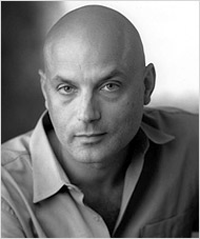
'Lost' author Daniel Mendelsohn.
- The Lost: A Search for Six of Six Million
- Harper (2006)
No one of Jewish descent growing up in America just after the Second World War could be entirely unaffected by the Holocaust. In my family, Uncle Walter and Aunt Holla were presented to us (I'm tempted to say, "exhibited" to us) in the early 1950s as our "survivor" relatives. They had managed "to make it out just in time," I was repeatedly told, in what became the recitation of a family legend, a story whose moral concerned the dangers of procrastination and the vagaries of luck.
Yes, Uncle Walter and Aunt Holla, now placidly seated on a sofa across from us in someone's large living room had sailed on "the last boat out of Europe." As a 10-year-old, I somewhat confusedly tried to imagine a Europe out of which no more boats sailed.
It would be some time before I would have even an inkling of what had happened. The singularity of the Holocaust in the 20th century, in which six million Jews were murdered by the Nazis, is pinpointed by cultural critic George Steiner. The Shoah (as the Holocaust is known in Hebrew) was underwritten, says Steiner, by the unique principle that "a category of persons, down to infancy, was proclaimed guilty of being. Their crime was existence, the mere claim to life." Not until years later -- years of schooling, conversation, and the reading of a dozen or more key books -- would it become clear to me what had happened to Jews in Europe, or the "Old Country," as it was called in the Yiddish-inflected English ("de olt kone-tree") of my and many other Jewish immigrant families.
Odysseyan search
Things were not all that different in Daniel Mendelsohn's family when he was growing up two decades later, in the late 1960s and early 1970s. As he says at the beginning of The Lost: A Search for Six of Six Million, "Some time ago, when I was six or seven or eight years old, it would occasionally happen that I'd walk into a room and certain people would begin to cry."
The rooms that the Long Island, New York-born Mendelsohn entered were those of aging Jewish relatives now living in Miami Beach, Florida, which the Mendelsohns visited during holidays. And what made those elderly Jews weep was the boy's striking resemblance to his dead great-uncle Shmiel Jaeger, who, along with his wife and four daughters had been killed by the Nazis in the 1940s in the small town of what was then Bolechow, Poland (now a part of Ukraine).
That phrase, "killed by the Nazis," was all that Mendelsohn knew of his lost great-uncle. It was "the unwritten caption on the few photographs that we had of him and his family... a prosperous-looking businessman of perhaps 55, standing proprietarily in front of a truck next to two uniformed drivers; a family gathered around a table, the parents, four small girls...; two young men in World War I uniforms, one of whom I knew to be the 21-year-old Shmiel."
That phrase, "killed by the Nazis," was the extent of what Mendelsohn's grandfather, Abraham Jaeger, one of Schmiel's several siblings, would permit himself to say about his long-lost brother.
Out of those scant sources -- a chilling phrase, some few photographs, and years of conversation with his otherwise loquacious and elegant grandfather -- Mendelsohn embarked on an Odysseyan search for his lost relatives. By the time his multi-continent quest reached its almost obsessive heights in the late 1990s and early 2000s, the boy who made elder Jewish relatives cry at the very sight of him was now a man in his 40s.
Brilliantly told
Mendelsohn is a classics professor at Bard College, the author of work in his scholarly field about the Greeks and Romans, as well as a memoir about gay identity, The Elusive Embrace, and an array of remarkably wide-ranging and well-written essays that appear regularly in the New York Review -- writings that persuade some readers (including me) that he's the best American essayist since Gore Vidal.
There are multiple reasons that Mendelsohn's Holocaust tale, The Lost, won the National Book Critics Award and a host of "best book of the year" mentions in 2006 (it was published in paperback late last year). For one thing, it is likely one of the last Holocaust stories to be based on living witnesses. Already, at the end of his book, Mendelsohn lists in memoriam 10 or so of the people he interviewed, then in their 70s and 80s, and now gone. Second, it's a terrific page-turning tale of detection, filled with astonishing coincidences, last-minute discoveries and seeming dead-ends that turn into heart-thudding findings about the fate of the perished.
Third, it's brilliantly written. From the story's very beginning, in the vignette about the boy who makes old relatives cry, to its conclusion, Mendelsohn conjures up entire lost subcultures, from the Jewish diasporas of New York, Miami Beach, Europe and Australia to the almost forgotten shtetl-life of now-gone Jewish communities, as well as the living culture of Israeli habitations and émigré outposts. He captures the strange sounds of disappearing languages like Yiddish and revived ones such as Hebrew and, best of all, he brings to life a remarkable cast of people.
What would you have done?
Beyond all that, which would be sufficient to make The Lost memorable in any case, Mendelsohn succeeds in doing several novel things with what can easily become a tired genre. In the necessary Jewish insistence on remembering the Holocaust, there's the danger of a kind of misuse of memory, a nagging for attention for sentimental or political reasons. I like the brutal Jewish quip criticising the excesses of exploitation of Holocaust memories, cited by Jacobo Timerman in his book The Longest War, "There's no business like Shoah-business." After all, 20th century politics produced so many millions of other deaths, driven by various comparably evil principles, that the Holocaust claim of uniqueness need not be an appropriation of exclusivity with regard to suffering. Mendelsohn avoids all the pitfalls.
In a work one of whose themes must be judgment, Mendelsohn is strikingly non-judgmental and without bitterness, although necessarily sorrowful. One phrase, uttered by many survivors referring to the killings in the multi-ethnic town of Bolechow, that echoes in Mendelsohn's ears throughout his search is "The Germans were bad, the Poles were worse, and the Ukrainians were worst of all." Yet, Mendelsohn's guide to Bolechow over a period of years is his Ukrainian friend, the historian Alex Danai, who, in Mendelsohn's vivid portrait of him, demonstrates an emotional and intellectual courage that undercuts all easy generalizations.
What is striking about Mendelsohn's stance is the way he cautions against quick judgments and instead leaves us with the question, What would you have done?, irrespective of whoever the "you" might be, Jew, or Pole or Ukrainian. Yes, there are countless stories of the inexplicable betrayal of ethnic neighbours with whom one lived in peace for generations, but there are also stories of Ukrainians who hid Jews, or the Polish boy who was in love with one of Shmiel's daughters, and who died for their actions.
The Talmud and the photograph
There are two "framing" devices and one textual theme that elevates The Lost above most other attempts to recover the past. In the Jewish tradition, there is a prescribed list of weekly readings from the Torah, the core books of the Hebrew Bible, that raise themes of creation, destruction, sacrifice, fratricide, conquest and covenants. There is also a long tradition of commentary on the Torah known as the Talmud, added to over the centuries by rabbis, scholars and other writers.
In The Lost, Mendelsohn interleaves his narrative with his own Talmudic commentaries, which relate the Biblical themes to the issues provoked by his quest. Once Mendelsohn does it, it seems like a perfectly obvious thing to do, but I don't know of any similar works that utilize this mode before Mendelsohn's. When I very briefly spoke to him at a talk he gave in Berlin recently, he confirmed that his Talmudic commentaries were a relatively late add-on in the composition of the book. They work very well, giving the project an additional layer of meditative depth. What's more, I like Mendelsohn's attitude to the biblical texts, which make no theological claims for them but rather treats them as the thematic myths that he has inherited. One can't help reflecting, however, that it's a very strange and destructive God that has "chosen" this tribal people.
A second, equally effective framing device is the photographs scattered through the book, some from family collections, and others of people encountered on the search, taken by Mendelsohn's younger brother, Matt. This illustrative notion was introduced, in recent writing, by the émigré German writer, W.G. Sebald, and it's used here as both an homage to Sebald and something more. After a long introductory lead-up in which Mendelsohn's great-uncle Shmiel gradually assumes written form, it's startling to come upon a full-page battered old photo of a strikingly handsome young man in a First World War uniform, gazing out at us through time. This is the man for whom we're searching.
Lost and found
Finally, the narrative is filled with reflections on the nature of story itself, in this case a story about loss. "How easy it is for someone to become lost, forever unknown," Mendelsohn reflects. "At night, I think about these things. I'm pleased with what I know, but now I think much more about everything I could have known, which was so much more than anything I can learn now and which is gone forever." This is a truism that clearly applies not only to those lost in the Holocaust but also to those all of us have lost.
Well along in reconstructing something of the life and death of Shmiel, his wife Ester and their four daughters, but with the story still incomplete, Mendelsohn asks himself, "For whose benefit, exactly, is the wholeness that I want so desperately? The dead need no stories; that is the fantasy of the living...." At this point Mendelsohn had met and interviewed many of the living survivors of Bolechow -- out of some 6,000 Jews, perhaps 50 escaped with their lives; a half-century later a dozen of them were still alive, scattered around the globe -- and various elderly residents of the town who might remember some priceless detail.
So, Mendelsohn could tell himself that there was now more of a story than there had been when he set out, and "surely that counted for something, if as some people think the dead need to be appeased." That's not good enough for this intrepid searcher.
"But of course, I don't believe this," he says. "The dead lie in their graves, in the cemeteries or forests or roadside ditches, and all this is of no interest to them, since they have, now, no interests of any kind at all. It is we, the living, who need the details, the stories, because what the dead no longer care about, mere fragments, a picture that will never be whole, will drive the living mad."
The need for the story is not a sentimentality, but a matter of survival.


23
Login or register to post comments
mopled
4 years ago
"Singularity"?
Last week we were treated to Glavin's character assasination of Kevin Annett, historian of the Aboriginal Holocaust. This week Persky pushing
"nobody got Holocausted like we got Holocausted."
Guys, enough! It is time to turn attention to the present. I'd have more respect for this stuff if the Jewish portion of the Nazi atrocities who emigrated to Israel hadn't turned around and reproduced it in Palestine for the next 60 odd years.
mainstradical
4 years ago
mopled
I'm sorry - where else in the 20th century was industrial genocide committed?
Fiat lux
4 years ago
The old Guinness record
The old Guinness record books used to award the highest number to Mao, with 26 million, Stalin with 22, and Hitler with 16, with 6 mil. of them Jews.
I have no Jewish background and have fought in a nazi satellite army without knowing anything about what was going on behind us.
All my former Jewish schoolmates in Hungary have disappeared forever and when I found out that one of my best friends and chess partners, Peter Adam, was murdered in Auschwitz, I never played chess again in his memory.
The peculiar thing is that nobody questioned the Holocaust for about 10 years after the war.
Which, at the same time, doesn't excuse some of the actions of various Israeli governments and their military.
Ed Deak.
snert
4 years ago
mainstradical
mopled has it right, sorry. 50 million plus others died in that war and for each one it was their own personal 'holocaust'. Far too much time is spent dwelling on the tribulations of just one group.
War is the issue to be dealt with, hopefully avoiding the travesties that have occurred and will, again and again no matter how many 'Holocaust' books are written.
The 'Holocaust' should definitely not be forgotten but it must be viewed in a larger context where it is not perpetually the focus of attention.
ME2
4 years ago
Hypocrisy reigns supreme
Yes, Ed, I have also find it strange that the Holocaust was not a media item until the mid-50s, or that our religious and political elites have claimed to be unaware of it during Wartime.
In the book Other Losses, Eisenhower is said to have been shocked to discover the existence of the camps.
And so turning our backs upon fleeing Jews both before and after the War also says much about our then prevailing attitudes towards Jewry.
But the big shocker for me, just as it was for you, Ed, has been learning of the Israeli treatment of the Palestinians.
We humans are a sorry bunch, indeed.
zalm
4 years ago
Shoah as a catharsis
Well, without any hint of being an apologist for the Israeli treatment of Palestinians on their own territory, I'd still consider this book for my reading list. Not many works approach the Shoah from any different kind of pespective other than "poor me" or "justified me", so Persky's description of this sounds interesting.
After all, damned little has been written by any other group about their treatment during the war - not even "poor me". Name me a great Ukrainian author, or Roma, or Romanian, Balkan or Polish author who wrote about the war in a cathartic way? I can only think of Hungarian literature, like some short stories I read once that included Peter Esterhazy, and a Czech writer, Jaroslav Seifert, who have attempted any kind of soul-searching about who did what during the war, and why. And maybe Marai as well, although I haven't read his work.
Yet every nation and culture that lived through the fighting in the most violent century of man's tenure on earth has a story to tell. My own history includes going back to Montenegro in 2005 to find my roots, discovering I had a past - a genealogy that goes back 400 years, but one in which people lost touch after the First World War, right through the Second and through Communism until the 1990s when they began to recover those lost relationships.
There was good reason. Anybody who had relatives "on the other side", whether that was of the ethnic line (Serb, Croat, Bosniac or Romanian), the economic line (bougeois or socialist), or the administrative (private or government) was subject to terror from any unknown quarter. At a gathering, a distant uncle told with tears in his voice of being forced to dig his own grave twice by the Partisans after being captured for his suspected Fascist leanings, watching as his son was forced to testify against him, and then another man in the village was shot in his place and dumped in the grave. The son was there as well, but could not listen to the story. He was told his father was a Communist who had betrayed the son and the rest of the family to the same (non-existent) Fascists, and willingly gave up his father based on this false evidence. And stories of this kind of treachery were legion.
Yet nobody spoke of it. Nobody spoke of the 600,000 - 1.1 million Serbs (number uncertain) killed in the concentration camps along the Sava river, the thousands of Bosniacs and Albanians killed in the mountain passes after being driven out of their homes, or the tens of thousands of Croats killed for opposing the Fascist Ustashe. Nobody speaks of the 35,000 Roma who were entirely wiped out - no survivors. Homosexuals, socialists, royalists, business-people, farmers, Arabs, religious, Muslims scientists, atheists - you could be killed for anything in that time and more than 2 million were, with no questions asked for fifty years, in a country of not much over 6 million.
zalm
4 years ago
Part II
It wasn't until the 1960s that questions were asked about the 85,000 Jews who lived in the Balkans, mostly in Croatia, Serbia/Vojvodina and Slovenia. And it was Jewish researchers paid for by Jewish money that was asking. Perhaps 20,000 were said to have escaped death in the war and the concentration camps; few remained and fewer returned.
Along the way, this research uncovered what happened to the other 2 million slain in the Balkans, this despite being told not to disturb things, not to ask questions, even being told fiercely to shut up and get out - not by government, but by the people themselves! The ordinary population was so terrorized by the wars, the treachery and the slaughter that they wanted no old ghosts awakened.
Yet, thanks to their efforts, more than 130,000 names have been recovered from the records of the third largest concentration camp in Europe - Jasenovac (pronounced Ya-SHEN-o-vats). The names include what I am certain of is my grandmother's only brother, slain in Jasenovac after his resistance in 1942 led to his capture in Niksic.
This investigation by Holocaust researchers eventually led to the exhumation of old records and stories, and finally the complicity of those on all sides began to be talked about. Finally, in 1997, the first conference was held in New York to speak about these horrors - organized by Jewish survivors and Shoah oganizations, but well attended by Serbs, Croats and others, who, for the first time, began to publicly tell their stories. I think, over the next twenty years, as the youngest who were alive in that time approach old age, that you will see a lot more stories come out of the Balkans, and I hope to be able to contribute in some small way to that lexicon as I hear the stories.
I think the Balkans owes a tremendous debt of gratitude to the Jewish researchers who refused to give up and insisted that all stories be told of this brutal, confusing, shocking time. For only the very first time, three years ago, did I begin to understand what was meant by the Jewish people having custody of the legacy of the Shoah, and that it was to be a gift to all mankind. It's not a legacy I would want custody of.
Give Persky a break. He reviewed an author who wrote what he knew about, as authors are encouraged to do. If any of you hears about a good book on the Balkan Shoah, let me know, and I'll review it.
zalm
4 years ago
Oh yeah,
Mmmmm.... I forgot. Check out the story of Jasenovac. And use the discriminatory sense God gave you - there's a lot of bullshit out there. But there's also stories of horror that made the German military blanche and never return.
www.jasenovac.org/
www.ushmm.org/museum/exhibit/online/jasenovac/
http://www.jasenovac-info.com/
rjm
4 years ago
Identify the bad guys
there are some surprising insights to all of this in a book by John Cornwell.
The location for Auschwitz was chosen, not by the nazi's, but by IG Farben... a zionist owned cartel fashioned as an industrial equivalent to the Rockefeller oil cartel. I beleive it was '47 or '48, the Allied installed government of Germany passed a law permanently hiding the identity of the shareholders of IG Farben.
[COMMENT REMOVED. -MODERATOR.]
tks,
rjm
rjm
4 years ago
identify the bad guys
btw, it is no surprise that various Rabbis are coming forward to denounce the zionist regime and call for the peaceful yet systematic dismantling of Israel on the basis that its very existence is forbidden in the Torah.
I guess you cant keep a lid on things like this forever.
tks,
rjm
Fiat lux
4 years ago
The problem is that any kind
The problem is that any kind of religion, or ideological "...ism" in history, can be and has been, turned into the legalization of any crime, and mass murder.
And history's priesthoods have been masters of it, as now are the pseudo priesthood of economists.
WW2 has killed an estimated 65 million people, most of them civilians. Our presently reigning neoclassical market economic theory is accomplishing the same in about 2 years, through starvation, bad water, simple illnesses and perpetual war, called "wealth creating, globally competitive market economics".
All fundamentalist religions are supporting and using it now, as the excuse for the biggest crime wave in human history, regardless the symbols they're working under.
Ed Deak.
DenisB
4 years ago
2 things
1)"never again" If only we had really meant it instead of it being just a euphamism.
2)I have a jewish friend, Ehud, a history major and teacher, whose complaint is that this one short moment in time seems to have wiped out the previous 6 thousand years of jewish history. Maybe in a hundred years or so the pain will have healed enough for the jewish people to remember all of their accomplishments through their history.
zalm
4 years ago
A caution
The location for Auschwitz was chosen, not by the nazi's, but by IG Farben... a zionist owned cartel
I enjoyed Cornwell's book Hitler's Pope, although found it a bit opinionated about what people were thinking that Cornwell could not possibly have had any knowledge about. But if his book quoted here by rjm says that Farben caused the Auschwitz plant to be built where it was, it's wrong.
Auschwitz was originally a transit camp for emptying the farmlands to the east - Poland, Hungary, Bulgaria, white Russia and Russia, of Jews who were then transported to Dachau for labour or "termination". Its location was chosen because of the large number of rail lines in the area serving the industrial area of Silesia - rail lines being necessary for transportation of "cattle" as they were often known.
It wasn't until 1941 that Auschwitz became a death camp, and that after BASF planned the building of a large chemical plant there. This plant was to be the centre of post-war manufacturing for Germany, and the forced labour was only to be used for building the plant, not for operating it. It was sited in Silesia because there were still a large number of German-speaking trained workers there (at the time, at least) who would have been a more viable and well-trained long-term workforce for BASF.
As to the Zionist nature of its shareholders, well who knows? That Eichmann had a Jewish mother certainly did not make him a Zionist, yet there are those who suggested he was, because of the nature of the Zionist "plot" to prevent transported Jews from escaping to England or America, so that they might more readily be enjoined to go to the newly-developing proto-state in Palestine.
Nothing in my library of about 80 books on Zionism and the Naqba suggests Zionists had a hand in creating Hitler's maelstrom of hate, except incidentally.
zalm
4 years ago
Rabbis, rubbies...
But they always have - this is nothing new. Even while in their own countries before WW2, (Poland, Russia, Romania, Hungary etc.) they condemned the creation of the Zionists entity of Israel as against God's plan; and still again while they were moving to Israel; and again while the wars were fought all around them, and their sons and daughters were serving in the Palmach and Haganah, they said this enterprise is doomed to fail; and they still do today.
And I've never gotten straight why they're there, except that it's better than where they were. People are puzzling, especially when they spend a lot of time talking to their secret friend.
At least Zionists, you know what they're thinking.
ME2
4 years ago
Wealth
No matter what the culture, the basis of the strife both within it and toward its "enemies" can always be traced to the ambitions of its wealthy who seek to dominate others as proof of their own superiority, for of what other value is excessive wealth?
Nothing better for the mega-wealthy then, than to unify people around racial, cultural and religious identifications, form a movement (such as Zionism) and then empower its sword-arm with religious dicta.
It's a scheme as old as organised mankind.
So I differ with Ed's analysis only in thinking that religion notwithstanding, we will remain powerless until we learn how to prevent the accreting of vast wealth and so too the power that goes with it, which has always happened whatever the system it has fed upon.
rjm
4 years ago
Quote:Nothing in my library
In Cornwell's Hitler's Scientists ISBN 0-670-03075-9, Chapter 27 The Devil's Chemists, repeated references are made to the "symbiotic" relationship between IG Farben and the SS.
Evidently, Aushwitz chosen by Dr Otto Ambros, on behalf of IG Farben, because of its location at the confluence of 3 rivers. The synthetic rubber plant that was to be built for the nazis required a considerable labour force, fortunately for IG Farben, the nazis had access to slave labour.
Its bad enough that IG Farben held nearly half of Degesch, the company that made ZyklonB, but their complicity in Auschwitz dates to the very beginning. IG Farben's synthetic rubber plant required an enormous amount of water to operate, (a requirement eerily similar to today's Oil Sands, in more ways than 1) It was most certainly IF Farbens logistical requirements that dictated the choosing of Auschwitz for the location of the facility.
There is absolutely no doubt that IG Farben was complicit in the atrocities of Auschwitz.
The nazis imported the labour force, those that didnt meet IG Farben's requirements went to the gas chambers.
I have noticed that there is some information available as the the punishment handed out to IG Farben executives after the war. It seems that the further up the corporate ladder you go, the lesser the sentence. I dont think any of the numerous IG Farben execs got more than 8 years for their dirty deeds, and it is quite clear that many more got away than were held to account.
It is also worth noting that the it was deemed necessary to hide the identity of the shareholders of this corporation, intimately entwined with the nazi regime, about the time of the creation of the state of israel.
[EDITED. -MODERATOR.]
btw, Mr. Zalm,
[HIGHLY OFFENSIVE COMMENTS REMOVED AND COMMENTER BLOCKED. -MODERATOR.]
rjm
G West
4 years ago
That is a truly racist and hateful statement
This is a truly racist, offensive, incorrect and hateful statement:
They are fundamentally responsible for every death that occurred during WWll and every person on this planet should know that... after all, it is the truth.
If it's not deleted and you, rjm, aren't banned from further postings here then The Tyee has lost any claim to further relevance.
ME2
4 years ago
It's still the same old......
The unfortunate truth is that Jewish capitalists did indeed have investments in Hitler's war machine, and that beyond question some were indeed "collaborators".
But that is in itself not an indictment that can be specifically laid only upon Jews, but rather is indicative of the consistent actions of all the mega-wealthy, regardless of race, colour or creed.
It is worthy of note that in the three years '39 to '41, prior to the US entry into the War, the US profited from massive investments in Germany, notably in the chemical and steel industries. All the while, incidentally, pretending ignorance of the Holocaust.
A favourite of conspiracy theorists is the "Intenational Jewish Conspiracy", while ignoring the fact that despite the great wealth of people like the Rockerfellers, even they would wield little power without the active complicity of the far more numerous non-Jewish economic elites of the Western nations.
We don't hear much about that "Conspiracy" these days, even from the Right Wingers who have long used it to focus attention away from the manipulations and theft by their own wealthy elites.
But they've had good reason for blaming Jews, since these same Fascist-inclined elites of our Western nations actively promoted and supported Hitler prior to WW2 as they looked for a bulwark against the rising Socialist tide.
Today they don't call it Fascism - it's now called the New World Order.
And it doesn't owe any allegiance to any race, any Nation, or any people. Its only allegiance is to money - and don't dare get in its way.
dorothy
4 years ago
not so simple
"...proof of their own superiority, for of what other value is excessive wealth?"
The superiority is not the central issue. The excessive wealth is an attempt to buy off he fates, to stave off the end of life. People who scramble to acquire excessive wealth are living in abject fear of dying. Think about it. You will see it makes logical sense. If we accept that we will die some day, the acquisition becomes a pointless pursuit, which will only keep us from using life to the fullest. Read Robbins' book, where he talks about "getting passionate" about things, then tells us, that once you have become successful and wealthy, the task to concentrate on is to "guard what you have earned" against all those who would take advantage. Bully for him - can you imagine any more desolate thing to occupy yourself with than "guarding" your wealth? Fear again, when all our strivings in life should be towards getting out from under fears that have been instilled in us for the purpose of controlling us...
RockSteady
4 years ago
The Polish Lost Should Be Remembered Too
Let's not forget how many Polish were killed by Nazi's. It is strange how we never really talk about that...in fact most schools don't mention anything but the Jews perishing in the Holocaust, which is tragic considering that many other races perished among the Jews and one of the most numerous were the Polish.
The Nazi German death machine in the Nazi-occupied half of Poland killed:
More than 2 million Polish Catholics, with special emphasis on eliminating the national elites (Zbigniew Brzezinski, Out of Control, Scribner's 1993, 7-18).
One out of four (25 percent) of Catholic clergy (Polish Foreign Minister Wladyslaw Bartoszewski's Speech to the Bundestag in Bonn, Germany, 28 April 1995).
One out of four (25 percent) of all Polish scientists (Bartoszewski, op. cit.).
One out of five (20 percent) of all Polish schoolteachers (Bartoszewski, op. cit.)
200,000 Polish children were deported to Germany for purposes of Germanization. 150,000, or 75 percent, never returned to their families in Poland (Bartoszewski, op. cit.).
May their souls rest in peace and may they also be remembered!
Latarnik
4 years ago
Seeking Six Million
My step father was a Catholic Chaplain of the Polish Army and was not taken to POW camp, but to Oswiecim (called by Germans and Jews) Auschwitz in 1939.
Close to 3,000 Polish Catholic priests and Bishops were killed by Germans during WW2. Could Hitler be called Christian? He was a pagan, friend, maybe even agent of Stalin. All the members of German Communist Party were ordered by Stalin to join Nazi Party. Is this a news to you? Opponents of it like Rosa Luxemburg or Karl Libknecht were promptly killed by Stalin.
During the first year of WW2 there were hardly any Jews in Auschwitz. Hitler was still trying to "resettle" Jews to Palestine, Madagascar or "sell" to America for a $1,000 per family f.o.b Spanish Border. There were no takers and British would not allow them in Palestine!
Killing machine has started, but let's not forget that when Hitler invaded Poland he had a list of 60,000 (Sonderlist) of Poles to be summarily killed, and most of them were caught and died in public executions. Stalin attacked Poland 17 days later when he figured out that Britain and France will betray her by breaking a treaty with Poland and would not open another front in the West.
Stalin had a list of over 100,000 to be killed and 10 million to be deported to Siberia. And they were. Population of Poland after the war, even considering border changes, was more than 15 million less, including some Polish Jews.
Nazi Gestapo and Soviet NKVD, when they were good friends between 1939 to 1941 kept regular meetings to decide who i is going to be killed by whom? They even had a "prisoner's exchange," to be debriefed before dying from tortures and executions.
There were no Polish collaborators with Nazis, as they were in France or even Britain.
Now there is a campaign of HOLOCAUSTS ENTERPRISE to accuse Poles for collaborating with Germans to kill Jews. It is the dirtiest propaganda trick I have ever seen.
Word Germans is seldom used. Some nameless, faceless Nazis are named to be culprits of it all.
Of course they were larger genocides than killing Jews during WW2. I measure genocide by a percentage of own citizenry killed. Communists like Pol Pot, Mao and Stalin have a big lead over Hitler. Japanese killed 10 million Chinese between 1937 and 1939. Does anybody remember about it?
More than 10 million Ukrainians were starved to death by Stalin in 1931. Not because lack of food in Soviet Union. They were selling enough grain to the West, to get hard currencies to provide each starved Ukrainian with 3,000 calories a day. According to David Friedman, this is the worst example of state controlled distribution of food. Socialism at its worst.
ME2
4 years ago
Rocksteady and Laternick,
Well, after reading your posts, I've come to the realisationen of how little I know and how fortunate I am to have led such a sheltered life at a time when so much suffering and death was going on elsewhere.
I'm blithering on because I feel compelled to do so. Perhaps it's because it's just too much to think that all that suffering and all those deaths could be for nothing positive.
Maybe your recountings being read by myself and the hundreds of other TYEE readers will influence many of us positively by making us more mindful of others far away.
Whatever, thank you both.
zalm
4 years ago
ME2
But that is in itself not an indictment that can be specifically laid only upon Jews, but rather is indicative of the consistent actions of all the mega-wealthy, regardless of race, colour or creed.
Repeat if necessary. As often as necessary.
Well said.