
Books

'The Biggest Story in the World'

Stephanie Nolen on AIDS, Africans, hope and gin.

By Bryan Zandberg, 3 May 2007, TheTyee.ca

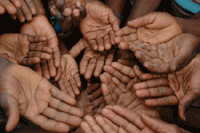
Many hands

Twenty-eight million Africans infected with HIV.

  • 28: Stories of AIDS in Africa
  • Stephanie Nolen
  • Knopf Canada (2007)

After a 36-hour flight from South Africa with her seven-month-old baby, and three days into a whirlwind tour of Canada, Stephanie Nolen still possesses energy aplenty to talk about "the biggest story in the world."

When I spoke to her last week, Nolen had just wrapped up a call-in radio show in Toronto where she took questions from "people who don't have the most enlightened view of AIDS in Africa."

"That's who the book is for," she said of the callers, wishing aloud she'd called the most ignorant ones "big wankers" on-air.

To many Canadians, Nolen is the blunt and deeply compassionate Africa correspondent for The Globe and Mail. Her new book 28: Stories of AIDS in Africa, was published last month by Knopf Canada.

Nolen's journey to Africa actually began in the Middle East. She landed in the West Bank as a young student under a mountain of debt from a Master's at the London School of Economics. Quickly mastering Arabic, she freelanced her way to a job with the Globe through her coverage of regional conflicts, including the fall of the Taliban, the 1996 war in Lebanon and the onset of the war in Iraq.

"It's kind of a Darwinian thing," she says of the conflicts, "if you don't actually get killed you become a foreign correspondent."

It was back in Canada, where she was working as an arts and life reporter for the Globe in Toronto ("which I frankly really hated," she laughs), that Nolen first caught on to a disturbing current in sub-Saharan Africa. Any opportunity she could find -- meaning her vacations -- she would leave her "wine and wallpaper" beat and catch flights to AIDS-ravaged nations like Malawi and Tanzania.

Eventually she convinced the Globe's editors to let her set up in Johannesburg, South Africa, and began publishing regular dispatches that set out to show Canadians just how unlike the other "African problems" HIV really was and is.

28 is a convincing continuation of that work. Here Nolen concerns herself with two things: humanizing an often paralyzing issue and exposing the workings of the deadly virus. To do that, she deftly recounts the stories of 28 people who have been touched in one way or another by HIV/AIDS: one story for each one million people infected. It's a moving read and a landmark text for anyone willing to look the disaster square in the face.

Here's some of what she had to say to The Tyee.

How did you select the people who tell their stories in the book?

"I did it two ways. One is I made a list of all the things that I thought people needed to know to really understand this issue. What political, economic, medical social information did you [the reader] need, and then I went looking for people whose personal stories would help to understand that. A little like the pill your mother hides in the raspberry jam when you're a kid....

"The other half is I made another list of people who [pauses]. My partner Meril said to me one time when I came home from Swaziland (and Swaziland has the worst infection rate in the world, it's about 43 per cent) and I came home and he says 'You know you go to Swaziland to write about AIDS and you still come home exhilarated.'

"And he said, 'People say to you all the time, "How do you do this job? It must be so depressing." But you're not depressed.'

"And he said, 'It's the people you spend time with.'

"And I thought, 'That's actually really important.' If I can spend time and introduce readers of the book to the kind of extraordinary people that I am privileged enough to spend time with all the time and now call friends, we might all get past thinking about this as a numbingly depressing issue."

Why is AIDS not just one more disaster in Africa? What makes it different?

"I think that we think 'Oh, AIDS: Bad.' But when we think of Africa, we think, 'Drought: bad; war: bad; famine: bad.' Right? It's one more bad thing in a place full of bad things.

"What I came to understand was that in fact AIDS underlies so many of these things. Yes there were epidemics of tuberculosis and malaria but they wouldn't be half as bad if everyone didn't already have a shattered immune system from HIV, and they wouldn't be half as bad if there were doctors or nurses or pharmacists to work in the hospitals, but they've all been killed by HIV. And the country has no tax base to respond because its economy has been crippled by HIV. That society is reeling and can't organize itself to respond because a whole generation of parents and young adults, who would not only be productive workers but who would also be building families, have disappeared because of HIV."

What do you think of the AIDS coverage on the major networks?

"I don't see the networks so it's really hard for me to answer that because we don't have a TV....

"I can tell you based on the fact that in the four years that I've been reporting on this story I have found myself in the company of other journalists exactly once. I have the sense that it still not exactly dominating our airwaves."

So you don't hang out with journalists often?

"I hang out with them when I'm back in Jo'burg, but when I'm reporting, the stories I do, I'm usually the only reporter on the story.

"The 10th anniversary of the Rwanda genocide I found myself in a good old fashioned -- can I use this term? -- media clusterfuck. But that's the only time that that's ever happened since I've been there.

"Actually, I'm sorry I'm lying that's not true. The Zimbabwe presidential elections: the last time Mugabe let any of us foreign journalists into the country, there was a few of us. There was a handful, probably fewer than there are at the B.C. legislature on a busy day."

I've read you're one of only three Western journalists in the world wholly dedicated to the covering the AIDS story. Is that true?

"You know what, that's not even true. The other two have left."

What kind of person wants to be a foreign correspondent? You spend your whole life in war zones.

"If I think about what we have in common (the foreign correspondents I hang out with in Jo'burg), we're sort of acerbic, cynical, bitter people who don't do well in [pauses]. Well, you couldn't put any of us back in our newsrooms anymore I don't think.

"But also [we're] people with an interest in the world and people with a willingness to go through some often adversarial conditions to get a story. But I believe those are stories that are worth telling, and that it's worth what it takes to go and get them. And we'd all rather spend our time getting screwed around by a corrupt Zimbabwean customs official than we would sitting in a newsroom in Canada.

"What does that tell you about our social skills? Limited."

I was reading a piece you wrote for Ms. magazine about gang rape survivors in the Congo and found I was so horrified by the details that I didn't want to read any more. Knowing your audience must experience this all the time, how do you negotiate writing things that could turn your readers away?

"That's a good question. You know what I think? I just tell the story and I take the chance that they may or may not go away.

I don't know whether this is a streak of masochism in my personality or what it is but my feeling is that I would always rather know than not."

What's the most hopeful story in the fight against AIDS in Africa right now?

"I think we're all pretty surprised at how successful male circumcision has proved in preventing transmission of the virus, that's good news.

"There's a lot less shame and a lot less fear [about admitting one has the virus] than when I first started. There's still plenty, but there's less. That's one of the things that's going to make a difference. The more normalized this becomes it's incredibly important....

"I guess maybe the most hopeful story, and this is sort of occurring to me as I talk, is the social movements that have emerged in response to HIV, and they have become some of the most powerful movements in their countries. It's people with AIDS who challenge their governments or pharmaceutical companies, or their own communities. They've organized a really powerful coalition, and I think that's a really great thing."

Why is the stigma diminishing?

"Treatment. When treatment came it wasn't a fatal illness anymore. When a few people saw people who had been at death's door get better, get up and walk again, then it made it a little less scary for a few more people to come out. And when a few more people came out -- and you actually knew somebody who was living with AIDS -- then it became easier for you to tell your family."

First-stage anti-retrovirals have become increasingly available; however, the second and third stages of drug therapy are still protected by patents and are too expensive for a massive deployment in Africa. How is the fight going to change that?

"Incredibly badly and I'm really glad that you brought that up. There's been all kinds of attention for totally understandable reasons about rushing people on to first-line treatment. Sooner or later people get resistant to those drugs, like the staphylococcus becomes resistant to an antibiotic.

"If you live in Vancouver, you can turn around tomorrow and go down to the pharmacy and get second-line drugs, third-line drugs, fifth-line drugs: there's a lot of drugs. Right now in Africa in terms of drugs you can afford.... When I started covering this story, first-line drugs costs about $10,000 [per person] a year. Today they cost about 120. That's put into the realm of affordability for governments all across the continent. Fantastic. What happens three or four years from now when those people are resistant to those drugs and they need second or third-line drugs and those drugs cost five and 12 times more? They're not accessible in any way; what is going to happen to their people? There's really no plan and I think that's an incredibly critical issue."

Are there things women will tell you they won't tell a male journalist?

"You know I'll never know that for sure; I don't have a control group. I suspect so. I suspect that the long conversations that I have about sexual violence are different with me than they would be with men. I also have no illusions about the fact that sisterhood goes so far. I think that the economic difference between me and the people I interview is probably a vastly greater gulf than the gender one is."

Really?

"Yeah, I'm an alien for these people; I arrive all shiny and white and well-fed and clean-clothed, and I don't think they know who the hell I am or what I'm doing there. And it's the saving grace of my job -- and I'm incredibly fortunate -- they're nice enough not to tell me to fuck off. They almost always answer my questions. I'm not sure I would be so generous."

Has the line between personal and professional changed for you since you started this assignment?

"I live in the middle of it. It's not only my job, it's my friends who are infected. We go to funerals on the weekends. You can't live in a city where one in three people have HIV and have a... you're not going to leave the office at five o'clock, right?

"But I don't know a lot of journalists who rigorously maintain that division."

So how do you cope with things like that, with things like funerals on the weekend?

"Gin."

The gym?

"GIN. As in gin-and-tonic and lemon with a few ice cubes. It's the same thing, right? Of course it's hard but it's happening, I know the pandemic is happening and I would far rather be there and be living in the reality of it than be living in Toronto and having the extent of my involvement be the fact that I bought the Product Red cell phone."

How sustainable is this for you?

"You mean how much gin can a girl drink? [laughs]

"I imagine I'll stay for awhile. I don't feel done."

 [Tyee]

17  Comments:

Login or register to post comments

  • Truman Green

    5 years ago

    hiv antibody test or clincal case diagnosis

    I'm wondering what percentage of the 43% of people in Swaziland who are "infected' have been diagnosed by a hiv antibody test, and what percentage have been diagnosed by a clinical case definition.

    And who paid for these millions of antibody tests, if the diagnosis was done by antibody test?

    Also what percentage of the 43% are claimed to be suffering from a fatal illness?

  • Truman Green

    5 years ago

    Is the hiv antibody test specific

    And one more thing, if I may--Is the hiv antibody test specific to the hiv particle or can a false antibody test result from the immune system reacting to any one of 70 other pathogenic syndromes, as found in the study by Christine Johnson?

    That is, does the hiv antibody test mean that the patient is suffering from a fatal illness or that the immune system of the patient is, in fact, working properly and producing ANTIBODIES, which afterall, is its job.

    And why do the Aidists claim that the presence of antibodies proves that a disease state is on the verge of causing illness, when in fact, antibodies mean that the system is working just fine, and has in truth, just defeated an invading pathogen.

    Antibodies are good, eh.

  • Truman Green

    5 years ago

    So if antibodies are good...

    What will the Aidist do when they invent a vaccine which is an analogue of the virus--attenuated, dead or whatever--whose job it is to prod the immune system into constructing hiv-specific antibodies, when the very presence of antibodies in the first place is what allowed the Aidists to claim that the patient was suffering from a fatal illness?

    Will the patient not have to receive a certificate from the Aidists which says something like:

    "To all medical professionals--disregard the presence of antibodies. These antibodies were prodded into the existence by our new vaccine. We know we said before that antibodies in the blood of a patient mean he's gonna die, (the famous hiv antibody test) but these antibodies are from our new vaccine, eh--and they're different."

    And so, Nolen or Zandberg, may I ask: do antibodies--even from a vaccine--mean life or death?

  • mopled

    5 years ago

    African Aids

    The official description of AIDS in Africa is different than in the developed countries.

    Quote:
    Unlike in the United States, AIDS in Africa may be diagnosed based on four clinical symptoms -- fever, involuntary loss of 10% of normal body weight, persistent cough, and diarrhea -- and HIV tests are not required. (63) The four clinical AIDS symptoms are identical to those associated with conditions that run rampant on the African continent such as malaria, tuberculosis, parasitic infections, the effects of malnutrition, and unsanitary drinking and bathing water. These symptoms are the result of poverty and other problems that have troubled Africa and other developing areas of the world for many decades.

    http://www.aliveandwell.org/

  • mopled

    5 years ago

  • Truman Green

    5 years ago

    The Biggest Story In The World

    is that HIV was engineered in a lab by the old virus cancer project people, and without upgraded mycoplasmas, (also genetically manipulated) is entirely harmless.

    Aids in America was originally caused by vaccine-vectored and homosexual-targetted mycoplasmas, and continued by administering immunesuppressing antiretroviral chemotherapies (such as the poison AZT) to unsuspecting, but perfectly well, hiv- positive people.

    Aids in Africa is just about people dying, as usual, from poverty, war and starvation--with their illnesses referred to as "Aids."

    The most obscene but brilliant marketing hoax of all time.

    Go here for essentially the true story:

    http://www.consumerhealth.org/articles/display.cfm?ID=20050621150422

  • flattax

    5 years ago

    HIV conspiracy theory

    Is not true. Conspiracy theories help some people to explain the horror of events like 9-11 and the Aids virus, but they are not true and are not constructive.

    It is amazing however, that this article does not spend much time on circumcision, which is quite effective.

  • Truman Green

    5 years ago

    just trot out the word 'conspiracy' and you

    think you've discredited the true history of the Aids scam, eh Flattax.

    Circumcision is a huge joke regarding hiv because the harmless retrovirus is only sexually transmissable at an average of 9 times per one thousand sexual intercourse contacts.

    Nancy Padian provided ample evidence of this in her well-known study which was the largest ever done on the heterosexual transmission of the so-called virus.

    Of course, she repudiated the findings of her own study and went to work for the Aids Africa syndicate on a huge grant.

    Fortunately the number of hiv positive people who are 'on to' the scam--at least in Canada--is increasing and many are now rejecting the dangerous antiretroviral therapy, which often causes the very symptoms considered to be Aids by the Aids profiteers.

    It's very hopeful that hiv people are learning that the best way to survive the dreaded hiv antibody test (which proves nothing specific) is to reject the antiretrovirals and live a healthy lifestyle, taking the hiv test as an indication that the immune system has been alerted to the intrusion of one of 70 or so pathogens.

    Go here for more on Padian: http://barnesworld.blogs.com/barnes_world/2006/08/more_on_african.htm

    Unelected BC Aids Czar, Julio Montaner, of the so-called Centre for Excellence in HIV/AIDS, along with a few other Aidists, has come up with a plan to prescribe hiv antiretrovirals to all hiv positive people.

    The Aidists have noticed that many long term hiv positive people do not get sick. They've invented several new names for them, such as 'long-term progressor' and 'elite controllers.'

    Grants have been given (of course) to study the genetic backgrounds of these people who have in common that they have stayed away from poisonous chemotherapies.

  • Truman Green

    5 years ago

    Padian link didn't work?

    The Nancy Padian story is complicated and I doubt if it's possible to get an accurate overview of her study and how she has denied that it shows that hiv is only very slightly heterosexually transmissable, without doing a serious study of her findings.

    If the link in my last comment didn't work, google: The Padian Waffle August 09, 2006 for a quick look at the issues involved.

  • Truman Green

    5 years ago

    If you looked at the Padian study

    you will have discovered that the heterosexual transmission rate for hiv from WOMEN TO MEN is one in ten thousand, ten times less likely than from men to women.

    Even more startling to Aidist believers will be the work of J. Palenicek et al way back in l992 which showed that homosexual transmission of hiv is more a matter of Aidist mythology than reality.

    Go here: "Longitudinal Study of Homosexual Couples discordant for HIV-1 Antibodies In
    The Baltimore MACS Study, J. Palenicek,"

    Read the entire PUBMED abstract beginning with: "Thirty-six sexually active couples serologically discordant for human immunodeficiency virus, type 1(HIV), within the Baltimore Multicener AIDS Cohort Study (MACS) were assessed..."

    Most interesting is the following:

    "A separate evaluation of unprotected anal receptive and insertive intercourse between discordant couples indicated high risk activities for a median of 40 months, as reported by the HIV seropositive partner...

    AND THIS: "Despite this finding NONE of the HIV-1 seronegative men in discordant couples had evidence of HIV-1 infection by viral culture, p24 antigen testing, or polymerase chain reaction for HIV-1 DNA."

    "The reason for this apparent lack of HIV-1 infection in discordant individuals remains unexplained."

    Not quite "unexplained," of course. High risk homosexual activity does not transmit hiv because hiv is even less homosexually transmissable than heterosexually transmissable.

  • mopled

    5 years ago

    Riddle for flattax

    What do the Magic Bullet, HIV, jet fuel and CO2 have in common?

    Answer: None of them are capable of what they are supposed to have done.

  • Truman Green

    5 years ago

    A few months ago I tried doing a comment

    in the Globe and Mail comments section in which I suggested ever so obsequiously and timidly that I was thinking maybe hiv doesn't really cause Aids. They allowed as how they'd have to read my comment for up to 24 hours and let me know if it was suitable. Suffice to say, it didn't appear.

    So this is very cool. Freedom of speech in Aids denialism. And no other posters. I guess genocide isn't important afterall.

    Brian Zandberg asks Stephanie Nolen: "What's the most hopeful story in the fight against Aids in Africa right now?"

    Nolen responds: "I think we're all pretty surprised at how successful male circumcision has proved in preventing transmission of the virus, that's good news."

    Tina Rosenberg, writing in the New York Times, Jan 14, 2007, agrees. She asks: "Could circumcision turn out to be as good as a shot?"

    And this: "The vaccine that arrived last month was not actually a vaccine. It was, instead, a confirmation of what science had long suspected: circumcision helps protect men from Aids infection."

    Rosenberg, obviously a bit confused by the antibody-vaccine problem I alluded to, brushes it off by claiming that hiv doesn't make very good antibodies. And the editors go for it.

    cont'd

  • Truman Green

    5 years ago

    Where was I? Oh yeah, circumscision...

    Nolen and Rosenberg go for rumour a lot. Now, myself, I tend to go for the science, but that's just me, eh.

    For example, google this: "Probability of HIV-1 Transmission Per Coital Act In Monogamous Heterosexual, HiV-1 Discordant Couples in Rakai, Uganda.

    Incidently, beyond circumcision, the probability of HIV transmission in this study is only slighly higher than in the Padian study, not sufficient to make circumcision or condoms particularly relevant.

    Back to circumcision.

    On the "Probability" site scroll down to the paragraph beginning; "Table 1 shows rate ratio of transmission per..." until you come to this little gem:

    "The risk of Transmission was not significantly affected by the circumcision status of the HIV-1 positive male partner."

    cont'd (maybe)

  • Truman Green

    5 years ago

    And here's a review of 35 circumcision-hiv

    studies:

    Here: "Circumcision & HIV Infection Review Of The Literature And Meta-Analysis."
    International Journal of Std, IDS, Vol 10, Pages 8-16, Jan. 1999. Last revised Dec 7, 2006

    As you might imagine, this caught my eye:

    "Based on the studies published to date, recommending routine circumcision as a prophylactic measure to prevent HIV infection in Africa, or elsewhere is scientificlly unfounded."

    And: "What consistently appears throughout all of these studies is the strong correlation between genital ulcer disease and HIV infection. There is also correlation between genital ulcer disease and the foreskin in many of the studies. However, when multivariate analysis was performed on several of the studies, the foreskin, as a factor was no longer significant, suggesting that the genital ulcer disease rather than the foreskin facillitated the transmission of HIV."

    Figures!

    Some more Aidist epiphenomenological wizardry to find a new cure for Aids in place of the elusive vaccine they'll never find because the human immune system is too intelligent to let a few live, attenuated or killed particles of a harmless mini-kilobased transposon frighten it into constructing antibodies.

    For a more cogent understanding of the epiphenomenal trick upon which the entire HIV/AIDS hoax depends for survival, see the link to "Blame It On Bread," posted by a clued-in Tyee worker in the 'Reported Elsewhere' column.

    And blame it on bread, eh, or circumcision, or hiv--whatever.

    Thanks.

  • Truman Green

    5 years ago

    Follow the money, eh

    According to Amanda Euringer, writing in the Tyee, Christmas Day, 2006, there's huge bucks in foreskins.

    See: B.C. Health Pays To Restore Man's Foreskin.

    This, according to Euringer: 'Timini claims that "circumcision is also a multi-billion dollar industry in Canada and the U.S." and that one doctor in the Lower Mainland of BC claims to have performed 20,000 circumcisions over the past decade, charging around $250.00 per procedure.'

    'Dr. Timini estimates that between the surgery and the foreskin's resale value, each foreskin is worth approximately $100,000.'

    Any bets on the split of the cash between the medical "scientists" and the African men who will be henceforh giving up their foreskins?

    I'm thinking the Africans will get zero, nada, nothing--as usual--when the Aidists come to town, poisonous antiretrovirals in tow.

  • Truman Green

    5 years ago

    But remember his, above all..

    It's mycoplasmas that destroy cluster differentiation type 4 Thymus cells, (CD4's) not a harmless retrovirus, laughingly known as HIV.

  • Truman Green

    5 years ago

    I swear I typed that 't.'

    So don't remember 'his,' but remember 'this.'

    • No best comments selected by an editor for this story yet. To see all comments, click the All Comments tab, above.
    • The discussion for this story is closed. No more comments can be added.