
Books

Pink Tide 'Pirates'

Tariq Ali surveys the new Latin left.

By Derrick O'Keefe, 12 Jan 2007, TheTyee.ca

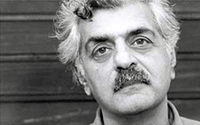
Tariq Ali

Tariq Ali explores "Che's Revenge."

  • Pirates of the Caribbean: Axis of Hope
  • Tariq Ali
  • Verso (2006)

In January's early days, a double-header of inaugurations highlighted the breadth of the "pink tide" sweeping politics south of the Rio Grande. On Jan. 10, Daniel Ortega was sworn in as president of Nicaragua, completing a 17-year effort to regain that country's top office. Venezuelan president Hugo Chavez arrived late for the Sandinista celebrations, flying in from his own swearing in for another six years.

Ortega has come a long way from his days leading the Nicaraguan revolution against the contras in the 1980s. He went to great pains to soothe the worries of the country's entrenched elite, watering down his economic demands to something like moderate social democracy. Chavez has taken a very different, aggressively anti-capitalist course, backed by a vibrant popular movement carrying out what is known as the Bolivarian Revolution. In the first days of 2007, the Venezuelan leader has already announced the nationalization of electric and telecommunications companies, emphasizing that this is part of a larger trend in which "everything that has been privatized will be nationalized."

The diversity among such Latin American leaders has caused some to identify "two lefts" in the region. In last May's Foreign Affairs, Jorge Castaneda, the former foreign minister of Mexico under Vincente Fox, counterposes "modern, open-minded, reformist, and internationalist" nominally socialist regimes in Brazil and Chile with "nationalist, strident, and close-minded" governments in Venezuela and Bolivia.

Castaneda, a former Marxist intellectual turned minister in a conservative regime, is precisely the type of turncoat upon which Tariq Ali enjoys venting all of his considerable polemical skills. The Pakistani-born Ali, a veteran activist, playwright and writer based in Britain, has, for instance, savaged former comrade-in-arms Christopher Hitchens's support for the Iraq war in both print and live debate. Early in 2006, Ali released the book Rough Music, a short and wicked denunciation of Tony Blair. He has since turned his pen to the rebirth of the left in Latin America, and in particular to the regimes loathed by Castaneda, with Pirates of the Caribbean: Axis of Hope.

A bridge from Cuba

The pirates in question are Cuba's Fidel Castro, Venezuala's Chavez and Bolivia's Evo Morales (although it must be noted that Morales leads a land-locked Andean country somewhat removed from the Caribbean Sea).

In a world as beset by inequality and imperial war as ever, Ali takes hope from this new Latin American alliance, examining the radical reforms underway in Venezuela and Bolivia and assessing the role played in these new political movements by the old revolution in Cuba and its ailing octogenarian commandante en jefe. The Cubans are a bridge from an earlier political era, according to Ali, whose own background is as a Marxist critical of the Soviet, Eastern European and other bureaucratic states.

The "old man in Havana," as the author rather affectionately refers to Castro, was prescient enough to identify early on the importance of Chavez's political project in Venezuela. But rather than insisting on "Cubanizing" the Venezuelans politically, as Soviet apparatchiks might have, Cuba instead provided much-needed human capital in the form of more than 10,000 medical personnel. In exchange for the doctors, who are essential in expanding Chavez's social programs, Caracas sends cheap oil to the energy-starved island. Ali provides a brief history of past concerns that made him take his distance from Cuba, as well as an assessment of Cuba's prospects after Fidel Castro. The author makes clear his disdain for any plans to return to U.S. domination:

Bolivia sees its ghosts

"Washington is waiting for the Old Man to die. Then a new offensive will begin. It will be an economic not a military assault, offering money in unlimited quantities to buy the loyalty of the island people and promising them a consumer paradise for eternity. If they succeed, it will be a tragedy for Cuba and Latin America."

According to Ali, another type of revolution is now also taking place in Bolivia, where the indigenous majority has finally elected one of its own in Morales. The author has an added reason for taking satisfaction in recent events in Bolivia. In 1967, he was part of a small team of British journalists who travelled to the country during the months when Che Guevara's band of guerrilla fighters was being rounded up and killed by the army. Ali believes Bolivia is today experiencing "Che's revenge."

Pirates of the Caribbean is richly footnoted and contains lengthy appendices in which Ali takes out his own polemical revenge on a number of those apostates of the left who now use their talents to demonize their former allies. For anyone interested in understanding Latin America's "New Left," Tariq Ali's Pirates is a great place to start.  [Tyee]

8  Comments:

Login or register to post comments

  • bpither1

    5 years ago

  • Cynic

    5 years ago

    Hugo Chavez once said

    Hugo Chavez once said "Imagine if the U.S. declared peace on the world, brought home all its troops, and started producing food and medicine to help the world's poor."

    Now that's what we need to hear from leaders. Too bad Canada is led by a warmonger.

  • James Burns

    5 years ago

    New Latin Left

    I'll be taking a look at Ali's book. And yes, Dyer definitely has some interesting insight into the situation in Latin America.

    I will be watching to see what direction Ortega takes, but there can be no doubt he's a far more watered down version of the Sandinista he once was, and that's being very kind. Nicaragua, however, has been decimated by failed neo-liberal economic policies. So much of the population lives in terrible poverty now that it is next to unrecognizable as the place it was even from the late '80s. Ortega will have to begin to initiate more progressive policies, both to get help from Venezuela and to show he can alleviate some of the truly massive suffering of the poor.

    Cuba and Venezuela are certainly ever more tied at the hip. It will be interesting if they do try for some sort of federated arrangement. But like Dyer says, it would have to be a relatively loose federation. If the Cubans as a whole are anything, they are an intensely nationalistic and proud people. Whatever Cubans' feelings about their government, they are proud to be Cuban and they want a Cuba run by Cubans. That, along with a profound understanding of many of the real accomplishments of the revolution, is why there hasn't been any unrest over Castro's illness. None of them want Cuba to be run by Americans again (and when I say Cubans I do not mean. Cuban-Americans).

    Dyer thinks the Americans will throw "unlimited" amounts of money at Cuba once Castro dies to try to effect an economic takeover. I suppose that is a possibility, but given the amount the Americans are currently spending on war I suspect the amounts of money they might have available will be far from "unlimited". What's more the Cuban-American terrorist groups that have been supported by the CIA since the Cuban revolution are almost guaranteed to try and sabotage any easy rapprochement. They are a truly murderous bunch.

    I can only hope that, if there is any post-Castro transition, it will be slow and smooth. One that enables Cubans to preserve their truly remarkable accomplishments in health, medicine and education, while enabling a gradual opening of trade with the U.S., so Cubans can see an improvement in their standards of living. They need to avoid at all costs a Russian style shock transition where the nation's assets are sold off for pennies to a tiny powerful elite of oligarchs, while the rest of the population gets to live in squalor, and can only press their noses against the glass of the new Yankee shops stocked with the latest iPods and designer clothes. The corruption of corporate capitalism will simply destroy Cuba. I don't believe Cubans will let that happen. Hopefully, they will be able to realize something along the lines of what Vietnam is doing, as that would be far better for the Cuban population as a whole.

    Although, if Cuba does enter some sort of federated arrangement with Venezuela, who knows what Latin America could look like in 20 or 30 years. Imagine a Latin American trading block along the lines of the EU. It certainly would make sense for them from an economic stand point, and they have far fewer language and cultural barriers than Europeans do. I guess we'll just have to wait and see.

  • RickW

    5 years ago

    Bechtel

    ....tried to privatize the very clouds over Bolivia
    http://www.democracyctr.org/bechtel/
    And we're supposed to tsk! tsk! South America for going "pink"?

  • doggone

    5 years ago

    isn't it?

    Mighty strange stuff coming down the pike: We are more or less aclimatized to the (dis) information that Ortega "lost" the hearts and minds of his country while attempting to stand up to Ollie and Reagan. Should he have "rolled over" sooner?
    Now Glen Beck (CNN this evening"News") seems to be carting out this (and other collapses of "populist" movements when faced with the threat or reality of Yanky F-18s bombing out your snot) as a failure of "communist" or "grass roots" government.

    Lets see:
    You find yourself not in favour in washington, you carry on with whatever activity the US Government has dissagreed with and the jets appear low and fast. Or worse - as Ortega found out. T'anks God for my annonimaty but thetyee should purchase a couple of Beaufort Ak- Ak

  • anarcho

    5 years ago

    which "everything that has

    which "everything that has been privatized (ie, corporatized) will be nationalized."

    A good idea that vwe should adopt with the added proviso - without compensation, serious jail time for the criminals like Campbell who stole our property and community and worker control of these de-corporatized industries.

  • RickW

    5 years ago

    Proviso

    Considering that they got the goods for nothing, there is nothing to "compensate" for..........

  • tommy boy

    5 years ago

    Tariq Ali's revenge?

    Since Tariq Ali is taking his revenge on the "apostates of the left," it might be interesting to review some his comments made on a television panel filmed in Oxford by Canadian Television in 1970:

    "...he was asked 'Do you believe, sir, that society today has reached the point where you see you have to use violence to achieve your ends?' Comrade Ali replied:

    'I would say that this is largely a tactical question, depending precisely on the degree of opposition which we encounter in our struggle for socialism. But briefly, the answer is yes. I think that to achieve the ends we believe in to the establishment of a socialist republic, I believe that a certain element of violence is absolutely necessary.'

    Another provocative question was: 'When you were president of the Oxford Debating Union did you not invite Governor Wallace of Alabama to speak at the Oxford Union?'

    Comrade Ali answered: 'Yes. Do you know why? Because we would have killed him.'

    That did not come off so well, and Comrade Ali was soon explaining:

    'Of course, when I say, "Kill him," I don't mean it necessarily literally. It's a tactical question. If I believed we could get away with killing him we would. It is a question of if you are organized to do so. I don't think we are. I meant kill him politically. That is what we wanted to do, but that wouldn't have taken place because Wallace wouldn't have got further past Oxford Station.'

    Comrade Ali did what he could to turn the provocative questions into a high-level dialogue on the difference between 'individual terror' with mass support and 'individual terror' without mass support.... 'At times, he said,

    'I think that individual terror becomes necessary. I don't believe in individual terror as a principle; I am completely opposed to it. I'll give you a concrete instance. I don't believe in solving this particular argument by shooting off a few people, who are making rude noises. Nor do I (believe) that individual terror can in itself bring you any nearer to what we believe in. Of course not. I believe that individual terror is justified when you have a mass movement, when you have mass support inside a particular society, then it is justified.'"

    (The above quote is from "The Leninist Strategy of Party Building" by Joseph Hansen, Pathfinder Press, 1979)

    • No best comments selected by an editor for this story yet. To see all comments, click the All Comments tab, above.
    • The discussion for this story is closed. No more comments can be added.