The Hook

The Hook Blog

Political News. Freshly caught. A Tyee Blog

Labour + Industry

A cost-benefit analysis of BC gang warfare

British Columbia is alarmed about the number of violent deaths stemming from current gang wars in the lower mainland. Premier Gordon Campbell has said the level of violence is unacceptable.

Most or all of these deaths are due to the marijuana industry, which now, according to one reliable source, creates 5 percent of the B.C. gross domestic product, employing 150,000 British Columbians.

Marijuana, most of it exported to the United States, generates $6 billion a year in wealth. By comparison, B.C. forestry and logging totalled $2.96 billion in 2007.

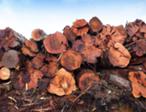
Sixteen persons died in the forestry/logging industry in 2007, which means the industry generated $185,062,500 per death.

By contrast, the marijuana industry in 2008 seems to have endured 58 deaths directly or indirectly related to the trade.

That would mean that in 2008 B.C. suffered one death for every $103,448,275 worth of dope produced, sold, and smoked.

While this makes marijuana a far more hazardous industry than forestry and logging, producers and consumers of both industries’ products are evidently happy to pay the price.

Crawford Kilian is a contributing editor of The Tyee.

8  Comments:

Login or register to post comments

  • Herb

    3 years ago

    Marijuana prohibition causes deaths

    Re: Most or all of these deaths are due to the marijuana industry.

    It is much more accurate to say that all of these deaths are due to marijuana prohibition.

    Marijuana is safe but prohibition is deadly.

  • Rod Smelser

    3 years ago

    IMPACT ON HOUSING PRICES

    Has any work been done to assess the impact that the marijuana cultivation industry has on the price of residential real estate?

  • Bobby Peru

    3 years ago

    First you get the money, then you get the power...

    Such an analysis is a result of flawed logic and leads to non-sensical conclusions. The nature of the deaths are not comparable- one results from accidents, the other from criminal action, which may or may not be related to marijuana. A gang related killing may occur for a number of reasons including cocaine, heroin or just plain insanity.

    Just letting gang killings continue, hoping that the gangsters eliminate each other doesn't work. Eventually and surely, innocent people will be killed. And the gangs just become bolder and start attacking govt institutions and officials. Just think of BC's situation as our own beginning of a version of Miami or Bogota.

    Of course, grow ops played a significant role in the run up of real estate prices. Just look at how many homes on Westwood Plateau in Coquitlam were growing weed- almost the entire development. It's difficult to determine how many homes were grow ops, but certainly access to home seizure records might be an indication. The current crackdown on extraordinary electricity users should shut down and force the sale of many homes, thus driving down the market.

    It's also wishful thinking to think that simply legalizing marijuana possession, sales and trafficking will eliminate the gang problem It certainly hasn't provided a magic solution in Amsterdam. Gangs are now deeply rooted in the Vancouver scene and they'll increase their other criminal activities.

    Our soft, liberal approach to crime has led to our Beautiful BC!

  • mcgregory

    3 years ago

    Marijuana prohibition causes deaths

    Given that loggers aren't trying to kill each other, I would have to say that logging is more dangerous than growing pot.

  • Kechika River

    3 years ago

    Vancouver Province editorial Friday, March 5, 1965

    "It began with a few pounds of heroin....

    The whole Rivard case which is turning Ottawa upside down and threatens the life of a government began allegedly with a few pounds of an ilegal drug known as heroin.
    U.S. authorities seek to extradite Rivard to charge him with being the key man in a narcotics smuggling ring which was uncovered by the seizure of 76 pounds of pure heroin last year at Laredo Texas.
    That amount of heroin diluted and broken into small lots for "pushing" in the underworld market is estimated to be worth $56 million when sold to dope addicts.
    Because this derivative of morphine cannot be sold legally in Canada or the United States it is valued at $46,000.00 an ounce by drug pedlars. It`s legal worth in the pharmaceutical trade is about $30.00 an ounce.
    In the futile endeavours to prohibit the use of narcotics North American legislators are maintaining an illicit traffic that guarantees it`s participants $1,500 quick profit for every dollar invested. Is it any wonder the dope trade
    is never at a loss for recruits?
    If laws against dope were more effective than the laws against liquor (which provoked the most acute outbreak of lawlessness in history and had to be revoked)they could be supported
    But anti-narcotic laws have not suppressed the traffic. Police are constantly on the trail of pedlars. Magistrates send a steady stream of addicts an "pushers" to prison and detectives intermittently seize a few pounds of heroin worth millions only because the drug is outlawed.
    Some police authorities speculate that when prohibition was repealed the gangsters who made fortunes from purveying ilicit booze turned their attention to narcotics as the next most profitable substitute.
    If addict could obtain drugs at legal cost from properly authorized dispensers,
    one thing is certain. There would be no more fortunes for drug pedlars and international drug rings. No longer would there be the incentive of huge profits. The traffic would soon die a natural death.
    And there would be no Rivard case with it`s ugly ramifications."

  • Kechika River

    3 years ago

    have we learned anything?

    How many billions of untaxed dollars have been made on the drug trade since this editorial?
    How much time and money has been spent on policing these ilegal drugs?
    How much money and time in court costs has been spent in prosecuting these "criminals"?
    How many people have been murdered because of the ilegal drug trade?
    How many of us have a criminal record for growing a plant or smoking a doob?
    Does anyone have any idea why these drugs are ilegal? They are just as available even though they are ilegal.
    Maybe even more so.
    Legalize these drugs, They should be govt. controlled from the growing, manufacture, dispensing and use of them.

  • Blackbird

    3 years ago

    You Nailed it Bobby Peru

    "Our soft, liberal approach to crime has led to our Beautiful BC!"

    Excellent analysis and summation, but you stop short of offering strategy. Who should be targeted if going after street dealers would be an inadequate response? Aside from jailing white collar criminals who launder billions in drug profits to help prop up our mutual funds (why is there even a choice between ethical and unethical investment?) and keep the cash flowing through our speculation and credit-based market economy, how will our societal institutions change? How will we ride out the economic fallout that will ensue?

    My five point plan follows:

    1. End Canada's involvement in the Afghan war.

    Canada has never experienced a foreign terrorist attack. The nation saw a rise in opium export from 450 tonnes in 2000 to 8400 tonnes in 2007 when it produced 93% of the world opium supply. We aren't over there to fight terror. We are there to secure, protect and export illegal product destined for consumption in Europe, North America and beyond. Trouble is, it kills our most loyal and brave citizens abroad and our most vulnerable in the homeland.

    2. Beef up Port Security.

    How many thousands of containers enter our ports in Halifax, Montreal and Vancouver each day? Tens? Hundreds? What percentage are scanned for illegal narcotics? How many inspectors are employed? If you want to end the illegal drug trade on Canadian city streets, the best place to start is to tighten security at its points of entry into the country. Less drugs on the street means fewer addicts which translates into reduced costs for drug treatment facilities, the criminal justice system, the penal system, the health care system, and the bureaucracies that stem from them.

    (cont.)

  • Blackbird

    3 years ago

    continued

    3. Investigate and prosecute government officials and corporate executives found to be involved in all aspects of the crime ring, be they high-ranking military personnel, financial services sector executives, advertsing industry moguls, shipping magnates, corrupt judges, etc.

    Sentence the guilty to the maximum extent of the law for their part in (a) defrauding the public by propagating a lie, i.e., that a war on drugs is being waged and (b) profiting from the deaths of citizens sworn to defend the nation and of those who fall between the current system's cracks. Money saved by ending Canada's participation in the War on Terror would finance the trials.

    4. Establish a new federal paramilitary unit with branches in the nations 30 largest cities and equip it with enough personnel and firepower to efficiently put local traffickers out of business.

    5. In addition to a temporary expansion of treatment facilities, make drugs available to addicts for whom all efforts at abstinence have genuinely failed.

    Physicians, in consultation with substance abuse counsellors and counselling psychologists will make this determination. Physicians will write prescriptions, the medical system will incur the cost. As illegal narcotics become less available the number of addicts will contract and, in time, the cost of supplying prescription heroin will be nominal.

    • The discussion for this story is closed. No more comments can be added.

    On The Hook

    About The Hook

    I will be your Hook editor for this week. But although my particular focus at The Tyee is education, youth issues, and a little bit of poverty and homelessness, we will still be bringing you the latest news from across British Columbia and the country. Count on updates about the student strikes in Quebec, the latest news about oil and gas developments that directly affect this province, local, provincial, and national politics, and more. Stay tuned.

    -- Katie Hyslop