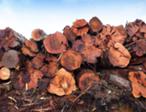
The spokesperson of a citizens' group called Stop the Spray BC says more intensive silviculture is the wrong approach for B.C. forests.
James Steidle issued a press release in response to the Auditor General's scathing report that found the B.C. government has failed to sufficiently replant the forests it manages and needs to develop a plan.
Auditor General John Doyle's six recommendations include developing a plan for forest stewardship and investing enough in silviculture to achieve long-term timber goals.
Silviculture companies typically spray herbicides on a site before re-planting to eliminate competition from other species.
"My fear is this growing chorus of "mismanagement" is going to cause the government to start spraying a lot more herbicides to control the deciduous trees like aspen and birch, whose presence is considered a management problem," stated Steidle in the press release. "And that would be bad for biodiversity, healthy forests, and long-term sustainability."
Stop the Spray has raised concerns about the industry's widespread use of glyphosate, in particular. The chemical is a key ingredient in Vision, Roundsup and other herbicides, and is under safety review by Health Canada.
"The underlying message of the Auditor General's report is that we need to plant more conifers. . . and engage in greater silviculture activities in the not sufficiently restocked (NSR) areas where deciduous growth is strong," wrote Steidle. "Nobody seems to think that a "mismanaged" NSR forest could potentially be a healthy one and that the real problem is too much logging."
Colleen Kimmett reports for The Tyee.



2
Login or register to post comments
Stewart MacKenzie
13 weeks ago
Ecological and Economic Idiocy
Aside from the many ecological reasons for not spraying, are the economic reasons the practice is just plain stupid. Many of the plants killed by spraying have commercial value, as demonstrated by companies like Siska Traditions and Prairie Naturals and a host of others. The idea that only conifers can be used to produce revenue is simply false.
Tree planting as practiced today is more about making money for Monsanto and various contractors and growers of seedlings than any genuine intention of developing a sustainable forest economy. The fact is, noone can prove at this point that planted trees will grow to become a healthy forest - it is an untested theory until it actually happens, and there are many indications that it will not. As Ed Deak points out, and as I have heard from people all over the province, the plantations are often dying off as fast as they are being planted, and those which survive are often unhealthy and unlikely to grow to a harvestable condition.
What we do know for certain is that many of the "undesirable" species being targeted already have commercial value, that they contribute to the natural cycle in ways we already understand and more ways we do not, and that allowing nature to take its course will produce a healthy forest over time, given that an appropriate climate
continues to exist for the "climax" species to grow to maturity.
Urban do gooders have mostly been sucked into the belief that planting chemically impregnated (with fungicides which are much deadlier than Roundup), chemically dependent trees equals restoring the forest. They need to learn much more about the natural cycles, the soil, and the practical uses of whatever nature provides, before buying into the argument that more artificial plantations are required.
Working within the natural cycles is much more prudent and dependable than operating under an illusion fostered mainly by those who profit from the present methodology. It is high time the environmentally concerned among us wake up to this reality, begin to put pressure on governments to allow nature to determine how the forest develops, and find the many economic opportunities which will arise in all stages of forest regeneration. The present methods not only defy reason from an ecological standpoint but destroy the alternatives, whether by killing them off, or poisoning them so they are unfit for human use.
wiley
13 weeks ago
silviculture can be genocide in another disguise
Hunters have been pointing out the disease and dieoffs in moose populations throughout the interior since chemo-silviculture became the industrial norm. It`s as if those idiotic nozzleheads had forgotten the entire food chain for most mammals and other forest inhabitants starts small, about the size of poison droplets on tasty leaves.
It`s more than tragic that in a province that has constantly positioned itself at being so much better than most regions at the stewardship our forests, the very opposite has come true. Just fly over in Google Earth and see for yourself, beyond the beauty strip. We`re actually a savage and primitive backward nation in our loving and caring relationships with the land.
The big timber companies are now distant and heartless, run by the 1%. Every decision reduced to dollars and donuts. Land stewardship is simply a poor fit. We should devolve this centralized and bungling bureaucracy now called MOFLNRO (perhaps to encapsulate it`s failures), and reallocate BC to smaller more localized stewardship, to community forests, to First Nations that still understand Respect. People will simply not spray poison in their own watersheds if given the choice and better alternatives.