


For just over $1.8 million, you can own 60 hectares of old growth forest and white sand shoreline within the boundaries of Cape Scott Provincial Park, just three kilometres off the world-famous Cape Scott Trail. If a more sheltered retreat is more your thing, $349,000 will buy about 16 hectares of old growth forest bordering the salmon-bearing Fisherman River – which is even closer to the Trail.
But you will have to move fast, according to real estate broker NIHO Land & Cattle Inc., given the pristine location on the emerald tip of north-western Vancouver Island, and the fact that both properties are thick with merchantable old growth trees.
The properties are just two of a number of privately-owned parcels that exist in Cape Scott Park, remnants of lands originally settled by Scandinavian settlers in the 19th century. Most of the pioneer lands were abandoned long ago, and gradually bought up by the province. But not all of the land.
News of the property sales came as a surprise to the Regional District of Mount Waddington, the regional municipality on the northern tip of Vancouver Island. Mount Waddington’s Planner Jeff Long later confirmed that there is nothing the municipality can do to protect the old growth forests on either parcels, or to restrict any development plans on the parcels.
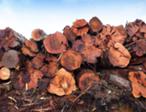
Recognizing the value of the old growth timber on the waterfront property in particular, the broker has hired a private company to do an “aerial overview,” estimating on its website that there is almost 30,000 cubic metres of merchantable timber up for grabs on that one site alone.
“Almost all of the property is covered in old growth timber which consists of cedar, hemlock, balsam, spruce, pine and cypress,” says the NIHO website. “There some big diameter trees on the property.”
Suntanu Dalal, a spokesman for the B.C. Ministry of Environment says the government is aware that the Cape Scott Park “in-holdings” are for sale, adding that there are at least 14 separate private pieces in Cape Scott Park covering about 150 hectares of land.
Dalal described the forests on the lands as “low-quality trees for harvesting,” an assessment at odds with both NIHO and their forestry surveyor.
Will the province consider buying this land to maintain the integrity of the park and Cape Scott Trail?
“The lands are on the Ministry’s regional acquisition list,” says Dalal. “But there are no immediate plans to purchase them.”
Christopher Pollon is a Contributing Editor at the Tyee.






What have we missed? What do you think? We want to know. Comment below. Keep in mind:
Do:
Do not: