


The Representative for Children and Youth and the new Minister for Children and Family Development may have a better relationship under Christy Clark's cabinet, but they are still far apart on the idea of a poverty-reduction plan.
"I have a very close, and positive relationship with the minister and I'm glad she's speaking," Mary Ellen Turpel-Lafond said, referring to Minister Mary McNeil, at the Child Poverty Panel, part of the Union of BC Municipalities Convention today.
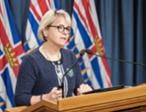
McNeil confirmed the positive relationship: "We're kind of boring, we're getting along. We each have a job to do, and we each have desires for the same outcomes."
Turpel-Lafond's relationship with the ministry under former-premier Gordon Campbell's government was rocky. Disagreements over Turpel-Lafond's role and access to government documents resulted in her suing the government to gain access to documents needed to audit a ministry program.
Turpel-Lafond says she's impressed with several government programs and changes since Clark took over, including raising the minimum wage, a home-visit nurse program for expecting and new low-income mothers, and implementing full-day kindergarten province-wide.
And both Turpel-Lafond and McNeil would like to see all levels of government, non-profit organizations, businesses, and other stakeholders working together to solve child poverty. It's how child poverty is addressed, however, that the two disagree.
"We don't have a plan. We have a number of programs, some of them work, some don't, but if we had a plan we wouldn't see children living in deep, intergenerational poverty," Turpel-Lafond says, referring to the call for a provincial poverty reduction plan. B.C. is one of only three provinces that has resisted implementing a poverty reduction plan.
"It's not a complicated concept to have a plan, and it's not a threatening concept to have a plan. It's not about gotcha politics."
McNeil, however, maintains her predecessor Mary Polak's resistance to creating a provincial poverty reduction plan.
"I want to see what it is that we can do together. I don't want to sit down and come up with a plan that's a compromise or watered down for one-size fits all," she says, emphasizing she's committed to action, not just words. "It has to be community-based."
B.C.'s child poverty rate has been the highest in the country for the last eight measured years (2001-2009), with approximately 100,000 children living under the poverty line.
This panel was not the first time the Convention has addressed poverty -- at the 2009 convention the members passed a resolution asking government to address child poverty in particular, and last year the UBCM passed a resolution encouraging the government to adopt a poverty reduction plan.
Katie Hyslop reports for The Tyee.







What have we missed? What do you think? We want to know. Comment below. Keep in mind:
Do:
Do not: