VICTORIA - A New Democratic Party MLA who chose not to run in this election said the party will have to take a close look at its policy on the carbon tax.
“The question everyone's going to ask is whether it was wise to take the stand on the carbon tax,” said David Cubberley. “I'll be one of those who'll be saying that was a strategy that should have been thought through a lot more.”
Cubberley won in Saanich South in 2005 with the endorsement of the Conservation Voters of B.C.. He made his decision to step down before the NDP took its position against the B.C. Liberal Party introduced carbon tax, he said, but added he disliked the position.
“These are pressing environmental issues,” he said. “The stand that we took had appeal in the short term for people who were somewhat victimized by the way that tax was done, but it was not a strategy from my perspective with enough vision to carry the day.”
The NDP environmental platform was strong he said, but it got lost in the debate around the carbon tax that had the NDP on the defensive.
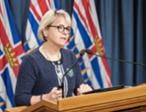
Reporters asked James about the carbon tax in a scrum following her concession speech. “I continue to believe the carbon tax is ineffective and isn't fair, so I still have those concerns,” she said.
She insisted she had no regrets about the campaign.
Andrew MacLeod is The Tyee’s Legislative Bureau Chief in Victoria. Reach him here.



6
Login or register to post comments
G West
2 years ago
Nope, sorry won't wash
The problem wasn't the opposition to the carbon tax - it was the fact that the NDP failed to stand up for ordinary people when it took the Liberal poison pill salary increase and golden pension.
Just imagine how much more effective the campaign would have been if every NDP MLA had been able to point to the Liberals and their salary piggery every time one of them opened their mouth.
In this economic climate the Liberals would have been lucky to retain much more than Kelowna and the Bible Belt - which is all they really care about anyway.
Karen D.
2 years ago
Thank-you Mr. Suzuki
David Suzuki, past environmentalist, can be thanked, in no small part, for helping the Liberals gain another four years to continue their destruction of our province. Campbell had a lot at stake in this election with hundreds of IPPs waiting for approval and Enbridge planning on opening up the Northwest to major oil tanker traffic.
Thank-you Mr. Suzuki for your untimely comments on the carbon tax and for helping open the door to industry and international investors intent on lining their pockets with no regard to the environment and the people of B.C..
Frank
2 years ago
Carbon tax
If the carbon tax was so popular how come Campbell's support didn't increase? What happened to all those people from the NDP and Greens who were going to have to vote Liberal due to the carbon tax?
In the end the carbon tax didn't mean a thing either way.
Wilfred Laurier
2 years ago
You are both Correct
Frank and Garth, you are both correct. The fact is the NDP didn't run a good campaign. They didn't get on an issue and focus on it. The only real issue they had was character assassination of the Premier. Personal attacks do not work in Canada. The NDP did it in 2001, 2005 and again in 2009. It didn't work any of those times.
The Liberals ran a disciplined and focused campaign. They did not run after Carole demanding blood tests or mail out hate flyers in Carole's riding. The used their volunteer network to get their vote out. They Fariview team was especially impressive at doing that, they smoked the NDP's star McGinn. The Liberals took the high road and it worked for them.
But in the end, they will do the same thing in 2013 and lose again. Slow learners.
Frank
2 years ago
Wilf
On the negativity thing you're simply refusing to believe the BC Libs run negative ads, evidence to the contrary. The fact they've got the higher popular vote for 4 straight elections illustrates that a negative campaign is very effective.
Rod Smelser
2 years ago
David Cubberly is an intelligent man
The BC carbon tax, like the Dion Green Shift, was primarily a election driven political gambit, not an environmental policy. Its purpose was to co-opt environmental leaders, their organizations, payrolls, and disciples, and in that regard it worked quite well. And having done that, to sharpy limit any expansion in the NDP vote, where again both the Green Shift and the carbon tax performed quite well in selected seats where a demographic once described by Alan Gregg as "the urban stupid" are a major force.
The real electoral bite of these policies for Liberal Party strategists is similar to that achieved over the past ten or more years by the long gun registry. Its purpose is to mobilize and exploit the contempt and derision that urban voters have for suburban and rural people.
As a policy, the only real and unique purpose of a strictly revenue-neutral carbon tax is to make the tax system more regressive by reducing income taxes and raising transactions taxes. That this is the real goal for David Suzuki and Mark Jaccard can be seen by noting the wording of this SFU news item:
http://www.sfu.ca/sfunews/Stories/sfunews02290801.shtml
David Cubberly is an intelligent man, and that's by his own admission. His take on all this is that the NDP had a strong overall environmental platform, but that on climate issues, "it was not a strategy from my perspective with enough vision to carry the day.” Terms like "strategy" and "vision" are not really policy analytics, their are campaign descriptors. And what does Cubberly have in mind? The article doesn't say, nor is there any indication of where one might find out what he's thinking in even minimal detail.
I would be interested in hearing what David Cubberly thinks is going to happen in discussions in Canada around carbon pricing given that President Barack Obama is committed to a cap and trade package without a carbon tax, and that Liberal Leader Michael Ignatieff has officially and firmly deep-sixed any mention of carbon taxes?
I personally think the carbon tax has served its political and electoral purposes, and that yesterday's BC provincial election was really its last major outing. Once the real provincial budget comes down, probably in a few months, we'll find out what actual policy course Premier Gordon M. Campbell intends to pursue in this regard.