


 SHARE:
The Alberta government is moving forward with its plan to merge health-care numbers with government-issued identification and proof-of-citizenship.
The logistical, legal, and privacy headaches will eventually force the government to abandon these new cards, at an even greater cost to taxpayers. Mark my words: there will be a massive do-over at some point.
Government officials have framed the new cards as a response to fraud. Never mind that there’s no evidence of abuse of any of these documents, to begin with. In practice, the changes will prevent far more Albertans from accessing government programs and services than from cheating them.
That's because the underlying issue is largely administrative. Alberta stopped collecting health-care premiums in 2009, eliminating one of the government’s key mechanisms for maintaining an accurate inventory of health-care cardholders.
For years, officials have known that the number of health-care cards in circulation exceeds the number of Albertans. The Alberta Office of Statistics and Information warned years ago about the need for better data management practices to address this very issue. That is a data quality problem, not a fraud problem.
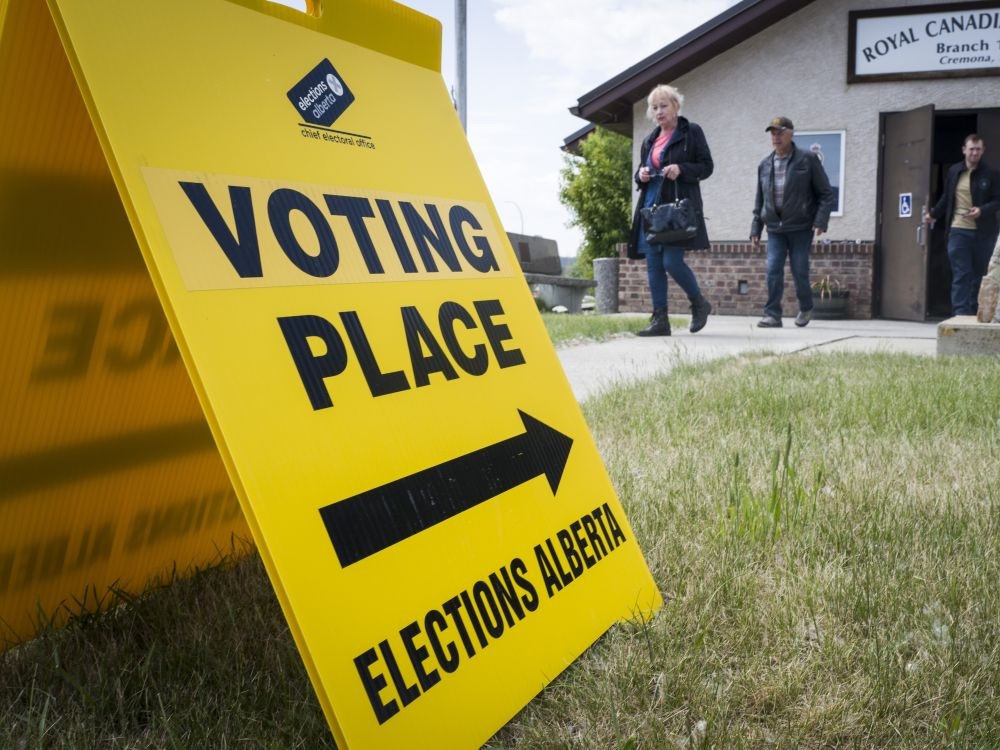
The same logic applies to the government’s decision to add citizenship markers to provincial identification. Ostensibly, the government wants to prevent non-citizens from accessing public services that only citizens are entitled to. By my count, that includes only voting and jury duty. I haven’t heard them complaining about the quality of jury members, so this boils down to electoral integrity, in their view.
Just as there is no evidence of widespread health-care cheating in Alberta, there is zero proof of widespread voter fraud. In both cases, governments are proposing significant administrative interventions to address problems that are grounded in feelings, not fact.
Fraud must be occurring somewhere, right? How else can we explain massive budget deficits and rising support for centre and left-wing parties? It must be shady outsiders!
Public policy should be based on evidence, not conspiracies. Before governments ask citizens to surrender more privacy or navigate more red tape (two gripes from the UCP’s own base), they should demonstrate that the problem they’re solving actually exists at a scale that warrants such measures.
Especially when the reforms introduce a host of new complications.
Consider families. Children will reportedly need to renew their cards every five years. In a family of four with two children, that means a steady stream of appointments, paperwork, fees, and renewals. At age fourteen, young people will have to begin paying for identification that was previously unnecessary for accessing health care. What is being presented as an anti-fraud measure quickly becomes a recurring administrative burden for ordinary families.
And this doesn’t even count Albertans who need to care for their elders.
The barriers are even higher for some seniors who may lack the necessary documents required to obtain the new provincial ID card. For instance, many older married women changed their names decades ago and may now need to produce not just birth certificates (featuring their maiden names), but also marriage certificates (featuring their married names) just to establish their identity. Anyone who has helped aging parents navigate government paperwork knows this is rarely straightforward. I know this from personal experience.
The consequences of losing a card are just as troubling. Today, misplacing your driver’s licence is inconvenient. Under the proposed system, losing your card could also jeopardize your ability to access health-care services, at least temporarily. A lost wallet suddenly becomes a health risk.
There is also a basic flaw in the logic of identity verification. It takes ID to get ID. By eliminating one standalone government-issued credential and consolidating functions into a single card, the government is reducing the number of documents Albertans can use to prove who they are. People who lose their identification will have fewer options for rebuilding their identity, not more.
Then there are the privacy risks.
The government’s new card bundles together some of the most valuable pieces of personally identifiable information an individual possesses, then hands it over to anyone who requests proof of ID. That includes far more than government officials.
Bartenders, political parties, box office tellers, police officers, employers, hotel clerks, car rental companies, liquor store owners, lawyers, pharmacists, university professors, landlords, insurance companies, cell-phone providers, bank tellers, bouncers, smoke-shop vendors, volunteer coordinators, childcare workers, software companies, and many others will now have access not only to your photo, address, date of birth, and licence number. They’ll also know if you’re a citizen or not, despite not needing that information to provide a service. (Oh, and your health care number, too.)
In an age of cyberattacks, identity theft, and data breaches, concentrating more information in a single credential increases the consequences of failure. Alberta’s Privacy Commissioner has already raised concerns about oversight, enforcement, and protections surrounding the new system.
Those types of concerns deserve more than the passing acknowledgement offered to millions of voters whose personal information was stolen and posted online by known backers of the UCP government.
At a minimum, the government should ensure that registries are fully subject to provincial privacy legislation and grant the Privacy Commissioner stronger powers to impose penalties for data misuse. (Make political parties subject to the same oversight, while we are at it.)
There is a simpler alternative available, and one to which the government will likely turn once the full scope of these problems become clear to ordinary Albertans.
Manitoba recently abandoned plans to place citizenship markers on provincial identification and instead chose a more straightforward approach: maintaining separate, plastic health cards while modernizing their format and administration. Rather than consolidating multiple functions into a single credential, Manitoba recognized that health coverage, identity verification, and citizenship status serve different purposes and carry different risks. A dedicated plastic health card may not be as flashy as an all-in-one solution, but it avoids many of the logistical, privacy, and access problems Alberta is inviting upon itself. Sometimes the best administrative reform is the simplest one.
In sum, the UCP’s policy is unlikely to survive in its current form.
Not because Albertans oppose modernizing government records. Most would support sensible efforts to improve data quality and reduce abuse. The problem is that the practical costs of this particular solution are likely to exceed its benefits.
Eventually, governments confronted with enough exceptions, exemptions, complaints, and unintended consequences tend to do what governments always do: revise the policy, carve out special cases, or quietly roll it back.
The irony is that Alberta may spend years building a complicated system of integrated identification cards only to discover that what we had was perfectly fine in the first place.
The truly conservative response would have been to leave things well enough alone, instead of indulging in conspiracy theories and scapegoating that leads to nothing but more red tape and cost to taxpayers. ![[Tyee]](/design-article.thetyee.ca/ui/img/yellowblob.png)
Read more: Alberta











Tyee Commenting Guidelines
Please note that email notifications for replies are not currently working due to a software issue which may be resolved in a future update.
Comments that violate guidelines risk being deleted, and violations may result in a temporary or permanent user ban. Maintain the spirit of good conversation to stay in the discussion and be patient with moderators. Comments are reviewed regularly but not in real time.
Do:
Do not: